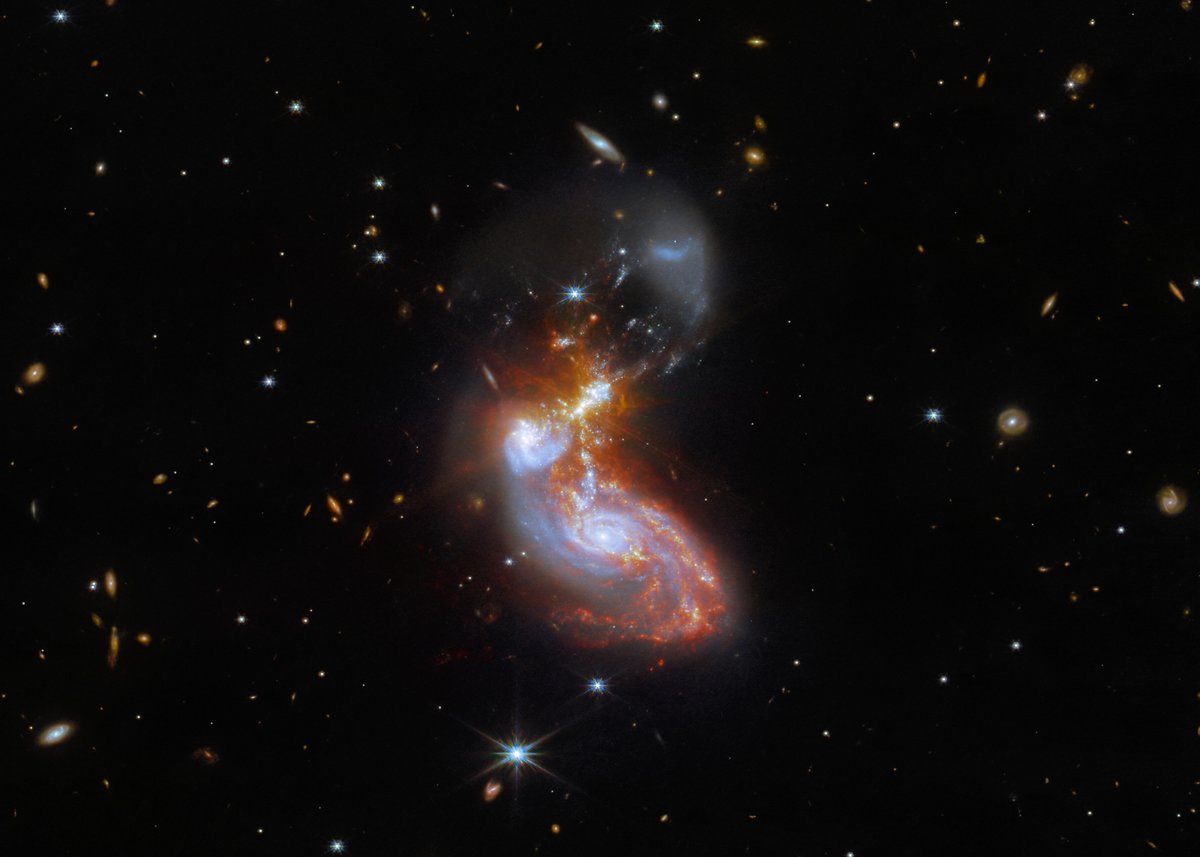
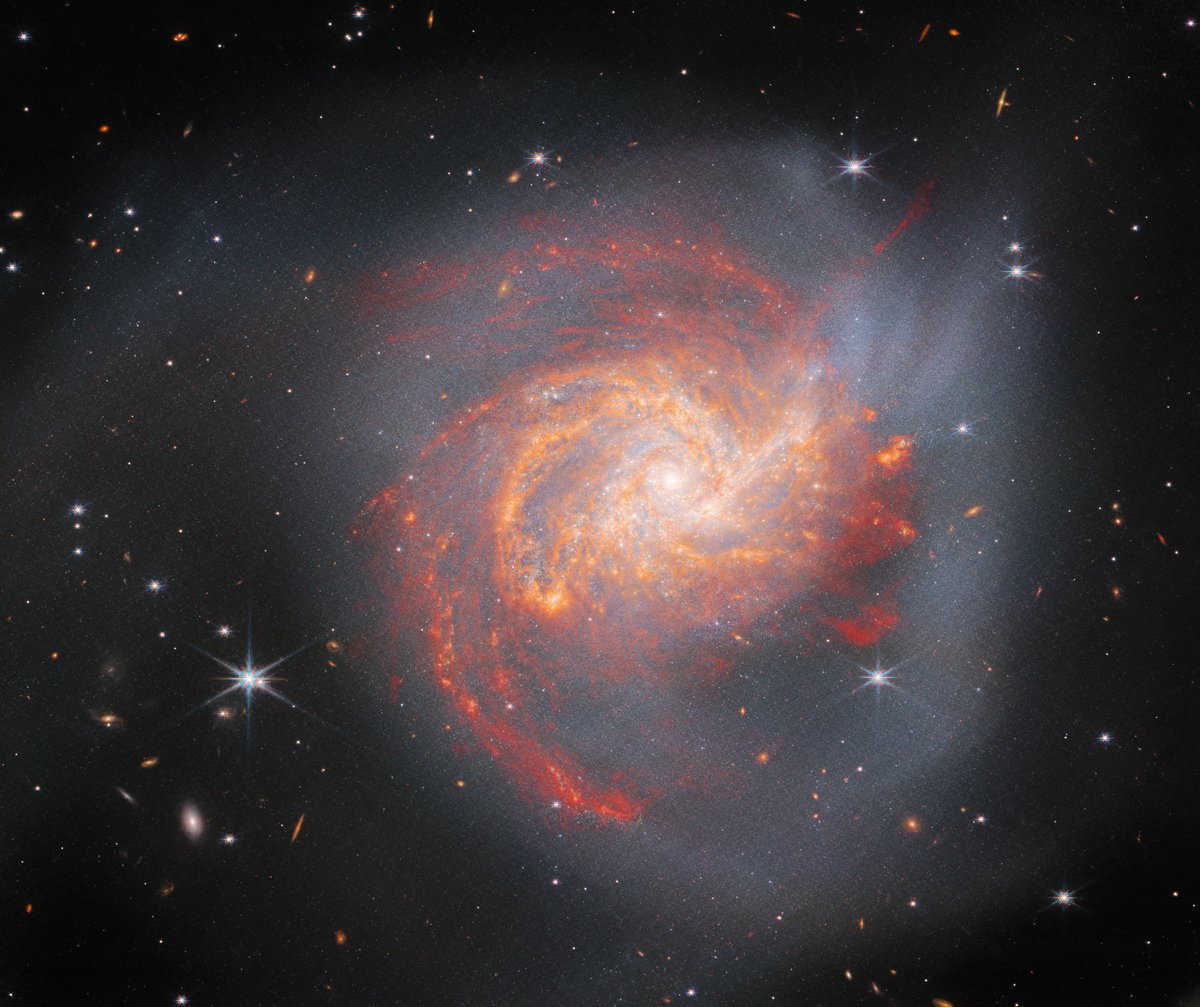
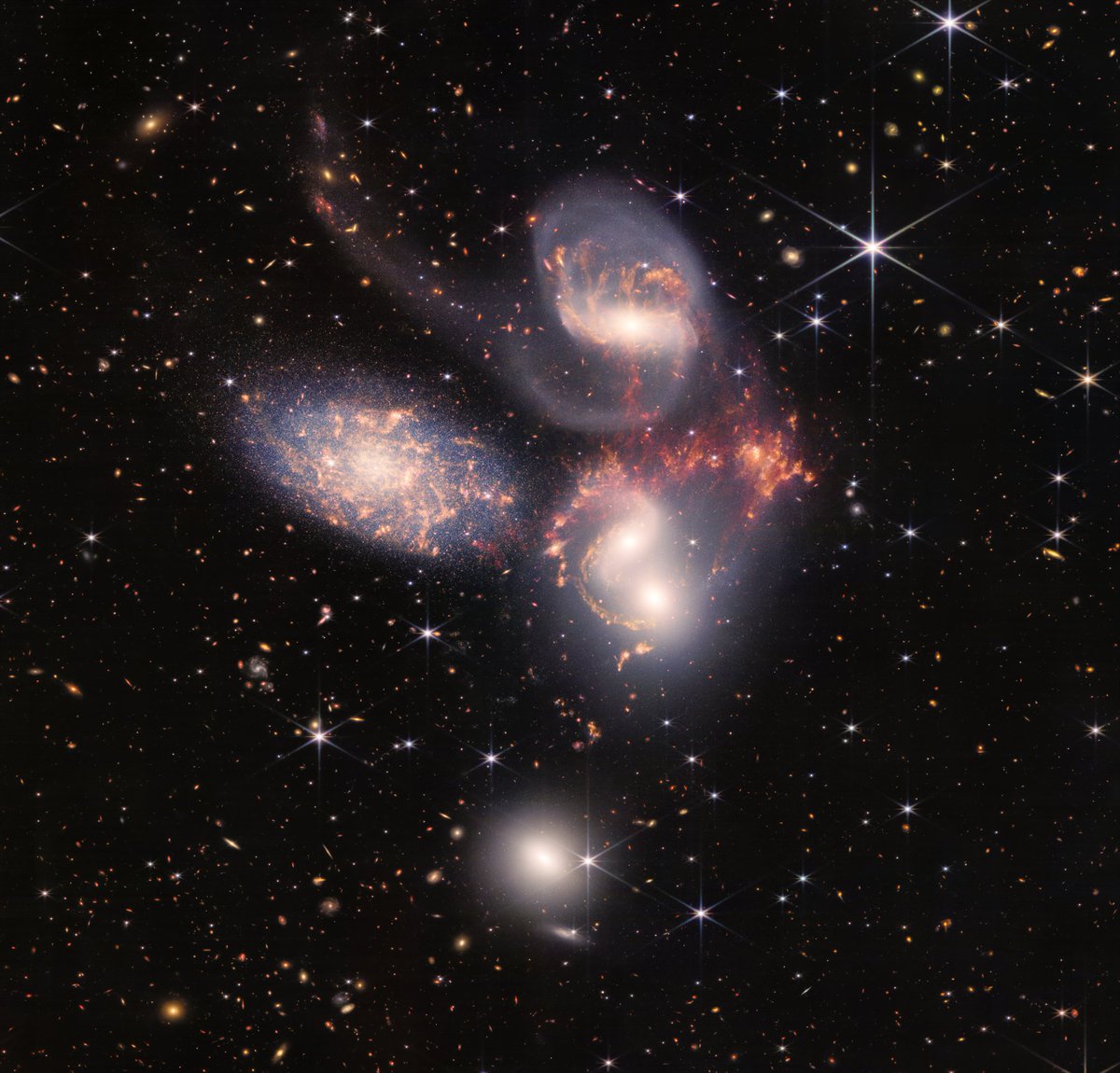
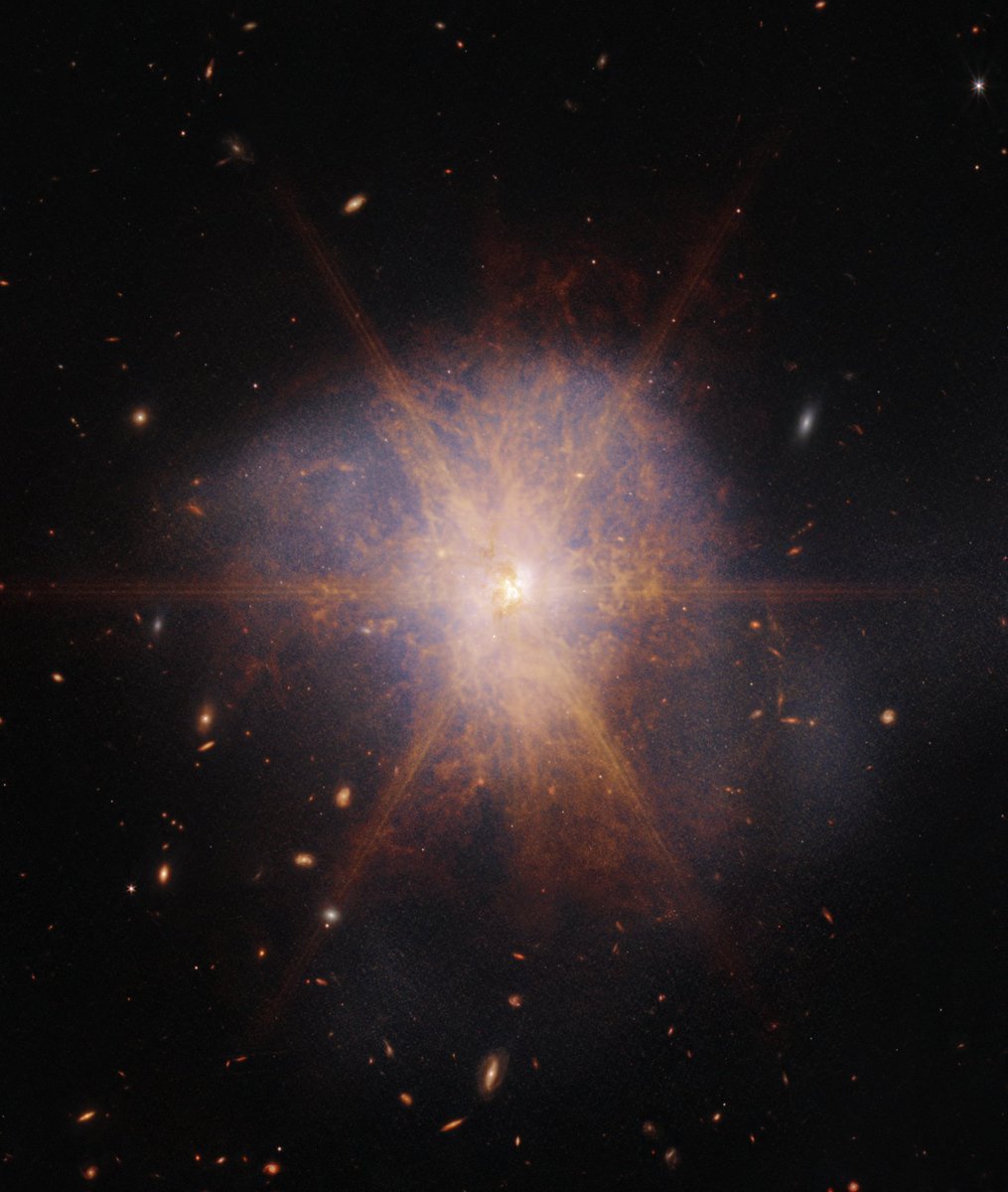
Galactic mergers occur when neighboring galaxies interact, pulled in by gravity. Here's a Webb round-up of #CosmicCollisions:
Stephan's Quintet - https://t.co/AUC3oc8xNw
NGC 3256 - https://t.co/88TiRqgGDC
Il ZW 96 - https://t.co/3NcxTIN8YJ
Arp 220 - https://t.co/HY2KZc5sdy
Stars in globular clusters pack snugly together. Messier 28, for example, crams about 50,000 stars into a region just 60 light-years (350 trillion miles) across. The Sun only has about 400 known stellar neighbors that close. #MondayMotivation
This is the last of our new #CosmicCollisions images.
If you missed any new views or want to learn more about galaxy mergers, you can find additional information here: https://t.co/GwZjGAyyE1
@NASAWebb Now, Webb adds near- and mid-infrared puzzle pieces to help scientists learn more about the structure and star formation in these galaxies – granting new insight into subjects that astronomers have studied for decades!
For more images and information: https://t.co/iL0Ic3FaJj