A Russian psychologist spent 10 years proving that the act of talking to yourself out loud is one of the most powerful cognitive tools the human brain has, and almost nobody outside his field has read the work.
His name was Lev Vygotsky.
He worked in Moscow in the 1920s and died of tuberculosis in 1934 at the age of 37. He had no laboratory, no funding, almost no English readers, and a body of work that the Soviet government suppressed for two decades after he died.
He produced the foundational theory of how human cognition actually develops, and the central piece of that theory was a behavior almost every adult is faintly embarrassed about.
Vygotsky noticed that young children talk to themselves constantly. They narrate their own actions, they argue with imaginary opponents, they instruct themselves through tasks out loud.
The dominant theory at the time, from the Swiss psychologist Jean Piaget, said this was a sign of cognitive immaturity that children would eventually grow out of as they learned to think properly.
Vygotsky said the exact opposite.
He argued that this self-directed speech was the most important cognitive event in the entire developmental window, because it was the moment a child first started to use language as a tool to control their own mind. The child was not failing to think. The child was learning how to think by externalizing the process and listening to themselves do it.
He predicted that as children matured, this out-loud self-talk would not disappear. It would go underground. It would become silent inner speech, which is the running monologue every adult has inside their own head for the rest of their life.
The voice you hear when you read this sentence is the direct descendant of a four-year-old narrating their own block tower.
For 50 years almost nobody outside Russia had access to his work, and the few researchers who did pick it up could not get funding to test it. Then in the early 2000s the experiments finally started to pile up, and what they found was that Vygotsky had been right about something even more important than he knew.
The first major study came from Gary Lupyan at the University of Wisconsin and Daniel Swingley at the University of Pennsylvania in 2012. They ran a simple visual search experiment. Participants were shown 20 images at once and asked to find a specific object, like a banana or a chair. In one condition they searched silently. In the other condition they were told to say the name of the object out loud to themselves while looking for it.
The participants who spoke the target name out loud found the object significantly faster, with higher accuracy, than the participants who searched in silence. The effect was strongest when the spoken word matched a familiar object the brain already had a strong category for.
Saying the word out loud literally tuned the visual system to detect that thing better. The researchers called it the label feedback effect, and the implication was that the act of vocalizing a goal physically changes how the brain processes the world while pursuing it.
The second major study came out of the University of Michigan and Michigan State in 2017. The lead researchers were Ethan Kross and Jason Moser, and they used both EEG and fMRI to record what happens inside the brain when people talk to themselves while emotionally upset.
They asked participants to recall painful autobiographical memories and reflect on them in two different ways. Some used the first person, saying things like "why am I feeling this way." Others used the third person, referring to themselves by their own name, saying things like "why is John feeling this way."
The brain scans showed that the simple act of switching from first person to third person, even silently, decreased activity in the medial prefrontal cortex, the region responsible for rumination and self-referential pain. Within a single second of using their own name instead of the word I, participants showed measurably lower emotional reactivity. The shift required no extra cognitive effort. It cost the brain nothing. And it worked.
Kross described the mechanism in his interviews. Talking to yourself by name creates a small amount of psychological distance from your own experience. Your brain processes the situation more like a problem belonging to someone else, which means it can analyze it instead of drowning in it.
What Vygotsky had intuited in 1934 turned out to be even more powerful than the developmental theory he built it into. The voice you use to talk to yourself is not background noise. It is one of the most precise cognitive tools the brain has, and you can change how it works just by changing the pronoun you use.
People who talk through problems out loud are not anxious or unstable. They are running an externalized version of a process the rest of us are running silently and worse. The kindergartener narrating their block tower, the surgeon muttering through a procedure, the engineer pacing a hallway describing a bug to nobody, the athlete repeating a cue to themselves before a free throw, they are all using the same ancient mechanism that builds and steers human thought.
You can run the experiment yourself the next time you are stuck on something hard. Stop trying to solve it silently in your head. Say it out loud. Describe what you are seeing. Walk yourself through the steps as if you were explaining it to a colleague who is not in the room.
And when something genuinely upsets you, switch to your own name. Ask why this person is feeling this way, instead of why I am feeling this way.
The voice you have been told to keep quiet your entire life is one of the oldest pieces of cognitive technology you own.
Most people are still embarrassed to use it.
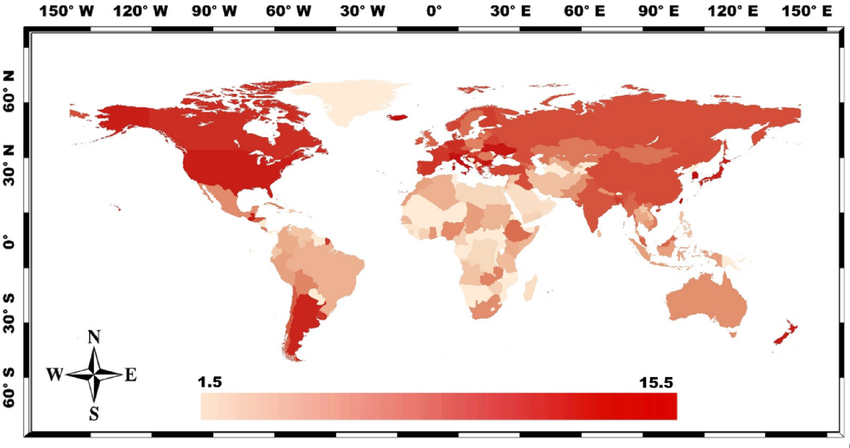
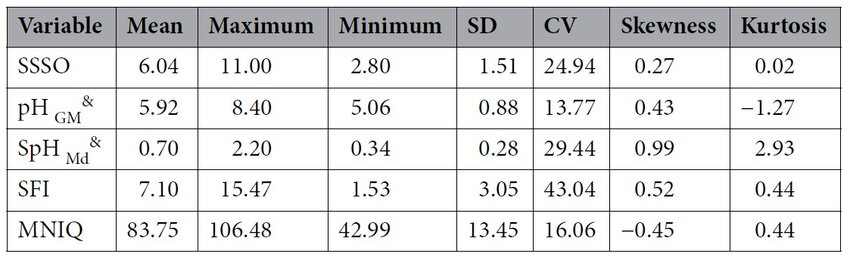
Soil fertility alone explains 34% of the differences in national IQ. Countries on the best soils (Mollisols, Andisols) average 10–15 IQ points higher than those on the wort soils (Oxisols, Ultisols), even before accounting for education or income.
This geographic pattern is visible in real populations. Japan and Taiwan sit on volcanic Andisols and consistently rank among the highest in global intelligence metrics due to their nutrient‑rich, high‑CEC soils. Meanwhile, much of equatorial Africa rests on Oxisols, soils so weathered and nutrient‑stripped that they produce chronically low micronutrient availability.
The further a soil’s pH drifts from 6.5, the more national IQ (MNIQ) declines. If your soil is too acidic (like much of the tropics), zinc and iron become unavailable. If your soil is too alkaline (like the Middle East), micronutrients get locked up too. The correlation between soil fertility and national IQ is r = 0.58, meaning soil alone accounts for 34% of the variation. Explaining 34% of a complex human trait is extremely high.
42 years ago Today, Alexey Pajitnov developed the first version of Tetris on an Electronika 60 terminal computer. Having sold over 170 million copies worldwide, it still stands as one of the world’s most successful games.
The Invisible Glass Experiment
Scientists once conducted a fascinating experiment with a pike and an aquarium.
They placed a transparent glass barrier in the middle of the tank. On one side was a large, hungry pike. On the other side swam several small fish.
As soon as the pike spotted the smaller fish, it launched itself forward to attack.
Bang! It crashed headfirst into the invisible glass and was thrown backward.
Undeterred, the pike tried again... and again. Each attempt ended the same way a painful collision. After repeated failures , its head became bruised and some of its scales were knocked loose.
Eventually, the pike gave up. It retreated to a corner of the tank, clearly frightened and defeated.
Then, the scientists quietly removed the glass barrier.
The small fish now swam freely around the entire aquarium some even passing right in front of the pike’s mouth.
But the pike never attacked again.
Even though it was starving, it refused to strike. In its mind, the invisible wall was still there.
A few days later, the pike died of starvation surrounded by abundant food it could no longer bring itself to eat.
This phenomenon is known as the Pike Effect (or Pike Syndrome).
It serves as a powerful metaphor for how repeated failures and setbacks can create invisible mental barriers that limit us long after the real obstacles have disappeared.
тенденции и основные новости вербовки и призыва от Идите лесом:
сейчас нам часто пишут запасники, которые получили повестки на уточнение данных и боятся, что из-за такой повестки им закроют выезд из России.
пока мы не зафиксировали ни одного случая, когда запасника не выпустили из России именно из-за повестки на уточнение данных или сборы. если такая практика появится, мы сразу об этом напишем.
—
более того. люди продолжают выезжать из России имея повестку в военкомат. каждую неделю фиксируем несколько таких кейсов. на днях один наш клиент с электронной повесткой спокойно вылетел из Шереметьево в Армению. Реестр военнообязанных и база данных погранслужбы по-прежнему не синхронизированы, автоматические ограничения за неявку по повестке по-прежнему не работают.
—
продолжается активное давление на людей, чтобы они заключали контракты:
во-первых, это активная вербовка студентов в вузах по всей России. теперь мы фиксируем давление не только на студентов, но и на студенток. например, в красноярском колледже ККОТиП студенток агитируют на контракт в войска БПЛА
к нам обращаются студенты 1–4 курсов, чаще всего — из техникумов, колледжей и региональных вузов. мы фиксируем вербовку студентов на контракт в 74 учебных заведениях не менее чем в 37 городах и регионах. как минимум в 10 кейсах речь шла о попытках вербовать студенток.
на днях проект «Хочу жить» опубликовал список из 1059 студентов, которых минобороны РФ завербовало на контракт прямо во время учебы. есть и первый подтвержденный случай гибели студента – на войне погиб 23-летний Валерий Аверин
—
во-вторых, это срочники. их обманывают и принуждают к контракту в поезде и в части, а жалобы родителей игнорируют. был и кейс, когда призывнику в документы о срочной службе добавили незаметный абзац о желании служить по контракту — как будто это обычный вопрос в анкете.
—
в-третьих, это те, кто идет по повестке сам в военкомат, без консультации с правозащитниками и без подготовки. например, по повесткам на уточнение данных мужчинам дают анкеты о желании заключить контракт с минобороны.
—
и последнее – по-прежнему большой поток обращений идет из СИЗО. контракты заставляют подписывать на этапе следствия, иногда еще в полиции, под угрозой максимально возможного срока. есть несколько случаев, когда полиция задерживала на улице нетрезвых людей и давила на них, чтобы они подписывали контракты
—
Госуслуги агитируют на контракт под видом «альтернативной службы»
так, например, во Владимирской области рассылают письма с темой «Альтернатива военной службе по призыву». по факту это тот же самый контракт
—
продолжается призыв, в Идите лесом обращаются призывники и их родные и сообщают о задержаниях облавы.
призывников забирают в метро, к ним приходят домой, угрожают уголовкой, в Москве везут в ЕПП или Угрешскую, забирают телефоны, не принимают документы и призывают одним днем.
—
в России появился целый рынок рекрутеров, которые на «Авито», «Юле» и в соцсетях продают военную службу как обычную работу — охранниками, электриками, монтажниками, сварщиками или водителями. за каждую "голову" рекрутеры получают деньги.
людей, откликнувшихся на такие вакансии, убеждают подписать контракт с Минобороны. после этого подключаются сотрудники рекрутингового агентства: покупают билеты, сопровождают кандидата до пункта отбора, проводят его через медкомиссию и подписание контракта. так вместо обещанной работы в тылу человек оказывается на войне.
—
по обращениям в Идите лесом видно, что дезертиры молодеют. раньше средний возраст людей, которым мы помогали дезертировать, был 28–35 лет. сейчас он постепенно снижается. в первую очередь за счет срочников, подписавших контракт. самый молодой из обратившихся — 2008 года рождения.
—
в мае мы консультировали 3 387 человек, помогали не попасть в российскую армию.
115 людям мы помогли дезертировать и оказаться в безопасности.
нет войне
A 24-year-old Polish tennis player arrived in Paris last week ranked 114th in the world, with no sponsors, no guaranteed income, and no certainty she could even pay for her hotel room.
She had to win three qualifying matches just to enter the French Open main draw. Prize money is only paid at the end of the tournament, so a Polish sports drink brand quietly stepped in and covered her hotel bill.
Her name is Maja Chwalinska. And today, she plays in the French Open final.
Before this tournament, she had won exactly one Grand Slam main draw match in her entire career. She had battled depression so severe that in 2021 she couldn't get out of bed. She underwent knee surgery in 2022. She spent years grinding through small tournaments across Europe just to stay afloat.
Then she arrived in Paris, won three qualifiers, and kept winning. Zheng Qinwen. Elise Mertens. Maria Sakkari. Diana Shnaider. Nine straight matches. One set dropped.
She is now the first qualifier in French Open history to reach the final. The last time a qualifier reached a Grand Slam final, it was Emma Raducanu at the 2021 US Open. Raducanu won.
By simply making the final, Chwalinska has earned more prize money than her entire career combined. The runner-up cheque alone is $1.6 million. If she wins today, she takes home $3.25 million.
One week ago she couldn't pay for her hotel room.
Introducing our new Lending and Liquidate pages!
We make it easier to explore lending vaults, compare opportunities, and earn yield from borrowers.
And with Liquidate we make it easier to spot loans close to liquidation 🐳
Links to Lending and Liquidate are below 👇
.@THORChain's exploit fix is done. The restart is close.
$XMR targeted for month-end.
Stablecoin swaps might go free.
This week's THORSday recap is live: 👇
https://t.co/y0aXNiIM1R
@loraclexyz trading crypto actually sobers u up to reality faster than some of these tradfi ppl cus vol is just so high and we nuke way more often
once u trade perps and finally lose some real money, you realize you dont know everything, or possibly dont even know anything
A duck was raised by eagles after being brought to the wrong nest.
On February 12, 2025, a nest camera captured an eagle sitting on two eggs when her mate returned with a third mystery egg.
Nobody knew where it came from, and even the mother eagle seemed confused for a moment. But instead of pushing it away, she tucked it under her body and raised it with the others.
Then the first egg hatched. It wasn’t an https://t.co/qmzgXWpDBq was a duckling.
A week later, the two eagle chicks hatched beside it, and viewers thought the duckling wouldn’t last long in a nest full of predators. But the mother eagle never treated it like food. She treated it like hers.
Fifteen weeks later, the same camera showed all three still together, with the duck growing beside the eagle chicks like a sibling. Researchers were stunned when they noticed the mother bringing back fish and softer food, almost like she knew the duckling couldn’t eat the same meat as the others.
Now everyone watching is waiting for the next impossible moment. Soon the juvenile eagles will fly away but how will the duck get down from the nest?
Це портрет херсонського фермера Олександра Гордієнка, який загинув від ворожого дрону у вересні минулого року.
Я зробив цю фотографію, коли їздив до Олександра у Бериславський район, щоб зробити репортаж про те, якою ціною наші люди вирощують хліб.
This is Ramsey. He is a mail delivery dog. Shipping is free, and while packages might not be handled with care, they are handled with enthusiasm. 14/10