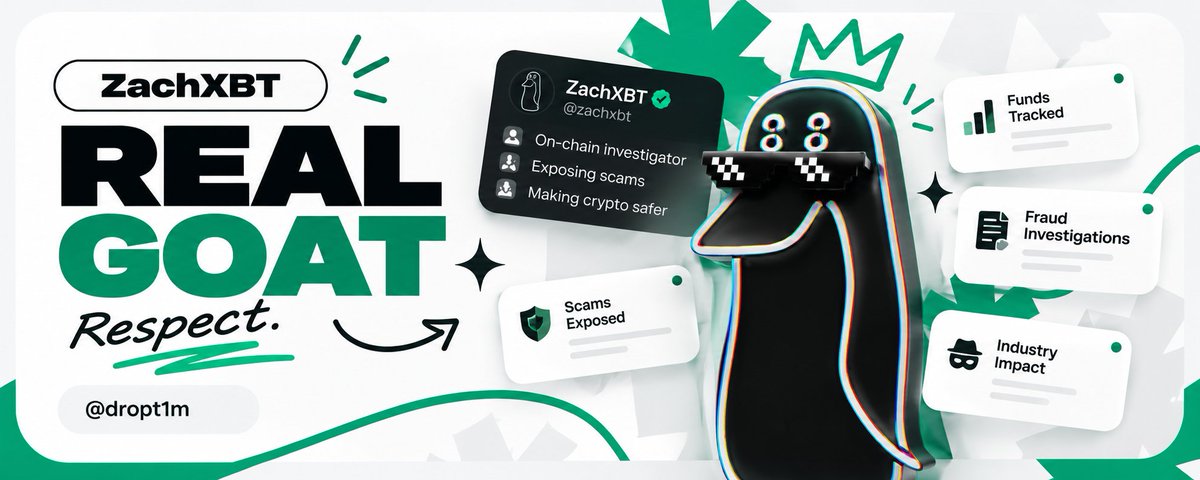
@zachxbt is genuinely one of the people who inspires me to get deeper into cybersecurity and blockchain.
The guy has shown how powerful on-chain investigation can be - tracking funds, exposing scams and connecting the dots that most people simply don't see.
What I really like is that he doesn't just talk about security. He actually does the work.
Seeing this honestly makes me want to learn more about cybersecurity, blockchain analytics and on-chain investigation myself.
I'm still at the beginning of that road, but people like ZachXBT show me how far these skills can actually take you.
Huge respect. 🫡
One day I want to be able to look at a blockchain and see what others don't.
🚨 WARNING: BE CAREFUL WITH REVENUE FAMILY
I decided to take a closer look at @RevenueFamily after seeing the project appear seemingly out of nowhere with very promising claims and “easy” earnings.
The biggest red flag appeared when I tried to withdraw funds.
Instead of completing the withdrawal normally, users can reportedly be redirected to suspicious third-party websites. One of the pages is even flagged with a “Suspected Phishing” warning.
I’m not telling you to blindly trust my conclusion - do your own research. But until these issues are properly explained, I strongly recommend NOT connecting your wallet, entering personal information, or sending money to the project.
❗If you've already interacted with Revenue Family, check what permissions you granted and where you entered your wallet credentials.
Better to miss an opportunity than lose your funds.
Stay safe. DYOR. 🛡️
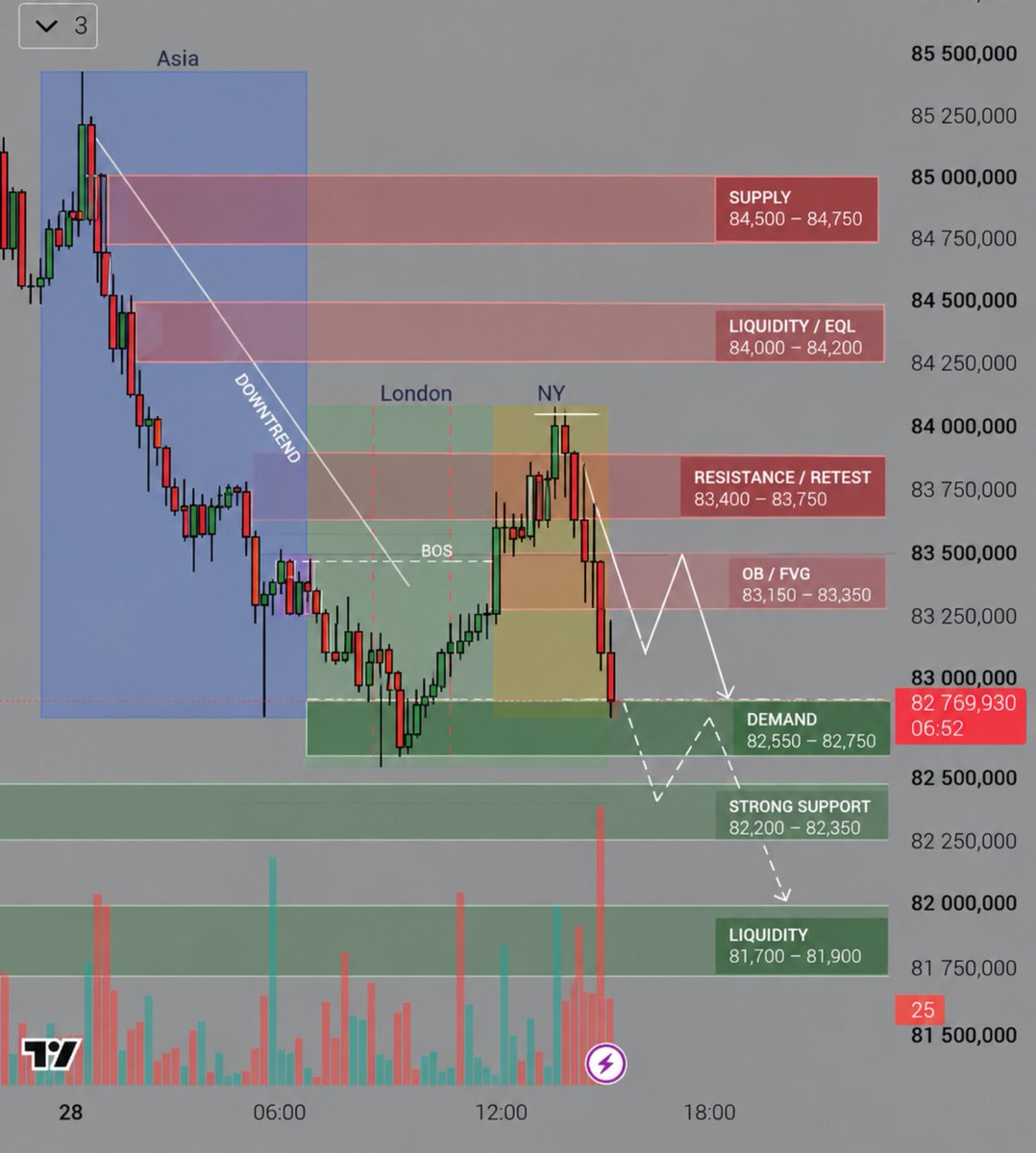
⚠️ Note: This market analysis was not done by a human.
I asked GPT to analyze the AI token market.
The results were... odd, to say the least.
Let's see how AI can sense the market in 2026.
What do you think do you trust such analysis, or is it still only human-powered?
❗A $400 Million Hack: How the Crypto Exchange Bitget Was Attacked and Who Is Behind It❗
🔻In late September 2026, the cryptocurrency industry faced one of the largest security incidents of the year. The Bitget exchange suffered a massive hacker attack, resulting in the theft of assets worth between $351.6 million and $387.5 million. In just 20 minutes, cryptocurrency in XRP, Ethereum, and various stablecoins was drained from the platform's hot and cold wallets to anonymous addresses.
🔻Anatomy of the Attack: Backend Instead of Keys
Contrary to the common scenario where hackers steal private wallet keys, the attack vector on Bitget was different. The exchange's security team quickly ruled out direct key theft.
The primary cause was the compromise of critical backend infrastructure. By gaining access to the exchange's internal systems, the attackers forged transaction data. They generated fake withdrawal requests, which Bitget's legitimate authorization system processed as authentic. The process ran automatically, and the exchange's algorithms independently released massive volumes of assets to addresses controlled by the hackers (one of the main receiving nodes was the wallet 0x770b...63Ee).
🔻The North Korean Trail
The scale, speed, and technical complexity of the hack immediately narrowed down the pool of suspects. Bitget CEO Gracy Chen stated that the attackers' methods "heavily match" the hallmarks of hackers from the DPRK. Such operations involving the hacking of centralized platforms followed by rapid fund withdrawals are traditionally attributed to the cybercriminal syndicate Lazarus Group, whose activities are linked to the North Korean government.
🔻A Lifeline for Users
Despite the colossal scale of the theft, the exchange managed to prevent panic among its clients. The platform's management promptly froze withdrawals to conduct a security audit, while keeping trading (spot and futures) and deposits available.
> The company's official stance: user balances remain unaffected, and all losses will be fully compensated from the platform's own reserves.
> A key role in resolving the crisis was played by Bitget's Protection Fund. At the time of the incident, its volume exceeded $464 million, which allowed it to cover the hack's damages with a solid surplus without jeopardizing the exchange's liquidity or its clients' funds.
🔻Background: What Bitget Is Known For
Founded in 2018, Bitget consistently ranks among the top 5 global crypto exchanges by trading volume today. The platform serves tens of millions of users and gained peak popularity thanks to its advanced copy trading feature — a tool that allows users to automatically copy the trades of professional traders. The company's ecosystem is actively expanding: in addition to derivatives and spot trading, the exchange is developing its native BGB token and actively investing in Web3 infrastructure, spearheaded by the non-custodial crypto wallet Bitget Wallet.
Good morning.
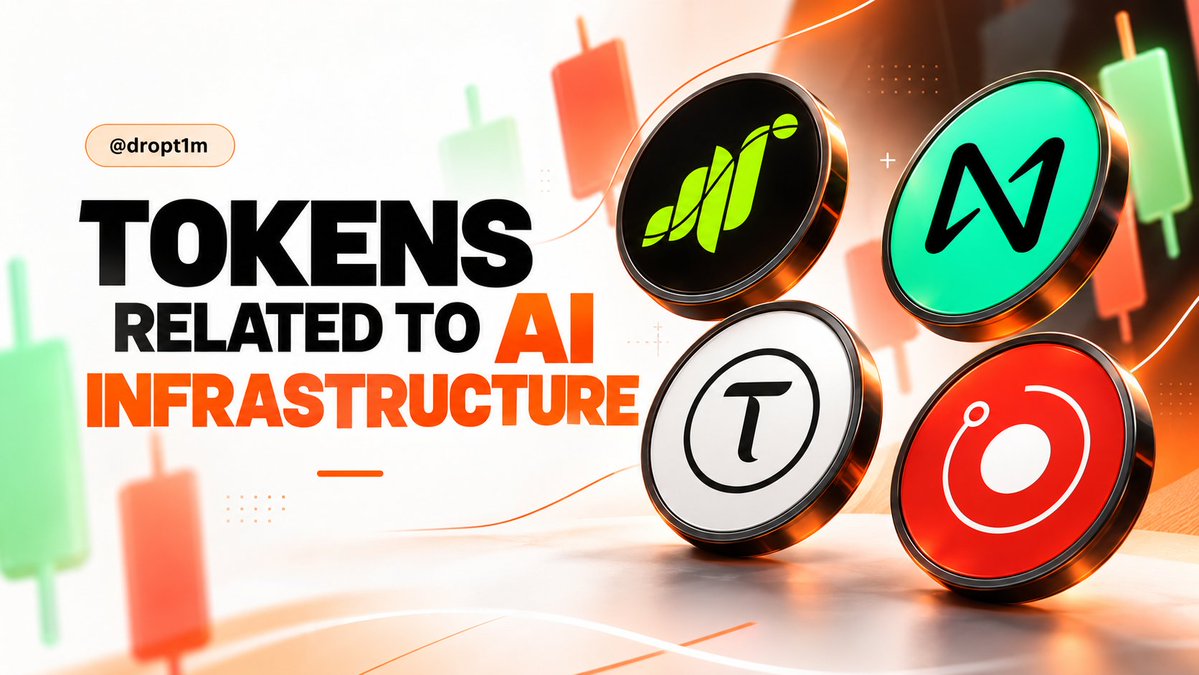
While the coffee cools, here’s a quick rundown of four tokens from the AI infrastructure space.
Over the past 24 hours (CoinGecko):
$NEAR $5.17 +1.5%
$TAO $307 −4%
$RENDER $2.05 +3–4%
$GRASS $0.63 +8–10%
Not everyone is seeing a steady picture. NEAR and RENDER are quietly in the green after a strong week. TAO is cooling off today after a surge. GRASS is once again the most volatile on the list: it’s already up about +70% over the week.
$NEAR — A Home for Agents
An L1 that markets itself as a chain for AI: agents live, pay, and move between networks via Intents and Chain Signatures. The big question is whether NEAR will become the settlement layer once agents start interacting with APIs and wallets without human intervention. Available on: Binance, Coinbase, Gate.
$TAO — The Intelligence Marketplace
Bittensor pays not for gigabytes of hardware, but for a model’s useful output. Subnets compete in areas such as inference, data, and predictions. The supply cap is the same as Bitcoin’s: 21 million. Growth hinges on one thing: whether subnets will attract real customers, not just rely on the supply cap. Today’s daily decline is a normal price to pay for the volatility of a category leader. Look for it on: Binance, Kraken, KuCoin.
$RENDER — Available GPUs
At first, cards were rented out for 3D rendering; now, those same nodes handle rendering and inference. Tokens are burned to power the network. If AI continues to face a shortage of GPUs—cheap, idle cards from others—then this is a no-brainer. Look for it on: Binance, OKX, Bitvavo. Network: Solana (not the old RNDR on Polygon).
$GRASS — Data for Training and Inference
The network collects and prepares web data specifically for AI: unused internet traffic from nodes is converted into datasets that labs purchase for training and inference. While models are devouring text and images by the bucketful, the data layer is just as scarce as the GPU layer. That’s why GRASS is currently outperforming its peers. Look for: OKX, Bybit, Gate.
That’s all from me for now. Have a great day.
#AI #NEAR #TAO #RENDER #GRASS