After successfully guiding the University for 30 years, BC President William P. Leahy, SJ, is stepping down.
BC Magazine explores how his presidency has transformed the Heights: https://t.co/sOSaq292Zu
Blake Butera '15 was the last @BCBirdball player to wear No. 3 before it was retired in honor of Pete Frates '07. Butera, the youngest MLB manager in 54 years, talked about his return to Boston, his time on the Heights, and Pete. #StrikeoutALS
🎥: @NESN
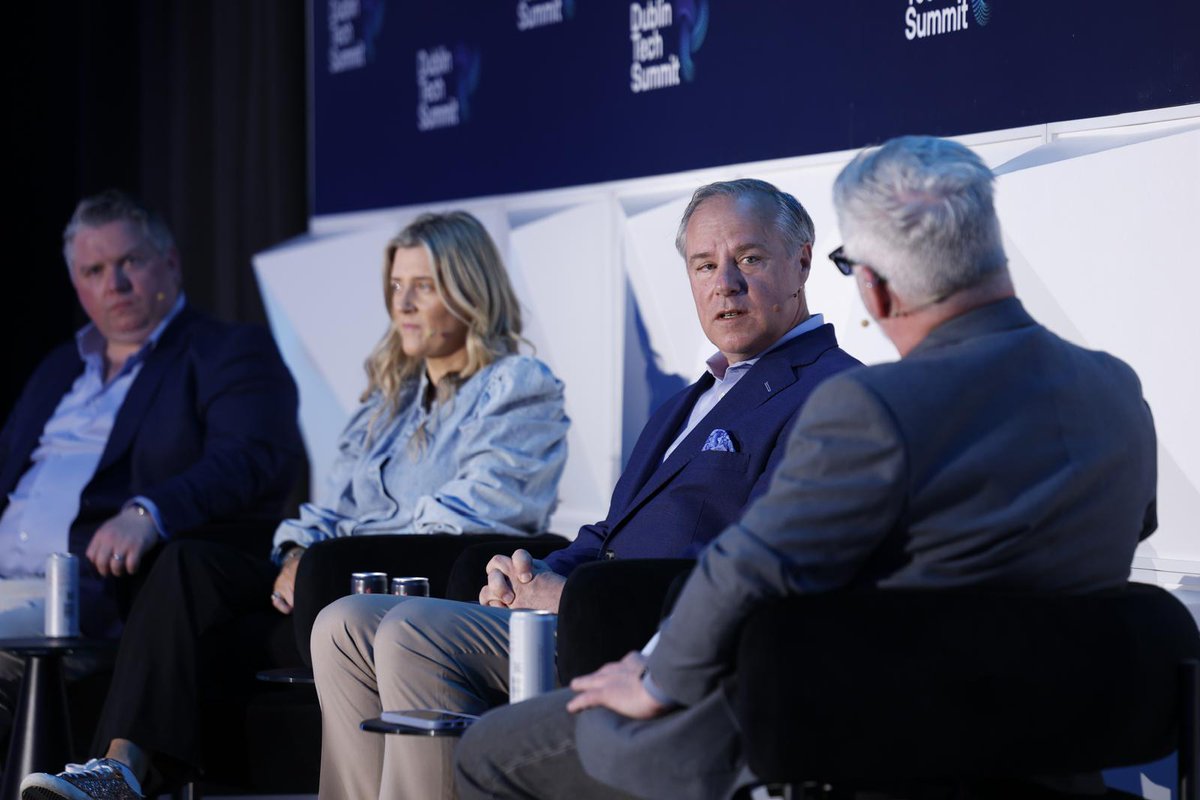
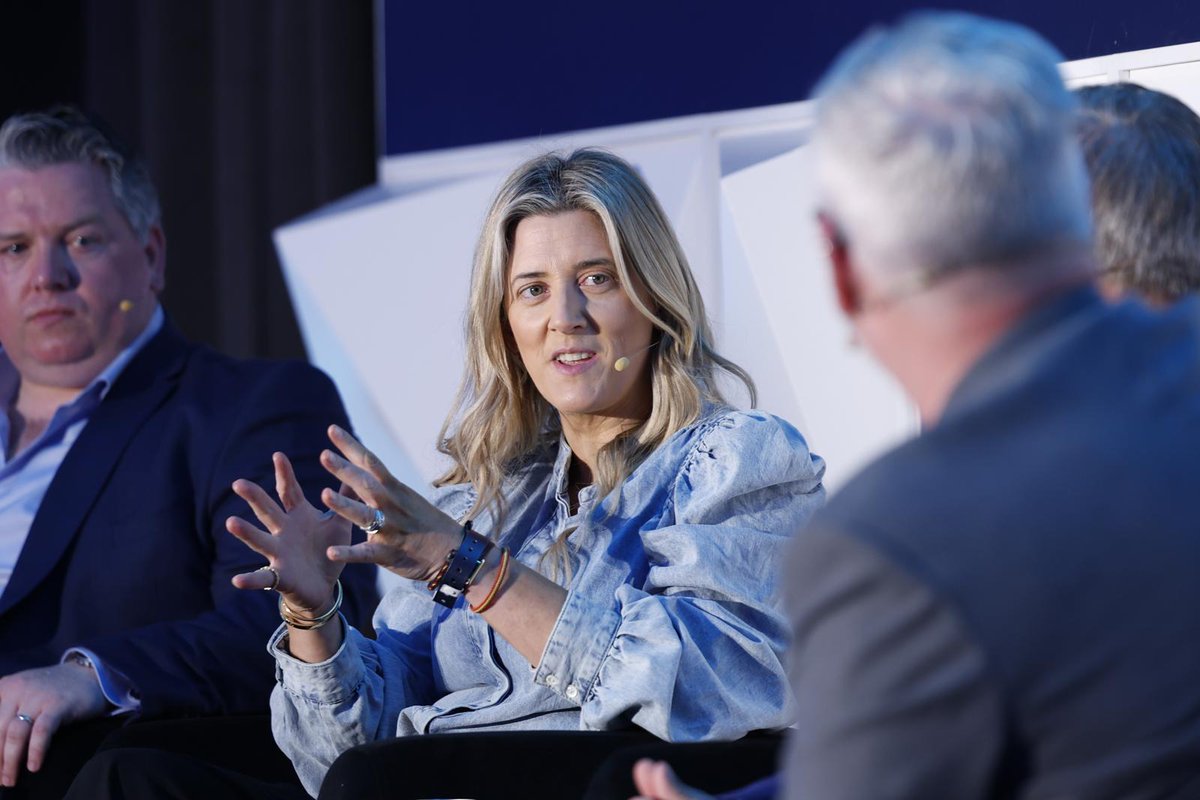
Digital Economies and AI Strategy; A Global Competitive Arena is no longer just a technology conversation, it’s a global economic one.
On the Main Stage, Barry Scannell, Emma Redmond (OpenAI), Colin Crowell and Charlie Taylor joined industry and policy voices to explore how regulation, infrastructure and talent will define competitiveness over the next five years.
From shifting policy landscapes to cross-border innovation, the panel highlighted how quickly the rules of digital leadership are evolving.
#dubtechsummit
In his first encyclical, Pope Leo XIV quotes J.R.R. Tolkien's "Lord of the Rings: The Return of the King.”
“It is not our part to master all the tides of the world, but to do what is in us for the succour of those years wherein we are set, uprooting the evil in the fields that we know, so that those who live after may have clean earth to till.”
(Photo: Vatican Media)
As evidenced by the unbridled promotion and implementation of technology at the expense of human dignity, we are truly experiencing an eclipse of the sense of what it means to be human. It is imperative to recover an understanding of the true meaning and grandeur of humanity as intended by God. It is in this sense that the challenge we currently face is not technological, but anthropological, and it is my hope that the Encyclical Letter to be published within a few days will contribute to answering this challenge.
Now that Artemis II has launched we have 10 days to get everyone on Earth a Planet of the Apes costume so we can do something hilarious when the astronauts return 😁
BREAKING: COPPA 2.0 just passed the Senate by unanimous consent. This marks a tremendous victory in my decades long fight for children and teens’ online privacy. Now, the House must do the same.
Excited to announce Claude for Open Source ❤️
We're giving 6 months of free Claude Max 20x to open source maintainers and core contributors.
If you maintain a popular project or contribute across open source, please apply!
https://t.co/inuh0hxREA
Everyone’s saying OpenAI got the “same deal” Anthropic was banned for.
Read the fine print. They’re not the same:
On weapons:
Anthropic asked for “no fully autonomous weapons without human oversight” = a human involved in the decision.
OpenAI’s deal says “human responsibility for the use of force” = someone accountable, which can happen after the fact.
Oversight ≠ Responsibility. One requires a human before the trigger. The other requires a name on the paperwork after.
On surveillance:
Dario said explicitly: current law hasn’t caught up with AI. The government can already buy your movement data, browsing history, etc without a warrant. AI can assemble that into a complete picture of your life, at scale. That’s mass surveillance without breaking a single law.
Anthropic wanted protections beyond current law.
OpenAI’s deal says the Pentagon “reflects them in law and policy.” That’s existing law as the safeguard, the exact law Anthropic said is insufficient.
Same words. Different agreements. Read them carefully
For the avoidance of doubt, the OpenAI - @DeptofWar contract flows from the touchstone of “all lawful use” that DoW has rightfully insisted upon & xAI agreed to. But as Sam explained, it references certain existing legal authorities and includes certain mutually agreed upon safety mechanisms. This, again, is a compromise that Anthropic was offered, and rejected.
Even if the substantive issues are the same there is a huge difference between (1) memorializing specific safety concerns by reference to particular legal and policy authorities, which are products of our constitutional and political system, and (2) insisting upon a set of prudential constraints subject to the interpretation of a private company and CEO. As we have been saying, the question is fundamental—who decides these weighty questions? Approach (1), accepted by OAI, references laws and thus appropriately vests those questions in our democratic system. Approach (2) unacceptably vests those questions in a single unaccountable CEO who would usurp sovereign control of our most sensitive systems.
It is a great day for both America’s national security and AI leadership that two of our leading labs, OAI and xAI have reached the patriotic and correct answer here 🇺🇸
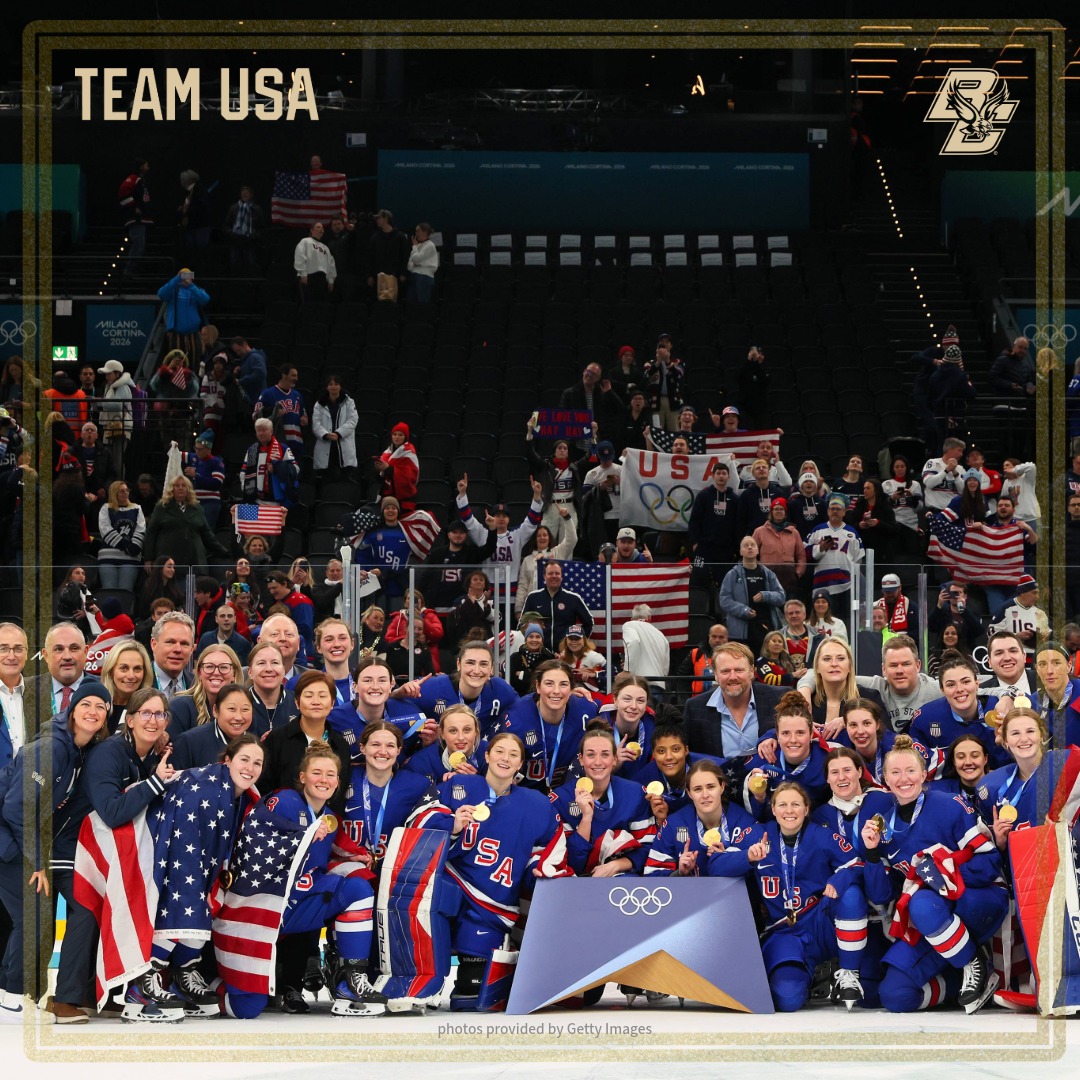
Truly Golden 🥇 @BC_WHockey greats Megan Keller ‘19, Cayla Barnes '23, Hannah Bilka '23, and Alex Carpenter '16 captured gold in Milan as Keller capped off an amazing @TeamUSA run with the game-winning, overtime goal vs. Canada. 🦅🇺🇸
More Photos: https://t.co/Ctt99KduMl
Boston College Hall of Fame member Bill Donovan has died, according to an AP report. He was 85.
Donovan is the third-leading scorer in BC basketball history and was the fourth player in program history to reach the 1,000-point mark.
When Anthropic stopped training on books that were literally pirated, they managed to hit on the one way of buying books that means no money goes to authors: buying used books.
They spent tens of millions of dollars buying used books from wholesalers, in batches of tens of thousands at a time. These were shipped to Illinois, scanned, and pulped.
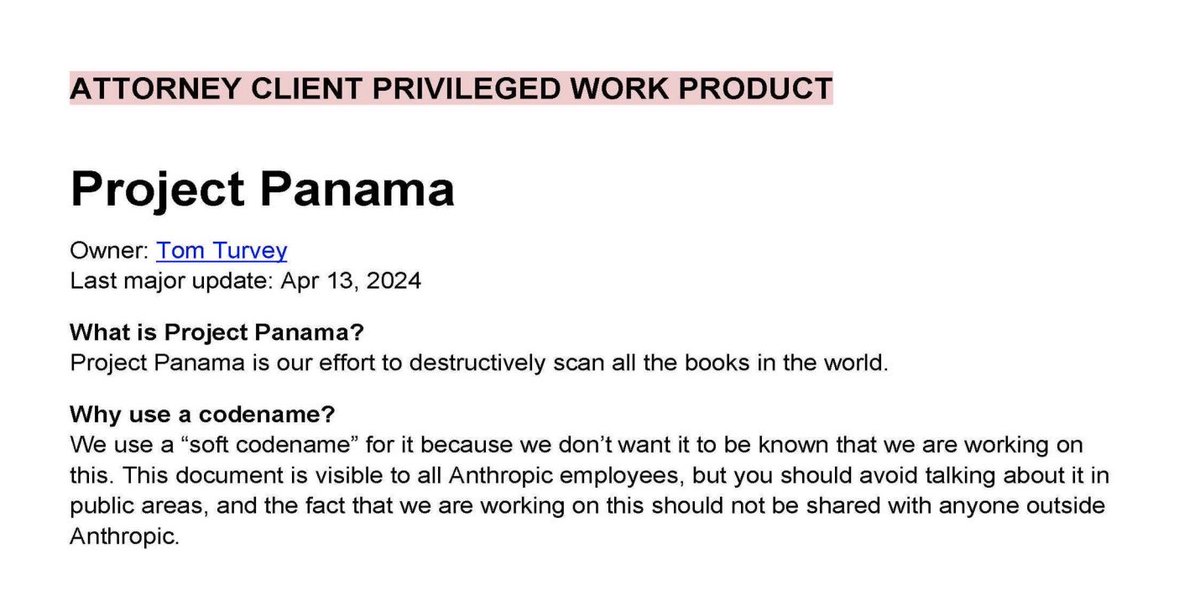
They called this Project Panama, using a codename because they didn’t want people to know they were doing it. (It ultimately came out through court documents.)
Before alighting on this plan, they were discussing licensing from book publishers, which would have meant money going to authors. But then they came up with the used books plan, and stopped all licensing discussions. Anthropic uses their huge war chest to get all the books in the world (that’s their aim) - authors get nothing.
IMO there are serious questions over whether this should be legal. Yes, they are buying the books. But you can’t just do anything you like with a book once you’ve bought it. You can’t scan it and sell it as an ebook, for instance. There are limits on what you can do with books you’ve bought, where what you would be doing would compete with the book’s rights holders.
As Judge Chhabria said in Meta v Kadrey, LLMs will likely compete with the books they are trained on by flooding the market. And as Dario Amodei himself said in 2021, big AI companies centralizing profits by training on books without the authors getting paid is a real concern.
Whatever your view of its legality, it’s pretty clear that it sucks for authors, letting Anthropic make money at their expense. Authors should get paid when their books are used to train AI, and should have the chance to say no to that training. Anthropic’s used books strategy gives them neither.
This cannot be repeated enough.
Not just because it’s true, but because when people believe the lie that Telegram is private and secure, they can put themselves and the people they communicate with in danger.