Cabbage juice contains L-glutamine, an amino acid that may help support the intestinal barrier and a healthy inflammatory response.
Dr. Eric Berg, DC, not MD; information only
Low vitamin D forces your body to pull calcium from bones, leading to weakness and artery damage.
Vitamin D, K2, and magnesium keep calcium where it belongs.
See how this trio supports bone and heart health naturally.
https://t.co/X3G2XcWkrx
Dr. Eric Berg, DC, not MD; information only
@PixieStrmDesign ahh sorry to hear this! :( hope you get well again very soon! In my book I've got a bunch of tips and things that have helped me, in case you're interested
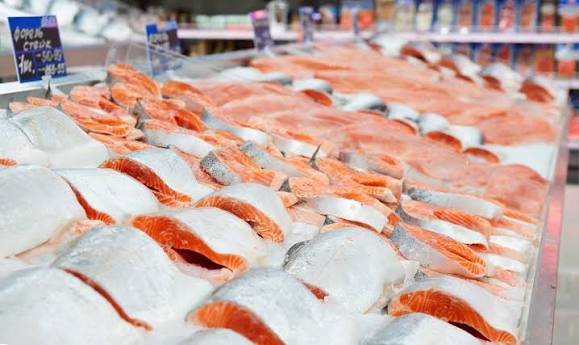
They told you to eat salmon for the omega-3, then they fed the salmon rapeseed.
The whole case for oily fish is the long-chain omega-3, the fat your brain and retina are built from, and the one fat in this whole debate both sides agree you need more of.
Farmed salmon does not make it. Nothing makes it. The fish gets it from eating smaller fish, which got it from algae. Take the smaller fish out of the feed and the salmon is a pink shape.
So the industry took the smaller fish out of the feed.
Fish oil is expensive and rapeseed oil is not. Between 2006 and 2015 the feed in Scottish salmon farms swung from fish oil to vegetable oil, and the omega-3 in the fillet on the shelf halved. Same fish, same price, half the point.
A portion of farmed salmon now carries half the fat you were sent to buy it for, and a load of linoleic acid the wild fish never had, because a salmon has no rumen and its fat is a printout of the feed bag.
The label still says rich in omega-3. Rich against what, it does not say.
The pattern holds across the whole shelf. Name a food for one virtue, industrialise it, quietly swap the virtue out for a cheaper oil, keep the name.
The salmon did nothing wrong. It ate what it was given. So did you.
Parasites have been linked in research and clinical observations to:
🟢 Anaemia and chronic fatigue
🟢 Hepatitis and colitis
🟢 Chronic skin rashes and eye floaters
🟢 Autoimmune flare-ups including MS and rheumatoid arthritis
🟢 Fibromyalgia
So the real question isn’t if parasites affect your health.
It’s how do they even get inside the body in the first place?
Here are the most common entry points:
🟢 Undercooked or processed meat
🟢 Contaminated water or ice
🟢 Pets that aren’t regularly dewormed
🟢 Unwashed produce
🟢 Walking barefoot on contaminated soil
🟢 Close contact within households
Once inside, parasites don’t just stay in the gut.
Many migrate and hide in tissues, organs, and biofilms - quietly disrupting nutrient absorption, immune function, and detox pathways for years without obvious symptoms.
This is why so many people struggle with:
🟢 Low iron or B12 despite good diet
🟢 Persistent digestive issues
🟢 Stubborn skin problems
🟢 Neurological symptoms
🟢 Autoimmune-type inflammation
Awareness is the first step.
Comment “DEWORM” for the step-by-step protocol I use for myself and my family.
Or you can go to https://t.co/6OnXkwQpJ8
Follow @naturalwarrior for more red pill wellness info that actually works
Nobody has ever given a full-throated sales pitch for a tin of sardines. Allow me.
Twenty five grams of complete protein, every essential amino acid present.
Two grams of EPA and DHA, the long chain omega 3 your brain and eyes are physically built out of, in the form your body actually uses.
Nine micrograms of B12. That is 375 per cent of a day, out of a tin, for a pound.
Selenium at nearly a full day's worth, which is what runs your thyroid and your own antioxidant enzymes.
Vitamin D, which almost nothing else in that aisle contains at all.
Iodine, phosphorus, iron, zinc, choline and CoQ10 on top.
And 380mg of calcium, because you eat the bones. They soften in the tin until they crumble. Nobody fortifies anything, nobody tips in a sack of chalk, nobody prints a claim on the front.
You are eating a whole animal. Bones, skin, organs, the lot. That is why the numbers look like that.
The tin is lined steel, sealed, oxygen removed, and the environment inside it is more controlled than most kitchens you have eaten in happily and without incident. No preservatives. Canning is heat and the absence of air. Fresh against tinned shows no meaningful difference in the omega 3, because the fish was caught and sealed within hours.
Now turn it over and read what it is packed in, because this is where they get you. Sunflower oil. Rapeseed. The word vegetable, doing a lot of work. You have bought two grams of the most fragile fat in the food supply and they have sat it in a bath of the stuff most likely to oxidise it.
Olive oil on the label is not the answer either. Olive oil is the most frequently reported food fraud category in Europe, and what it gets cut with is sunflower, soybean and rapeseed, which means the premium tin can be the seed oil tin with better lettering.
Buy them in spring water or in brine. If the only tins on the shelf are in oil, drain them properly and put your own butter on the toast.
Mercury runs about 0.013 parts per million. Swordfish runs about 0.995. Small fish, short life, plankton diet, nothing has time to build up. Every scare story you have read about fish was written about something that eats the sardine.
All of it, for about a quid.
Which is exactly why you have never seen an advert for one. There is no margin in a sardine. Nobody can sell you a subscription to it, nobody can powder it, and no company alive wants to promote a food that already works and costs less than a bottle of water.
The one time anybody did market it, they did not change the fish. Cornwall lived off these for five hundred years, salted them by the ton in stone cellars and shipped them to Italy and Spain by the barrel. Then the market died and pilchards on toast became a byword for having no money. By 1995 the Cornish fleet was landing seven tonnes a year, total.
So a man in Newlyn ran some market research and found that pilchards made people think of tins, tomato sauce and school, while sardines made them think of beaches and sunshine. Same fish. Different word. He renamed them Cornish sardines in 1997.
Landings went from seven tonnes to around seven thousand.
Same fish, same boat, same net, new noun. The tin your gran was pitied for is on a chalkboard now for fourteen quid.
It grew all of that in the North Atlantic and asked nobody for anything.
Buy the tin.