En Rosario, Argentina, un niño de 10 años llamado Mateo publicó un anuncio en Mercado Libre en marzo de 2024.
"Vendo PlayStation 4 con 8 juegos - $120,000 pesos argentinos."
La consola valía eso. El precio era justo.
Pero en la descripción escribió algo extraño:
"Vendo porque necesito el dinero para algo importante. No acepto menos."
En dos días recibió 47 mensajes.
Todos preguntaban lo mismo: "¿Por qué la vendes?"
Mateo no respondió a ninguno.
El día 3, un hombre llamado Sergio le escribió:
"Te doy $150,000. Pero solo si me dices para qué necesitas el dinero."
Mateo le respondió: "Para comprar una silla de ruedas."
Sergio preguntó: "¿Para quién?"
"Para Lucas. Es mi compañero de escuela. Tiene parálisis cerebral. Su silla se rompió hace un mes. Sus papás no tienen plata para comprar otra nueva. Lucas no puede ir a la escuela sin su silla."
Sergio no lo podía creer.
"¿Tus papás saben que vendes tu PlayStation?"
"No. Se van a enojar. Pero no importa. Lucas necesita la silla más que yo necesito jugar."
Sergio le pidió reunirse en persona.
Mateo accedió. Fueron con su mamá presente.
Sergio llegó con el dinero. Pero también con algo más: una cámara.
"¿Puedo grabar esto? Quiero que la gente sepa lo que estás haciendo."
Mateo dijo que no. "No quiero que Lucas se sienta mal. Él no tiene la culpa."
Sergio insistió. "No voy a mostrar tu cara ni la de Lucas. Solo quiero que la gente sepa que hay niños como tú."
Mateo aceptó.
Sergio le dio $150,000 pesos. Mateo le dio la PlayStation.
Pero Sergio no se la llevó.
"La PlayStation es tuya. Me la quedo solo 3 días. Luego te la devuelvo."
Mateo estaba confundido.
Sergio subió el video a TikTok esa noche.
Sin mostrar caras. Solo audio de la conversación.
El video decía: "Un niño de 10 años vende su PlayStation para comprar silla de ruedas para su compañero."
En 18 horas: 2.3 millones de vistas.
Los comentarios explotaron:
"¿Cuánto cuesta la silla? Yo pongo plata."
"Pasen número de cuenta, ayudemos."
"Ese niño tiene más empatía que muchos adultos."
Sergio actualizó el video: "La silla cuesta $450,000 pesos. Ya tenemos $120,000 del niño. Faltan $330,000."
En 6 horas juntaron $890,000 pesos.
Más del doble.
Sergio compró la silla de ruedas. La mejor disponible. Costó $480,000 pesos.
Con el resto ($530,000 pesos), compró:
- Una PlayStation 5 nueva para Mateo
- 15 juegos
- Terapias de rehabilitación para Lucas por 6 meses
Tres días después, Sergio fue a la escuela de Mateo.
Con permiso de la directora, interrumpió la clase.
Entró con la silla de ruedas nueva.
Lucas estaba ahí. En una silla prestada, vieja, incómoda.
"Lucas, esta silla es para vos."
Lucas y toda la clase se quedaron en silencio.
"¿De dónde salió?" preguntó la maestra.
Sergio miró a Mateo. "Tu compañero Mateo vendió su PlayStation para comprártela. Pero la gente de internet ayudó. Ahora tenés la mejor silla que pudimos conseguir."
Lucas lloró. Su mamá (que estaba ahí porque lo llevaba y traía de la escuela) lloró.
Mateo se puso rojo. No quería atención.
La historia salió en todos los medios de Rosario. Luego nacionales.
Clarín, La Nación, Infobae. Todos cubrieron la historia.
Mateo se volvió viral en Argentina.
Pero él solo quería jugar su PlayStation y que Lucas volviera a la escuela.
Dos semanas después, algo más pasó.
Una empresa argentina de tecnología, MercadoLibre, contactó a Mateo.
Le ofrecieron ser "embajador junior" de su programa de responsabilidad social.
Mateo tenía 10 años. Dijo: "¿Qué es eso?"
Le explicaron: "Queremos que nos ayudes a identificar otros niños como Lucas que necesitan ayuda. Y nosotros pondremos el dinero."
Mateo aceptó con una condición: "Solo si Lucas viene conmigo."
MercadoLibre accedió.
Hoy, 8 meses después, Mateo y Lucas han ayudado a identificar 23 casos de niños con discapacidades que necesitan equipamiento.
MercadoLibre ha donado $12 millones de pesos argentinos.
23 niños tienen ahora:
- 11 sillas de ruedas
- 4 prótesis
- 5 audífonos
- 3 andadores especializados
Todo porque un niño de 10 años decidió que Fortnite podía esperar.
Lucas hoy tiene 11 años. Va a la escuela todos los días en su silla nueva.
Es el mejor amigo de Mateo.
Cuando le preguntan sobre lo que Mateo hizo, Lucas dice:
"Mateo me dio más que una silla. Me dio la posibilidad de volver a ser normal en la escuela. De no sentirme diferente. De tener un amigo que me ve como persona, no como 'el niño en silla de ruedas'."
Mateo tiene su PlayStation 5. Juega Fortnite.
Pero dice que ya no es lo mismo.
"Antes jugaba todo el día. Ahora juego una hora y pienso: ¿qué más puedo hacer que ayude a alguien?"
En la escuela de Mateo en Rosario pusieron una placa:
"Mateo, alumno de 5to grado, nos enseñó que ningún juego es más importante que ayudar a un amigo. Por su gesto, 23 niños más ahora tienen lo que necesitan. Mateo no es héroe. Es simplemente un buen amigo."
¿Qué estarías dispuesto a vender hoy para cambiar la vida de alguien que conoces?
Blood flow is not pushed simply by the heart, but negotiated by physics: according to Hagen–Poiseuille’s law, a tiny change in vessel radius can outweigh pressure itself and radically reshape tissue perfusion.
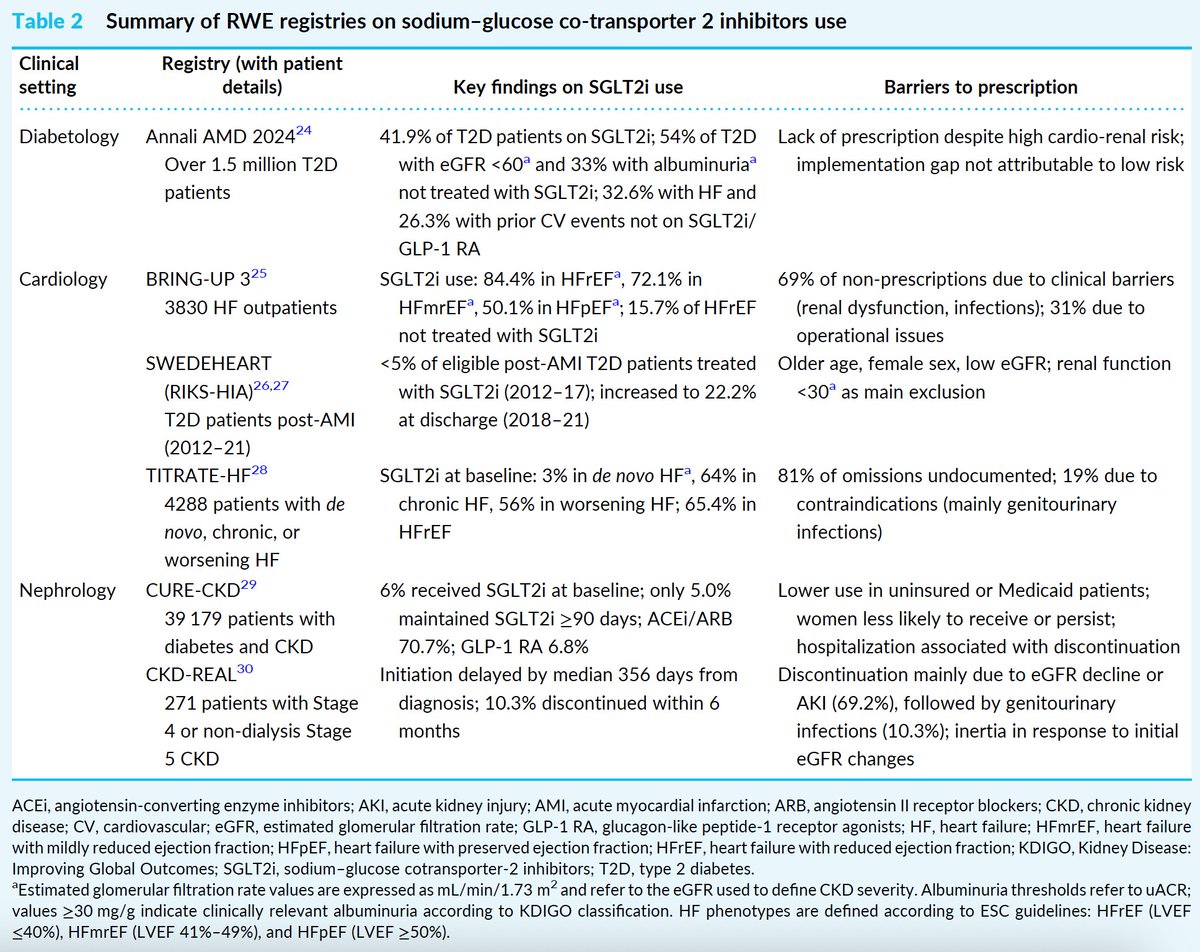
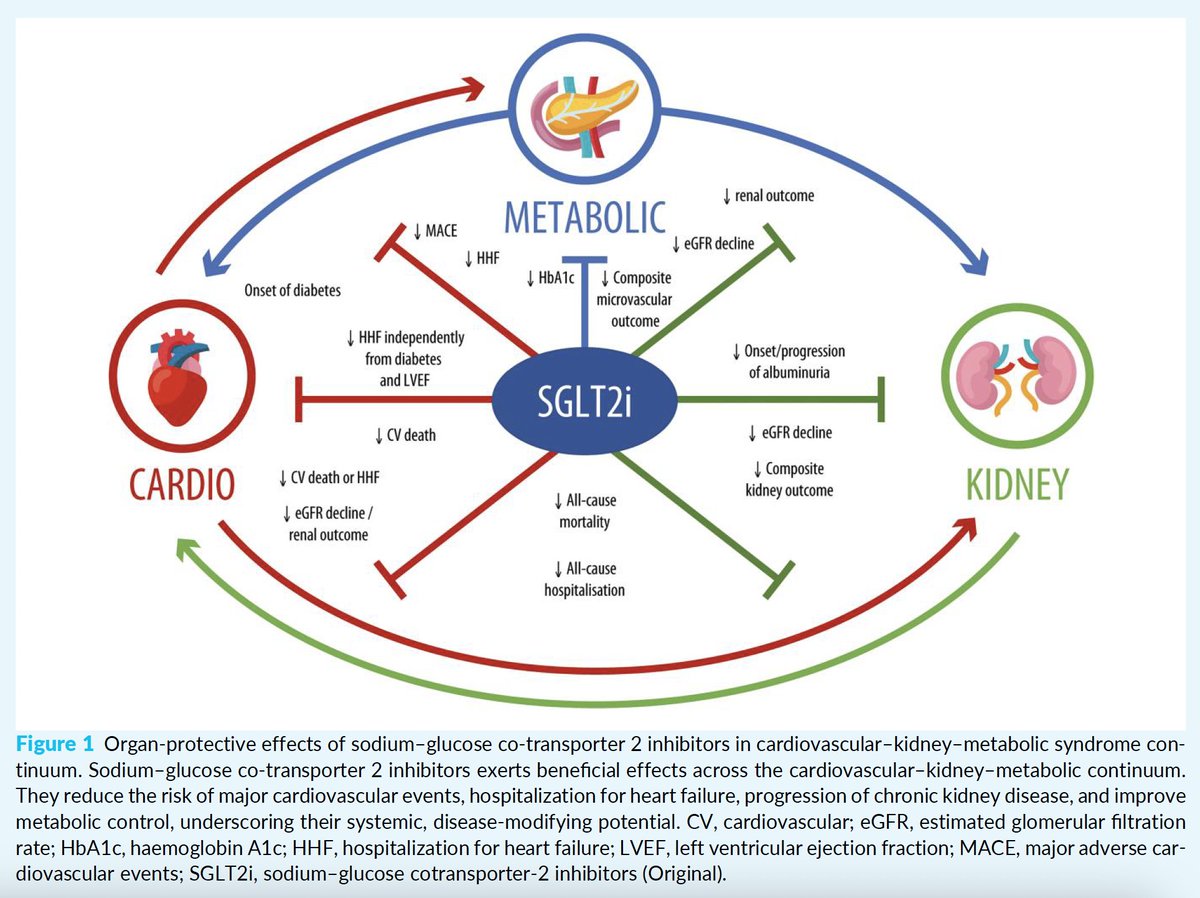
IMPLEMENTACIÓN DEL USO DE ISGLT-2 EN EL SÍNDROME CARDIO-RENO-METABÓLICO
Perspectiva de expertos
🔴Evidencia solida en la ⬇️riesgo de eventos en pacientes con insuficiencia cardíaca, diabetes e insuficiencia renal
🔴Recomendación Clase IA⏩Ins. cardíaca, DBT2+enf CV y/o ins. renal, y en ins. renal crónica
🔴Bajo uso de iSGLT2 en registros de la vida real
🔴Hay barreras en su indicación
🔴Algoritmo⏩screening y uso de iSGLT-2
Vía @ESC_Journals
https://t.co/yUnjldEmhn
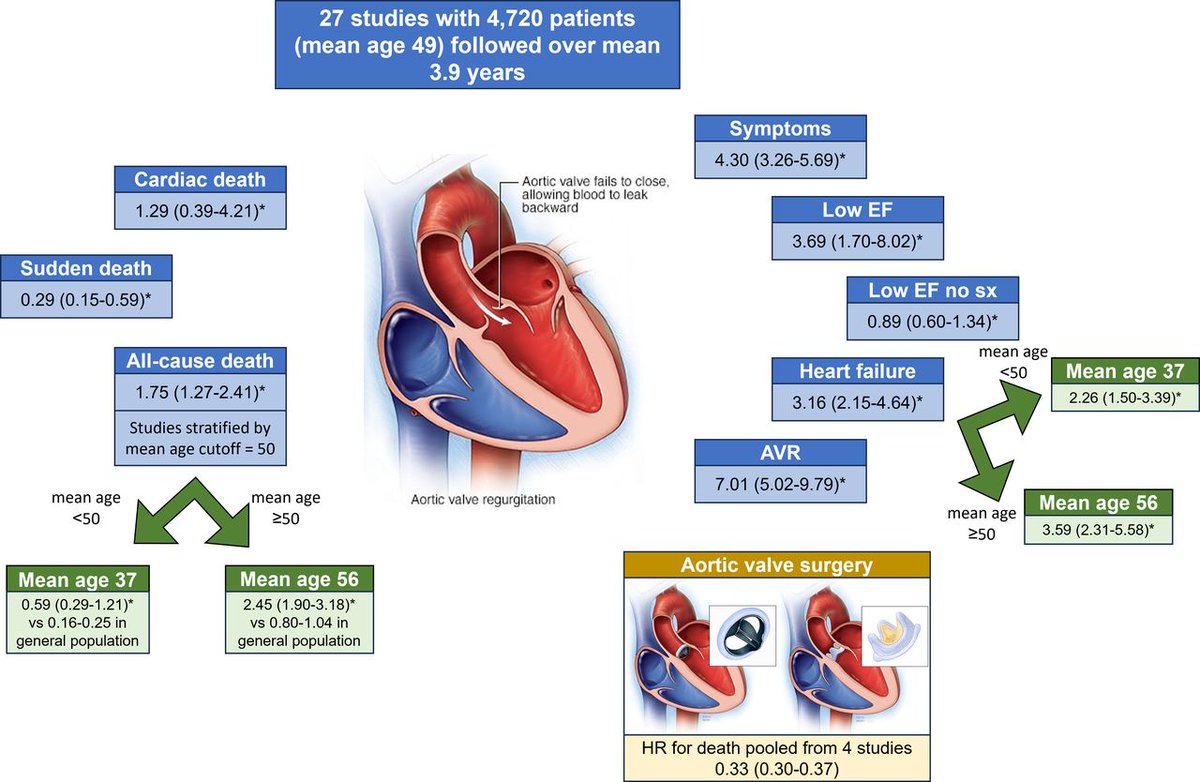
Natural history of asymptomatic moderate or severe aortic regurgitation: a systematic review and meta-analysis
Please read the article and enjoy an in-depth interview between @jhfrudd and the first author, Dr Jwan Naser from The Mayo Clinic in Rochester, Minnesota, USA
Paper: https://t.co/fxWs0bkEiv
Interview: https://t.co/ZGhyrExOAf
https://t.co/itEeUHKifn
📉Understanding myocardial infarction (MI) localization.
This chart correlates specific EKG lead ST-elevations with their corresponding occluded coronary arteries- the LAD, LCx, or RCA and the affected myocardial territories.
#Cardiology#STEMI#EKG
Clasificación SCAI del Shock 🫀💥:
La clasificación de la Society for Cardiovascular Angiography and Interventions (SCAI) es actualmente el sistema más utilizado para estratificar la gravedad del shock cardiogénico. Permite identificar progresión clínica, pronóstico y orientar decisiones terapéuticas. 🧐🔎🫀
🟢SCAI A (“At Risk”): paciente en riesgo de desarrollar shock, pero sin datos de hipoperfusión ni hipotensión. 🔬Lactato: normal (<2 mmol/L).
🟡 SCAI B (“Beginning”): pre-shock o shock incipiente. ❌ Aún sin hipoperfusión franca. 🔬Lactato generalmente normal.
🟠 SCAI C (“Classic”): el shock cardiogénico clásico.🔬Características típicas: lactato >2 mmol/L, índice cardíaco <2.2 L/min/m², PCP >15 mmHg.
🔴 SCAI D (“Deteriorating”): shock en deterioro a pesar del tratamiento inicial. Requiere ⤴️vasopresores, escala soporte mecánico, lactato sigue aumentando, empeora hemodinámicamente. 🚨 Indica fracaso terapéutico inicial.
⚫️ SCAI E (“Extremis”): shock refractario extremo. Colapso circulatorio profundo, hipotensión severa, lactato >8 mmol/L, PCR prolongado o paro cardiaco frecuente. ☠️Mortalidad extremadamente alta.
DOI: 10.1056/NEJMra2312086
https://t.co/LaiLlEVEEE
Alzheimer’s disease cannot be understood only as a problem of amyloid or tau. It is also, at least in part, a disorder of lipid handling, repair and clearance.
ApoE sits at the centre of this story because it is not just a cholesterol transporter; it is one of the brain’s lipid logisticians.
ApoE is usually introduced as a “cholesterol protein”. But in the brain, that description is almost too small.
Although the brain represents only about 2% of body weight, it contains nearly a quarter of all body cholesterol — a striking reminder that neuronal function is built not only on electrical signals, but on lipid architecture.
The brain is a lipid-rich organ, yet it is largely isolated from circulating cholesterol by the blood–brain barrier.
Most cerebral cholesterol is therefore produced, redistributed, remodelled and cleared locally. Neurons need lipids for synapses, membrane repair and plasticity, but they are not the main lipid managers.
That role belongs largely to astrocytes and microglia, which package cholesterol and phospholipids into ApoE-containing particles and deliver them to neurons through receptors such as LDL receptor family members.
This is where ApoE becomes biologically fascinating.
There are three common ApoE isoforms: ApoE2, ApoE3 and ApoE4, encoded by the ε2, ε3 and ε4 alleles. They differ by only two amino acid positions, yet those small structural differences alter lipid binding, receptor interaction, protein stability and inflammatory behaviour.
✳️ ApoE3 is the most common variant and is considered the neutral reference.
✳️ ApoE2 is relatively protective against Alzheimer’s disease, although not absolute.
✳️ ApoE4 is the strongest common genetic risk factor for late-onset Alzheimer’s disease.
But ApoE4 is not a diagnostic sentence. It is a risk modifier, not a deterministic mutation.
A person carrying one ε4 allele has increased risk; carrying two increases it further. Yet many ApoE4 carriers never develop Alzheimer’s, and many patients with Alzheimer’s do not carry ApoE4. That is why ApoE genotyping is better understood as a predictive and stratification marker, not as a standalone diagnostic test.
Mechanistically, ApoE4 appears to disturb several converging processes.
It is less efficient in supporting lipid redistribution and neuronal repair. It favours amyloid-β aggregation and impairs its clearance. It also influences tau pathology, neuroinflammation, mitochondrial stress and blood–brain barrier integrity.
The brain does not simply dump cholesterol directly into the blood.
Excess cholesterol is converted mainly into 24S-hydroxycholesterol, an oxysterol able to cross the blood–brain barrier. Once outside the brain, it reaches the liver, where it can be metabolised and eliminated through bile acid pathways.
So ApoE sits at a crossroads: lipid trafficking, amyloid clearance, immune tone and vascular interface biology. In Alzheimer’s disease, ApoE4 does not “cause” degeneration in a simple linear way; it shifts the brain towards a less resilient lipid–immune state, where damage is harder to clear and repair is less efficient.
This image shows the ischemic cascade
The sequence of events that happen when a coronary artery progressively fails to deliver enough blood to the heart muscle, especially during stress/exercise.
What proportion of cardiovascular events — heart attack, stroke, heart failure — happen in people with at least one of the 4 main risk factors (high blood pressure, high cholesterol, diabetes, smoking)?
Almost all of them (>99%)
🔔 #AlertasFAC N°7 |
El criterio clásico de MCH ignora sexo, edad y contextura corporal. Un estudio con IA en +50.000 pacientes lo demuestra: al indexar el grosor parietal, el predominio masculino en el diagnóstico cae del 89% al 56%.
La alerta acaá 👉 https://t.co/9fs2q46Bb4
Coronary Artery Territories Explained
Each of the major epicardial coronary arteries supplies a specific region of the heart muscle. During an ultrasound (echo) exam, these regions can be mapped to assess myocardial perfusion and wall motion.
To standardize interpretation, the left ventricle (LV) is divided along its long axis into four main walls: anterior, inferior, septal, and lateral. At the basal and midventricular levels, both the septal and lateral walls are further split into anterior and inferior segments.
Across short-axis views, each wall is subdivided into three levels:
🔲 Basal
🔲 Mid
🔲 Apical
The very tip of the LV, beyond the cavity, forms the apical cap. In total, this creates a 17-segment model of the LV, widely used in echocardiography for assessing wall motion and perfusion.
Coronary Supply
Most of the heart's blood supply comes from the left main coronary artery, which branches into:
1️⃣ The Left Anterior Descending (LAD) artery
2️⃣The Left Circumflex (LCx) artery
🔹 The LAD primarily supplies the anterior wall and the anterior two-thirds of the septum via septal branches. It also gives off diagonal branches that supply the anterolateral wall. In some individuals, a long LAD may wrap around the apex to supply part of the inferior wall.
🔹 The LCx runs along the atrioventricular (AV) groove and gives off obtuse marginal branches that supply the inferolateral wall.
🔹 The Right Coronary Artery (RCA) supplies the inferior one-third of the septum, the inferior wall, and also provides blood to the right ventricle.
This structured layout helps echo readers correlate coronary anatomy with the 17 LV segments, essential for diagnosing regional ischemia or infarction.
Read it. Save it. Share it
@TrackYourHeart
¿Sabés evaluar críticamente la información sobre los medicamentos que prescribís?
Academia FAC abre inscripción para el curso Uso racional de medicamentos en Cardiología.
Aval OPS + OMS + UNLP.
Inscribite: https://t.co/GrxFJwPCgz #AcademiaFAC#Cardiología#Residentes
https://t.co/1Oku0AvrLE
📉Understanding myocardial infarction (MI) localization.
This chart correlates specific EKG lead ST-elevations with their corresponding occluded coronary arteries- the LAD, LCx, or RCA and the affected myocardial territories.
#Cardiology#STEMI#EKG