Request:
Top 10 Best Scottish Results (excl. Old Firm)
Based purely on opponents ClubElo rating before match, and taking nothing else into account.
Obviously #10 is actually the best result, but in terms of rating of opponent, Aberdeen's Quarter Final victory 'ranks' higher
🤍 🕊️ A statement on behalf of Kevin Keegan’s family:
“It is with immense sadness that we announce that Kevin Keegan has passed away at the age of 75.
“Kevin had been battling cancer and was surrounded by his wife and daughters in his final moments.
“A double Ballon D’or winner, Kevin was a much loved husband, father and grandfather.
“The family would like to thank Kevin’s incredible medical team for all their support.
“This is a hugely difficult time and they are requesting space and privacy.”
#NUFC
I think that is close to sackable from Tuchel. A coach appointed at great expense for his tactical acumen and "ability to get over the line" needlessly forces England miles from it.
All that money... for that?
The Guardian has now been told by three sources that in March 2024 Nigel Farage told senior Reform insiders that if he were to resume leadership of the party, and run to be an MP, he would need to be compensated for the financial harm of giving up his City career to spend 20 years campaigning and standing for election again.
Insiders and donors were insistent that Farage needed to return and to take Reform into not only a 2024 general election but a 2029 one, too. He argued that would cost him £5m, the sources said.
No mention was made of security costs in the discussions about needing to replace lost earnings, sources said.
My recollection from this weekend was Alanis getting a bit annoyed at the crowd singing too fast🤣
Great times - although a long walk home to Strathaven from Strathy Park!
30 years ago today was the first day of the 1996 T In The Park festival at Strathclyde Country Park.
Amazing line up across the weekend!
Who went? Who wishes they’d gone?
30 years ago today was the first day of the 1996 T In The Park festival at Strathclyde Country Park.
Amazing line up across the weekend!
Who went? Who wishes they’d gone?
There are 18 members of FIFA's disciplinary committee but the unprecedented decision to lift Balogun's automatic ban was taken by just one person - the chairman Mohammad Al Kamali of UAE. No one else was consulted.
Full story: https://t.co/DbqEmcPlOT
A lot have asked what you do about the altitude if your England...Finally, a soccer question in my area of expertise! Here's what I'd do if I were England.
First, the impact at 7k feet is real and significant. You can see it in the soccer data, total distance covered and high speed running drop significantly. 3-9% for the former, 10-15% for later. The higher the altitude, the bigger the effect. The less acclimated, the bigger the effect.
At 7k feet VO2max would drop about 10-13%. We saw this in track performances at the 1968 Olympics. And performance drops about 5-6% depending on race distance. Jim Ryun ran lights out in the 1500, but ended up second to Kenya's Keino because he was better at altitude.
So what do we do?
1. Acclimate...if you had more time this would be the key. You train at altitude, maybe even use altitude tents, etc. But it takes time...
About a 3 week acclimatization cuts the VO2max/performance drop in half as your physiology adapts. One study on track athletes showed it took 19 days to fully acclimate.
England doesn't have that time.
2. Arrival time
The research points to two different approaches: compete as soon as possible (within ~24 hours) after arrival. Why? You compete before poor sleep and plasma-volume loss sets in.
Generally, plasma shifts starts right after arrival but reach the level that impairs endurance capacity by about 24 hours and increase from there before leveling off.
Or you arrive 5+ days before and hope to acclimate. While it varies for each individual, generally 1-3 days after arrival, performance sucks as your body is adapting to the drastic change.
But...fly in/out is also risky as it involves travel, sleep disturbance, etc. close to the match.
So in their situation, it's all about tradeoffs. Altitude is a massive stressor. Everything from blood to respiration is put under stress to adapt. So you've got this dip before adaptation.
You can lessen that dip being acclimated. But who knows what England did.
Honestly, depending on travel, I would have flown straight from the last game to altitude. Buy yourself as close to 5 days as possible. And if possible maybe even somewhere like 5k feet within driving distance. No idea on planning, but if I didn't acclimate. That's what I'd likely do. I'd avoid the coming in 2 days before. Worst tradeoff.
So what do you do now?
1. Hydration and plasma volume.
Altitude drives respiratory water loss and diuresis, and plasma volume decreases acutely. Hydration strategies can blunt this. Folks have even tried manipulating high sodium intake to help sh9ift plasma volume
2. Fuel with carbohydrate.
We generally will burn more carbs at higher altitude. Make sure you are fueled up. AND use fueling strategies mid-game more like an elite endurance athlete. Something like maurten's gels would work well.
3. Bicarb it up.
Altitude is going to harm aerobic abilities. All those sprints and high speed running will build up more fatigue. The new sodicum bicarbonate is a must here. I'd load up if I were England. Plus, altitude tends to lower blood bicarb. Also,, it tends to help more for folks who aren't fully acclimated.
4. Protect sleep.
Disrupted sleep is a major part of it. So do everything you can to help get a good nights sleep. Limits screen time, blue light blockers, all the stuff.
5. Tactics and pacing.
You've got to adjust. Mexico will be adapted. You won't. Learning how to pace better and time your runs will be key. If you try to do the same thing as always, you will be screwed.
6. Beet Root juice.
It can boost endurance performance. Works better on non-elite endurance athletes. Which would honestly be a lot of these soccer guys. And altitude can impair the natural turning of nitrite into nitric oxide, so theoretically beet root juice would help even more at altitude. Though, you'd hoped to test it, or else you could be peeing red stuff that might scare folks, ha.
7. Caffeine.
Not altitude specific, but boosts endurance performance. A well timed dose to peak in the 2nd half would be helpful.
8. Heat adaptation.
Where England may have benefited from playing in the US is that heat addaptation (and its boost in plasma volume) can help with altitude. So even if they aren't altitude adapted, the heat wave in the US may have helped them.
There you go. The science of altitude adaptation for performing. Hopefully, England is prepared! And if not, maybe they see this post and start downing the bicarb, maurten, beet root, and caffeine. Ha
-Steve
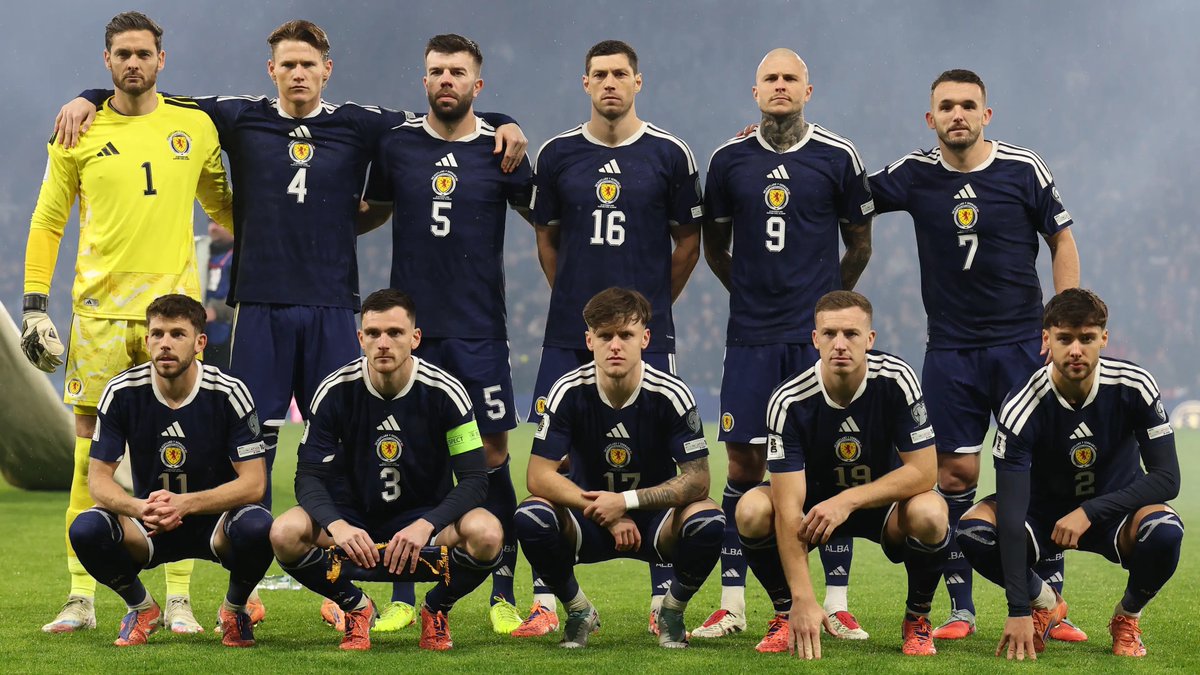
Let's talk about Scotland.
Scotland have been lacking certain player profiles in key positions, which limits their playing style. This eventually led Steve Clarke to constantly experiment with different line-ups in an attempt to fit all of his best players into the team, but it ultimately affected the team's overall dynamics.
Scotland have been usually playing on a 4-2-3-1/4-4-2.
In possession, Scotland are not a team that genuinely want to build from the back. They may initially look to play short, but as soon as they face pressure, they tend to go long. The only player capable of consistently receiving under pressure, organising play and progressing the ball was Billy Gilmour. Unfortunately, he got injured before the World Cup.
The second player who could really help Scotland control possession is McGinn. That's why I never understood the decision to use him on the left. McGinn is a specialist in the right half-space, where he excels at receiving between the lines, turning under pressure and protecting the ball. Maximising those situations was one of Scotland's best ways to progress possession. In the preparation game against Japan, some of Scotland's best attacks came from McGinn receiving vertical passes from the right centre-back. At times, Scotland even allowed him to drop deeper to collect the ball.
Neither McLean nor Ferguson are midfielders who naturally receive under pressure and dictate play. Under Thiago Motta, Ferguson thrived with the freedom to drift wide, attack space in behind and roam from an advanced midfield role, while McLean is a much more defensive profile. Because of that, it didn't make much sense to me that Scotland tried to build from the back against Brazil when they lacked midfielders comfortable under pressure and had also moved McGinn away from his best position.
Using McTominay as a central midfielder wasn't the solution either. He's much more effective as a second striker who wins second balls, attacks the box aggressively and makes excellent runs beyond the defence. For me, the logical solution was to maximise the qualities of your two best players by keeping both McGinn and McTominay in their natural roles. Against Morocco, Scotland looked better because McGinn played on the right, but McTominay was once again used in midfield. Overall, there were very few minutes during the tournament when both players occupied their best positions at the same time.
Another major issue is Scotland's lack of players who can attack space in behind or provide genuine pace in the front line. As a result, they struggle to threaten opponents in transition. The game in which Scotland looked most dangerous on the counter was when Tierney played on the left wing, simply because he offered more speed. I also thought Steve Clarke got the line-up and the team's dynamics right in that game. Using Tierney to track Hakimi made sense, and overall it was Scotland's best performance of the tournament.
In general, though, Scotland struggled to get out of their own half. If you can't dominate possession and you also lack a real transition threat, your attacking options become very limited. It's striking that England have several athletic players who can attack large spaces, (Gordon, Rashford and Bellingham, for example...) while Scotland lack those profiles. Scotland looked most dangerous when they delivered crosses into the box for McTominay or from set-piece situations.
I understand Steve Clarke's idea of using Doak to add energy, pace and 1v1 ability on the wing, but I wouldn't have done it at the expense of McGinn's position. The trade-off was simply too great. For me, Doak was better used as an impact substitute.
Another issue is the lack of a complementary centre-forward alongside McTominay. He would benefit from playing with a striker capable of dropping deep, holding up the ball and linking play, creating space for him to attack beyond the defence. One name that stands out is Robbie Ure, currently playing for Sirius in the Allsvenskan. He offers exactly that profile and provides qualities Scotland currently lack. Although he's still young, he has the potential to become Scotland's future number nine.
Defensively, Scotland also lack the profiles needed to clearly define their identity. If they press aggressively and go man-to-man high up the pitch, their back line is exposed. Several goals over the last few months have come from Scotland pressing high but being punished because they lack athleticism at centre-back. On the other hand, if they defend in a low or mid-block, they don't possess enough pace to consistently threaten on the counter.
As a result, Scotland often rely on isolated moments to push higher up the pitch before looking to create chances through crosses or set pieces. At the moment, their most reliable way of reaching the opposition half is by playing long rather than through controlled possession or dangerous transitions. While this approach can occasionally be effective, it is too chaotic and too limited to consistently compete with stronger opponents.
To improve, Scotland need Billy Gilmour available to enhance their ability in possession. They need a link-up striker who complements McTominay's strengths, a left winger capable of attacking large spaces to improve their transition threat, and more athletic centre-backs if they want to become a more proactive defensive team. Above all, they need to keep their best players in their best positions.
If they address some of these issues, Scotland can become a much more competitive side.
'Sadness', 'pride' and 'hysterical commentary back home'...
Scottish FA chief executive Ian Maxwell on Steve Clarke's departure and Scotland's World Cup.
#BBCFootball
✅ 4 points won is mathematically enough to secure Round of 32 as one of the best third-place nations!
🇧🇦 Bosnia and Herzegovina are the first third-place nation that secured Round of 32 spot!
🇰🇷 South Korea are given 88% chance.
🏴 Scotland are given just 25% chance.
24.9% - After their 3-0 defeat to Brazil yesterday, Opta's prediction model currently gives Scotland a 24.9% chance of reaching the last 32 of the 2026 FIFA World Cup.
Tenterhooks.
8 teams with highest probability to qualify as a third-placed team:
🇧🇦🇰🇷 🇸🇪 🇸🇳 🇬🇭 🇩🇿🇨🇩 🇵🇾
These are not overall probabilities to qualify, but probabilities to end up 3rd AND qualify. Many teams can also qualify as 1st or 2nd in the group.
For overall probabilities to qualify check our previous posts.
👉 Full probabilities and scenarios for all teams available in our 🕹️ FMD Simulator
if you're Scotland and wondering whether you'll advance as a third-place team, you can go to your team page and see how much each outcome in every upcoming game helps or hurts you — a truly incredible tool
@FP_Scotland@fmeetsdata We just need Germany and Ivory Coast both to avoid defeat - not to win. Of the various group scenarios it's one of the more likely ones. Australia beating Paraguay by 2 goals would also be huge for our chances.