@catturd2 My all time favorite movie. Shaw’s USS INDIANAPOLIS monologue was worth the price of admission. Jaws was also the original summer blockbuster.
#OTD in 1942, the Grumman F6F Hellcat flew for the first time. The F6F would become the most successful Navy fighter of WWII, with Hellcat pilots claiming 5,163 victories and a 19:1 kill-to-loss ratio.
84 years ago today, a pilot running out of fuel made a decision that won the Pacific War. Most Americans have never heard his name.
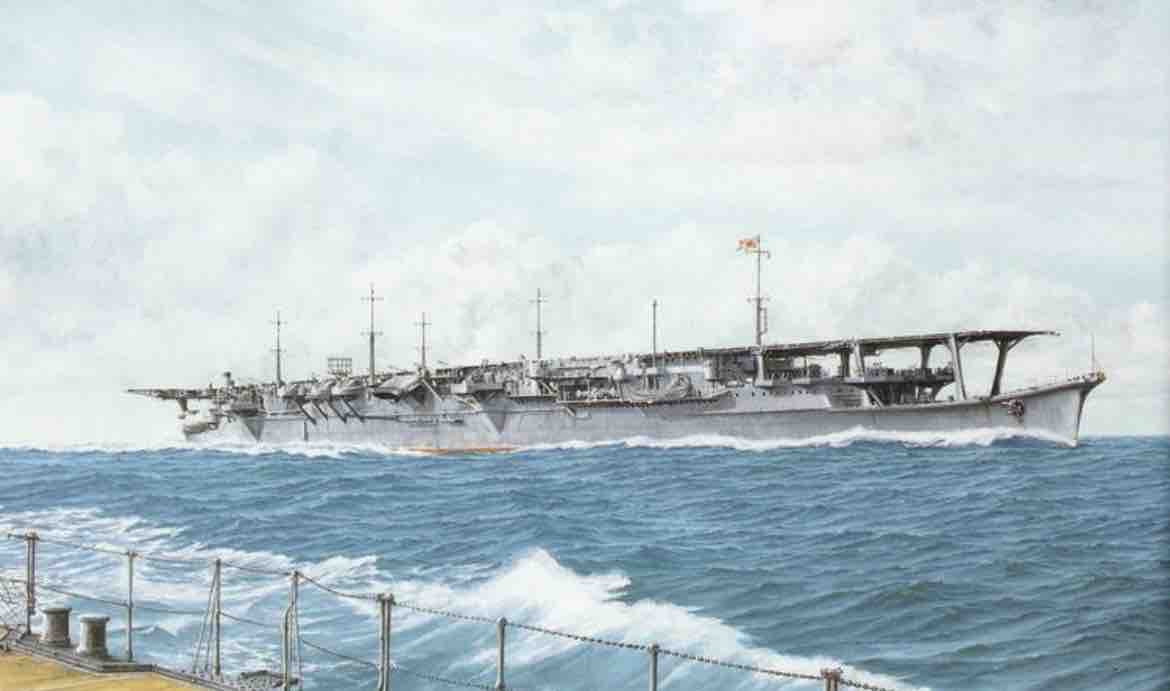
June 4, 1942. Six months after Pearl Harbor, Japan's navy is undefeated. Four of the carriers that burned Pearl, Akagi, Kaga, Soryu, and Hiryu, are steaming toward Midway to finish off the US Pacific Fleet.
At 7:52 AM, Wade McClusky launches from USS Enterprise leading 32 Dauntless dive bombers. Here's the detail nobody mentions: McClusky is a fighter pilot. He'd been given the air group weeks earlier and had barely flown a dive bomber in combat. Now he's leading every SBD the Enterprise has at the most important target in the Pacific.
9:20 AM. He arrives at the intercept point where the Japanese fleet is supposed to be.
Empty ocean. Nothing for miles.
The Japanese had turned. Nobody knew where. And now McClusky owns the worst math problem in naval aviation: his fuel is bleeding away, and every minute he keeps searching, he condemns more of his own pilots to ditch in open water where nobody will find them.
Doctrine is clear. Turn back.
McClusky keeps going. He works a search pattern, squeezing miles out of dying fuel tanks.
9:55 AM. Far below, a single Japanese destroyer is cutting a white scar across the ocean at flank speed. It's the Arashi, racing to rejoin the fleet after depth-charging the American submarine Nautilus. Think about that. A failed sub attack is about to give away the entire Japanese navy.
McClusky reads the wake like an arrow and follows it.
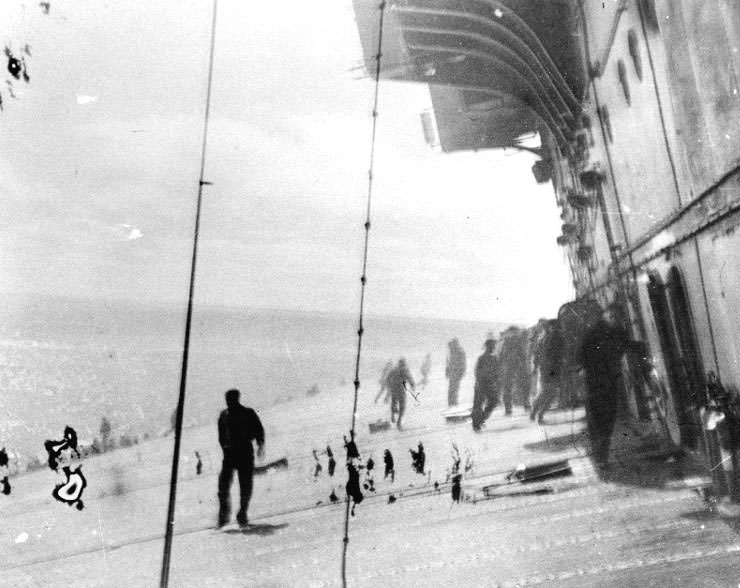
10:02 AM. The horizon fills with the entire Japanese strike force. Four carriers, their decks crammed with planes being refueled and rearmed. Fuel lines snaking everywhere. Bombs stacked in the open.
And here's the miracle: the sky above them is empty. Minutes earlier, American torpedo squadrons had attacked at sea level and been annihilated. Torpedo 8 lost all 15 planes. One survivor, Ensign George Gay, watched what came next while hiding under his seat cushion in the water. Those doomed pilots dragged every Japanese fighter down to the waves. The door upstairs was wide open.
10:22 AM. McClusky pushes over from 14,500 feet. Both squadrons follow him down onto Kaga. It's actually a mistake, doctrine said split the targets, but Lt. Dick Best catches it mid-dive, pulls out with two wingmen, and goes after Akagi alone. His single bomb pierces the flight deck into the packed hangar. It's enough.
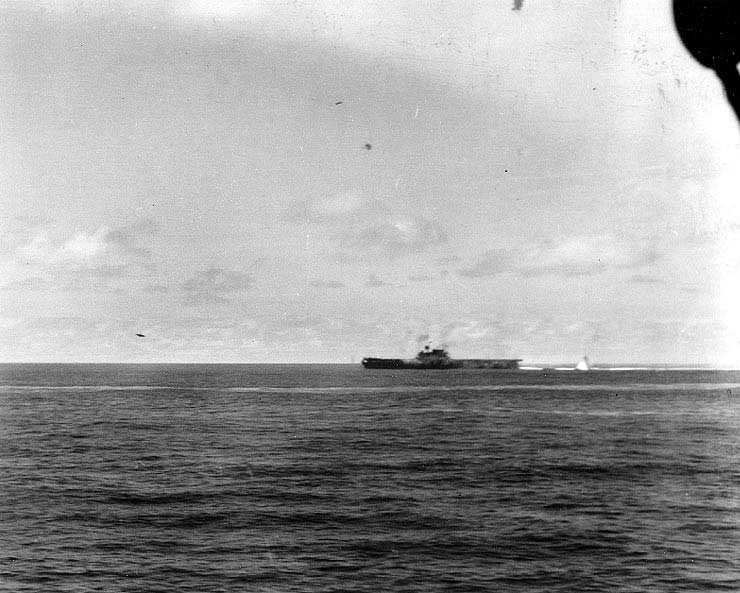
By 10:28, Kaga, Akagi, and Soryu, the third hit simultaneously by Yorktown's bombers, are floating infernos. Six minutes. Three carriers that attacked Pearl Harbor, gone. Hiryu follows them to the bottom that evening.
The cost of McClusky's gamble was real. Many Enterprise bombers never made it home, some shot down, others swallowed by the sea when their tanks ran dry. McClusky himself was jumped by two Zeros on the way out, took five bullets through his shoulder, and still flew his shot-up Dauntless back to the Enterprise.
Admiral Nimitz said McClusky's decision "decided the fate of our carrier task force and our forces at Midway." Japan never won another major battle.
One borrowed pilot. One destroyer's wake. One choice to keep flying when every gauge said go home.
The Battle of Midway began on this day in 1942. The course of World War II was dramatically altered when Douglas SBD Dauntless aircraft destroyed four Japanese carriers.
Six Minutes at Midway – The Moment the Tide Turned in the Pacific War
“In just six minutes, three-quarters of the Japanese carrier force at Midway had been destroyed.”
https://t.co/MqdPrw9QCk
On this day in 1942, U.S. warships ambush a Japanese task force at Midway. Japan loses four carriers and nearly 250 warplanes in the ensuing battle. It's a turning point in the Pacific War.
84 years ago today, the most important Japanese admiral in the Pacific sailed into a fog bank he could not see out of, carrying secret orders he believed were known to no one on earth.
The Americans had read them three weeks ago.
In May 1942, Admiral Isoroku Yamamoto had a plan to end the war in the Pacific in 30 days. He would draw the surviving US Navy carriers into a trap near a tiny atoll called Midway, 1,300 miles northwest of Hawaii, and destroy them with the largest naval force ever assembled. 200 ships. 700 aircraft. 100,000 men. Four heavy carriers under Vice Admiral Chuichi Nagumo would lead the strike. The American fleet, which had only three serviceable carriers left after the Coral Sea, would be annihilated. Then Hawaii would fall. Then the US would sue for peace.
The plan was perfect.
It was also compromised.
In a basement in Pearl Harbor, a small team of cryptanalysts under Commander Joseph Rochefort had broken the Japanese naval cipher JN-25 in the spring of 1942. They were reading roughly 20 percent of every Japanese signal in real time, and educated guesswork filled in the rest. By mid-May they knew the target was somewhere referred to only as "AF." But where was AF?
Rochefort had a hunch. He sent a signal in the clear from Midway saying their water distillation plant had broken down. Two days later, Japanese intercepts mentioned that "AF" was running short of fresh water. Bingo.
By May 27 Admiral Chester Nimitz knew the date of the Japanese attack, the composition of the Japanese force, the route Nagumo would take, and roughly the time he would launch his first strike. He pulled every American carrier to a point northeast of Midway called "Point Luck" and waited. The trap had been set for him. He set a trap inside the trap.
On June 2, Nagumo's four carriers approached Midway through the worst fog any of them had ever seen. Visibility dropped below 600 yards. His ships could barely see each other. He held radio silence to protect his approach. He believed he had complete surprise. He believed the American carriers were thousands of miles away in the South Pacific. He believed he was about to win the war.
Yamamoto, on the battleship Yamato 600 miles behind him, had intelligence that the American carriers might in fact be at sea. He chose not to break radio silence to warn Nagumo. He assumed Nagumo had the same intelligence. Nagumo did not.
At 4:30 AM on June 4, Nagumo launched 108 aircraft against Midway from a position the Americans had been waiting for him to reach.
By sunset, three of his four carriers were burning hulks. The fourth would sink the next morning. Japan lost 3,057 men, 248 aircraft, and the four best carriers of the Pacific War in a single day. Japanese naval aviation never recovered. The war was decided in six minutes between 10:22 and 10:28 AM on June 4.
The whole disaster traced back to one decision on June 2: a Japanese admiral sailing into fog, trusting that nobody knew where he was going.