🕺When you conference with fun loving live wires, who set the stage on fire! @shivanim675 et al. Fun to sprinkle some Indian madness on the dance floor, especially the handkerchief dance of Indian weddings. @FHillemann, next time, we will do complete seq. for sure. Thnx @asab_org
🚨The science of #Animal#Domestication often overlooks the intra-specific (social) transitions necessary for the long-term transformations of wild, ancestral populations into modern-day commensals such as dogs, kites, monkeys, cats, pigs, and cattle. At https://t.co/CIiqI1OWMA & @delhikites, we explore diverse animal responses to urban environments, an unintended experiment on animal social interactions with humans across various ecological settings. We invite you to collaborate with us in unraveling these eco-evolutionary puzzles to address the emerging conflicts between humans and urban commensals, which impact public health through physical injuries and zoonotic diseases. Conversely, these non-human residents also serve as companion animals, sparking debates on #coexistence conundrums. #THINKPAWS is an @India_Alliance project led by @_NishantK, in association with @wii_india, @weareAUD & @OxfordBiology/@school_of_arch et al.
What a whirlwind 🌪️ There were over 150 talks at #ECBB2024 this year! What were some of your favourites and/or something new you learned? ⬇️
I mean, half of us are stuck in airports, hotels and trains, why not reminisce? 😜
Have you ever wondered if the way we #connect with #nature in cities resembles how ecosystems function? Science currently has a gap in understanding how our actions ripple outwards, impacting everything from individuals to entire species. This is where our exciting new https://t.co/CIiqI1PuC8 research comes in! With @delhikites, we're delving into the fascinating parallels between human-nature connections (both ecological and cultural) and the way ecological systems organize themselves. Given our dependence on healthy ecosystems, it's crucial to seize the opportunity presented by the ongoing urbanization revolution in the tropics (the second major shift in human-nonhuman relationships, following the invention of agriculture). By understanding these connections, we can revolutionize how we interact with nature in our cities. @OxfordBiology@wii_india@weareAUD@DBTIndia@wellcometrust@India_Alliance@OxIndiaCentre@india_oxford@oxmartinschool
Doing #science if often isolating; on many fronts. But conferences @ecbb2024 help you feel at home, offering camaraderie in success, failures, dejections, hopelessness. There're not individual attributes, but the common labour cost on creating cool stories. Pics wid coolest peeps
🚨Come to #BOU2025 where @_nishantk will appreciate “Avian anthropologists” in bustling cities! ️🪶 Cities in the Global South are vibrant cultural crossroads for humans and avian immigrants. They're teeming with animal observers adapting to human-altered landscapes. We often underestimate how well these creatures have been "studying" us, especially those thriving in our urban environments.
Take @_nishantk's research journey, which began in 2009 @TTDSVCDU! His initial question: what happened to avian scavengers other than vultures? This sparked an MSc project at @wii_india, leading him to explore the fascinating world of Delhi's kites. @delhikites’ research expanded to investigate habitat choices, human-wildlife interactions, movement, and population ecology of kites, first presented at #BOU2016. This work at @OxfordBiology highlighted the importance of viewing cities as social-ecological systems, where humans and animals co-exist in complex ways. This exploration sparked a passion for cognitive ecology, inspired by @LucyMAplin. It has been a full circle moment, revealing the distinct yet interconnected cognitive processes that shape human-animal relationships in thousands of tropical cities.
From dogs and macaques to cows and honeyguides, and even top predators, the list of animals reflected in cultures across the world is vast. We at @ThinkpawsOrg are captivated by these nuances, not just in Delhi but across the globe!
Join us in extending #respect and understanding to these non-human denizens. As our mentor, @MarianDawkins, reminds us, the first step towards respecting is acknowledging how little we know about our fellow creatures. Let's collaborate and unravel the stories of human-animal coexistence in bustling cities! #cognitiveecology #THINKPAWS #urbanization #Immigrants
𝗠𝗼𝗿𝗲 𝘁𝗵𝗮𝗻 𝟴𝟬𝟬 species are directly threatened due to unmitigated urbanization!
𝗜𝗻 𝟮𝟬𝟮𝟯, 𝗼𝘃𝗲𝗿 𝗵𝗮𝗹𝗳 𝗼𝗳 𝘁𝗵𝗲 𝘄𝗼𝗿𝗹𝗱'𝘀 𝗽𝗼𝗽𝘂𝗹𝗮𝘁𝗶𝗼𝗻 𝘄𝗮𝘀 𝗹𝗶𝘃𝗶𝗻𝗴 𝗶𝗻 𝘂𝗿𝗯𝗮𝗻 𝗮𝗿𝗲𝗮𝘀, 𝘄𝗶𝘁𝗵 𝗮 𝗴𝗹𝗼𝗯𝗮𝗹 𝘂𝗿𝗯𝗮𝗻𝗶𝘇𝗮𝘁𝗶𝗼𝗻 𝗿𝗮𝘁𝗲 𝗼𝗳 𝟱𝟳 𝗽𝗲𝗿𝗰𝗲𝗻𝘁.
Now this might also make us wonder, that 👇🏼
𝗛𝗼𝘄 𝗶𝘀 𝘂𝗿𝗯𝗮𝗻𝗶𝘀𝗮𝘁𝗶𝗼𝗻 𝗶𝗻 𝘁𝗿𝗼𝗽𝗶𝗰𝗮𝗹 𝗰𝗶𝘁𝗶𝗲𝘀 𝗰𝗵𝗮𝗻𝗴𝗶𝗻𝗴 𝗼𝘂𝗿 𝗿𝗲𝗹𝗮𝘁𝗶𝗼𝗻𝘀𝗵𝗶𝗽 𝘄𝗶𝘁𝗵 𝗱𝗼𝗴𝘀?
The impact of urbanization on our relationship with dogs in tropical cities is profound and often overlooked.
As new infrastructure and gentrification change our landscapes and communities, we must recognize the potential disruption to free-roaming dogs' food sources and behavior.
Neglecting the well-being of these animals in current development policies may lead to public health and animal welfare issues.
Understanding the effects of urbanization on the human-dog relationship can guide us in developing strategies for fostering harmonious coexistence in our shared urban ecosystems
But this doesn’t end here!
Further research is crucial to uncover the intricacies of how environmental and regional infrastructure factors influence the human-dog relationship in tropical cities. This understanding will pave the way for more effective strategies in shaping a future where humans and dogs can coexist harmoniously within our shared urban environments.
Let's discuss in the comments! What are your thoughts on human-dog relationships in developing cities?
Visit our website https://t.co/Kc0Y9PHZ6j and read our report for more detail https://t.co/ITNZ3MPEZW
#urbansystems #cities #wastemanagement #people #animals #waste #Science #Coexistence #OneHealth #InternetOfHumanimals #Sustainability
@UniofOxford@OxfordBiology@wii_india@weareAUD@india_oxford@OxIndiaCentre
More than 55% of the world's population is lives in <1% of Earth, constituting cities.
Wait! There's more to it!
60% of the world’s urban population (& a third of the global population) occupies highly dense metropolitans!
𝐇𝐞𝐫𝐞'𝐬 𝐰𝐡𝐚𝐭 𝐯𝐚𝐧𝐢𝐬𝐡𝐞𝐬 𝐢𝐧 𝐩𝐥𝐚𝐢𝐧 𝐬𝐢𝐠𝐡𝐭!
The non-human life is cities is hardly talked about.
The human density presence overloads these urban spaces with waste way more than the rest of the planet, more so in densely populated developing economies.
The talks on waste today is about all recycling, circular economy and innovations - all great ideas. But that's tip of the iceberg in an ecological frame of reference!
Waste is shaping and modulating behaviour of opportunistic animals on smaller urban scales to the planetary scale and WE AREN'T TALKING ABOUT IT!
Traditional waste management doesn't consider the ecological impact. This can lead to unintended consequences for these creatures.
As responsible urban stewards, how can we create a more #sustainable future for all city dwellers, human and animals?
#Research is needed to understand the link between waste management practices, animal demographics, and their behaviour. This knowledge can help us create sustainable cities that are livable for all residents, human and non-human alike.
#THINKPAWS is committed to researching these complex interactions and pioneering the knowledge and solutions that benefit both humans and wildlife.
Support #ScienceofCoexistence. Join hands with us!
#urbansystems #cities #wastemanagement #people #animals #waste #Science #Coexistence #OneHealth #InternetOfHumanials #Sustainability #urbansustainabilityseries
@UniofOxford@OxfordBiology@wii_india@weareAUD@OxIndiaCentre@india_oxford@Stanford
Super cool, @ProfExistence! In Delhi, we are asking these Qs, pertaining to human induced alteration to limiting factors (enormous supply of food subsidies & virtual absence of predators). I guess the last time we had such an impact was through agriculture-induced human-animal socialites (technically called Domestication). Perhaps the second such revolution is being experienced in rapidly urbanising tropics where a handful of species are co-opting in tandem with how they feature in human ecology. For instance, "time" (circadian rhythms) limits as to how long would migratory kite populations from the Central Asian landscapes continue to take advantage of landfills (or, are they really at advantage?). These Qs take new shape when male street dogs would need to negotiate b/w currently "contrasting urban choice" of settling for food given in the street (i.e. human centric behavioural repertoires) vs siring as many females as possible, supported by food enormity. These dilemmas and inter vs intra-sex dynamics would help settle canine conundrums:- would being a dog for dogs vs a dog for humans continue to overlap? Ask woofler plz 😅 & Stay tuned with https://t.co/Kc0Y9PHZ6j for updates @Greger_Larson @OxfordBiology@DBTIndia@India_Alliance@vrtiwari1@wii_india@weareAUD@OxIndiaCentre@MCD_Delhi
Hey friends/Tweepls coming to @ecbb2024, plz connect with me in case you know of affordable places in #Zurich@UZH_en. In case there are backpackers who would like to huddle together at a multi-room flat/Air bnb one could book together for 16 - 20th July 2024. Plz RT & link me!
The luck part is analogical to finding a co-passenger in flight/a long distance train to put life in perspective (the journey gives experience, with fair quanta of randomness/patterns). After all, we all are particle aggregates. But living or experiencing life is a sweet effort by these particle arrays constituting the living, enabling highly varying & profound experiences, depending on how, what and when we gather as resources. Humans (and many other animals) are a class apart that we don't only pick the tangible; we can pick "experiences" of varying order, and can transfer them as well: story telling/culturing. Your journey to Zimbabwe to teach; encounter with the malarial parasite is one such co-passenger occurrence. We are glad you are with us to recount not only that but a lot more in the form of your books and science, etc. The only thing inevitable is such "passenger co-occurrences", hinting that people should mind when/why/how they tinker it at infinitesimally small scales from the point of "Universal co-occurrences". As humans (even better as trained professionals) we are so fortunate to observe, fiddle and be responsible about such occurrences. Not every human has this opportunity, so lets entertain those that 'hold the fort' with our small efforts. #coexistence
Such simplistic comparisons are cute, but we fail to capture what Delhi vs Barcelona has to hold in their bellies. Physical transformations / Infrastructure facets of nature that we call Urban Ecosystems are responses to a much wider, landscape level phenomenon. Ironically, these landscape level phenomenon are driven by another aspect of Delhi @the_conqueror56 posted: the Lutyens! We need city facets on the right to imagine the "orderliness" on the left (all 2nd/3rd world cities have it). Sometimes, that is shifted to faraway sites in time and space; what we call 'Colonies'. Hence, lets embrace our own urban, and bring science and culture for the Future of Tropical Cities. Barcelona, and other Western cities will die 1000 deaths if they have to pack 30 million people, countless animals, and enormous waste... and continue to move on. The only worry is the cost paid by subalterns: people, animals and other non-humans. Join us to Create #ScienceofTropicalCities on an #UrbanPlanet. (Check: https://t.co/Kc0Y9PHrgL)
Do our neighbours in concrete jungles pose a health risk, or are they a hidden benefit?
India's vibrant cities are teeming with life, not just human. Stray dogs, monkeys, and a kaleidoscope of birds share our concrete jungles.
Residents share their space with a surprising number of companions – dogs, and other wildlife.
But how much thought do we give to the health implications of sharing our urban spaces with these creatures?
While these animals can offer a sense of connection to nature and even provide pest control, their presence can also raise concerns about disease transmission and waste management and public health.
What can we do to foster a healthy coexistence between humans and urban wildlife in our cities?
Can we find a balance between cultural practices of feeding urban animals and the potential health risks they pose?
Read our latest report to have a deeper understanding on the Urban Human-Animal Coexistence and more.
Link to whitepaper: https://t.co/ITNZ3MP7ao
Link to Website: https://t.co/Kc0Y9PHrgL
Share your thoughts on the delicate dance between human-animal relationships and public health in our ever-growing cities!
🐾
#Thinkpaws #ScienceOfCoexistence #Sustainability #Science #Research #InternetOfHumanimals #OneHealth #Urban #Animals #Wildlife #Coexistence #UrbanSustainabilitySeries #HumanAnimalCoexistence
@OxfordBiology@UniofOxford@weareAUD@wii_india@OxIndiaCentre@india_oxford
Glimpses of the talk by our Co-Founder and Chief Scientist, Dr. Nishant Kumar, at Indian Wildlife Ecology Conference, 2024, held at The National Centre for Biological Sciences (NCBS), Bangalore. #iwec24@_NishantK
Bird-aircraft coexistence in aerospace by co-opting cultural practices! It was fun to share the progress of @delhikites since 2011, from the same stage at @NCBS_Bangalore, where I discussed my 'overzealous' UG project on vulture decline. Time flies with @delhikites@ThinkpawsOrg
Do our furry (and feathered) friends have a bigger pawprint than we think?
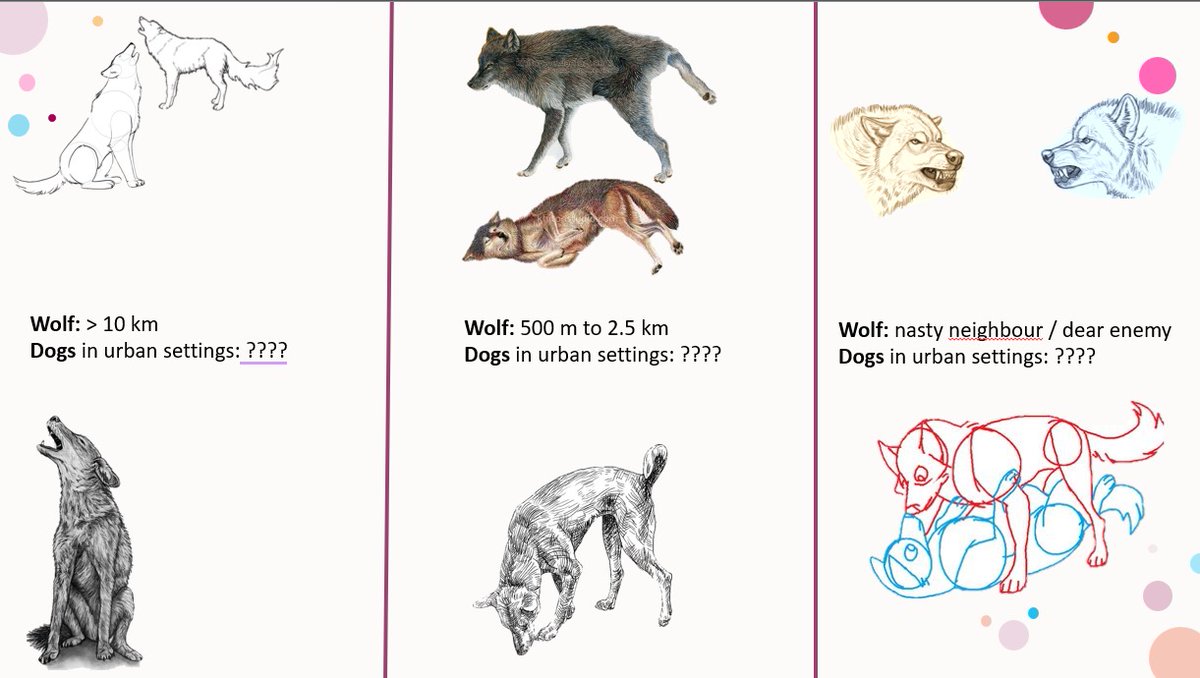
Wolves in Streets- Part 3.
Check out our website https://t.co/MLBXSTSBT2 and read our whitepaper for more information
https://t.co/k3zccOFvy7
Stay tuned for other parts of our urban sustainability series.
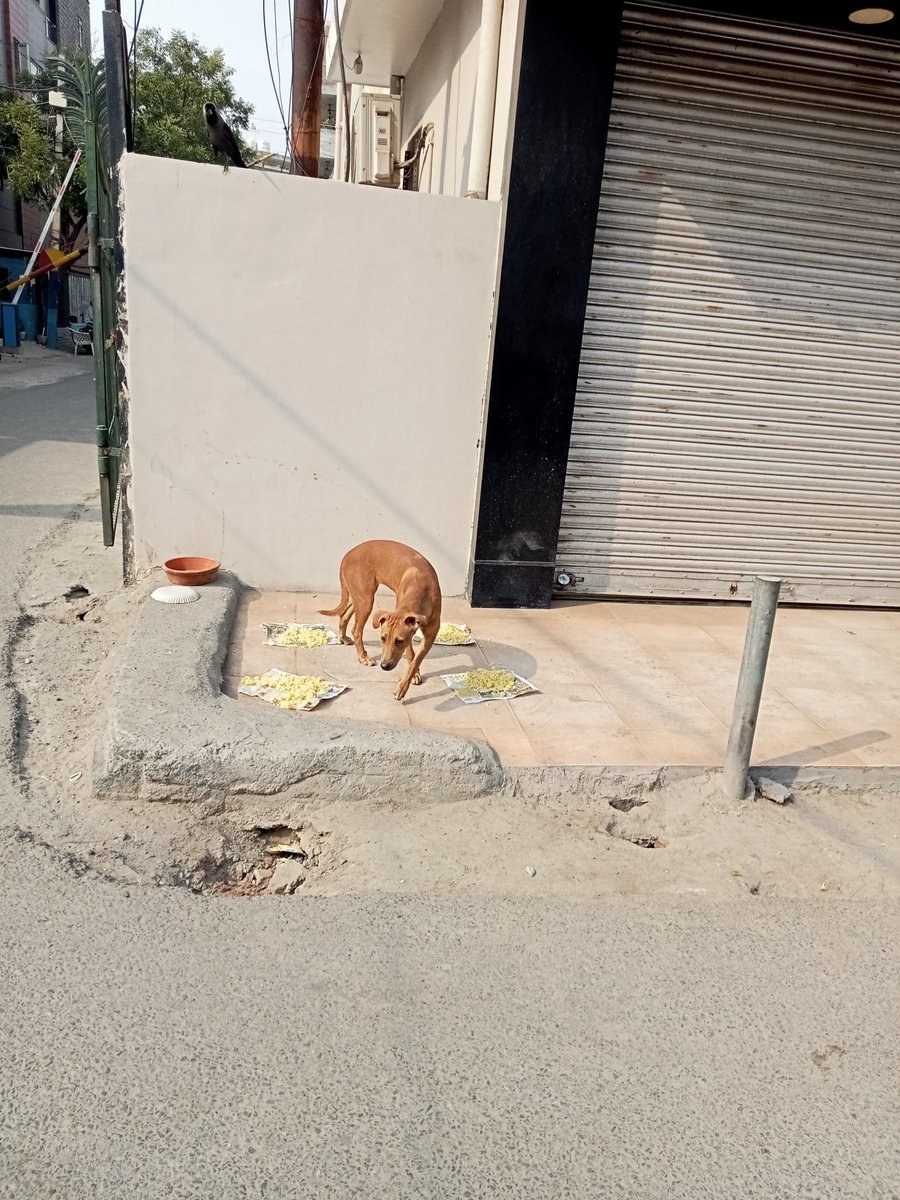
It is high time we evaluated the consequences of these seemingly benign and harmless act of patronising behaviour, where multiple species are fed across the world. Stay tuned: https://t.co/clMyWBtv7k
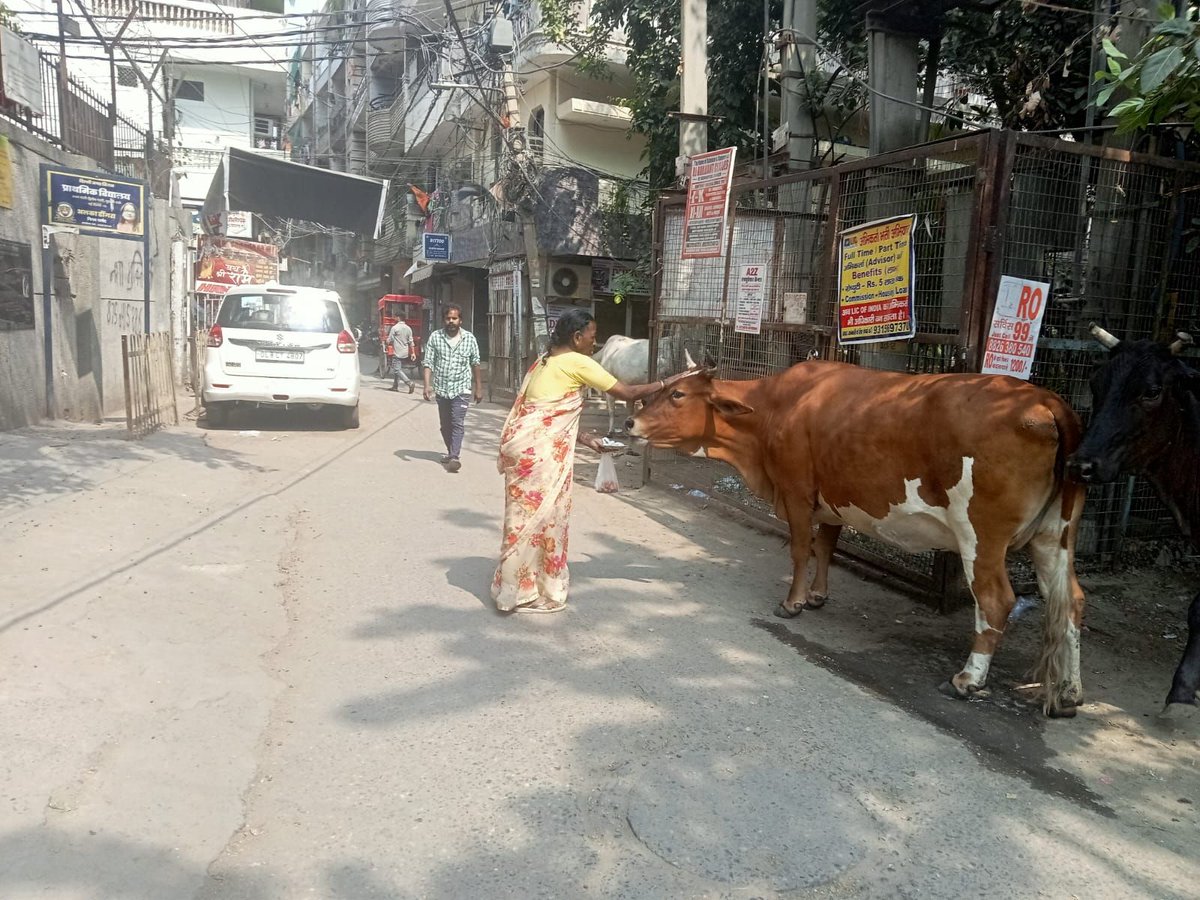
#Cities & #Cows in #India: How do we find a Common Ground❓
India's reverence for cows creates a unique urban challenge. At #PAWS Web, we're exploring how scientific research can bridge the gap.
Stay tuned!