Do you feel it?
In late 19th-century Paris, while concert halls demanded massive orchestral sound and technical speed, Erik Satie took a radically different path. They made fun of him. They tried to ignore him.
Working as a pianist in the cabarets of Montmartre, he composed Gymnopédie No. 1 in 1888—a work that stripped Western classical music to its barest essentials.
The piece operates on a deliberate paradox. Though peaceful on the surface, Satie marked it lento e doloroso (slowly and painfully).
That underlying melancholy prevents the music from becoming purely decorative, giving every suspended chord weight and quiet gravity.
Watching it played, you see the thought and weight put into each simple note as it pulls on something inside you.
To many it is not to make you feel good but to feel. And in this is something shared. Perhaps a rainy-day memory.
In this 1966 broadcast, French pianist Jacques Février demonstrates the strict discipline Satie’s music requires. Chosen by Maurice Ravel and Francis Poulenc to premiere their works, he understood that performing Satie demands utter emotional restraint, letting the space between the notes carry the composition’s weight.
By removing resolving harmonies and traditional momentum, Satie laid the groundwork for modern minimalism and ambient music nearly a century before either genre had a name.
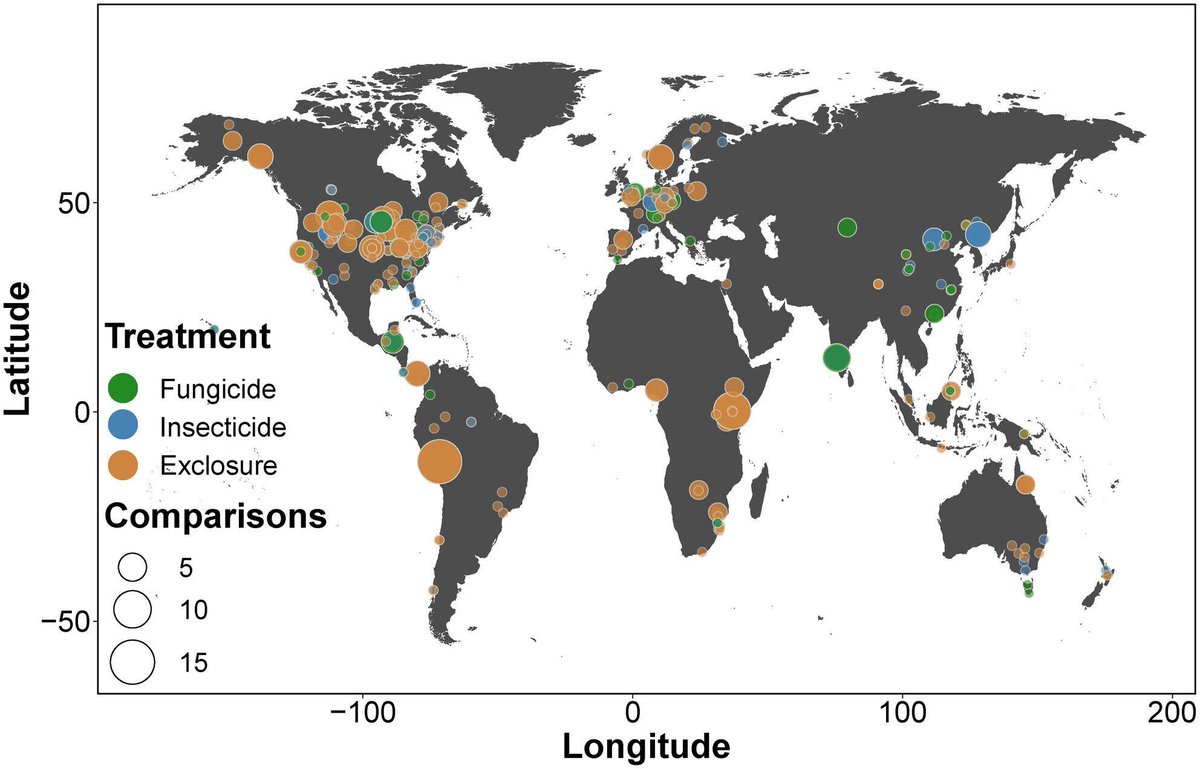
🔎 We conducted a global meta-analysis of 3,135 data comparisons from 296 papers to quantify the effects of removing plant consumers on plant biomass, diversity, reproduction, and survival.🌵
📖 Read the full study here: https://t.co/YEj2qmxwiY
We are moving to new definitions of success for organisations & systems, says @indy_johar. It is less about prescribed “end-states” (targets & standards to be achieved) & more about creating the conditions for change - diverse people working well together, having a sense of agency, adapting quickly & creating shared futures.
He sets out key leadership shifts including:
1. Focusing on relationships, not just plans: Success comes from strong trust & communication between people & teams, making it easier to handle challenges & seize opportunities.
2. Treating goals as guides, not set-in-stone: Use goals to give direction but be ready to adjust them as circumstances change & new opportunities arise.
3. Strengthening the “agentic capacity” of diverse people: Enable people to sense, interpret, act & learn together across the system so coherence is built from the ground up—not imposed from above.
4. Pushing authority and accountability closer to where challenges & opportunities happen: So decisions can be made quickly & locally.
5. Measuring improvement in adaptability & collaboration: not just results: A healthy system is one that can handle diversity, make sense of new information & adjust quickly — not just one that delivers on a fixed plan.
6. Investing in trust & learning systems: Make time & space for teams to learn from what’s working & what’s not & share that knowledge openly.
7. Operating across different time horizons simultaneously: (i) current urgencies & institutional realities (e.g. targets, reporting cycles). (ii) transitional infrastructures for reflection & adaptation; (iii) long-term investments in trust, feedback & sensing new directions.
https://t.co/n4ym52oBdu. Via @karas01
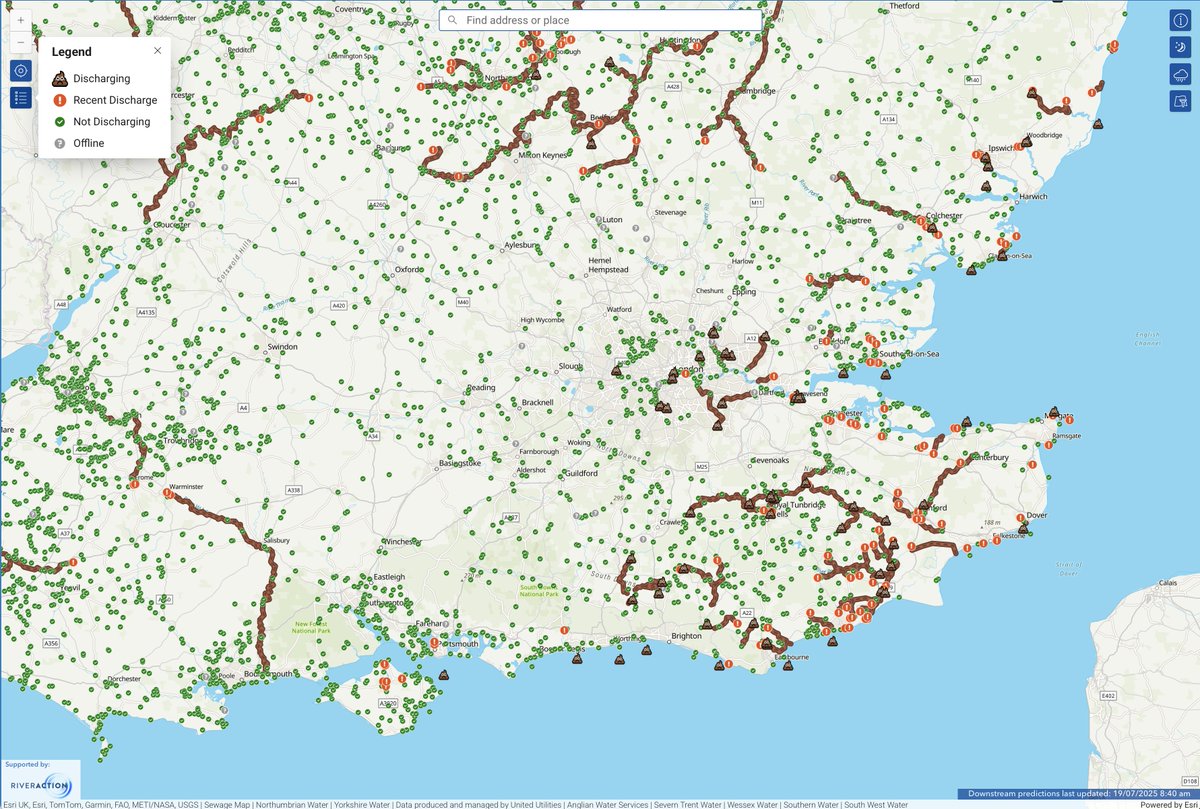
I'm going to try a little experiment. It's just gone 9:00am, London and parts of southern England are under an "Amber" weather warning, let's how long it takes for the sewage dumping to start and how it progresses over the next few hours.
Oh look, it's only been raining for a few hours and the dumping's started already. Well done to @SouthernWater, @thameswater, @AnglianWater.