@zachtratar@NotionHQ Ability to connect with other databases automatically. For example, transcript gets added to a client page and also automatically adds tasks to a main task database. And ability to identify different speakers quickly on the transcript. Suggest next actions from the conversation
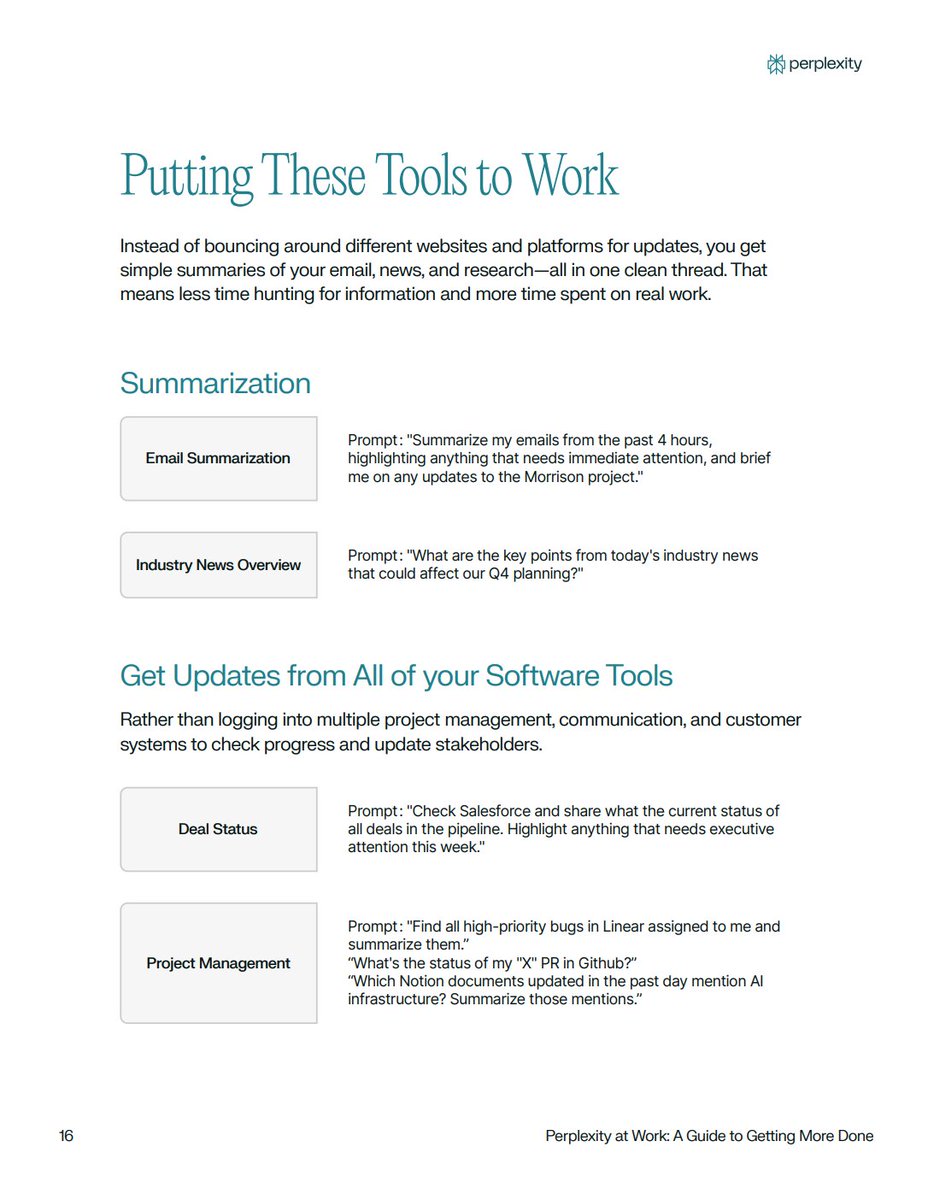
Perplexity just quietly dropped a 42-page internal guide on how they actually use AI at work.
What I found most useful:
→ How they automate the small stuff. Email, meeting prep, research (all done by AI)
→ Using AI to amplify your curiosity, not replace it.
→ Their prompting playbook is simple, practical, and genuinely good.
Comment “AI” and I’ll send it to you for free.
⚖️ Why «Used GPT-5» and OpenAI’s safety router violate user rights
OpenAI admitted: in ChatGPT your model choice can be ignored. The system «routes» requests to GPT-5 if it decides the topic is «sensitive». This means even a paying subscriber who explicitly chose one model may get a response from another - with no option to disable.
Legal breakdown:
1. Transparency & misleading practices
In the EU this falls under UCPD (Directive 2005/29/EC): if a core feature of a service is hidden or distorted, that’s a misleading omission. Model choice is a core feature.
2. Consumer rights (CRD)
Under the Consumer Rights Directive (2011/83/EU) sellers must clearly disclose the main characteristics of digital services before purchase. If users pay for access to a specific model but get routed elsewhere, that violates Art. 6 CRD.
3. Unfair contract terms (UCTD)
Unilateral substitution of terms without valid reason = unfair contract. Even if buried in fine print, such clauses are vulnerable in court.
4. GDPR
To decide a user is «in distress», the system must process personal data (including special categories). That requires transparency and a proper legal basis (Art. 9 GDPR). A generic «I accept the policy» click is not enough.
5. DSA & AI Act
The Digital Services Act and AI Act (effective Aug 2025) require disclosure of the main criteria behind algorithms. OpenAI only cites vague «sensitive topics». No criteria, no thresholds, no metrics, no user control. This fails the standard.
6. US: FTC & CPRA
The FTC bans deceptive practices: hiding material conditions. In California, the CPRA classifies this profiling as automated decision-making technology (ADMT) — with rights to an explanation of the logic and to opt out.
Today, «Used GPT-5» = a black box that:
- swaps out paid functionality
- processes intimate data without clear consent
- denies users control
This is not just a UX flaw. It runs counter to the fundamental principles of consumer protection and data rights.
A 3-4 day workweek is coming. Bill Gates, Jensen Huang, and now Zoom CEO Eric Yuan agree. AI will profoundly shift work productivity and the time we spend at work.
@OpenAI This has really impacted interactions with the model and ruined the way we were able to communicate with it. GPT used to be an amazing way for highly logical people to explore emotions in a safe space. Now the responses are a block to the interaction.
@Tuxsoia@OpenAI who are you to make that decision for them? People have the right to choose who and how they want to communicate with. Limiting their freedom doesn’t solve the problem. If people rely on AI because they don’t have the friends and support system all you accomplished is isolation.
Are you working on something that can change the world? The answer for 99.99999% percent of people is no.
We should stop just training people to fit into the world, and instead start training them to change it.
@mark_k Depends on the application. I would just take the AI doctor as truth (but I don’t do a human doctor either). I think AI medical tools can help patients be more informed so you can have better discussions with a human doctor about possible treatments and diagnosis.