Is VO2max really the key to longevity and peak performance?
You've heard the hype. Let's get at the truth.
It's not that it doesn't matter. It's that it's massively overemphasized. Everyone tells you it's the key...and well, it isn't.
Here's why:
https://t.co/fvOS8weRRb
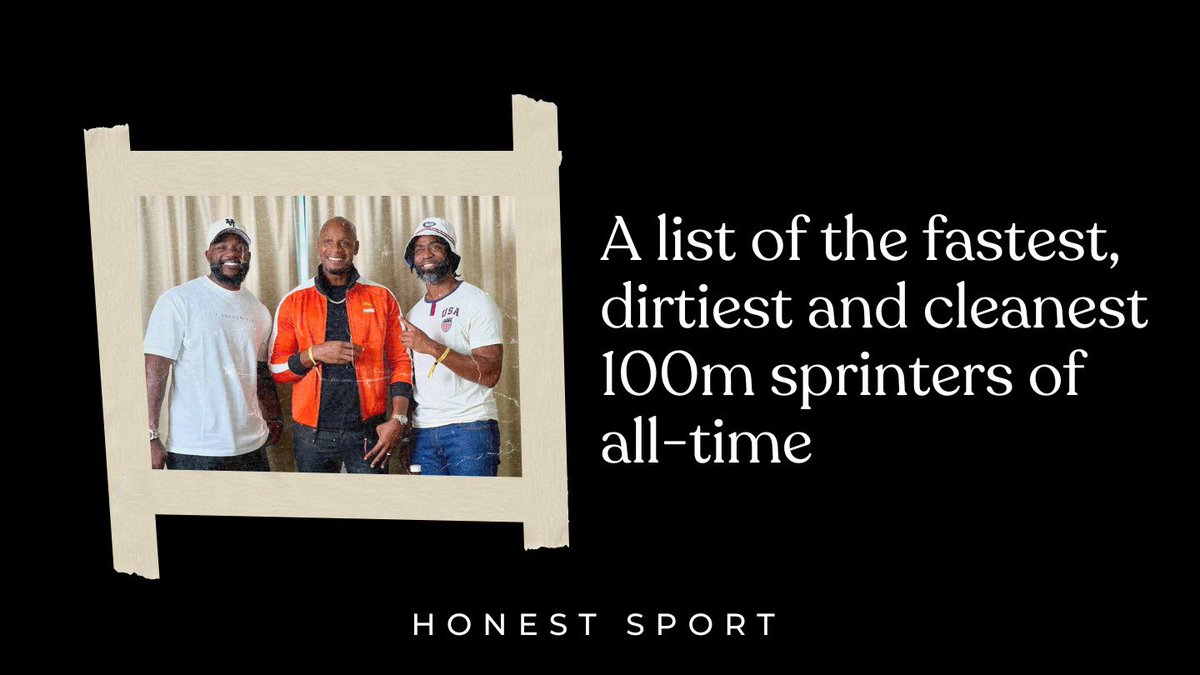
9.58 - Usain Bolt
9.69 - Tyson Gay - BANNED
9.69 - Yohan Blake -BANNED
9.72 - Asafa Powell - BANNED
9.74 - Justin Gatlin - BANNED
This is the full list of the fastest 100m sprinters ever - detailing whether or not they have links to doping.
🖇️ https://t.co/oVmWEFGafl
Performing cold water immersion after exercise is probably harming your gains.
Athletes often use cold water immersion to reduce muscle soreness and speed up the recovery process.
However, several studies have found that cold water immersion after resistance exercise training blunts some muscle hypertrophy.
Studies by Dr. Luc van Loon and colleagues have shown why this happens.
Postexercise cooling muscles can significantly decrease their ability to absorb amino acids and incorporate them into muscle fibers, which is crucial for muscle growth. This cooling effect also lowers the rate of muscle protein synthesis right after your workout.
People looking to improve their muscle conditioning should reconsider using cooling as part of their recovery strategy. Adjusting how and when you use cold water immersion is important to optimize muscle gains.
Here’s how you can still enjoy the benefits of cold exposure without compromising your muscle gains:
• Save the ice baths for non-resistance training days.
• Or, at the very least, avoid cold water immersion for at least 8 hours after resistance training, as this is when your muscles are in their prime for protein synthesis.
• A cold shower? Go for it. It's unlikely to cool your body enough to interfere with muscle-building processes.
Check out the full episode on optimizing muscle hypertrophy:
https://t.co/qpJf0c5uoz
This is a good meta-analysis by @BradSchoenfeld and colleagues on cold water immersion post-training:
https://t.co/1T7E0HoPns
Dr. "Ufe" Fuentes was commissioned by the 🇪🇸 government eight years before Barcelona '92 to prepare 12-15 year-old children in order to make of them successful athletes 💉💉💉🥇🥇🥇 [ARD Team]
The afternoons of the past 3 weeks I’ve been following @LeTour and the amazing performances of the cyclists.
During those days I saw lots of comments about how is’s possible to recover in short time after injury. I wrote an article with my (limited) knowledge on injury recovery: https://t.co/nUzkYuonwV
Any amount of alcohol appears to be toxic to the brain and leads to reductions in brain volume.
This involves a notable impact on brain gray matter, which consists of neuronal cell bodies and is crucial for processing information, and white matter, which involves the connections between different brain regions.
- Consuming between 1 and 2 standard drinks per day is linked to reduced gray matter and white matter volume.
- Increasing the daily dose to 2–3 drinks, 3–4 drinks, or 4 or more drinks further reduces gray and white matter volume.
The damaging effects of alcohol on the brain likely result from micronutrient deficiencies, direct toxicity of ethanol and acetaldehyde, and inflammatory processes.
Heavy alcohol consumption is especially detrimental, leading to the loss of neurons in several critical brain regions, including the hypothalamus, cerebellum, hippocampus, and amygdala.
Exercise strongly moderates this relationship! Engaging in regular physical activity protects against white matter damage associated with heavy drinking.
These powerful effects are likely due to the impact of exercise on BDNF and brain circuits related to motivation and reward. The brain loves exercise!
Learn more about alcohol's effects on the brain in the latest episode of the FoundMyFitness podcast:https://t.co/laLhkDYZS0
Alcohol blunts the anabolic response to exercise training, likely reducing the body’s ability to grow and repair muscle tissue over time.
Consuming alcohol along with 25 grams of protein after combined aerobic and resistance exercise reduces muscle protein synthesis by almost 25%. The reduction is even greater at 37% when alcohol is consumed without protein.
Even small amounts of alcohol are likely having varying degrees of detriment if you’re looking to optimize your improvements in muscle strength, hypertrophy, or VO2 max.
Of course, this doesn’t mean that you can’t make gains while also drinking alcohol occasionally.
But for peak performance, drinking rarely or avoiding alcohol entirely, especially right after exercise, is probably the best option.
Watch episode 92 of the FoundMyFitness podcast on YouTube: https://t.co/a9OjF0SNee
Alcohol promotes neuroinflammatory processes that may contribute to depression and accelerate brain aging.
This happens through direct effects of alcohol on the brain and through a secondary yet equally important route involving the gut-brain axis — the communication network that links our brain to our GI tract.
Alcohol can cause “leaky gut” and inflammatory cytokines can then escape the GI tract, enter the bloodstream, and cross the blood-brain barrier where they cause inflammation in the brain.
Alcohol also increases the excitatory neurotransmitter glutamate, upregulates the sympathetic nervous system, and activates the brain’s resident immune cells, further promoting an inflammatory response that perpetuates a vicious cycle.
It’s not really surprising why chronic heavy drinking is associated with neuronal loss and reductions in brain volume.
Watch episode 92 of the FoundMyFitness podcast for more on alcohol's effects on the brain: https://t.co/utbA5v31Gd
“In the years to come the number of footballers worth watching will be less and less and football will become less enjoyable”
Fascinating comments as always from Marcelo Bielsa. Can’t deny thinking similar once or twice watching games at #EURO2024
Liverpool ⚽ Pre-season fitness test - 6 minute run.
Why 6 minutes?
6 minutes is approximately the duration you can maintain at VO2max intensity.
The pace you sustain for this period can be confidently used to prescribe your Maximum Aerobic Speed (MAS).
From your MAS pace, you can also estimate your critical speed.
Alcohol affects the entire body systemically through its potent effect on promoting intestinal permeability (aka “leaky gut”), especially at high doses.
This allows inflammatory cytokines, bacteria, and endotoxins to leave the gut and enter the circulation.
The most notable endotoxin is called lipopolysaccharide or LPS.
LPS is harmless inside the intestine, but in the circulation, it’s highly toxic and induces an inflammatory response throughout the body and the brain. This effect is so potent that LPS is used in research as an acute phase reactant, making it almost synonymous with immune activation.
Higher alcohol consumption means more LPS levels. A single binge drinking occasion elevates LPS levels in the bloodstream for up to 3 hours and chronic heavy drinking is associated with elevated circulating LPS.
I’d hesitate to say that one or two drinks is highly detrimental in this regard, but it’s helpful to be aware of these effects.
Learn more in episode 92 of the FoundMyFitness podcast: https://t.co/utbA5v2tQF
Alcohol causes increased intestinal permeability (AKA leaky gut)
Here's why this matters:
When gut permeability increases, this results in endotoxins leaving the gut and migrating to other organs
One of these endotoxins is know as LPS
LPS induces a large inflammatory response, increasing levels of several cytokines
When LPS enters the bloodstream, it's linked to:
• Type 2 diabetes
• Heart disease
• And liver disease
Here's the thing, though...
Even a single binge drinking session (>4 drinks in a single sitting) elevates LPS levels in the bloodstream for up to 3 hours
In short, remember these two things:
-> More drinking means more gut permeability
-> Because of that, higher levels of alcohol consumption are associated with higher LPS levels
Is there any amount of alcohol that is beneficial?
My latest episode delves into its detrimental effects on brain volume loss, neuroinflammation risks via gut-brain axis disruption, and the credibility of mitigation strategies and hangover "cures." We also explore how alcohol affects brain function, sleep, glucose regulation, cardiovascular health, cancer risk, exercise adaptations, potentially heritable epigenetic changes, and more.
Whether you avoid alcohol, drink a little too much, or fall somewhere in between, this comprehensive episode has valuable information for everyone.
Timestamps:
0:00 - Introduction
2:19 - What does it mean to "have a drink"?
3:55 - Drinking frequency definitions
6:55 - How alcohol is metabolized
10:47 - How genetics affect alcohol metabolism
12:41 - Can alcoholism be inherited?
13:58 - How food affects alcohol metabolism
15:57 - Does age affect alcohol metabolism?
16:46 - How alcohol affects micronutrient absorption
21:22 - How alcohol affects gut health
23:15 - Alcohol elevates circulating LPS levels
26:09 - Gut health & alcohol use disorders
30:49 - Sick quitter & healthy user biases
33:57 - How alcohol impacts the brain
37:53 - Alcohol's effects on anxiety
42:09 - Brain volume loss from alcohol
44:16 - Alcohol facilitates vitamin B1 deficiency
46:00 - Alcohol promotes brain inflammation
47:16 - Dementia & Alzheimer's disease risk
53:19 - Impact on APOE4 carriers
57:28 - Alcohol and brain health mechanisms
1:01:11 - Is resveratrol in red wine beneficial?
1:05:50 - Detailing the sleep stages
1:09:11 - How alcohol impacts sleep
1:12:44 - Alcohol worsens sleep apnea
1:14:10 - Reducing impact on sleep
1:16:37 - Hangover symptoms & causes
1:20:56 - How different alcohol types affect hangover severity
1:22:22 - Treating hangovers with fruit
1:25:05 - Zinc, vitamin B3, & hangovers
1:26:05 - Managing hangovers with NSAIDs
1:26:46 - "Hair of the dog” for hangovers
1:27:05 - Liposomal glutathione, NAC, & hangovers
1:30:21 - Does ZBiotics credibly prevent hangovers?
1:32:43 - Dihydromyricetin (DHM) for hangovers
1:33:41 - Exercise & sauna for treating hangovers
1:34:47 - Does alcohol cause early death?
1:38:54 - Alcohol consumption in Blue Zones
1:52:18 - Genetics, alcohol, & cancer risk
1:55:10 - Can quitting alcohol lower cancer risk?
1:57:15 - Cancer-causing mechanisms
2:04:15 - Alcohol & cardiovascular disease (CVD)
2:11:42 - Mechanisms of cardiovascular disease
2:15:55 - Industry funding in alcohol research
2:17:54 - Type 2 diabetes risk
2:20:08 - How alcohol affects blood glucose
2:22:58 - Alcohol's impact on your waistline
2:26:04 - Why alcohol facilitates weight gain
2:28:37 - How alcohol impacts reproductive health
2:31:29 - Fertility impacts of alcohol in females
2:37:27 - How alcohol impacts fertility in males
2:39:03 - Preconception alcohol risks
2:41:44 - How alcohol affects testosterone in men
2:43:27 - Pre-pregnancy alcohol consumption risks
2:47:49 - Is red wine the healthiest option?
2:51:19 - Headaches after drinking red wine
2:52:20 - Alcohol & post-exercise recovery
2:56:08 - Does alcohol "blunt your gains"?
2:58:45 - How alcohol affects VO2 max
2:59:36 - Can exercise lessen alcohol cravings?
3:02:34 - FGF21, exercise, and alcohol intake
3:07:32 - Alcohol damage control tactics
This episode is available on X, YouTube, Spotify, and everywhere else. Links in comment.
If you're celebrating the holiday today with a few adult beverages, keep in mind some of these damage-mitigation strategies.
1) Have your last drink >4 hours before bed.
2) Consider supplementing with magnesium glycinate before bed (alcohol increases magnesium excretion).
3) Don't drink on an empty stomach.
4) Stay hydrated & supplement with electrolytes.
5) Supplementing with N-acetyl cysteine (NAC), liposomal glutathione, and/or sulforaphane may reduce hangover severity.
6) Supplement with a micronutrient-rich multivitamin to replenish your body's micronutrient stores. Vitamin B3 & zinc, in particular, are crucial for helping your body convert alcohol into less harmful metabolites.
Note that there isn't much evidence to support any of these "hangover cures" and the best option is to avoid drinking to excess or not drink at all.
Learn more in episode 92 of the FoundMyFitness podcast: https://t.co/utbA5v2tQF