200 years ago M. Faraday discovered benzene, but we are still learning about it. Just published in @acsnano, we show that direct interaction over 1 nm orders a network of benzene rotors mounted on triangular platforms. @kieluni@CFMdonostia@ESIMproject https://t.co/I8VRqhYLbl
Just published in The Journal of Physical Chemistry C @JPhysChem an study of the low energy excitations of ErPc2 on Au(111). A collaboration with @QNSscience@CFMdonostia@DIPCehu
https://t.co/tqPWyMkF18
📢 NEW JOB OFFER❗
➡️ Postdoctoral Researcher
🤝 Theory & Simulation Group*, led by CSIC Prof. Pablo Ordejón
*AuSpire project on Planetary Wellbeing connecting Spanish & Australian research communities.
🎯 Apply 👉 https://t.co/oSlQdfiZtJ
🔃 RT appreciated!
#BarcelonaJobs
200 years ago M. Faraday discovered benzene, but we are still learning about it. Just published in @acsnano, we show that direct interaction over 1 nm orders a network of benzene rotors mounted on triangular platforms. @kieluni@CFMdonostia@ESIMproject https://t.co/I8VRqhYLbl
📃 NEW PAPER OUT❗
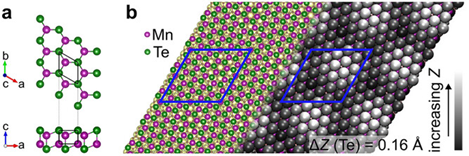
🤔 A team led by Dr Marc G. Cuxart has shown that MnTe can change its #magnetic behavior when reduced to just a few atomic layers, which could be key in next-gen #Spintronics.
🤝 @ImdeaMaterials@CFMdonostia@ALBAsynchrotron
ℹ️ https://t.co/g7rVYy47nF
From our side, the project required more than 1700 calculations and 1.1 million of CPU-hours. The last three articles have been published in #OpenAccess
These are fascinating systems showing the magic of porphyrins and how powerful on-surface synthesis can be to create new chemical compounds.
Finally, I want to thank everybody involved in this quite fruitful collaboration. Good job everyone!
Thrilled to share our new paper in @angew_chem!
We used on-surface chemistry to grow Fe- and Co-porphyrin nanotapes and explore their unique magnetic interactions! A great collaboration between @Empa_CH, @CFMdonostia, and @UAM_Madrid https://t.co/tl24e7xau3
📢New paper out in Adv. Funct. Mater.
👉https://t.co/HoqJ6WN4kw
We explore the behavior of MnTe, an altermagnet, as it approaches the 2D limit — revealing emergent magnetic structures that could enable novel spintronic functionalities
@IMDEA_Nano@ALBAsynchrotron@AdvPortfolio