The earliest DOS source code was found on printer paper in Tim Paterson's garage so we've open sourced it on 86-DOS 1.00’s 45th anniversary! This is next-level software archaeology for study, preservation, and plain ol’ curiosity. Go dig in and learn how it was recovered! #DOS #RetroComputing
https://t.co/l0ZRMSC5LS
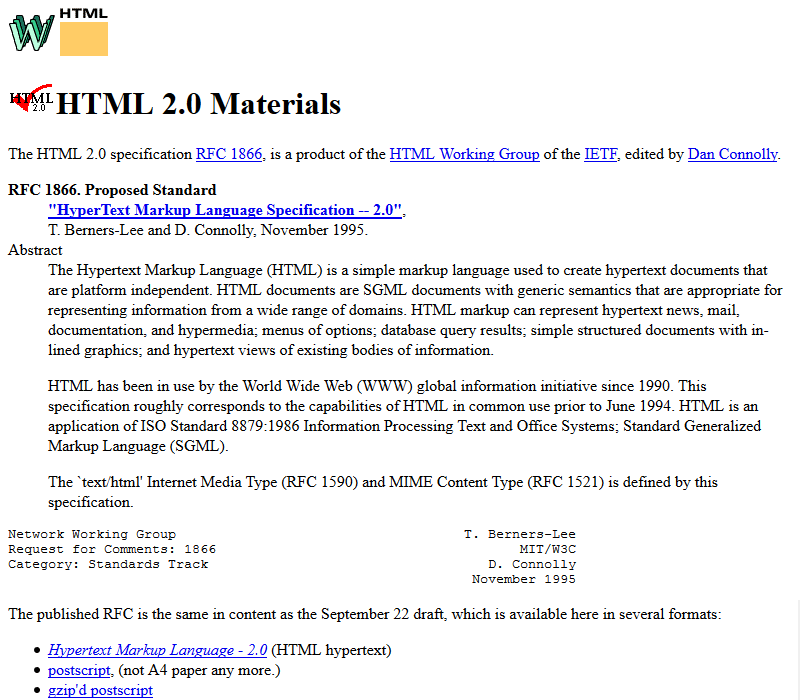
On November 24, 1995, The IETF organization published the RFC 1866 specification for HTML 2.0. HTML 2.0 supported forms, tables, graphics, and a number of new tags, such as !DOCTYPE, head, body, etc.
#WebDesignHistory
It is with sadness that we announce the passing of Professor Simon Lavington,.A pioneer in computing & devoted historian. We were honoured to award Professor Lavington the 2024 Honorary Fellowship. Our thoughts & condolences are with his family. His impact is immeasurable.
Layers was AT&T’s proprietary windowing system, shipped with the UNIX PC (PC 7300), predating the widespread adoption of X11. Layers acted like a graphical multiplexer—a distant ancestor of tmux or screen—but ran directly on a bitmap display with rudimentary window management.
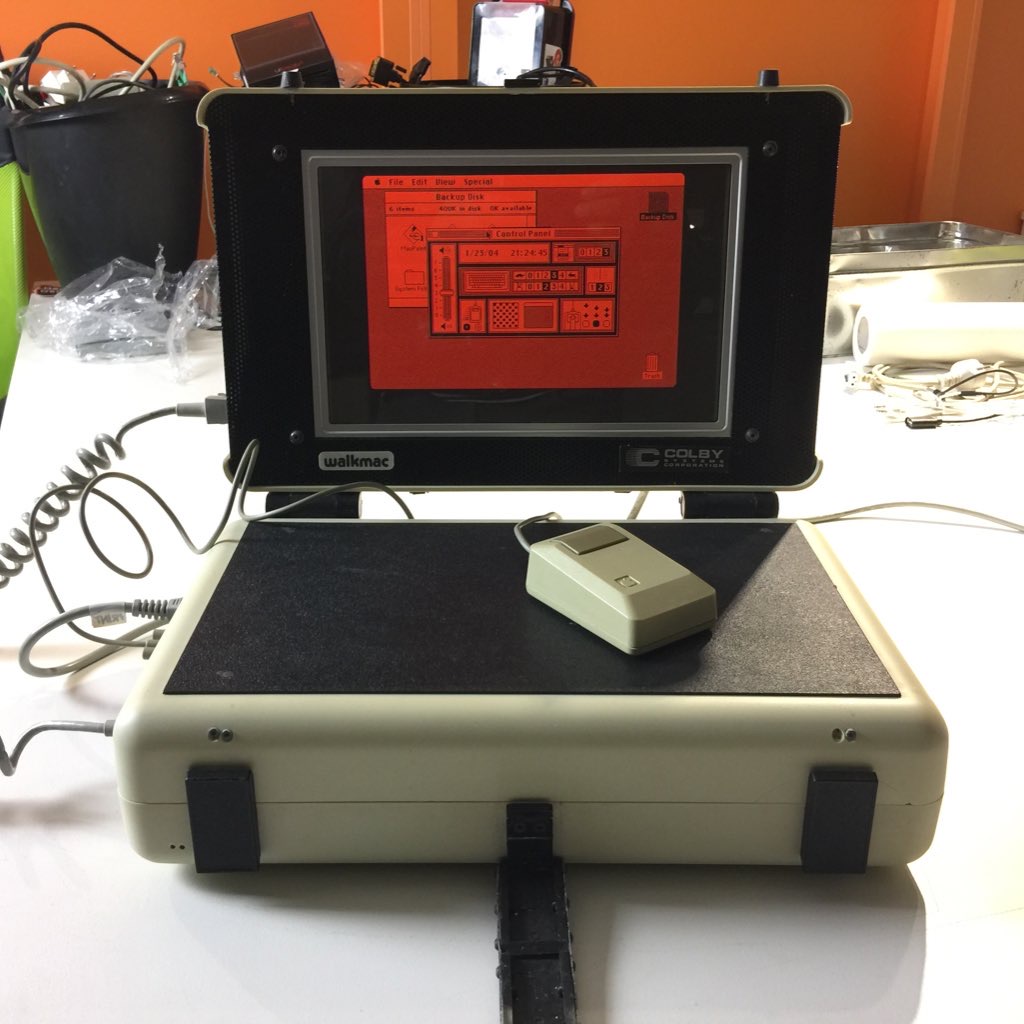
Walkmac, prototype (1986)
This is one of the few preserved and operating prototypes of a Mac portable computer in the world, built by Colby Systems. They had a modular structure, a removable floppy disk drive and an HDD, which were all placed in special metal cassettes.
Save it! Reasons:
1. One of the first ARM devices for the general public;
2. The last British (European) computer with true historical significance;
3. One of the most elegant home computers in existence;
4. The last British (European) home computer that is not a PC clone.
Oscar Peterson using a Synclavier II digital synthesizer with a DEC VT100 terminal and a VT640 Retro-Graphics expansion.
https://t.co/edpQdCfB7P
#retrocomputing#rchvid