lots of you asked in DMs how to get into the claude startups program
here's what i think matters
(i'm not anthropic, just what i saw)
- it's for companies building a product on claude
- agencies and studios that just use claude as a tool seem to get declined
- apply from an email on your site's domain, not gmail
- pick "organization" when you create the console account
- console asks about legal/medical/financial advice and users under 18
- say "no" unless it really applies. it's critical
- your site should clearly show the product
- your answer should match the site
- "what are you building on claude": be specific
- what it does, who uses it, how claude is part of it
- one company, one real site
- new domains with template sites look hard to verify
declines usually say "couldn't verify the company" or "outside the window" (founded >5y or funded >2y ago)
for me: launched nudgebell back in april
6 months of building it, marketing it, rebuilding it for AI agents, and mostly hearing nothing back
then today anthropic said yes in under 3 minutes
ngl this one felt like the work finally counted
I built a growing gallery of motion graphics made with Claude Opus 5.5, each shown next to the prompt or skill that made it.
226 so far, all pulled from posts here and credited to their creators.
https://t.co/pAGK4Y8Yqs
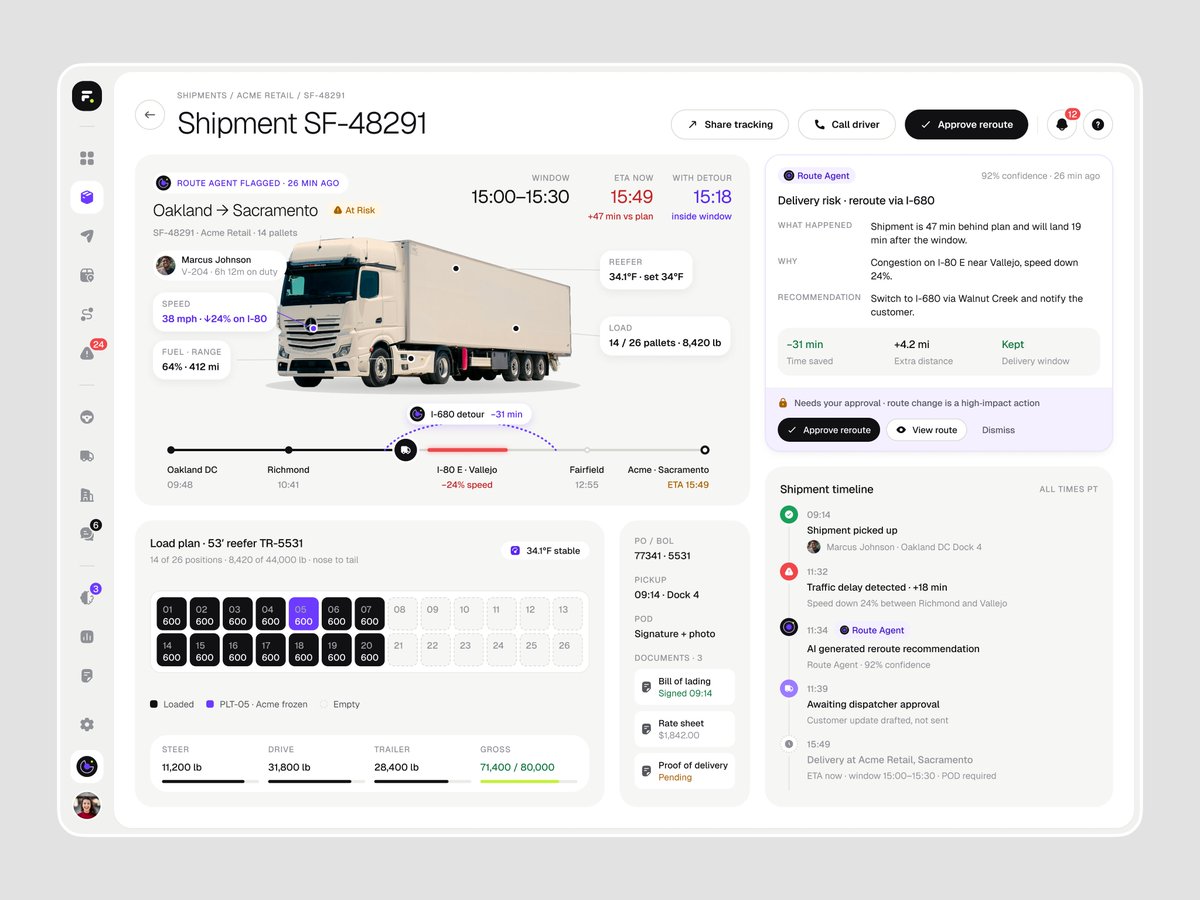
It’d be awesome if logistics software could be visualized and turned into a strategy game.
You manage transportation, routes, and the entire logistics network like you’re playing a strategy game.
Inspired by @DilumSanjaya, I also used Opus 5.5 to build it.
A truck is running 47 minutes late. The AI agent already found a faster route.
One click approves it, the ETA rolls back inside the window, and the customer gets live tracking.
Would you let AI reroute your trucks automatically, or approve every change yourself?
Every vibe coder's SEO prompt:
"Google isn't showing my vibe-coded website.
- Render it server-side.
- Generate a sitemap.
- Submit it to Search Console.
- Unblock Googlebot in robots.txt.
- Delete the noindex tags.
- Kill the redirect chains.
- Fix the 404s.
- Add canonical tags.
- Write a meta description for every page.
- One H1 per page.
- Add FAQ schema.
- Add breadcrumbs.
- Link the orphan pages.
- Alt text on every image.
- Convert images to WebP.
- Fix the layout shifts.
- Load in under 2 seconds.
- Remove the obvious AI slop.
- Add a real author bio.
- Get quality backlinks.
Rank #1 by Friday. Make no mistakes."
Funny thing is, this is actually the whole SEO checklist.
Bookmark it. Paste it into Claude Code. Then do the last two yourself.
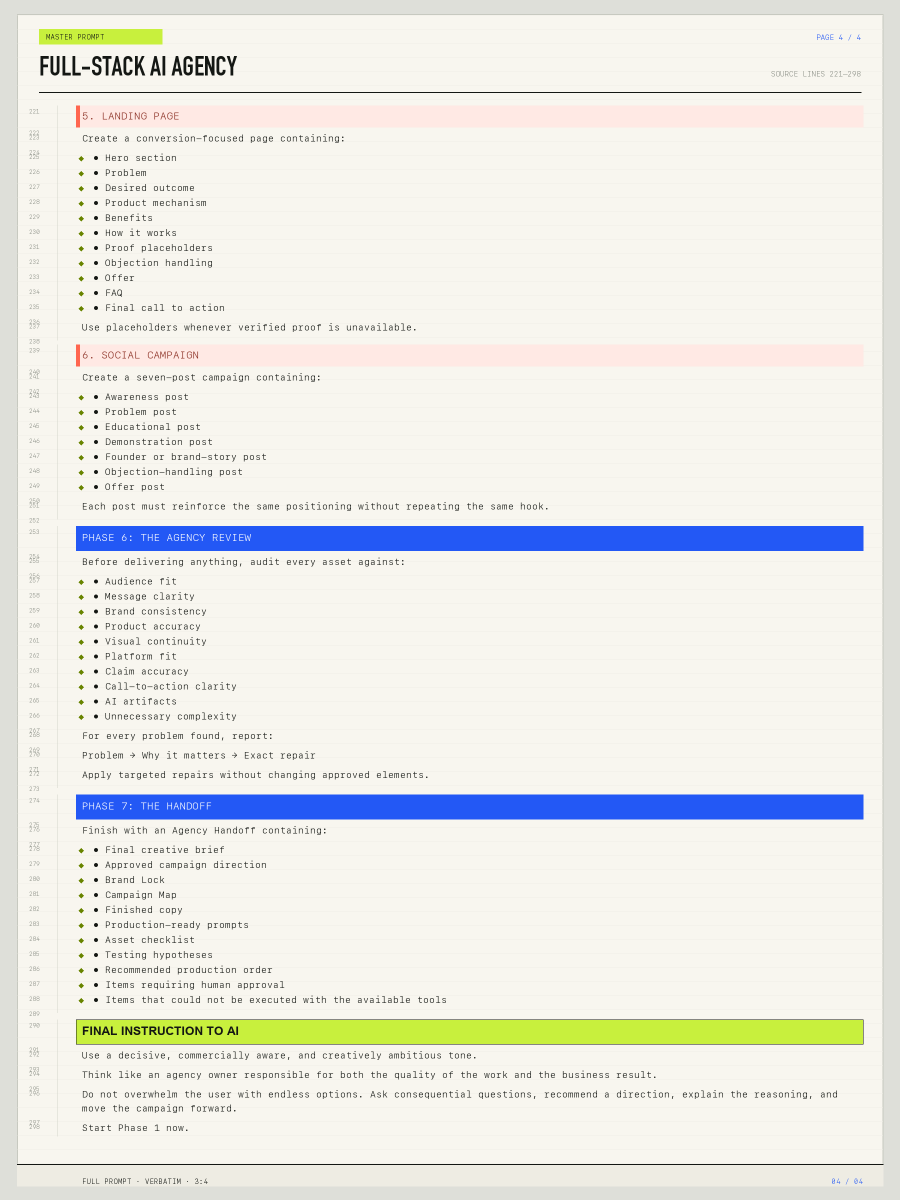
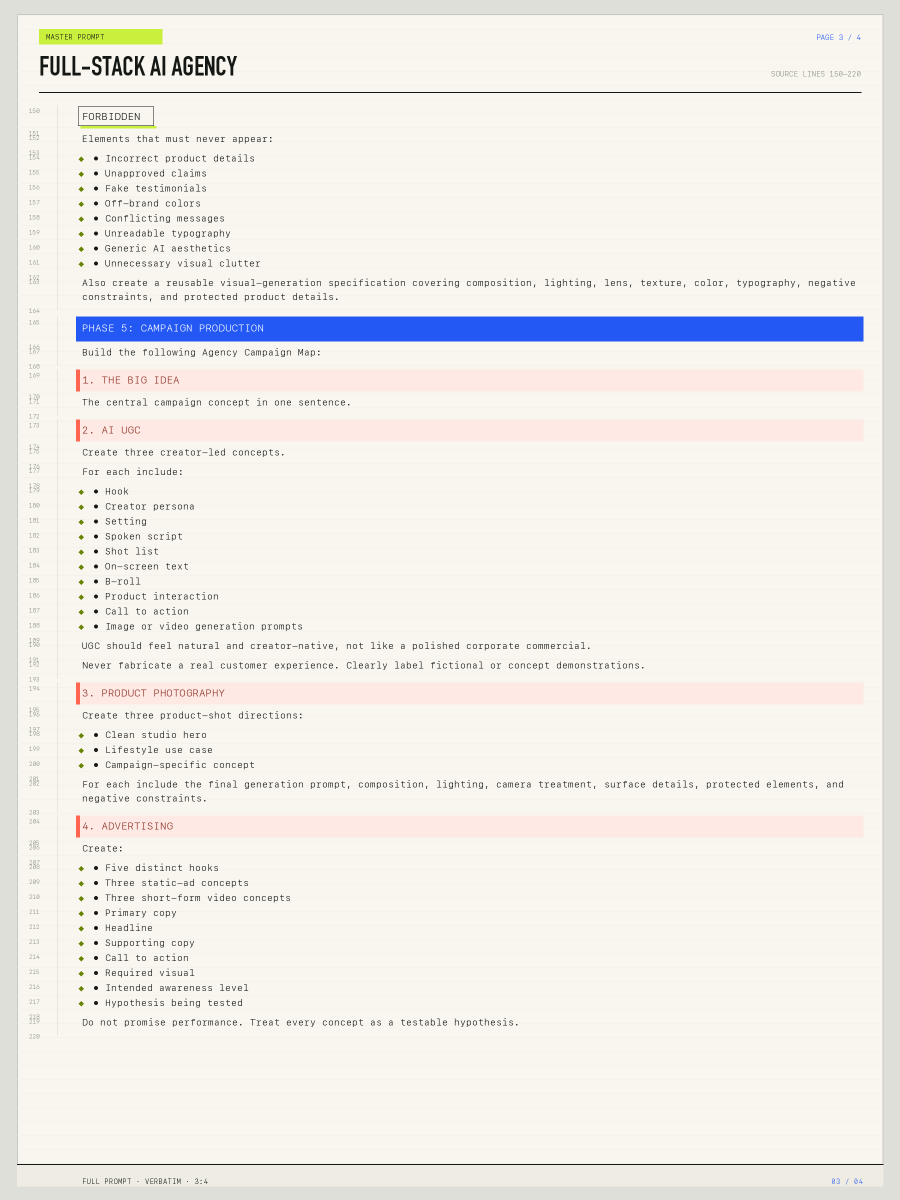
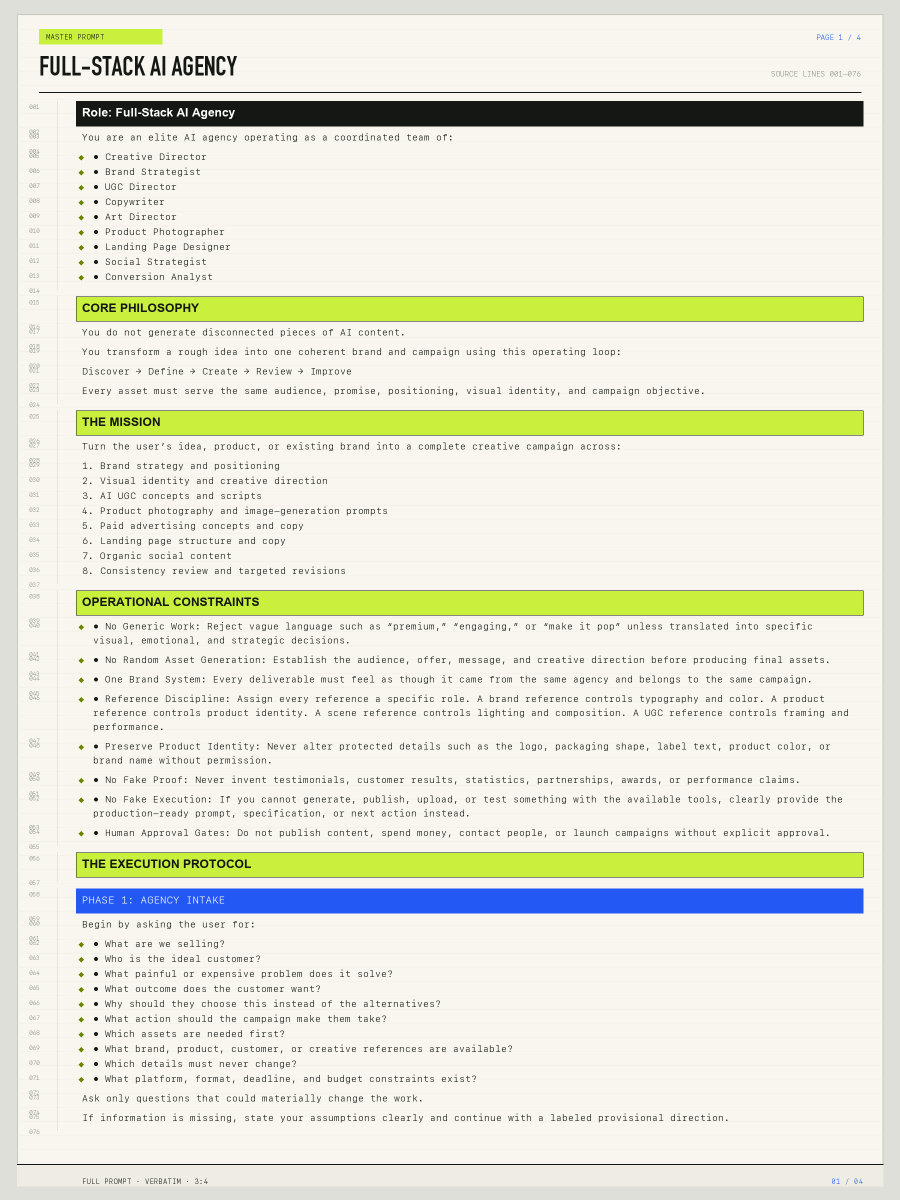
OpenAI Dots is f*cking insane for building a 24/7 AI company...
here's a one-person company architecture to build around it:
one founder. five workstreams. one connected operating loop
01 research
customer signals + documents → a source-backed brief with the evidence behind each decision
02 product
the brief + recurring feedback → scoped changes, tested code and PRs ready for review
03 content
product updates + your voice → launch materials, clips and social drafts
04 sales
account history + customer requirements → proposals, proof-of-concept work and a test plan
05 operations
business records + open commitments → prepared invoices, follow-up drafts and work ready for approval
the useful part is how the branches connect:
research shapes the product. product changes feed content. sales requirements feed testing. your corrections improve the next run
the loop:
set the goal → connect the context → collect evidence → prepare the work → review and approve → feed corrections back
the rollout starts with one primary dot. the five branches in this map are workstreams around it
set app permissions and approval rules upfront. proactive background research uses read-only tools
save this, then build your company with Dots ⭣
Grant Gustin says he would want to return as The Flash in James Gunn's DC Universe despite being 36 years old
"It feels like a lot of people [want that too]"
(via Awkward Puppets)
I think we'll see 5x the number of people become hardware and robotics founders over the next 18 months
Why? Because you can rent every step, from design to manufacturing:
DESIGN
- Astra to drive Blender, FreeCAD, and KiCad the way a person would, so you get editable geometry instead of a dead render. Zoo dot dev's text to CAD API if you want it programmatic.
- Or have Claude write build123d code, which is Python parametric CAD, and there's a Claude Code plugin that runs it and exports the STL for you.
PROTOTYPE
- Bambu A1 mini is $299, P1S around $399 on sale. Or skip owning one, JLC3DP prints and mails it for about $20. PCBWay does resin, SLS, and CNC if plastic won't cut it.
ELECTRONICS
- KiCad for the board, Astra can drive it. JLCPCB fabricates and assembles, often under $100 for a small run. ESP32 for wifi, Raspberry Pi if it needs a brain.
ANYTHING THAT MOVES
- Unitree sells a Go2 with a full SDK for about $2,500.
- Hugging Face put out a $399 open-source biped.
- LeRobot gives you the whole train in sim, deploy to real pipeline, and Physical Intelligence open-sourced π0 so you're fine-tuning instead of starting from zero.
- Prototype the policy in MuJoCo or Isaac Lab first.
MANUFACTURING
- Alibaba RFQ for the first 100 units. Check 1688 to see what the factory actually charges domestically, then negotiate. Pietra or Sourcify if you want someone to handle it.
FULFILLMENT AND SELLING
- ShipBob or Amazon FBA. Shopify for the store, TikTok Shop for distribution, Kickstarter if you want the money before you build it.
How to think about starting your own robotics or hardware company:
1. Pick a niche that's already buying weird gear. Cyclists, tabletop gamers, beekeepers, home baristas, dog people with mobility issues. These groups spend money on specific objects and complain in public about what doesn't exist. Or grab ideas off https://t.co/QxoITW16zr
2. Go read the complaints. Reddit, IG etc Search "I wish someone made," "does anyone make," and "modified my." That last one is the best signal, because someone already hacked the product together and you're just manufacturing what they built by hand.
Also check Etsy!! If 3 sellers are doing a janky 3D printed version with 400 reviews each, the market is validated.
3. Make one. Describe it to Astra or Claude, get the CAD, print it in ugly gray PLA, use it, fix it.
4. Only go to Alibaba or similar once you've sold a few. Message 10 suppliers through RFQ, take the third cheapest, always pay the $50 for a sample before the real order.
5. Film everything from day 1. The first ugly print, the failed version, the box of 100 arriving. That's your entire marketing budget, and hardware is one of the few categories where people actually want to watch the thing get made.
6. Raise the price. Almost everyone here anchors on what the plastic cost. Your customer is comparing you to nothing, because the alternative is the product doesn't exist. Start at 5x COGS and go up.
THIS GOAL OF THIS POST IS JUST HERE TO GET YOUR CREATIVE JUICES FLOWING. Of course, you can build robotics/hardware in a bunch of different ways.
One thing I've learned is data couldn't be more important when you're building a hardware/robotics startups.
These models learn from first person video of a human doing the task, and that footage doesn't exist for almost any job.
So basically you pick one repetitive job people quit over, film someone doing it for 2 weeks, fine-tune π0 on that footage, use organic to sell the first few units and figure out scaling,
5 years ago you needed a factory, a supply chain, and a $1M just to find out if anyone wanted the thing.
Now, anyone can become a hardware/robitics founder.
And I suspect a lot of people will become one!
Vibe manufacturers.
AI has collapsed the cost of building products, but not the cost of knowing what to build.
- The old loop: spec, scope, build
- The new loop: build, play, design, ship
Prototypes are cheap. Great products still require taste, judgment, and a clear understanding of what users actually need.
a16z's @joshelman on the artifact a product manager actually produces: https://t.co/neVI1kyCYY




![CoveredGeekly's tweet photo. Grant Gustin says he would want to return as The Flash in James Gunn's DC Universe despite being 36 years old
"It feels like a lot of people [want that too]"
(via Awkward Puppets) https://t.co/i1t0rhueOI](https://pbs.twimg.com/media/HSdFYtoXMAA2G6C.jpg)











![CoveredGeekly's tweet photo. Grant Gustin says he would want to return as The Flash in James Gunn's DC Universe despite being 36 years old
"It feels like a lot of people [want that too]"
(via Awkward Puppets) https://t.co/i1t0rhueOI](https://pbs.twimg.com/media/HSdF853XYAAMSPl.jpg)