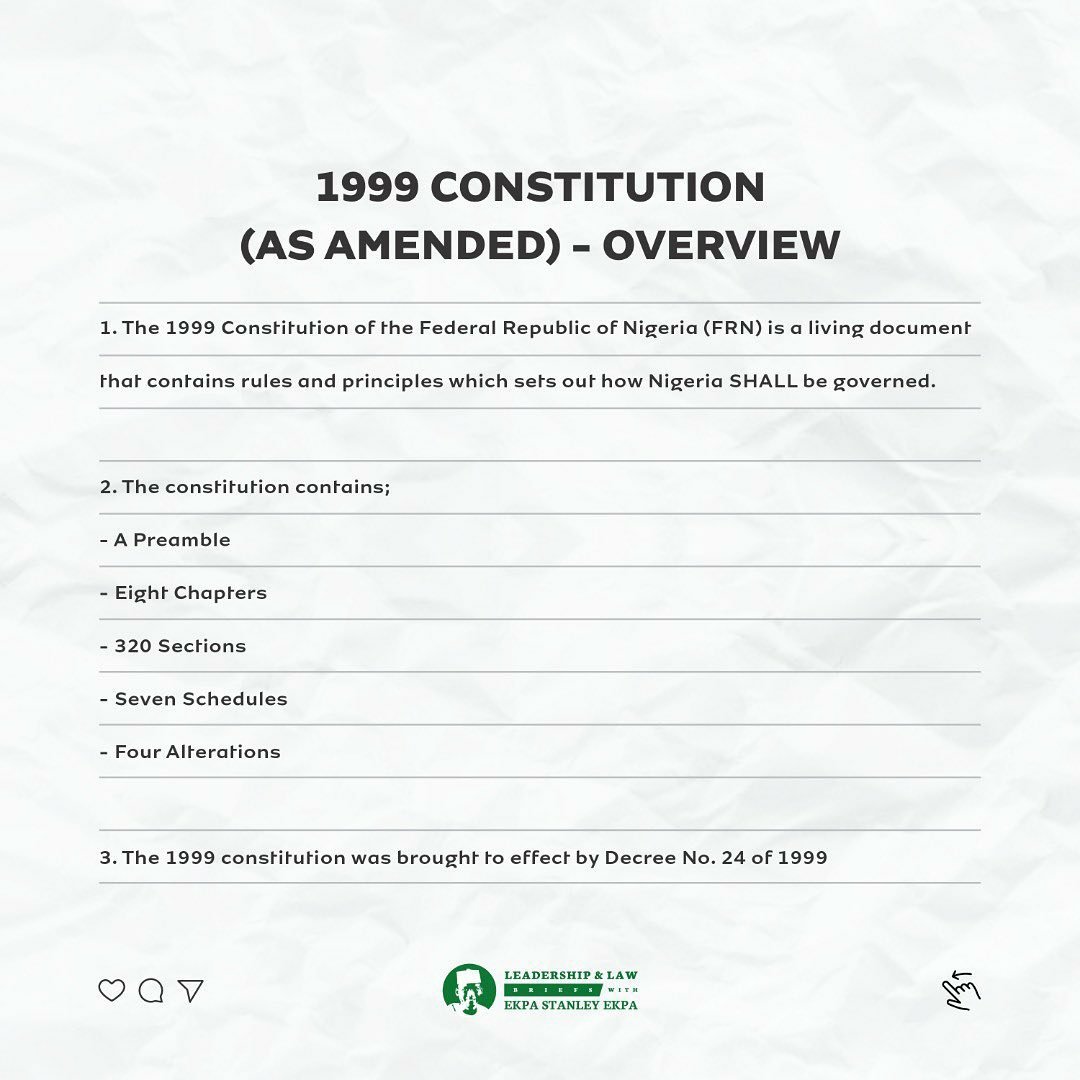
What do you think about starting the month of May with an overview of the 1999 Constitution of the Federal Republic of Nigeria (as amended).
Watch this space as we bring to you daily sections of the CFRN 1999.🇳🇬
#nigerianconstitution#constitutionclausesclass#CFRN1999
3. What results, output and impact are we likely to have, and how do we sustain such impact?
Share your thoughts with us in the comment section on the Nigerian Dream and section 17 of the Constitution.
Cc:
@LegalNaija@NBAYLFOfficial@designbeak@bintabaeby@ekpaStanleyekpa
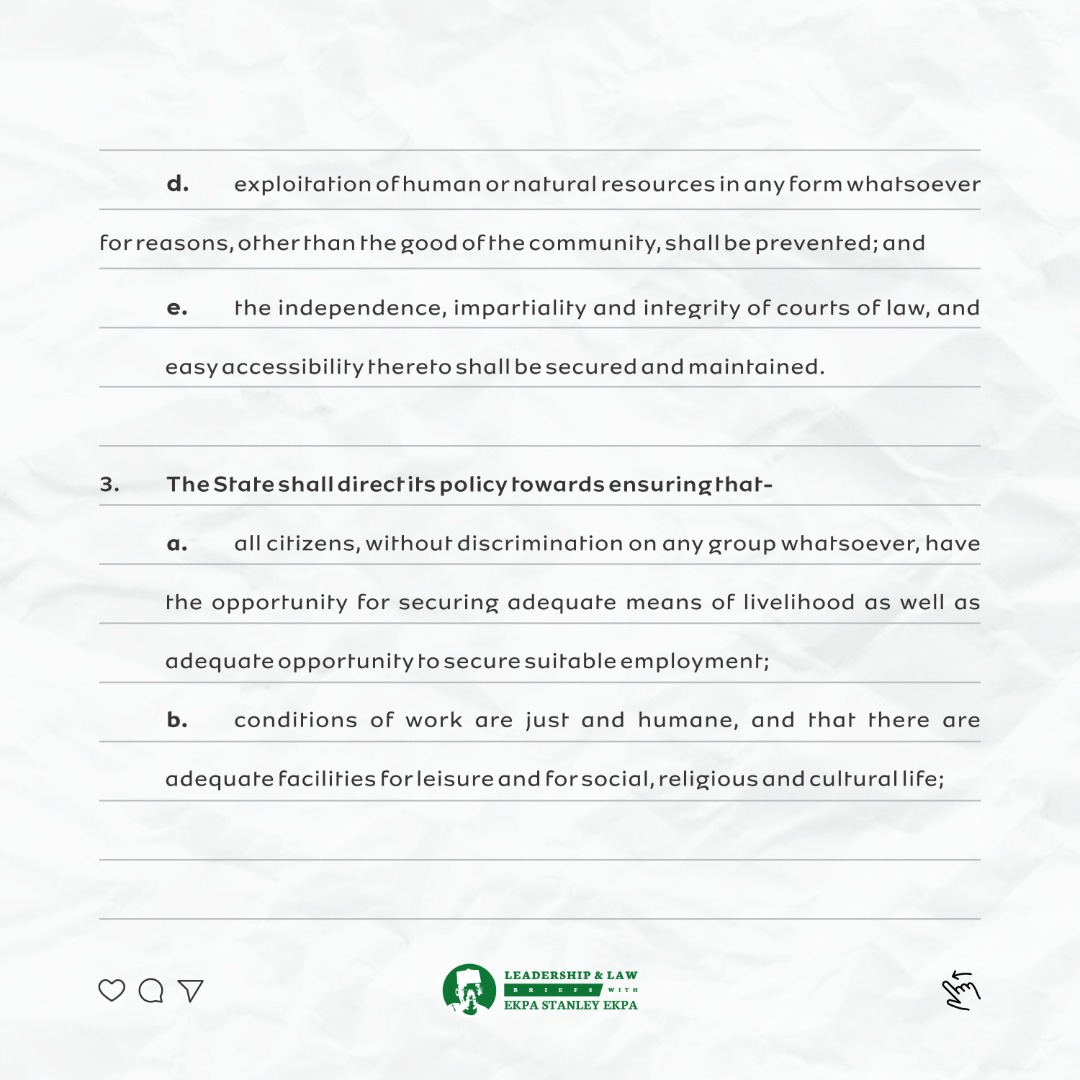
Section 17 - Social Objectives
What is the Nigerian Dream?
Have you ever asked what is the Nigerian Dream? Section 17 answers your question. It creates a country founded in the ideals of Freedom, Equity and Justice - where everyone shall have equality of rights,
provide public assistance, provide social welfare, among others, please tell them that section 17 already provided for all those items and more, what we need are three things:
1. HOW do we achieve those items?
2. Will you have the political will to do them without corruption?
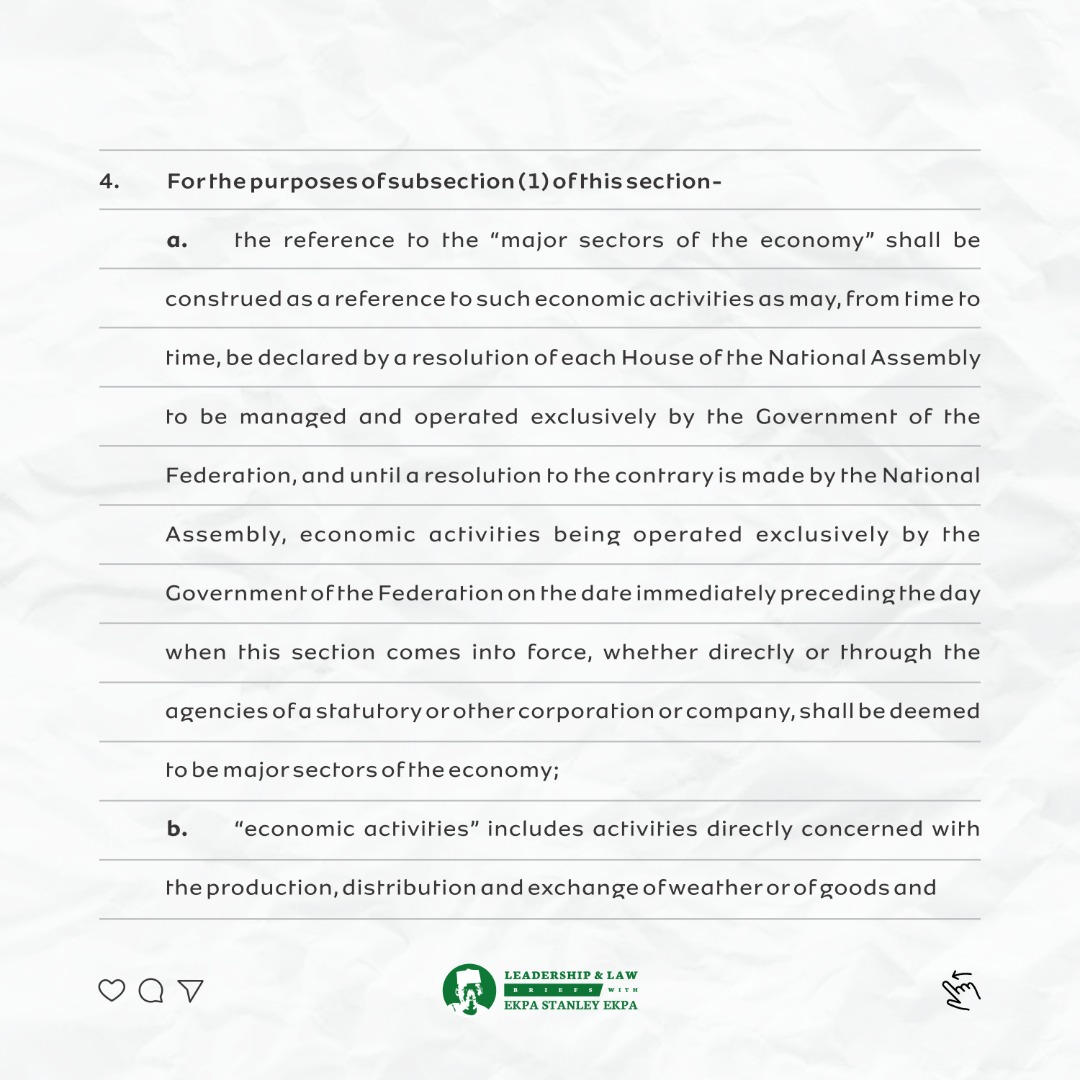
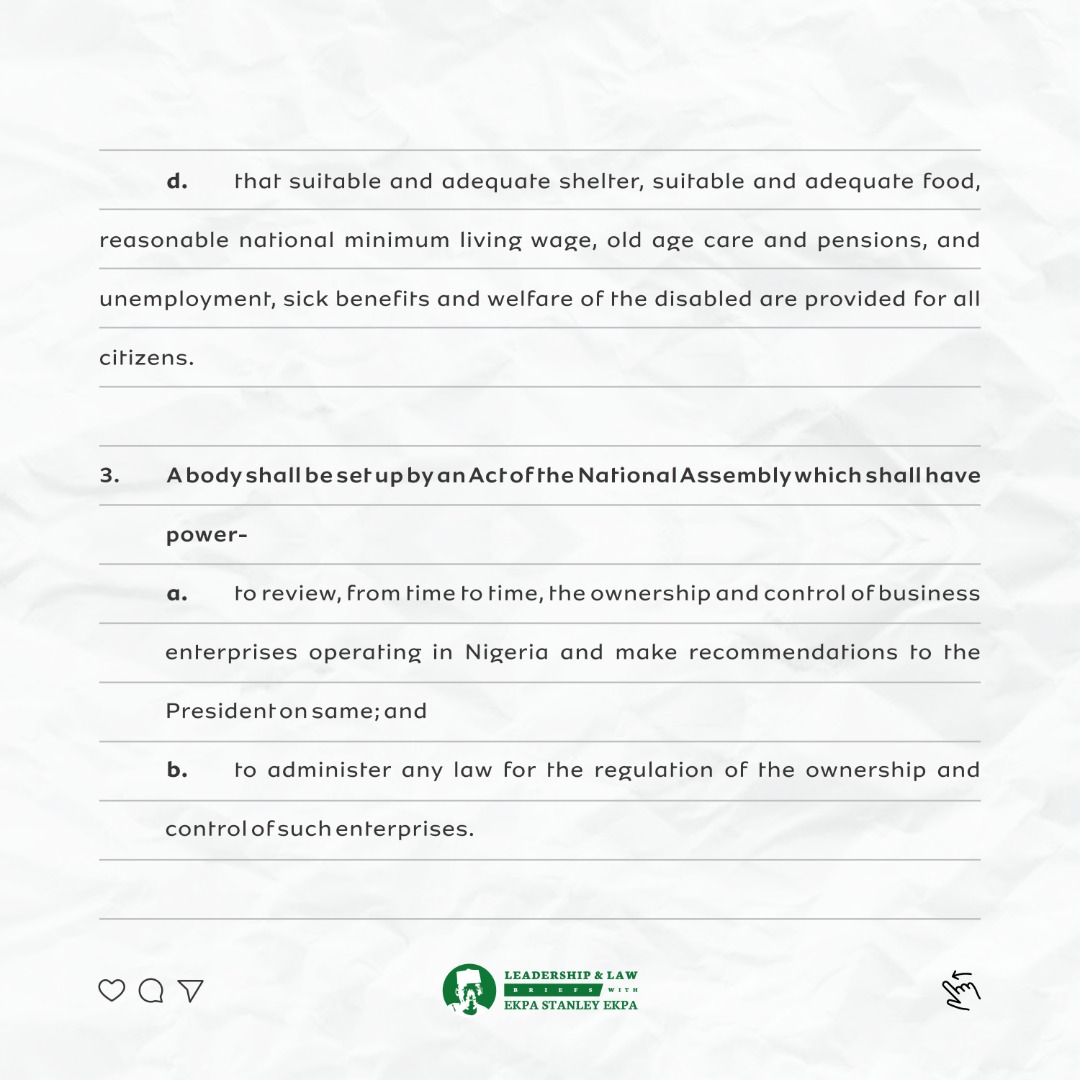
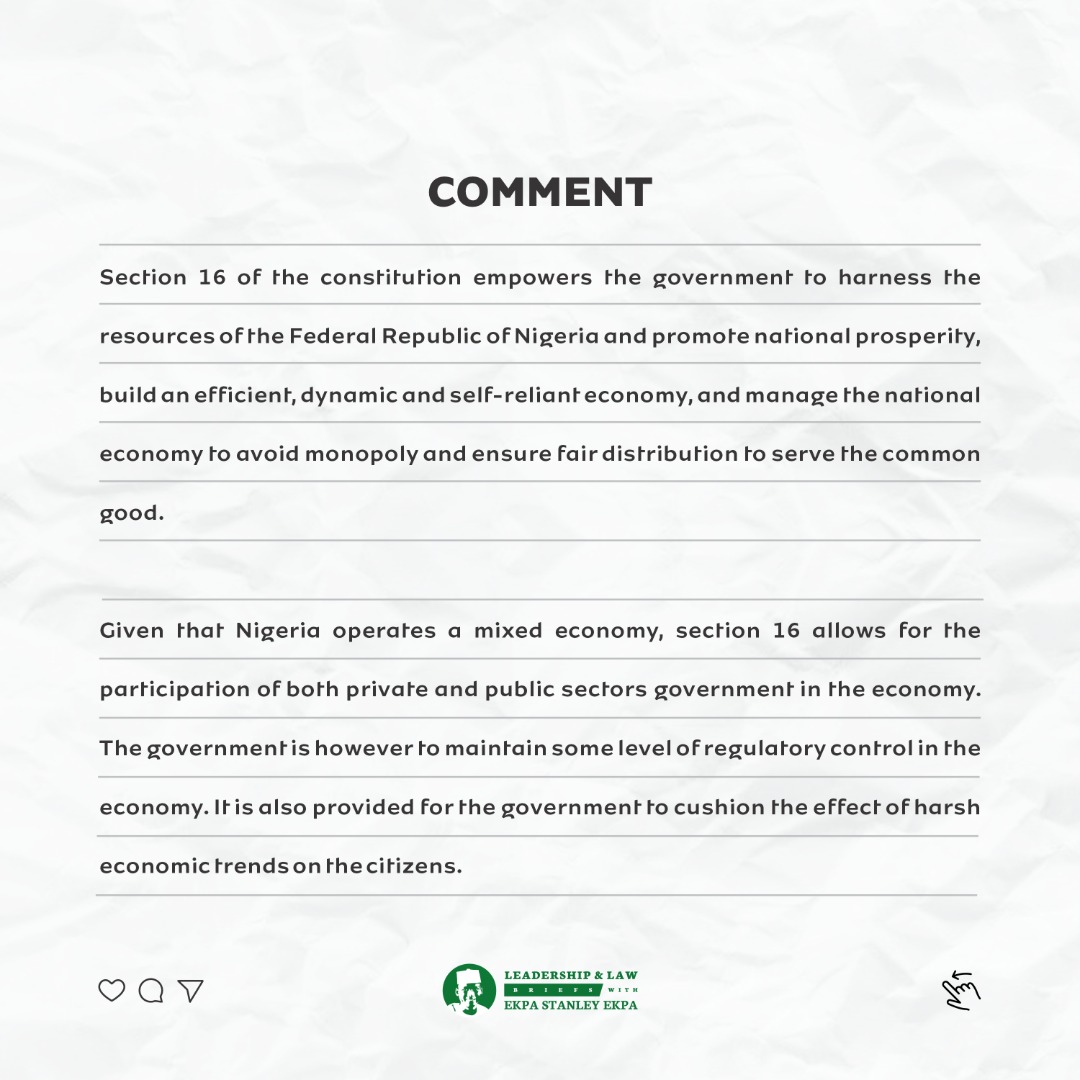
Section 16 - Economic Objectives:
Section 16 of the constitution empowers the government to harness the resources of the Federal Republic of Nigeria and promote national prosperity, build an efficient, dynamic and self-reliant economy,
and manage the national economy to avoid monopoly and ensure fair distribution to serve the common good.
Given that Nigeria operates a mixed economy, section 16 allows for the participation of both private and public sectors government in the economy.
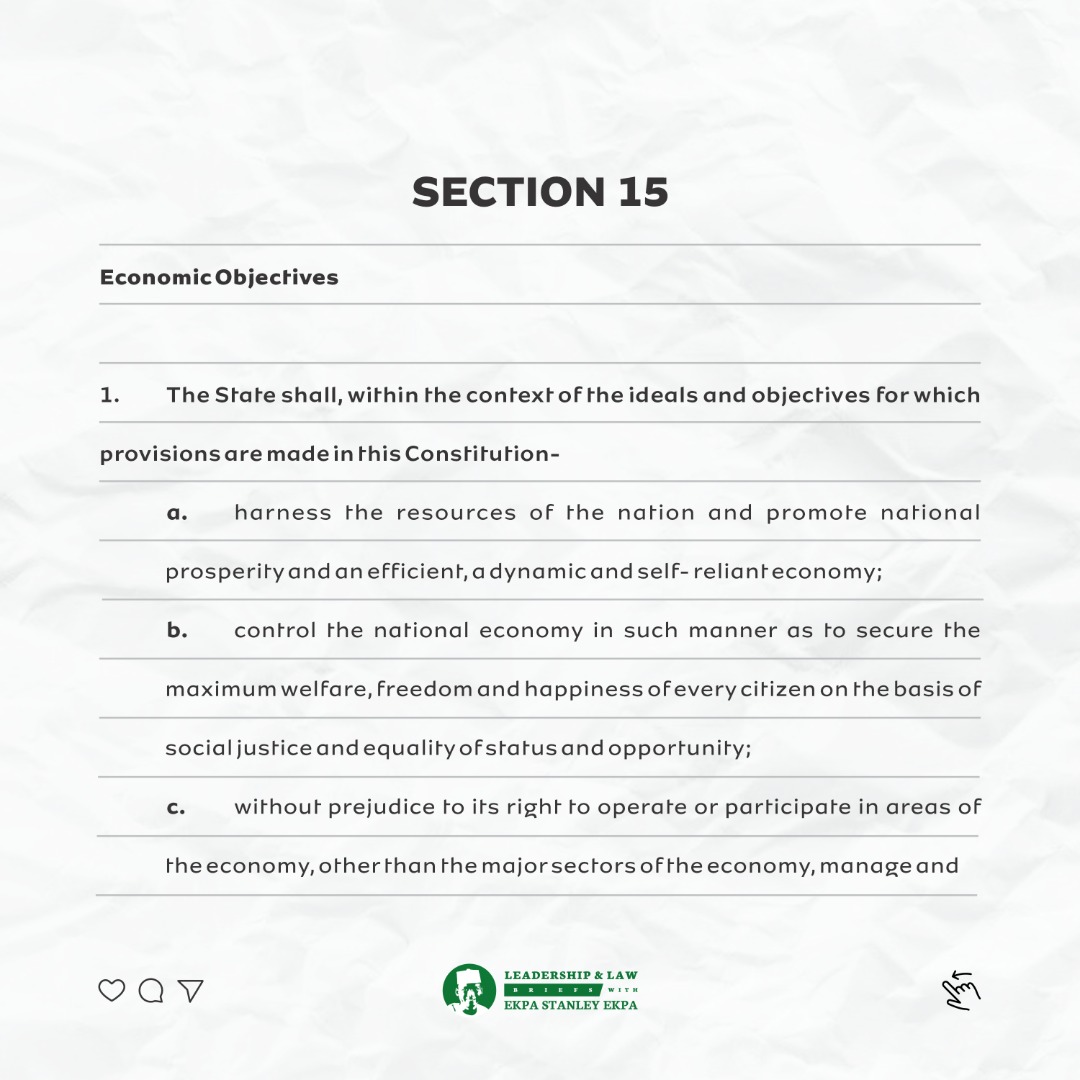
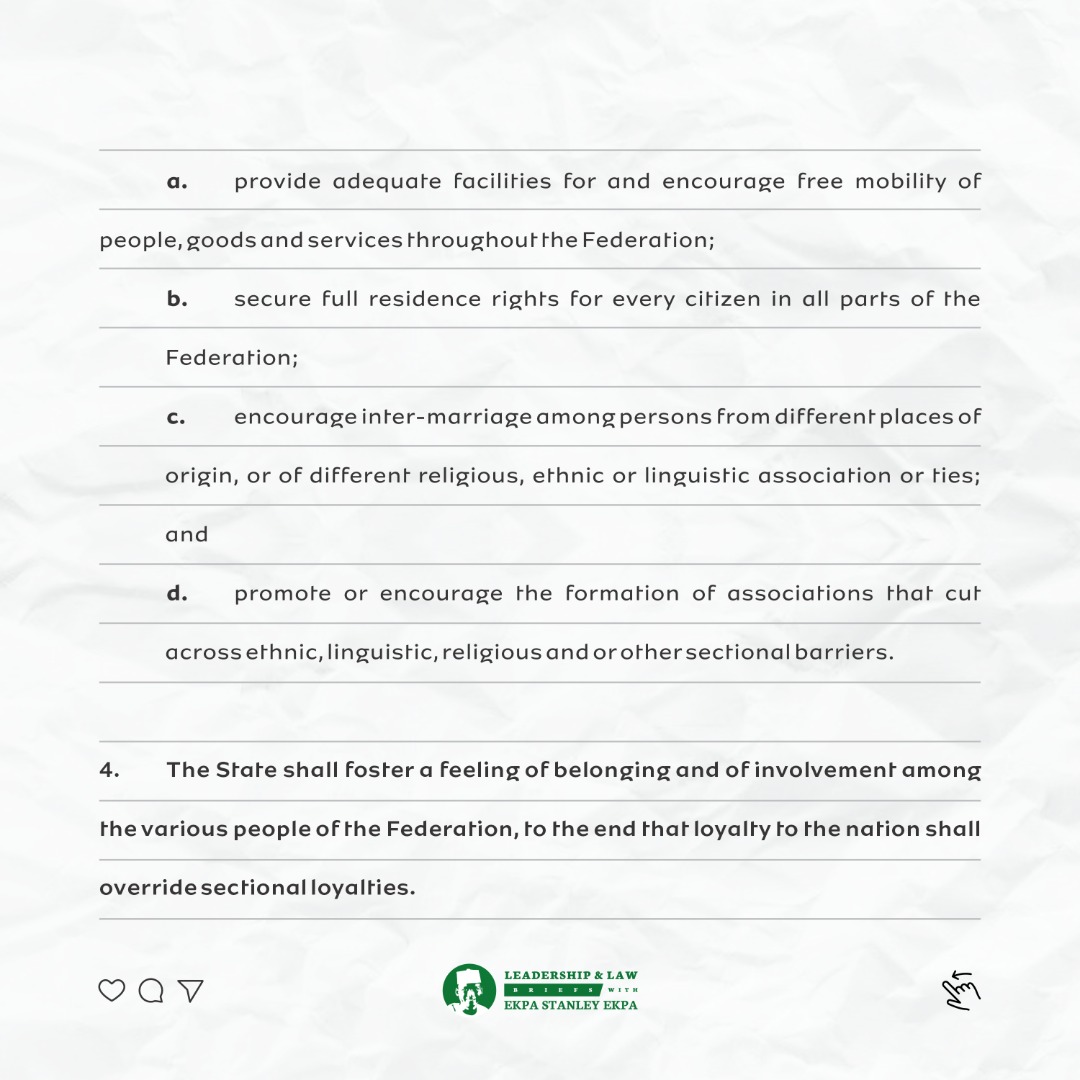
Section 15 - Political Objectives
Section 15 of the constitution outlines five core political objectives for Nigeria, to wit:
1. Established the motto of Nigeria: Unity and Faith, Peace and Progress.
in all parts of Nigeria).
4. Established the duty of government to foster a sense of belonging among the people of Nigeria.
5. Made it mandatory for government at all levels to abolish abuse of power and corrupt practices.
Section 14 - The Government and the People
The provisions of section 14 of the Constitution established five fundamental constitutional issues:
1. That the principles of democracy and social justice shall be the basis for governing Nigeria.
5.Established the recognition of federal character and the diversity of Nigeria in the composition of government or any agency of the government both at the federal, state or local government level, as a way to promote a sense of belonging and galvanize national loyalty and unity
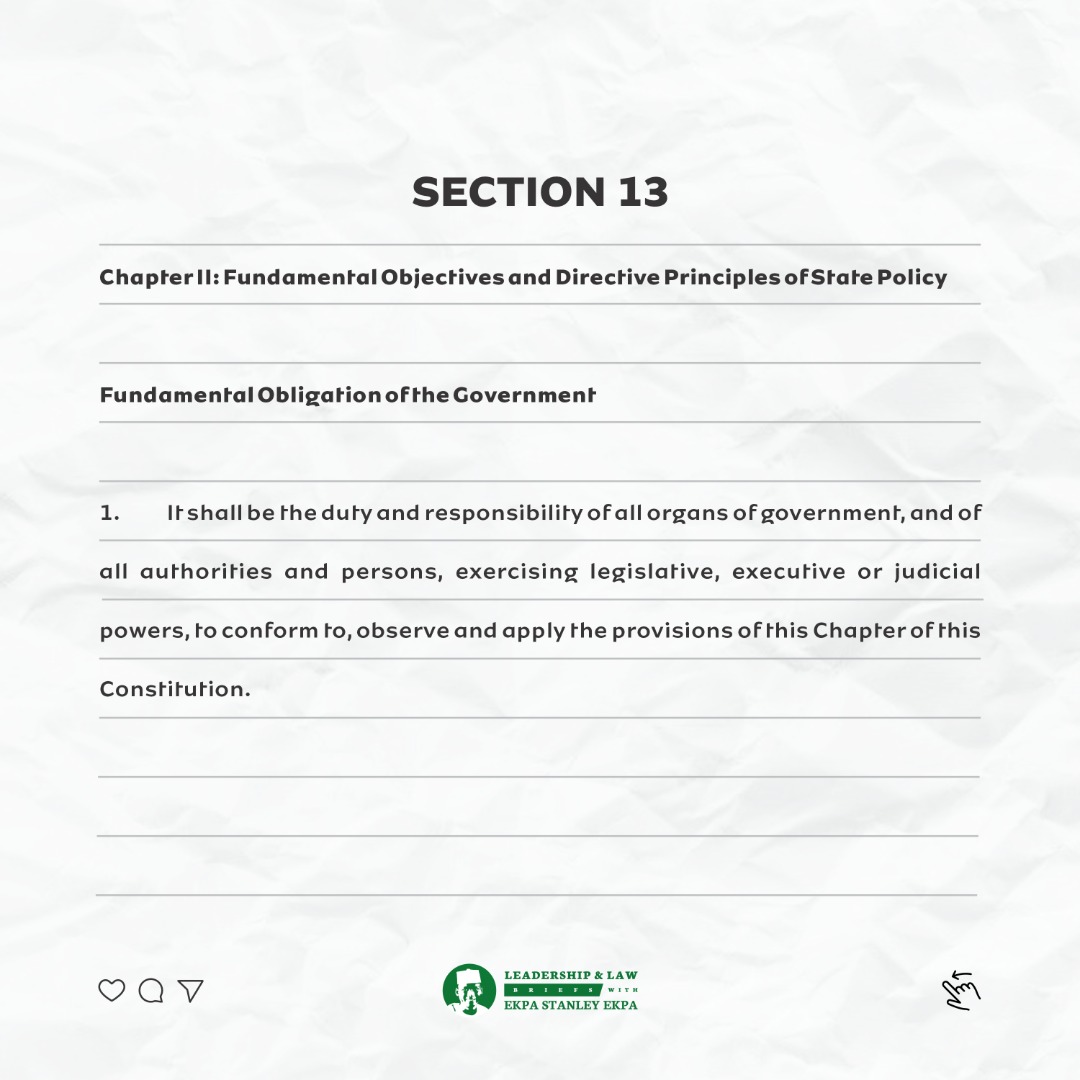
Section 13 - Fundamental Obligations of the Government
Section 13, which is the first section under Chapter Two of the constitution, provides for the Fundamental Objectives and Directive Principles of State Policy,
other items on this chapter for your community, you cannot take the government to court, because section 6(6)( c) says the judicial powers conferred on the courts shall not extend to the powers to the issues under this chapter. It is as lawyers would refer “not justiciable.”