Yvon Chouinard, the founder of Patagonia, has made the planet itself the sole beneficiary and effective "shareholder" of his company.
In an extraordinary move that redefined corporate ownership, Chouinard transferred full control of the $3 billion outdoor apparel brand away from his family. He placed 100% of the company into a carefully designed structure consisting of a trust and a nonprofit organization, both dedicated to combating the climate crisis and protecting the natural world.
Under this new arrangement, the Chouinard family gave up any claim to personal profits. Instead, all earnings not reinvested in growing the business—roughly $100 million each year—now flow directly to environmental causes, funding the preservation of wild lands, conservation efforts, and initiatives to fight climate change.
In essence, Patagonia now exists to serve Earth as its only true shareholder, placing planetary survival above the accumulation of private wealth.
The model has already delivered significant results. As of 2025, the company had channeled an additional $180 million into nature-protection projects. The structure relies on two key entities: the Patagonia Purpose Trust, which safeguards the company’s original mission and values, and the Holdfast Collective, a nonprofit that directs the profits toward high-impact environmental work.
Rather than selling the business to the highest bidder or taking it public, Chouinard chose this radical path—creating what many see as a groundbreaking template for purpose-driven capitalism. Patagonia has shown that a for-profit company can become a powerful force for ecological restoration while remaining financially successful.
[Chouinard, Y. (2022). Patagonia's Next Chapter: Earth is Now Our Only Shareholder. Patagonia Works]
Hey teachers, there’s lots of quick ways to add a little STEM to your classroom this week… here’s one:
Make some origami turkeys
(instructions: https://t.co/RxtB4limwN)
C.S. Lewis died 63 years ago today, about an hour before John F. Kennedy was shot.
Barely anyone noticed.
The man who gave us Narnia passed away at The Kilns, his home outside Oxford, at 5:30 p.m., one week shy of his 65th birthday.
By suppertime every newspaper on Earth was racing to Dallas. (Aldous Huxley died that day, too.)
His road to Narnia ran through two wars.
A shell caught him at Mont Bernenchon in France in April 1918. His Oxford friend Paddy Moore had already been killed, and the two young men had promised to look after each other's parent if one didn't make it home.
Lewis kept that promise for more than 30 years.
War came again. This time, three London schoolgirls were evacuated to his house in September 1939. A bachelor of 40 who barely knew any kids (brave guy), he scribbled a few lines on the back of another manuscript about four children sent away from the air raids to stay with an old professor.
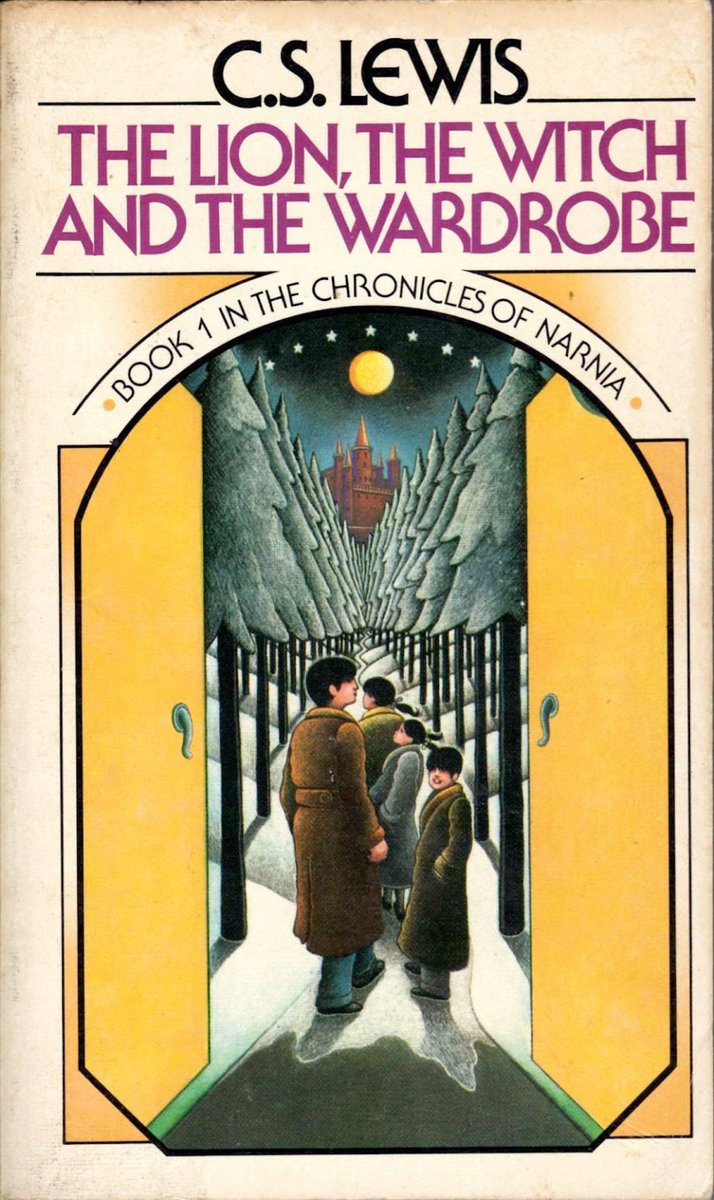
The scrap grew into The Lion, the Witch and the Wardrobe.
He dedicated it to his goddaughter Lucy Barfield: "But some day you will be old enough to start reading fairy tales again."
The news that night belonged to Dallas, and fair enough. But Lewis left you a wardrobe you can still climb into whenever the headlines get negative and annoying. Books like his are where I went when I quit doomscrolling, and the view's been sooo much better.
Embrace beauty, reject doom, my friends ✨
هذا المقطع متداول بشكل كبير بسبب الفضيحه التي حصلت فيه:
أثناء زيارة وزير الدفاع الامريكي بيت هيغسيث وزوجته وعدد من كبار مساعديه لقبر الجندي المجهول في مقبرة أرلينغتون في يوم المحاوبين القدامى، بدأ بعض أفراد المجموعة بالحديث والضحك، وهنا حدث ما لم يتوقعوه:
أوقف أحد جنود حرس الشرف دوريته، واستدار نحوهم وصرخ بصوت حازم مطالبًا الجميع بالتزام الصمت والاحترام!
المثير أن الجندي لم يتردد رغم وجود وزير الدفاع أمامه، والأغرب أن البنتاغون خرج لاحقًا ليؤكد أن الجندي تصرف بشكل صحيح
@snufflewort I had all the symptoms of NPH but the neurologist said it was anxiety and gave me Xanax which made my symptoms worse. It took my entire family going to my next appointment before she referred me to a neurosurgeon. So, when I had the above symptoms I fought for testing!
Can’t wait to get behind the mic for big time games. After multi cancer battles it is the BEST MEDICINE I can receive -sitting at courtside- there were times in my cancer battles that I wondered if that would ever happen again @jksports https://t.co/ViaHoMntu8
Bill Gates paid for the rights to seven physics lectures from 1964 so that anyone on Earth could watch them for free, and almost nobody has pressed play.
They were given by Richard Feynman.
In November 1964 Feynman gave Cornell's Messenger Lectures. He planned six lectures for a general audience, then added a seventh. The series was called The Character of Physical Law. The BBC filmed it.
A year later he won the Nobel Prize.
The films went around colleges for years, and then disappeared from circulation in the 1980s.
Gates had watched them at Harvard. He later said he "fell in love" with them. He has reportedly told people that if he'd seen them earlier, he might have become a physicist instead of starting a software company.
In 2009 he paid privately for the rights, from the Feynman estate, the BBC and Cornell. He never said how much. Microsoft Research put them online for free and called it Project Tuva, after the tiny republic in Central Asia that Feynman spent his last years trying to visit and never reached.
When the BBC license ran out in 2021, Gates renewed it.
Here's what's inside:
> The Law of Gravitation
> The Relation of Mathematics and Physics
> The Great Conservation Principles
> Symmetry in Physical Law
> The Distinction of Past and Future
> Probability and Uncertainty
> Seeking New Laws
The last one has the line every science teacher quotes. If it disagrees with experiment, it's wrong.
Gates said his 10-year-old son could follow them.
They're still free today on Caltech's Feynman Lectures website.
One of the richest people alive paid to make the best physics teacher of the century free.
The only thing left to pay is about seven hours.
Which would you watch first: gravity, or why time only moves forward?