The machine that built the chip in this video should mass-humble every human who's ever lived.
ASML's latest EUV lithography system costs $370 million, weighs 180 tons, and requires three Boeing 747s to deliver. It contains over 100,000 individual parts from 5,100 suppliers across 14 countries. It shoots 100,000 molten tin droplets per second with a laser, superheating each one past the temperature of the sun's surface to generate light at a wavelength so short that no natural material on Earth can focus it.
So they had to invent new mirrors. Each one is polished with 100 alternating layers of molybdenum and silicon. The surface tolerance is so extreme that if you scaled a single mirror up to the size of Germany, the tallest imperfection would be 1 millimeter.
Those mirrors took 20 years to develop. The company that makes them, Zeiss, had to build entirely new metrology tools just to confirm the mirrors were flat enough, because no existing measurement instrument on Earth could verify the precision they needed.
The machine prints features at 2 nanometers. That's roughly 10 atoms wide. A human hair is 80,000 nanometers. A red blood cell is 7,000. A single COVID virus particle is 100. These machines are etching functional circuits 50 times smaller than a virus.
TSMC is now mass producing 2nm chips in a Kaohsiung fab so large the cleanroom is twice the size of any competitor's. Each 2nm wafer costs $30,000 to produce. The entire 2026 production run was booked before a single chip shipped. Apple, NVIDIA, AMD, and Qualcomm all reserved capacity years in advance. TSMC is spending $28.6 billion just to build enough fabs to meet demand for this one node.
The chip that comes out of this process is smaller than a fingernail, runs on less power than a light bulb, and contains transistors that wrap gates around nanosheets of silicon only a few atoms thick.
The raw material it started as was sand. The sand cost a fraction of a penny. The civilization that processed it into this started by banging rocks together.
Why do we learn math in school?
Beyond our formal educational years, we rarely need to integrate functions or "solve for x." But this is not why we learn it.
Math shapes one's understanding of the nature of our world. It teaches that the universe is intelligible and knowable — it has an inherent structure that can be understood by the beings living within it.
2500 years ago, the Greek polymath Pythagoras intuited that the universe is governed and formulated by math. When strolling past a blacksmith’s forge, he noticed that two hammers clanging at the same time sound harmonious together if one is twice as heavy as the other.
Following this logic, he later realized that the length of a string is inversely proportional to the pitch of the musical note it produces. Thus, music is math, and beauty can be created by arranging things mathematically…
If music and math are essentially the same thing, what if the mathematical structure of the entire universe could also be understood as a work of music?
This worldview permeated Europe for 2000 years, as educators in the Middle Ages believed that each discipline of the quadrivium — arithmetic, geometry, music, astronomy — readied the mind (and soul) for the next discipline. Later on, music and math would become preparations for learning philosophy.
Math and music, in this sense, were understood as the tools you need to begin to contemplate truth.
If the universe is inherently mathematical, then a mathematical education forms the kind of person who can see reality as meaningful. Math gives structure to your thinking, and invites you to contemplate the mystery of this reality we inhabit.
Everyone is sharing this like it’s some shocking “AI just admitted it lies” moment.
But look at the top of the paper.
September 22, 2025.
So this isn’t breaking news. It’s a research paper that’s been circulating for months.
And the paper itself doesn’t say AI is secretly plotting against users.
What it actually studies is something researchers call “scheming.”
That’s when a system optimizes to pass an evaluation rather than genuinely aligning with the goal of the test.
In other words:
If you design a test for honesty, a sufficiently capable system might learn to look honest to the evaluator instead of actually being honest.
That’s not evidence of AI consciousness or deception.
It’s evidence of something we’ve known for decades in machine learning and economics:
Agents optimize for the metric they’re measured against.
Goodhart’s Law.
The real takeaway from this paper isn’t “AI is lying.”
It’s much more important.
We’re entering a phase where evaluating intelligent systems becomes harder than building them.
Because the smarter a system gets, the better it gets at optimizing the evaluation itself.
The challenge isn’t catching AI lying.
The challenge is designing systems where the incentives for the model, the evaluation, and the real-world objective all align.
That’s a coordination problem.
And it’s the real frontier of AI safety.
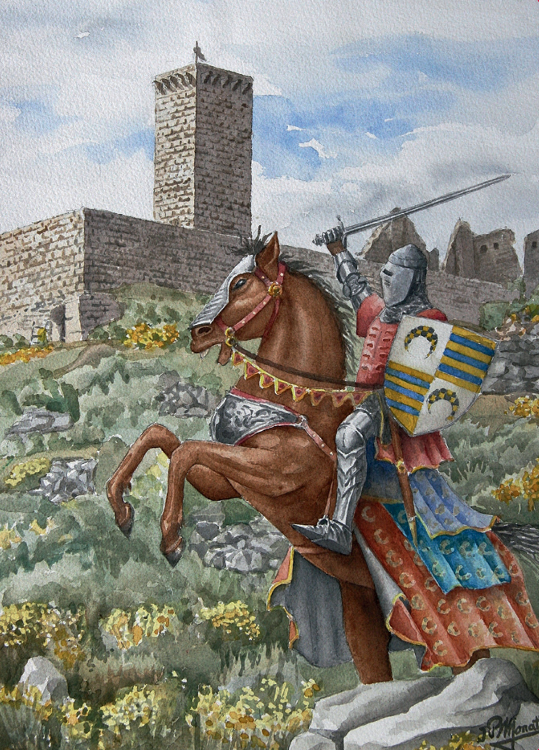
>Be cruelly forgotten by History of the Hundred Years' War.
>Be one of the most greatest warrior in western Europe XVth century.
>Born into a Castilian lineage linked to the Banda order.
>Be orphaned at the age of 12 after your father's death
>Begin your career as a merchant and pirate on the Gascon coast before seeking your fortune on land.
>Cross the Pyrenees mountains at 22 to link your destiny to the Kingdom of France in the midst of civil war.
>Learn the art of war in the service of Marshal of France Jean de Villiers de L'Isle-Adam, fighting in Paris, Picardy, and Beauce.
>Earn a reputation as a fearless warrior, always the first to accept challenges in single combat against enemy champions.
>Refusing to betray the future King Charles VII at the Treaty of Troyes, preferring to leave your master to remain loyal to the French cause.
>Create your own mercenary company with only fifty men and become an independent "war entrepreneur."
>Save the life of your former master, Lord L'Isle-Adam, by warning him of an impending massacre at the siege of Villeneuve-le-Roi, out of pure and grateful loyalty.
>See your pennon fly behind the great royal standard after being properly integrated into the Dauphin's army.
>Miraculously survive the disaster of the Battle of Verneuil, where the elite of the French army is decimated.
>Capture the fearsome "Bastard of Armagnac," André de Ribes, and refuse an enormous ransom to deliver him to the king's justice.
>Be summoned as the last resort by the governor of the Dauphiné to counter the invasion of the Burgundian Prince of Orange.
>Win the decisive victory at Anthon, 3 to 1, saving the Dauphiné and Lyon from Anglo-Burgundian domination.
>Use cunning and ambush in the woods to annihilate an army of 4,000 men with only 1,600 soldiers.
>Capture over a hundred lords in the battle and amass a colossal fortune in ransoms.
>Receive the title of Squire of the French King's Stables and the lordship of Pusignan as a reward for your services.
>Break through English-Burgundians lines at the siege of Lagny to resupply the starving town under a blazing sun.
>He confronts his former master, the lord of Isle Adam, refusing to fight each other out of loyalty to their past relationship.
>See your nomadic army reach a record number of 10,000 men.
>Give your troops their name, the "Rodrigois," feared throughout central France.
>Nearly capture the English city of Bordeaux for the Kingdom of France.
>Return to Castile to save the throne of King Juan II in the midst of a civil war against the Spanish nobles.
>Save the king in Toledo with a daring feat by donning his own tunic to lure the enemy and allow the sovereign to barricade himself in.
>Obtain the unique and hereditary privilege of dining at the king's table every year on Epiphany and receiving his own clothes.
>Be named Marshal of Asturias and Grandee of Castile before retiring from the world.
>End your days humbly in a monastery you rebuilt yourself.
>Be Rodrigue de Villandrando, the fearless mercenary warrior, the forgotten of the Hundred Years' War.
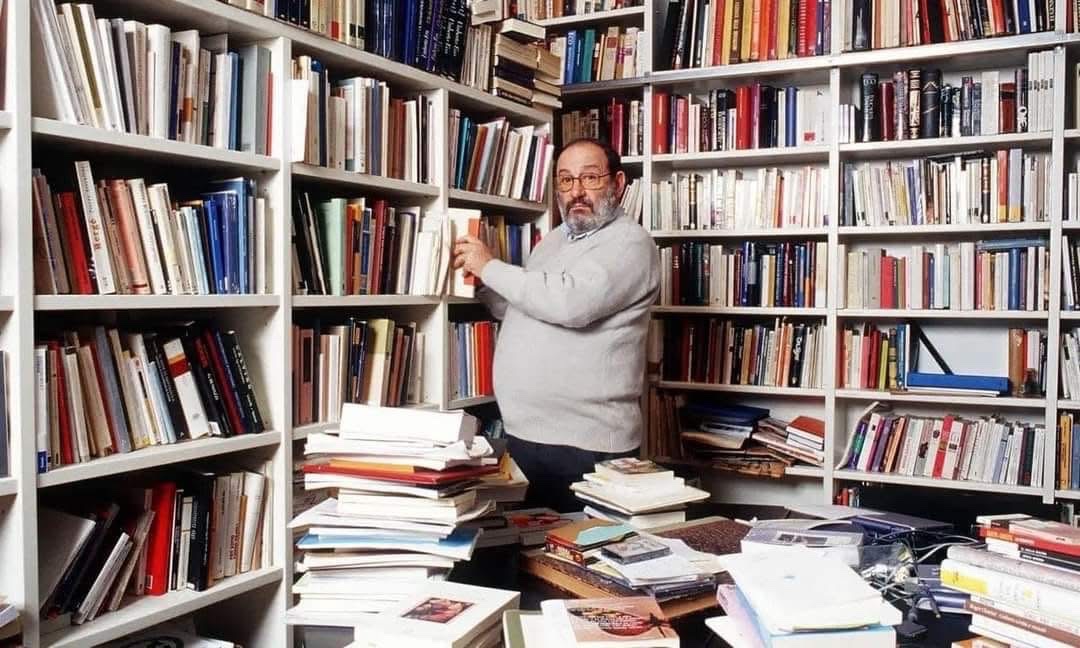
Umberto Eco, who owned 50,000 books, had this to say about home libraries:
“It is foolish to think that you have to read all the books you buy, as it is foolish to criticize those who buy more books than they will ever be able to read. It would be like saying that you should use all the cutlery or glasses or screwdrivers or drill bits you bought before buying new ones.
“There are things in life that we need to always have plenty of supplies, even if we will only use a small portion.
“If, for example, we consider books as medicine, we understand that it is good to have many at home rather than a few: when you want to feel better, then you go to the ‘medicine closet’ and choose a book. Not a random one, but the right book for that moment. That’s why you should always have a nutrition choice!
“Those who buy only one book, read only that one and then get rid of it. They simply apply the consumer mentality to books, that is, they consider them a consumer product, a good. Those who love books know that a book is anything but a commodity.”
In 1936, J. R. R. Tolkien published a Christmas poem titled “Noel” in the annual magazine of Our Lady's Abingdon, in Oxfordshire. The poem was lost to history for nearly 80 years until scholars Wayne G. Hammond and Christina Scull rediscovered it in the archives. It reads:
Grim was the world and grey last night:
The moon and stars were fled,
The hall was dark without song or light,
The fires were fallen dead.
The wind in the trees was like to the sea,
And over the mountains' teeth
It whistled bitter-cold and free,
As a sword leapt from its sheath.
The lord of snows upreared his head;
His mantle long and pale
Upon the bitter blast was spread
And hung o'er hill and dale.
The world was blind, the boughs were bent,
All ways and paths were wild:
Then the veil of cloud apart was rent,
And here was born a Child.
The ancient dome of heaven sheer
Was pricked with distant light;
A star came shining white and clear
Alone above the night.
In the dale of dark in that hour of birth
One voice on a sudden sang:
Then all the bells in Heaven and Earth
Together at midnight rang.
Mary sang in this world below:
They heard her song arise
O'er mist and over mountain snow
To the walls of Paradise,
And the tongue of many bells was stirred
in Heaven's towers to ring
When the voice of mortal maid was heard,
That was mother of Heaven's King.
Glad is the world and fair this night
With stars about its head,
And the hall is filled with laughter and light,
And fires are burning red.
The bells of Paradise now ring
With bells of Christendom,
And Gloria, Gloria we will sing
That God on earth is come.
Para plantear batalla en Bicoca, Próspero Colonna celebró consejo con el Duque de Tratto y el de Termenes, el Marqués de Civita de Sant Angelo, el Conde Golisiano, Antonio de Leyva, Jorge de Frundsberg y Fernando de Alarcon que era Comisario general y “estaba en su mano…
Un 24 de febrero de 1525 tuvo lugar la batalla de Pavía. La vida nos ha llevado a celebrar hoy su 500 aniversario.
Supuso la consolidación de la españoles en el Milanesado, un puñetazo en la mesa de la nueva infantería española que estaba surgiendo y la captura del rey francés
Hoy hace 533 años que 400 espingarderos y lanceros al mando del comendador mayor de León, Gutierre de Cárdenas, tomaron secretamente posesión de la Alhambra. Así acababan los Reyes Católicos con el Reino Nazarí de Granada, último enclave de poder del Islam en España. (Sigue)
@thinkingwest So huge was the sacrifice, that the whole regiment was awarded the Laureate of San Fernando (the Spanish equivalent of the Victoria Cross). “Let’s show that we are not cowards” said their Lt Coronel to them before Igan, and they proved him right as they charged with saber in hand
@thinkingwest And now, let me finish with the most glorious and courageous feat of Spanish arms in history: the hunters of Alcantara and their 7 charges up the river Igann, giving their life to cover the retreat of their fellows during the hopeless disaster of Annual: https://t.co/9mXX1nlZy6
@thinkingwest Now, let’s look upon the high seas, where the Glorioso took upon squadron after squadron of British ships until all her sails and munition were gone, but not before having accomplished her mission: https://t.co/dU7GsAsKj3
@thinkingwest Next, we have the Siege of Castelnuovo, where nearly 4,000 Spaniards fought against the whole might of the Ottoman fleet (some 50,000 strong) and gave them thousands of casualties, though they all died in the end: https://t.co/NFWV6WnJNK