Codex now supports non-OpenAI models.
No hacks needed anymore.
You can use local models with Ollama / LM Studio, or plug in third-party model APIs directly.
At OpenAI, we're continuing to bet on Rust as the future of systems programming.
I'm proud to announce that we're making a $600,000 commitment to the Rust Foundation, which combines our Platinum membership with additional support for maintainer efforts across the Rust ecosystem.
The scary part about Anthorpic's Fable nerf is not that it refuses to answer biology or cryptography. It's that it foreshadows what's coming. A world where a couple companies decide what you can and cannot do. They're building a new ruling class and you're not in it...
1- AI-generated code just creates more technical debt.
2- At the end of the day, you (the developer) are responsible for the code, not the LLM that generated it. So the less code you have, the easier it is for you to own it.
3- A good engineer knows what code to write, and equally importantly, what code not to write or to delete.
(BTW, this is what we old-school software engineers have been saying for a long time, and we've been called all sorts of names for it.)
Quantum computing introduces long-term risk for digital infrastructure, from wallet signatures to validator integrity and more.
Circle’s post-quantum whitepaper explores Arc’s phased approach to resilience across:
→ USDC
→ Smart contracts
→ Validators
→ Infrastructure systems
Planning for long-term security and institutional adoption.
https://t.co/Kt8d1aPIKz
We’re very proud of our work with @saturn_credit, who chose us to formally verify the contracts for USDat and sUSDat tokens.
The collab really paid off: A critical underflow bug was caught before it could reach users.
More details 🧵
Minimax has just given me the most braindead, 8B-tier explanation of my test joke, and then when I said "Naive", hit me "Whatever you say" without thinking.
nah, Western frontier can sleep soundly.
Maybe it really is that good on KernelBench tho
This incident is unrelated to Squid’s core protocol and contracts. All Squid users and integrators are unaffected and no action is needed.
A third-party Gnosis Safe module was exploited today across Base and Ethereum, resulting in approximately $3.2M in losses. The vulnerable contract is verified on Basescan under the name “SquidRouterModule” but this contract was not built, deployed, or operated by Squid. It is a third-party smart-wallet product that chose to integrate with Squid, among other protocols, but has not been in contact with us.
The exploit worked because the third-party module accepted a caller-supplied constant string as proof that a message was secure. If you pass in this string (which is publicly available in the verified contract’s code), then you can execute an array of arbitrary calldata, stealing funds at will. The victims’ Safes had added this faulty contract as a trusted Safe Module, which gives the contract the ability to spend any tokens in the Safe without signatures. Squid’s own router (0xce16F69375520ab01377ce7B88f5BA8C48F8D666) is architecturally different and was not touched. Squid user funds, approvals, and integrations are fully secure.
Early public reporting may reference “SquidRouter” due to the contract’s verified name on Basescan. The accurate framing is: a third-party SquidRouterModule was exploited, not Squid’s Router contract. The contract shares our name but is not our code. We are monitoring the situation and will share updates if anything changes materially.
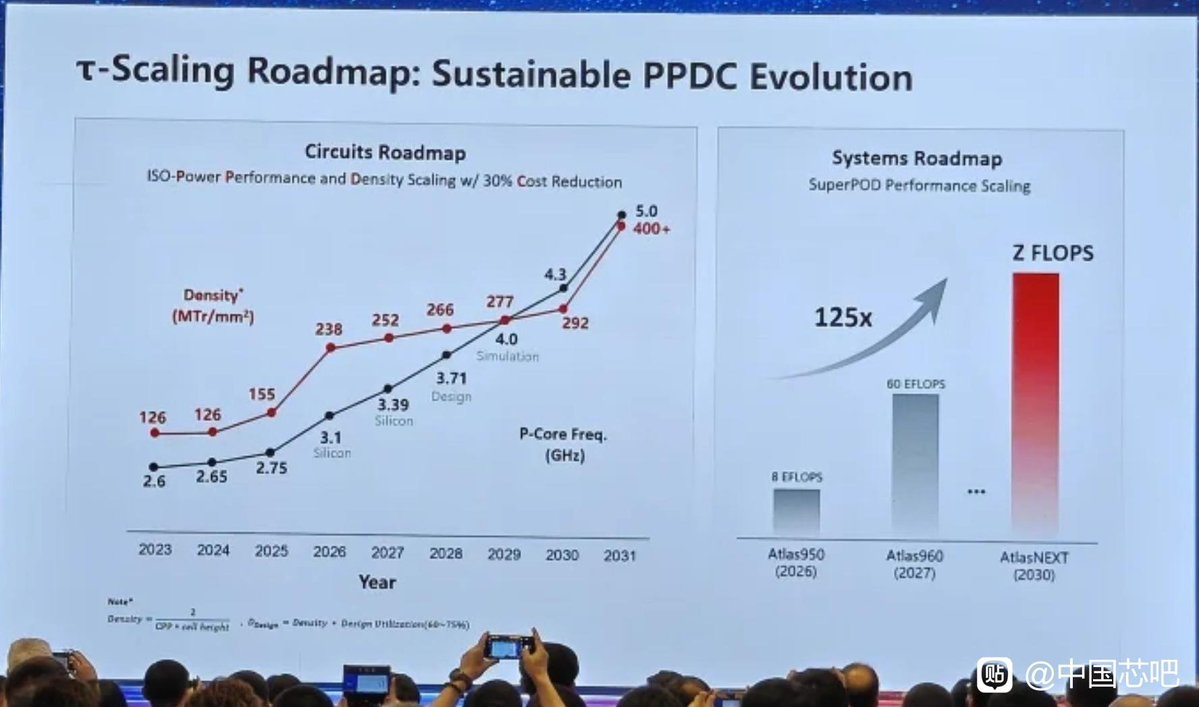
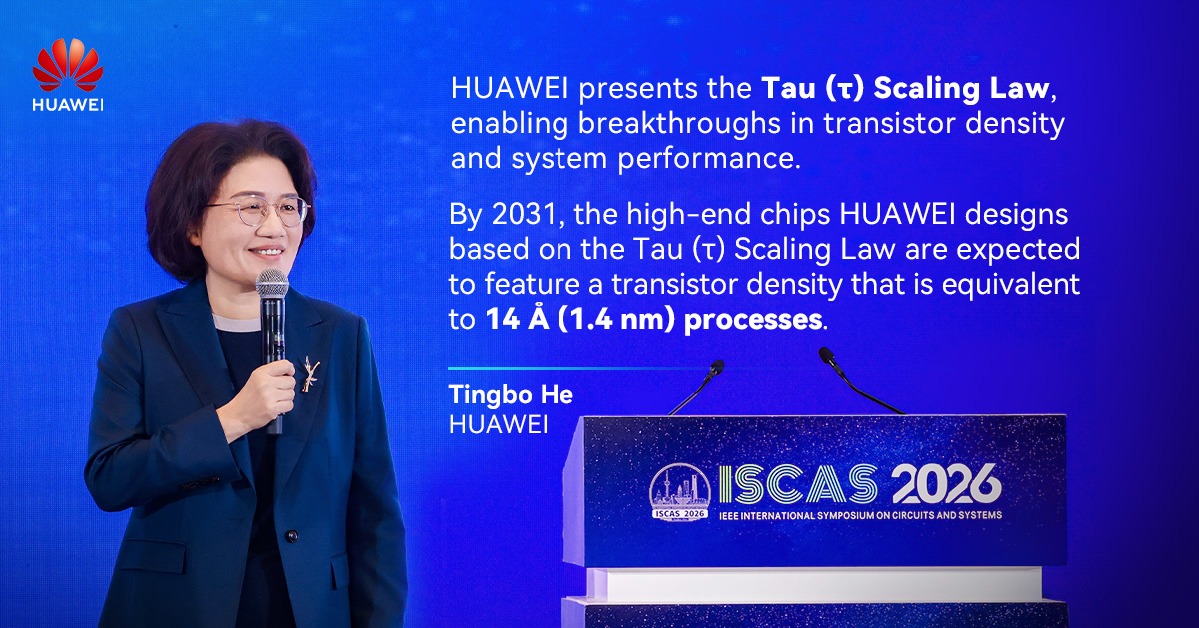
HUAWEI has presented the Tau (τ) Scaling Law, a new principle for guiding the future development of the semiconductor industry. By 2031, HUAWEI's high-end chips based on this law are expected to feature a transistor density that is equivalent to 14 Å (1.4 nm) processes.
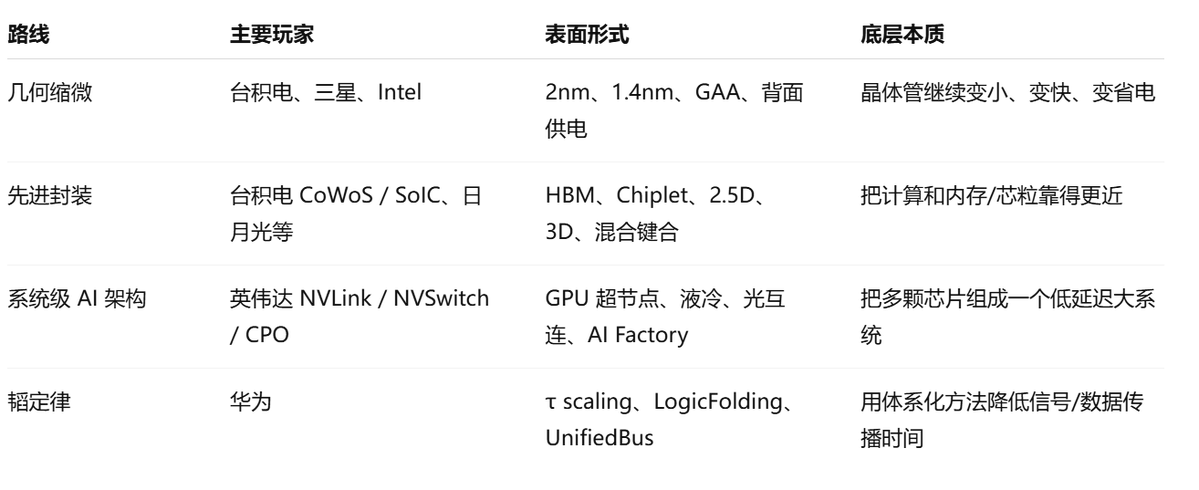
Chinas Huawei can't access EUV. So they wrote their own scaling law. The leverage of US export controls erodes.
Huawei just presented the Tau (τ) Scaling Law at IEEE ISCAS, a framework that replaces geometric transistor scaling with time-based optimization across devices, circuits, chips, and systems.
Huawei is not trying to win the nanometer race anymore. They're redefining it.
381 chips designed and mass-produced over six years. Kirin chips with their new LogicFolding architecture ship this fall. Target by 2031: transistor density equivalent to 1.4nm processes - without EUV (ASML embargo still hits hard)
Whether Tau Scaling delivers on that promise remains to be seen. But it shows one thing: US export controls cut Huawei off from cutting-edge lithography, and instead of hitting a wall, they built a parallel road.
China's semiconductor independence isn't hypothetical anymore. It's shipping in phones, running AI workloads, and now has its own scaling law presented at one of the world's top circuit design conferences.
If Huawei can close the performance gap through architecture instead of lithography, the entire leverage of US export controls erodes. The sanctions were designed to keep China two generations behind. Huawei is trying to make that metric irrelevant.
h/t @AndrewCurran_ for finding this interesting blogarticle and @zephyr_z9 for the photo