Estoy trabajando en https://t.co/pjFyWFIiKC
Es una web app que permite ver archivos que producen 2 apps de nicho, de ingeniería de costos para construcción principalmente en México.
UPLOAD YOUR OWN FLOOR PLAN TO MAKET
HAVE IT RECOGNIZED AND EDITABLE IN MINUTES
One of the most requested features weʼve ever received just launched.
Check it out:
We're launching Bridge today 🌉
An AI engine that builds virtual homes. Blueprint in, walkable home out. Every plan, every option, structural changes included.
What took 3D artists months now takes days. Homebuilders can finally show buyers every home they sell.
https://t.co/QrwlM5FUjP
No one is born homosexual, or born like anything.
We were all born with no understanding of how we should live.
Thats why the Bible is there as God’s will, and guidance for our lives. It’s our choice to follow to optimum or not.
PLANT-BASED TO SAVE THE CLIMATE?
✅ Plant-based diets lead to small gains
With 0.2-0.8 t CO₂e saving/y, plant-based eating isn't the major climate solution some claim it to be. On a 9-15 t CO₂e footprint, this equals 1–6% reduction, depending on dietary restrictiveness.
Recomiendo que no le den RT, porque le va a caer como balde de agua fría a los chairos, y a esos macuarros no les gusta bañarse. Pero miren lo que podríamos traer en la cartera si Donald Trump ayuda a México a liberarse del narcoterrorismo.
In Trump We Trust!
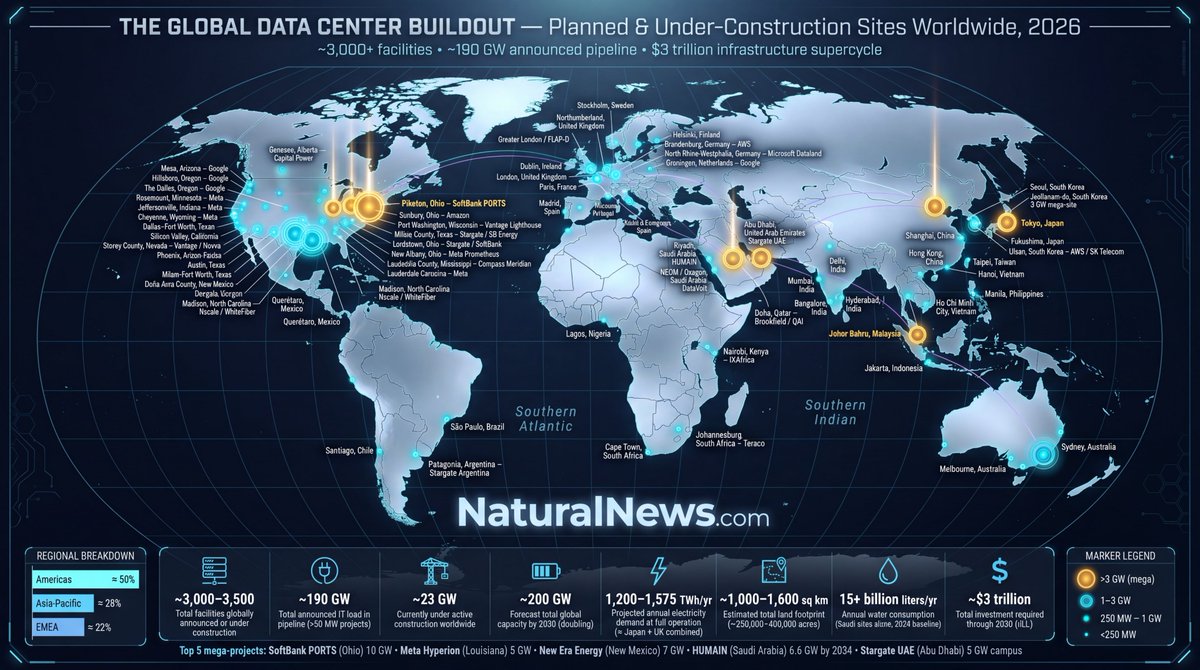
I have put together a remarkable global map of every data center under construction or planned for construction.
It shows a staggering 3,000 - 3,500 data centers being built or already announced to be built, consuming 190 GW of power when completed.
They will consume over 1,000 square km of land and 15+ billion liters of water per year, in all.
You are free to use this infographic in your videos and broadcasts. It's rendered at 4k. Just please give a call out to Natural News. The infographic is 99% correct but could have small typos or slight geographic variance, since it's AI-rendered.
Enjoy and share!
"If I told you there was one free thing you could do every Sunday that would make your kids happier, healthier, smarter, and closer to you, you'd think I was selling something."
Take your kids to church regularly. I don't care if you believe. The data is so lopsided that skipping it is the parenting equivalent of refusing vegetables because you don't like the taste.
Grades. Religious teens get As at almost twice the rate of nonreligious teens. In a class of 100, that's 24 A-students instead of 14. Church gives a kid the same academic boost as being born rich instead of poor.
College. Working-class religious kids earn bachelor's degrees at double the rate of their nonreligious peers. Middle-class kids do it at 1.5x the rate. For families without a trust fund, this is one of the most powerful forms of upward mobility social scientists have measured.
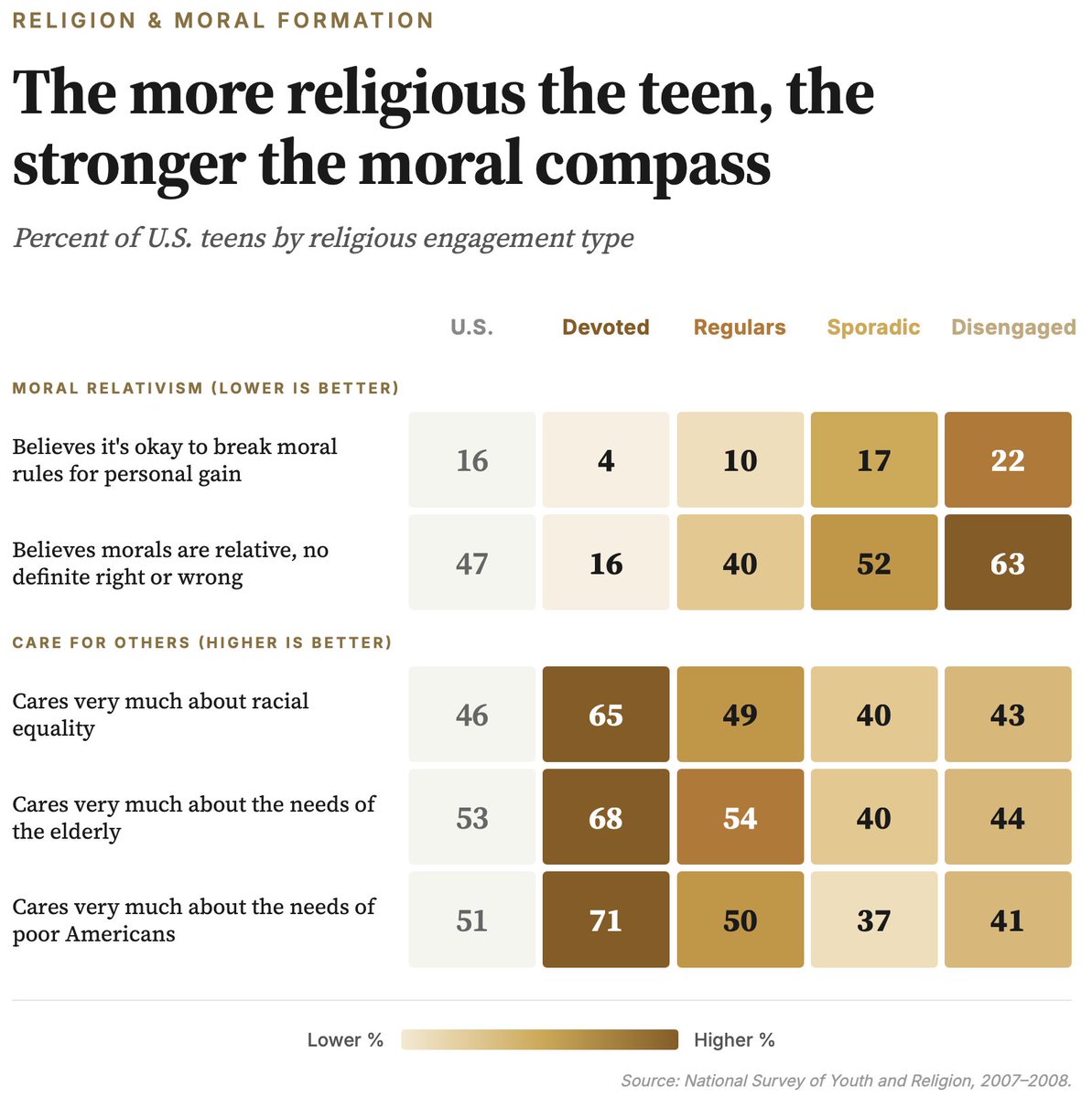
Character. Religious teens are far less likely to lie, cheat, or do things they hope their parents never find out about. They're more likely to care about racial equality, the elderly, and the poor. They reject the idea that morality is whatever works for you in the moment. That kind of kid doesn't happen by accident. It's built.
Closeness. 60% of parents of religious teens say they feel "extremely close" to their kid, compared to 50% of nonreligious parents. The kids report the same thing back. They get along better with their parents, talk about hard stuff, and actually want to spend time with their family.
Despair. Religious teens are dramatically less likely to be depressed, anxious, lonely, or feel that life is meaningless. 90% of devoted religious teens never binge drink, compared to 41% of the disengaged. Economists named the modern epidemic "deaths of despair." Regular church attendance is one of the strongest known buffers against it. Parents are spending fortunes trying to solve teen mental health. The most evidence-backed intervention is free.
Purpose. Religious young adults report higher purpose, gratitude, life satisfaction, and resilience. These are the exact traits every parent says they want their kid to have.
Here's why it works. Affluent families already surround their kids with networks of stable, accomplished adults through neighborhoods, schools, and parents' colleagues. Working and middle-class families usually don't. A congregation is often the last institution in American life that puts your kid in weekly contact with dozens of stable, employed, sober adults who know their name. It used to be called "a village." Now it barely exists outside of churches.
"But I don't believe." Your kid doesn't need your theology. They need you to show up.
"But church is boring." So is sitting through a kindergarten music recital. Parenting is the deliberate choice to be bored on purpose for someone you love.
There's a church within 15 minutes of nearly every American home. You don't need money, connections, or credentials to walk in. Nothing else in this country will surround your kid with engaged adults, teach them moral seriousness, and give them a stable weekly rhythm at zero cost.
You already drive them to practices that produce far less. The free thing on Sunday produces more, on more dimensions, than almost anything else you do as a parent.
You don't have to believe anything. You just have to take them.
This MRI study on young kids just exposed something terrifying:
They scanned the brains of 60 children aged 3–5 — including 5-year-old Rose — and found interactive screen time is causing measurable loss of white matter in their developing brains. Even just 2 hours a day is linked to impaired neural connectivity, language, and literacy development.
Professor Mike Nagel (neuroscientist and father) said his first reaction was simply: “Wow… I was not anticipating seeing anything like that.”
We’re physically changing children’s brains before they even start school — and the damage is visible on scans.
This one actually unsettled me. I’ve always suspected too much screen time was bad, but seeing real white matter loss in toddlers hits different.
Parents of little ones — has this kind of research changed how much screen time you allow?