Excited to share our work on chromatin landscape remodeling in cloned embryos! 🐄🐄We started off w/ simple question: how does the somatic epigenome reprogram to prepare for the onset of transcription (EGA)? https://t.co/cNk6FNvvkp
Interested in exploring the molecular mechanisms of early mammalian development?
Fully funded 4-year PhD opportunity at the University of Dundee!
We are seeking a motivated PhD student to lead a biochemical and structural biology project.
See the link
https://t.co/8xqiry15gn
🪄Regeneration is a conversation between stem cells and their surroundings. 🥳I’m excited to share our new review on the expanding landscape of stem cell niches and how understanding stem cell–niche dialogue could advance tissue repair and healthy aging 💪🏽
https://t.co/7hvGFZr3gk
When you look at the teamwork behind work like what was just published here, you realize the coordination required across teams, datasets, and time.
Will AI help us with this coordination? What if we took the same dataset and findings here... and asked AI to coordinate the data, find overlooked relationships, and uncover additional insights? What happens when you add to this the work of thousands of other papers in the space? Mere mortals cannot encompass the range of expertise required to fully plumb the opportunities.
That's an AI/SI goal worth pondering. But what resources would it take to make it happen?
Congratulations to Patel et al., the other authors, and the rest of the team without whose effort a work of this complexity could not come to the aid of patients with dire diseases such as those represented in this publication. And, of course, thanks to the patients and family members whose lives are represented in papers like this.
Our Nature Medicine paper is out: menopause isn't a slow slope. Across 300M+ lab tests from 1M+ women, many body systems jump at the final menstrual period. Men show no such jump. 1/4
https://t.co/OgrPwaQe2E
@OdedRechavi It’s not dead yet [monty python meme]! The genomics and stem cell and chromatin fields are still pretty lively here, although not like the good old days
Are weak TF motifs important? @ZeitlingerLab use deep learning to systematically map low-affinity pioneer binding sites in mESCs and show that they cooperate with strong motifs to open chromatin. Preview w/ @gracecbower: https://t.co/V3mmqmeJPG Paper: https://t.co/lEZnhrCZiI
Don’t take it from me, but a huge regulator for female health beyond reproduction is the ovary.
Decoding its biology is some of the most valuable work one could en doing and funding today.
We're hiring too! 🧠🧬 Two PhD projects in our lab: glioblastoma as a cellular ecosystem, and neurodevelopmental disorders modeled with patient iPSCs and organoids. Apply by 19 Oct!
https://t.co/M8hEEulhuv
Cervical clues: Olfm4 as a marker of epithelial diversity and plasticity
This Research Highlight showcases work by Mala Mahendroo, Shanmugapriyaa Madhukaran and colleagues.
https://t.co/5sn9UREaM5
New preprint with @ZernickaGoetz on lineage reconstruction in mouse embryos and stem cell-derived embryo models, led by Yunzheng Liu (@Rachsuliusy )! (1/13) https://t.co/K1sshH4lgO
The only way to combat the AI cheating crisis is with intensive instruction. This requires smaller class sizes and profs who aren’t teaching 5 courses a semester at 4 different colleges like many adjuncts. Cut the make-work admins, do a TT-hiring blitz. Anything else is madness.
1. CRISPR came from basic research on bacteria.
2. Optogenetics started with a discovery in algae.
3. The GFP protein comes from jellyfish.
The biggest breakthroughs all trace to scientists follow their curiosity. This is one huge reason why we must keep funding basic research!
Did not have a “anyone can have a valid opinion about gene editing human embryos despite not having the technical ability to accomplish said experimental procedure or conceptual framework to be able to sufficiently analyze a safety profile” on my 2026 bingo card. 🤦♂️
genuinely in awe of how the tech fiefdoms sent all their best hype men to try to court the Holy See and the response was Leo staking his entire pontificate on waging a crusade against AI
Huge Congratulations to Azim Surani on his retirement. He discovered genomic imprinting-a foundation of epigenetics. Later: germ cell specification & reprogramming. Azim’s rigorous scholarship, humble kindness, and insights were so inspiring.@GurdonInstitute@Cambridge_Uni
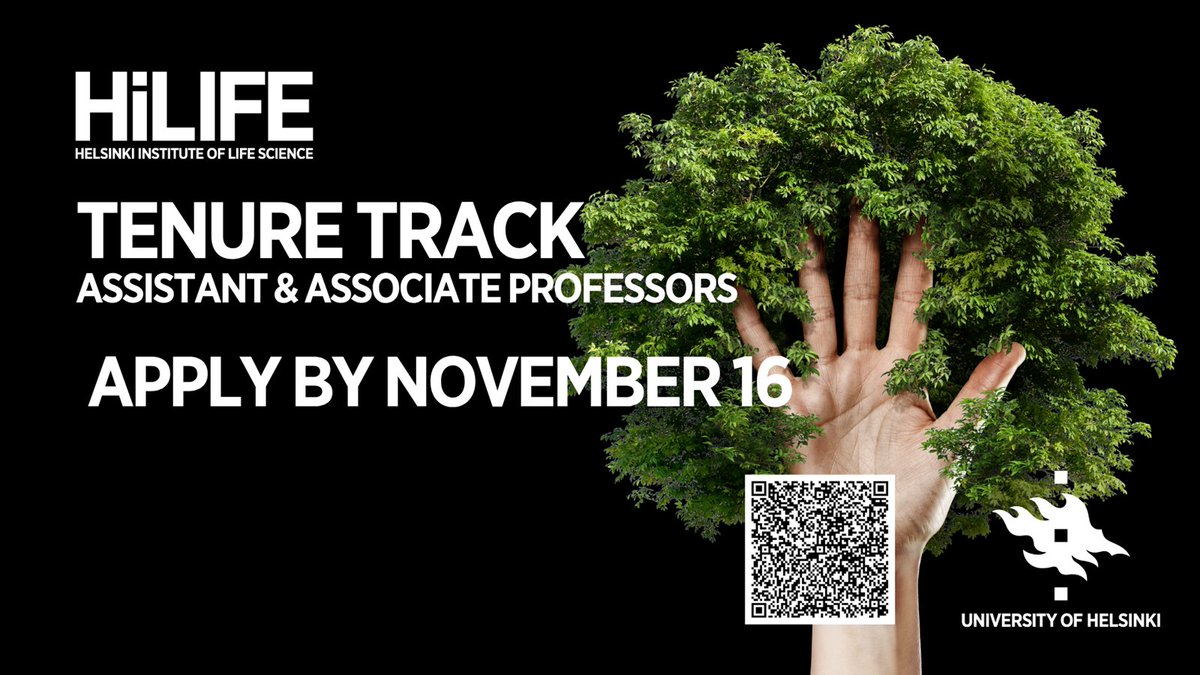
We are looking to welcome new Tenure Track assistant/associate professors to our research community for the fifth time in HiLIFE’s history 🙌
Submit your application by November 16, and spread the word within your networks too!
https://t.co/qDBI4YZUOF
#lifescience#recruitment
The Department of Human Genetics at the University of Utah is continuing a multi-year recruiting initiative for multiple tenure-track faculty positions at the rank of Assistant Professor. See details here https://t.co/RHizeHjaEw