It is now time to do the unpleasant: deconstruct the non-experimental parts of the Korean room temp SC claims. This is relevant because the theoretical/background SC discussions in these papers are so naïve that if it were an undergraduate project at Maryland we would give an F
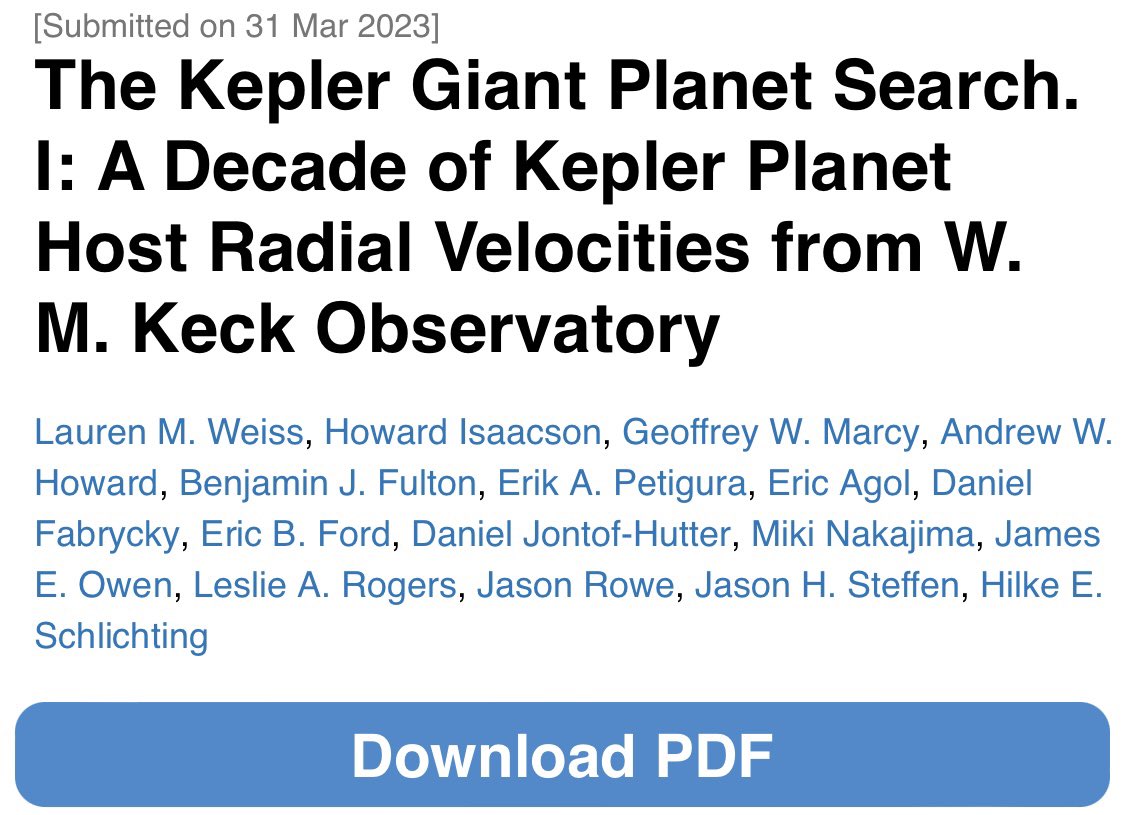
To add to this, I collected ~50 of the RV points that went into this paper across ~20 nights of observing. Numbers are similar for many other ECRs I work with. I was not offered coauthorship and Geoffrey Marcy was. ⬇️
Turns out I collected 52 RVs used in this paper, also not offered coauthorship but he was. I don’t want to be a coauthor with him in any scenario. I spent 18.3 hours of my life staying up late collecting data to unknowingly help prop him up.
I’m totally excited to share that our new department of Astronomy & Astrophysics at UC San Diego was officially approved today! This was years in the making with an incredible team effort! More news to follow soon… @ucsdastro @karinsandstrom@coolstarlab @QuinnKono et al.
The survey overview for our #JWST resolved stellar populations ERS program by Weisz, McQuinn, Savino, et al. is out today! In it, you can read about the science motivation & observing strategy and see the color-magnitude diagrams for M92, Draco II, & WLM. https://t.co/lxEvAVSfv8
While it's a great relief that the case is over, it was frustrating to see what attitudes some people in power still have towards harassment.
We must change a system that appears to worry more about people calling out harassment than about harassment itself.
7/8
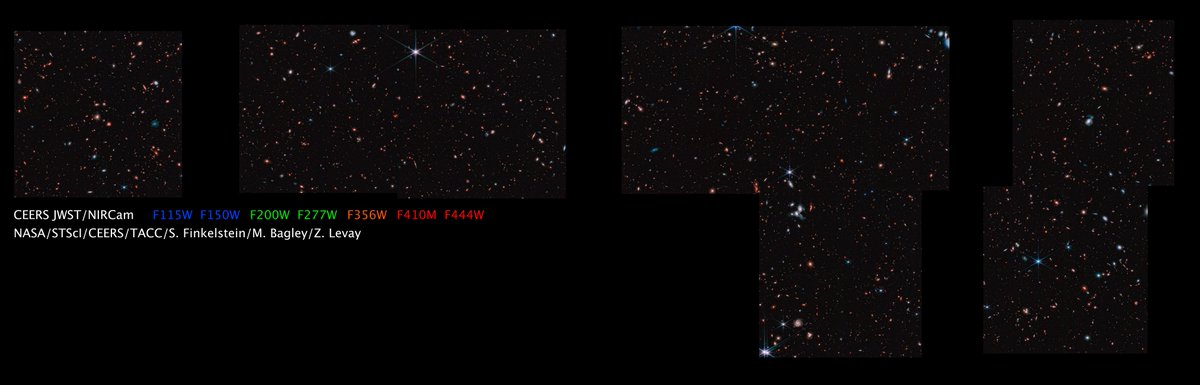
We are very excited to announce CEERS Data Release 0.5, our first CEERS release of real JWST imaging!! Check out our data release page for more information: https://t.co/OvPB9zQ8qV
Today's an exciting day as we are able to finally present the MillenniumTNG (MTNG) project, a collaboration between MPA, Harvard, & Durham that has been a long time in the making. One of our goals has been to combine volume & resolution to enable impressive dynamic range, [1/9]
I have been waiting so long to share this, and it is finally time! Do you want to see THE BIGGEST IMAGE #JWST has taken of galaxies so far?! Our color mosaic image from @ceers_jwst is ready, and there are SO MANY GALAXIES in it! Download it here & ZOOM IN https://t.co/DJcBu8DMFl
🚨Today is paper day!!! (and also my b-day 🥳)🚨 https://t.co/nhelILAtjI
This paper is about constraining the timescale required to halt star formation in satellite galaxies of massive clusters at z~1.
Why do we care & what does this tell us about satellite quenching at z~1?
Today is my very first paper day!! 😎
https://t.co/XiRu8QFOPK
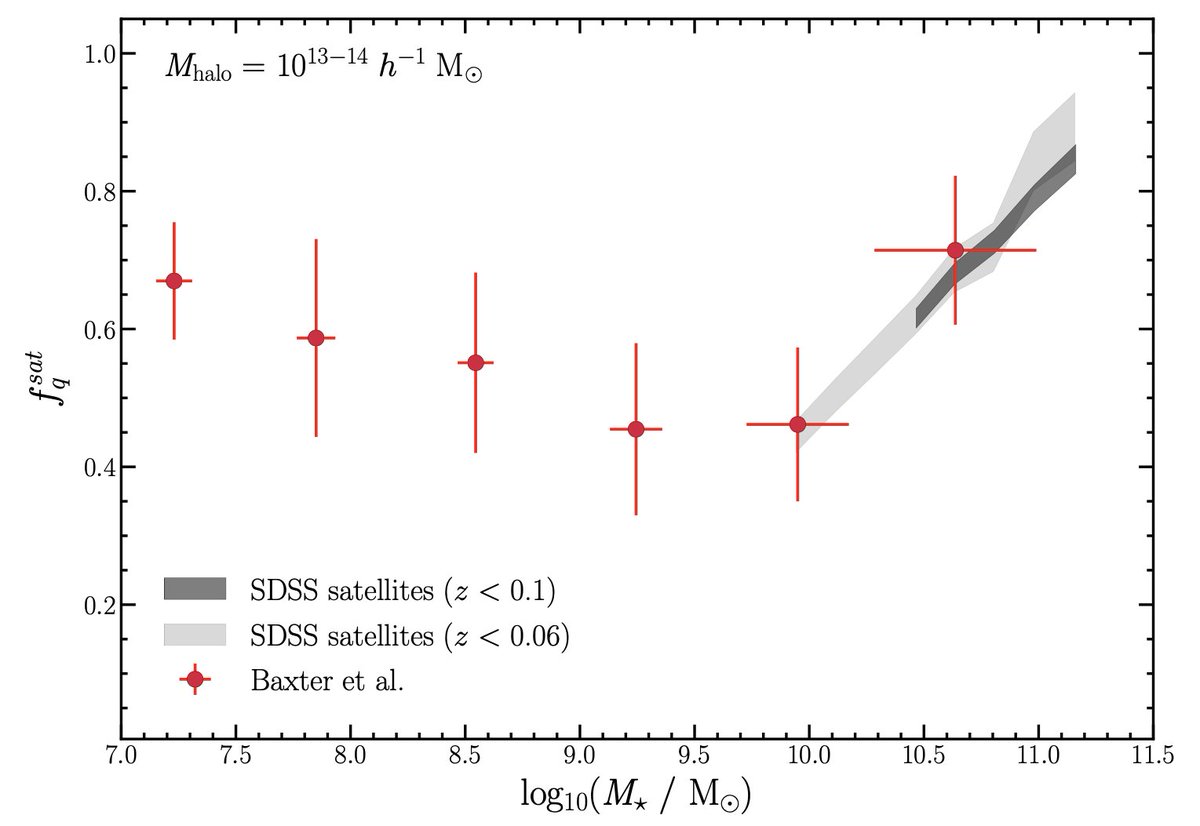
In this paper, we couple supervised machine learning with a statistical background subtraction technique to measure the quenched fraction of low-mass satellite galaxies in group environments.
Why is this important?
Excited for the recent work by Tae Baxter (@sentientbaryons) to hit the arXiv - https://t.co/efLNC2syoI. Tae is using neural networks and large photometric surveys to lead a statistical study of low-mass satellite galaxies. @UCIPhysAstro@UCIPhysSci
Tae finds an increase in the satellite quenched fraction at low masses in nearby groups, likely driven by an increasing efficiency of ram-pressure stripping.
Astronomers discovered a supersized galaxy—six times as big as the Milky Way—from the very early universe, and it’s changing their way of thinking about how such structures form. @keckobservatory
https://t.co/zUsHktZE7Q




![Swnk16's tweet photo. Today's an exciting day as we are able to finally present the MillenniumTNG (MTNG) project, a collaboration between MPA, Harvard, & Durham that has been a long time in the making. One of our goals has been to combine volume & resolution to enable impressive dynamic range, [1/9] https://t.co/9SUfVlnkoM](https://pbs.twimg.com/media/FfgD4JbWYAEz4pd.jpg)