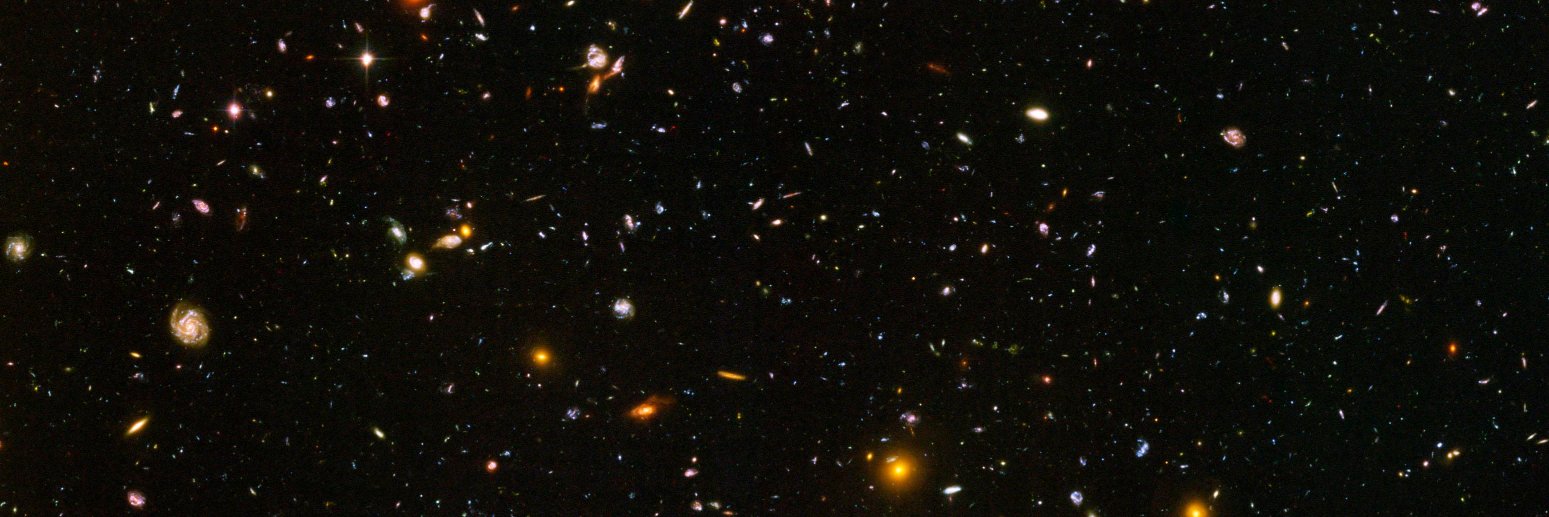
🚨Today is paper day!!! (and also my b-day 🥳)🚨 https://t.co/nhelILAtjI
This paper is about constraining the timescale required to halt star formation in satellite galaxies of massive clusters at z~1.
Why do we care & what does this tell us about satellite quenching at z~1?
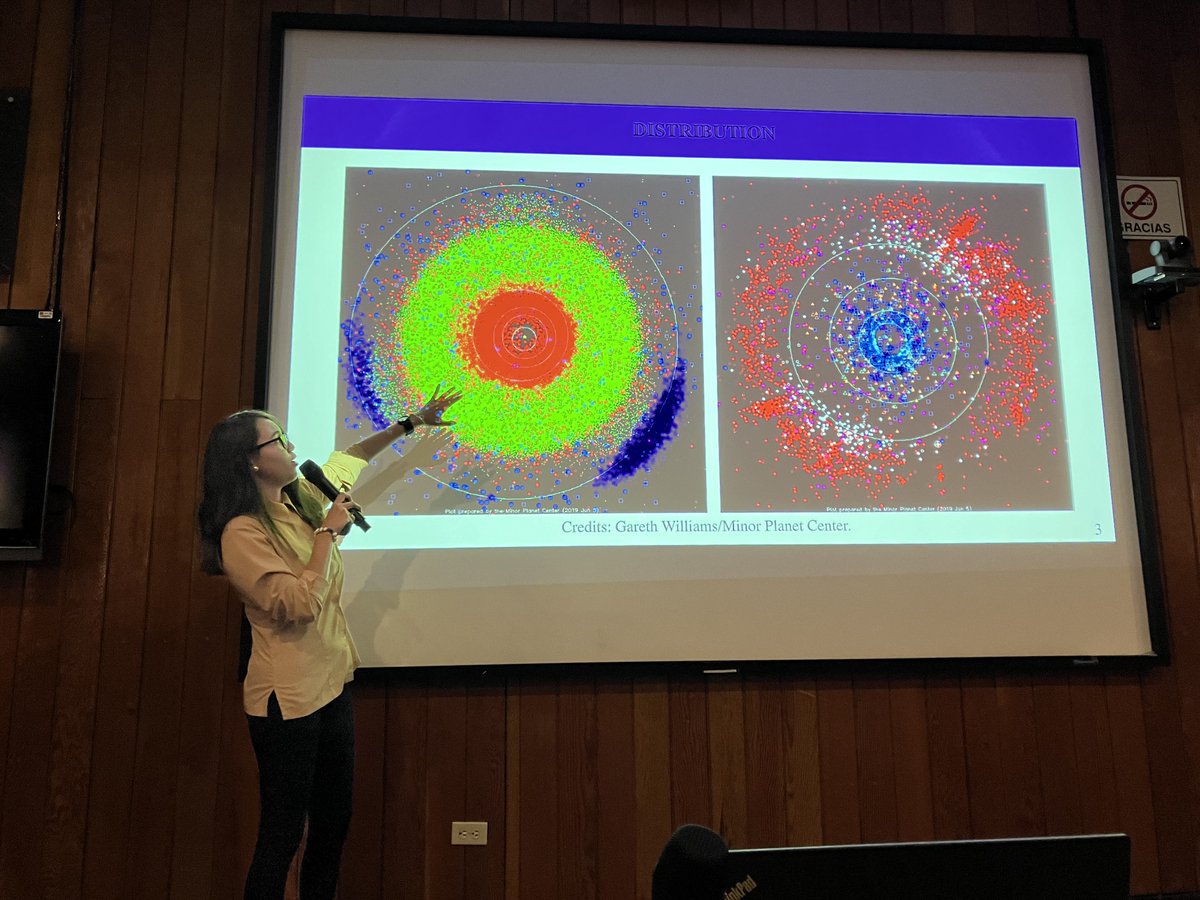
Next up Ana Zurita talking about the 2CAN instrument on the 1.5m telescope at San Pedro Martir which will search for and classify Minor Bodies in the Solar System with spectrophotometry #esdasmeeting
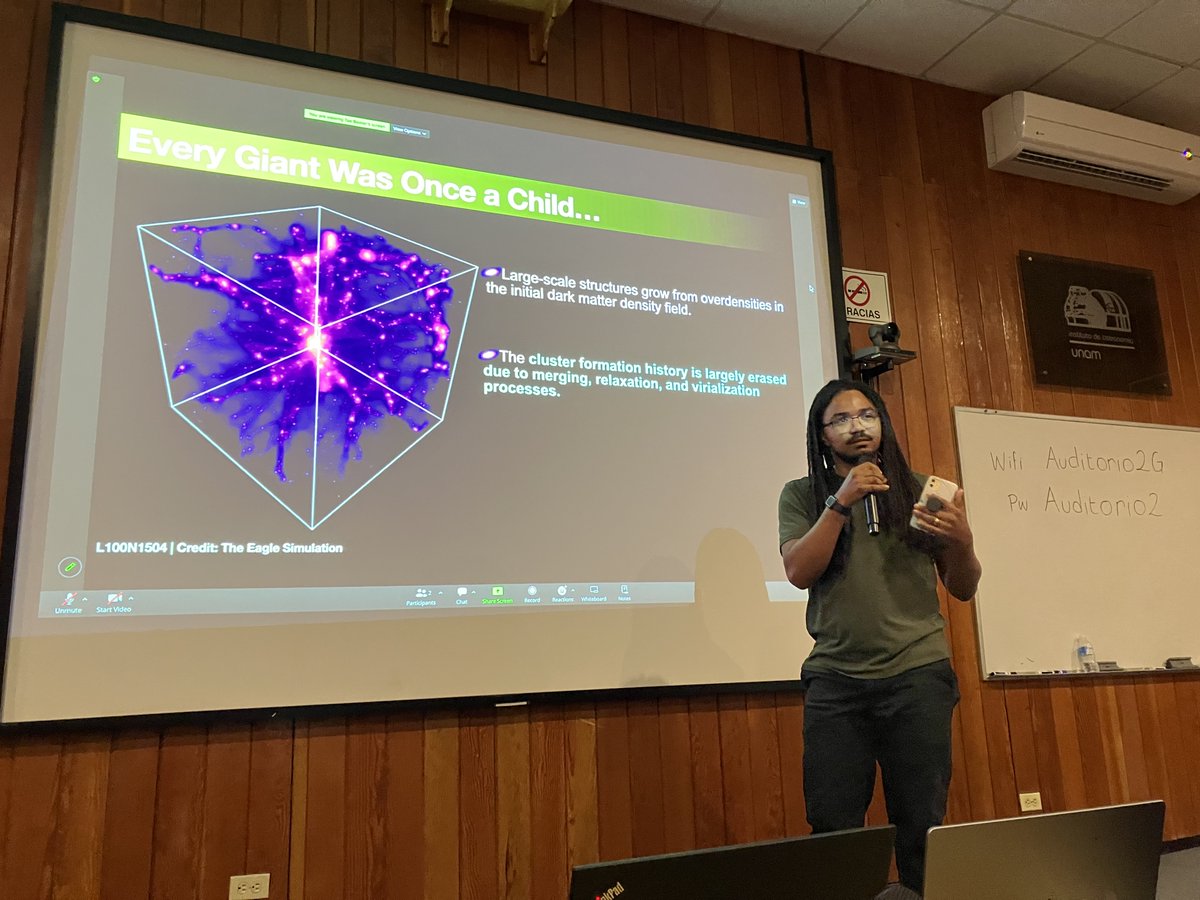
Next up is Devontae Baxter telling us about the evolution of galaxy protoclusters using the TNG-Cluster simulation - most protocluster observations capture only the inner cores! #esdasmeeting
Having a lot of fun in Ensenada, Mexico for the first ever Ensenada-San Diego Astronomical Society Meeting! #esdasmeeting thanks for the picture @karinsandstrom !!
The Computational Astrophysics Research Preparation (CARP) workshop will provide participants with foundational programming skills and relevant mentorship, with the goal of facilitating their transition to a four-year university and preparing them for undergraduate research.
It was an honor to return to Tech as an invited CRA seminar speaker. I had a wonderful time sharing my research, engaging with community, and witnessing how the campus has evolved since I graduated back in 2017. Many thanks to @AstroAhura and the CRA for the invitation! 🤍💙💛
@sentientbaryons Dr. Tae Baxter (new NSF AAPF Fellow at UCSD!) giving the 2nd @ucsdastro colloquium of the quarter on how Galaxies quench their star formation!
I am happy to announce that the Black Scientists and Engineers of @Caltech (BSEC) are hosting the Inaugural Conference for Emerging Black Academics in STEM (#cebas).
Dr. Tracy Johnson is the keynote speaker, and it will take place on @Caltech on May 12th!
Applications for the LSSTC Data Science Fellowship Program are OPEN!!! Follow us @LSSTC_DSFP for program news and updates: https://t.co/juVsfcHDta #astronomy#DataScience
Read about our upcoming splinter session at #AAS241! The NOLP fellows will be leading a round table discussion on two ideas that we’ve been thinking about a lot in the past year…
1/6
Altogether, the results from our analysis suggest that “starvation” -- or the exhaustion of cold gas in the absence of cosmological accretion -- may be the dominant environmental quenching mechanism at z > 2.
🚨Today is paper day!!! (and also my b-day 🥳)🚨 https://t.co/nhelILAtjI
This paper is about constraining the timescale required to halt star formation in satellite galaxies of massive clusters at z~1.
Why do we care & what does this tell us about satellite quenching at z~1?
Moreover, if we modify our fiducial model to include pre-processing within the infall region of our clusters, we find that the mass dependence becomes slightly weaker with galaxies quenching between 1.5-1.0 Gyr after infall.