New Video!
Here is some great Tornado F3 footage from 'Wicky' and Dave Gourlay's time flying in the Falkland Islands with 1435 flight.
📺 https://t.co/pleaQ9MSG3
This photograph should stop you cold when you read what’s about Eleven Northrop YB-49 flying wings, lined up at the Hawthorne plant in California, around 1949. No fuselage, no tail — just pure wing, like something pulled straight out of a science fiction novel.
Jack Northrop spent his entire career obsessed with this design, convinced it was the future of aviation. And he wasn't wrong — he was just about 40 years too early. The program was cancelled, the aircraft were scrapped, and the dream seemed buried.
Then in 1989, the B-2 Spirit rolled out of a hangar and the whole world finally understood what he was talking about.
The YB-49 never made it into production. But looking at this image, it's hard not to feel that something genuinely important was lost — and remarkable that one man's vision survived long enough to reshape the skies anyway.
Some ideas don't die. They just wait.
Had to update this composite image with the latest mysterious aircraft. We have reported on all of them over the years, starting 12 years ago with the Amarillo and Wichita sightings, then the January 2026 image by Uncanny Expeditions, and now the most recent one by Project Fear.
You can read about the 2014 sighting ones here: https://t.co/rSugcOcyUJ
The January 2026 here: https://t.co/WzLIBh6MGm
And the latest one here: https://t.co/n2goQ7P8FW
Thank you @uncannyex@ProjectFearX
Clash at Poteau
Encounter at Poteau
The clash at Poteau between Task Force Mayes and Kampfgruppe Hansen has often been described as an “ambush”. Oxford’s definition of ambush is as follows, surprise attack, lying in wait in a concealed position. However this was far from the facts, it was more of an encounter. Oxford’s definition of encounter, run into, come upon, stumble on. When the Group received orders to muster whatever vehicles they could, head east and retake Recht and Born the encounter was inevitable. Both units were heading in the opposite direction. German forces were definitely not hiding in wait to ambush as a very rigid time table of advance was to be followed.
Kampfgruppe Hansen provided the southern flank protection to Kampfgruppe Piper and as such was adequately equipped. The unit consisted of the 1st SS Panzer Grenadier Regiment with three battalions of infantry, artillery, flak units. However without a doubt the most valuable asset was the attachment of the 1st SS Panzerjager Abteilung equipped with the Jagdpanzer IV L/70 (V) with a 75mm Pak 42 main gun. This was the first action of the newly created Abteilung.
William Barton C/18 who was towards the head of the column through dense fog could make out the faint shadows of infantry and “some sort of vehicle” out in front of the convoy. Several Jagdpanzer IV’s began shooting up the column before the cavalrymen could even see what was before them. Needless to say the lightly armed Task Force was no match. Drivers and crewmen attempted to turn vehicles around, however the column was closely assembled and many vehicles attempted to use the road shoulder and muddy soft fields to return to Poteau. As a result several became stuck and immobilized. Others hopelessly bumper to bumper abandoned vehicles and returned on foot.
While still holding on to the town elements of both Squadrons were involved in a hilltop battle northeast of Poteau. The Germans were attempting to out flank the Cavalry Group and attack from the wooded area from that direction. The Group occupied the town until approximately 14:00, ordered to withdraw towards Vielsalm and closed at that location at 16:45.
Several of the cavalry vehicles were deliberately set on fire by advancing Germans for the benefit of an SS photo unit that was attached to the Abteilung. The very famous widely published photos of advancing Germans past wrecked and abandoned vehicles were shot by the same photo unit. (see photos) Close observation of the photos will show that the infantry is advancing in two different directions.
This encounter reinforces the fact that during World War II Mechanized Cavalry was not utilized as intended. (see earlier post on Cavalry missions) Often out gunned its speed and maneuverability could not even the field against an enemy with superior firepower.
It must also be considered that ordered to “retake” Recht and Born was not a mission that the Group could accomplish, considering that earlier elements of the 7th Armored Division were pushed out of the same location. Records indicate that this order came from the 106th Infantry Division H.Q. who until this point very little communications had occurred between the Group H.Q. and Lt. Jones of the 106th.
Colonel Devine had made several trips to the H.Q. of the 106th Infantry Division during the month of November however a working relationship was never established. On one visit to discuss potential defense/counterattack plans should they be necessary, Jones did not even remember who Devine was. Not to infer that this was a recipe for disaster, but it was. The 18th Cavalry Reconnaissance Squadron had been in their defensive positions since mid October replacing elements of the 2nd Infantry Division. The 106th Infantry Division newly arrived and untested in combat. Not a reassuring fact either. But then again this sector of the front line was known as the “ghost front”.
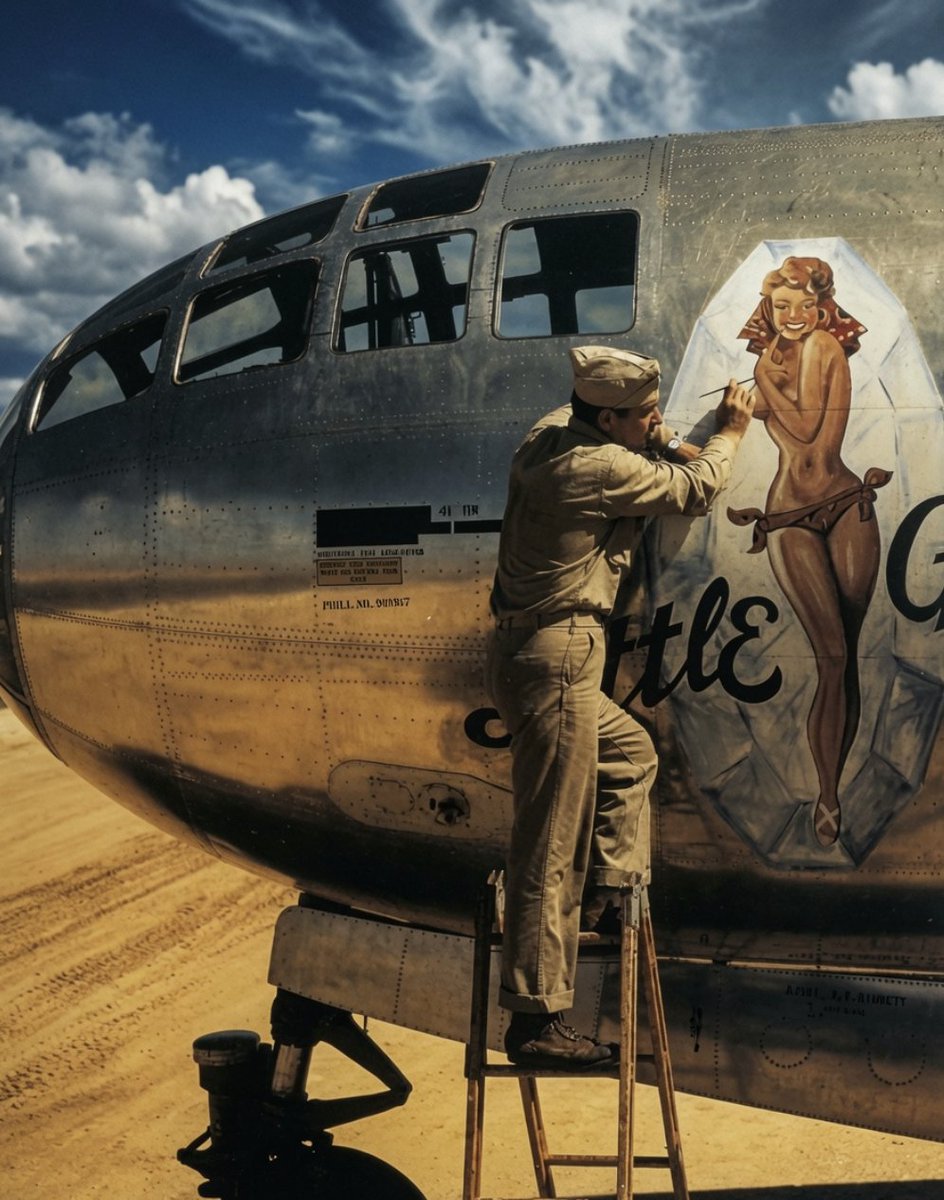
The paintings on the noses of WW2 aircraft were rarely just decoration.
To the men who flew behind them, they were luck. Protection. A charm against death.
The tradition was older and stranger than almost anyone realizes, and it runs from an Italian sea monster in 1913 to the Ferrari logo to Walt Disney.
This is the story of nose art..🧵1/7
While the DC-8 typically rotated in the 150-160-knot range, Concorde often delayed rotation until roughly 220 knots due to its slender delta wing design.
Despite the higher Vr, Concorde still achieved airborne status first thanks to its exceptionally high thrust-to-weight ratio and the Rolls-Royce/Snema Olympus 593 turbojets, which delivered greater combined takeoff thrust than the DC-8's entire engine suite.
📹: Oddgeirsson
In April 1943 an American Major General's ashes were scattered from a B-17 Flying Fortress near the Arizona desert.
24 years later his son led one of the most successful aerial ambushes of the Vietnam War.
7 North Vietnamese MiGs shot down in 12 minutes. Zero American losses.
The mission was called Operation Bolo.
This is the story of Robert and Robin Olds..🧵1/7
On a really hot day, like today.
It always reminds me of July 5th 1982
And the classic World Cup game.
Italy 3-2 Brazil
Memories of a great summer!
#WorldCup
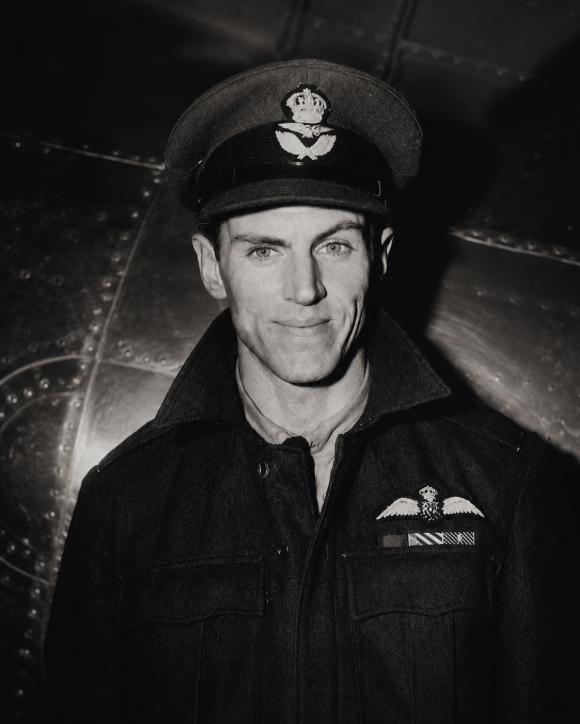
A rebellious Canadian teenager who could barely hold a job became the highest scoring Allied fighter pilot of the Malta campaign.
In one brutal stretch over Malta he shot down 27 Axis aircraft.
RAF officers considered him brilliant in the air and nearly impossible to manage on the ground.
German pilots feared him.
This is the story of George Beurling..🧵1/5
Good illustration of ejection seat technology:
Look at where the rockets on the seats fire. Both jets are inverted when the ejection is initiated, so the seat should fire the pilots straight at the ground…
But they are smart. They fire enough to clear the jet, then re-orient themselves & fire enough to slow the descent. Once they do, the seats cut the occupants loose from the straps & deploy the parachute.
Look where the parachutes deploy in relation to the jets. Absolutely incredible technology!