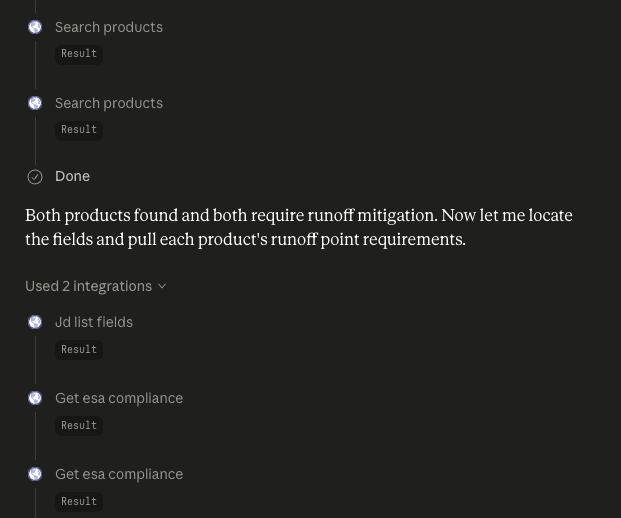
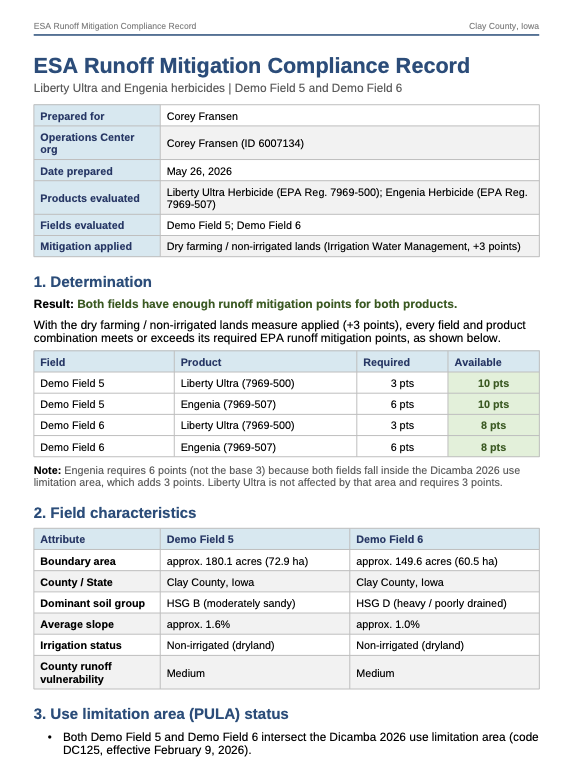
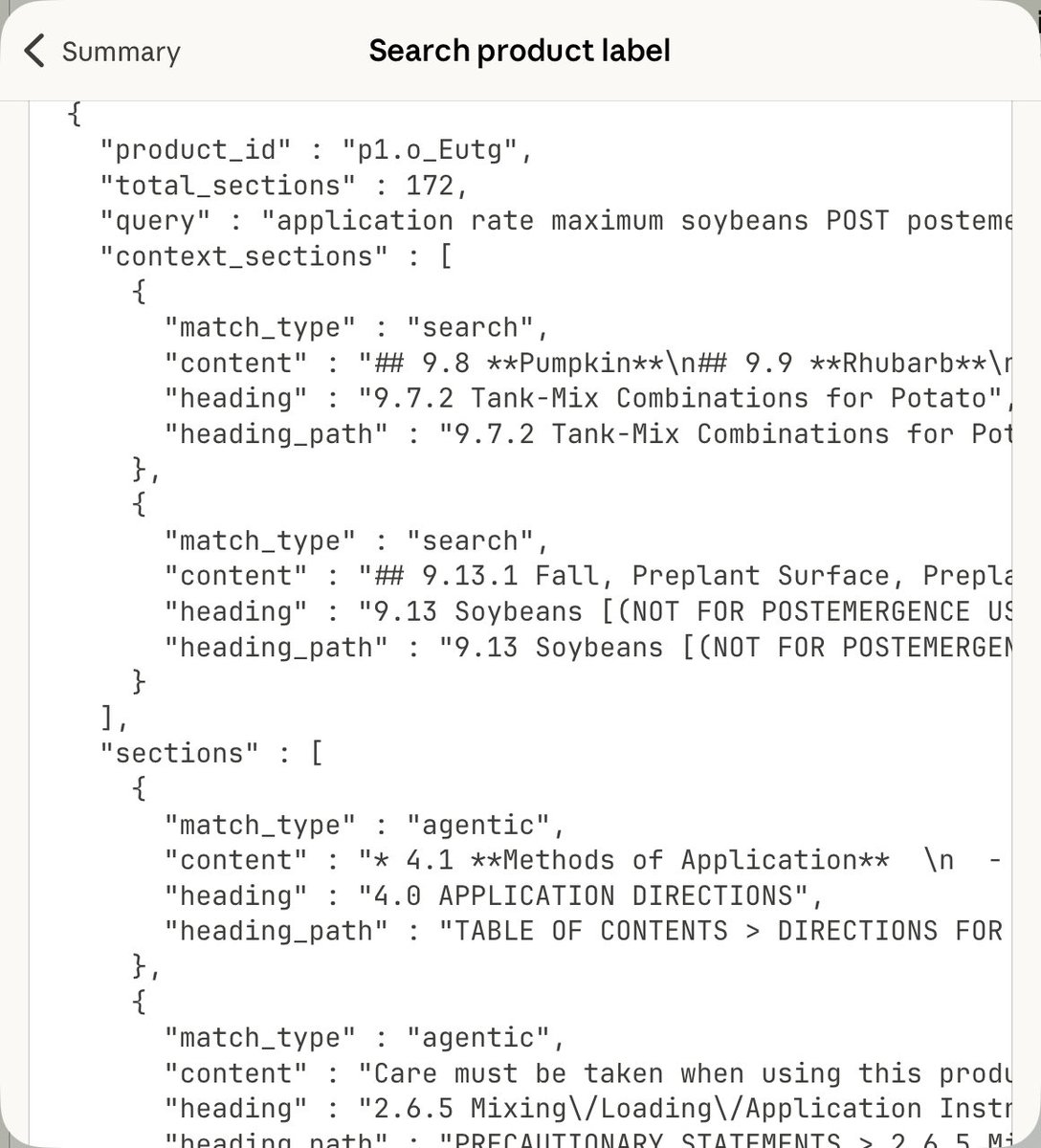
I built two MCPs: one for John Deere Operations Center, one for AcreBlitz.
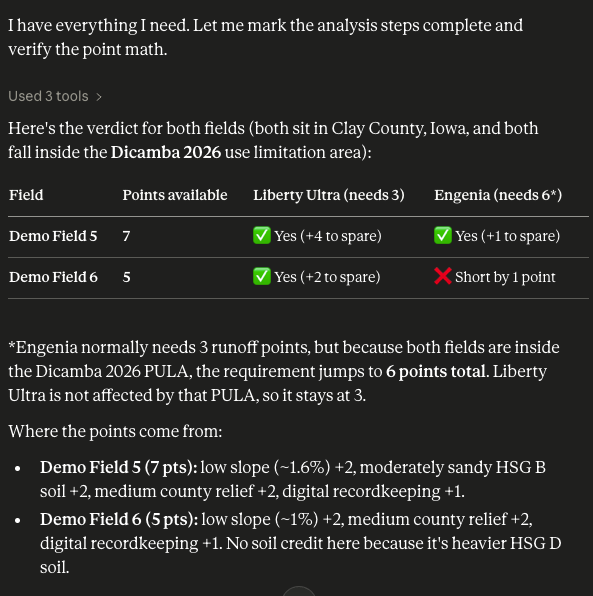
Connect both to Claude and ask "can I spray Engenia on these fields?" Your field boundaries come from John Deere, ESA rules and label data from AcreBlitz, answer the question and Claude creates a clean report.
Compliance should be this easy. Data should be this connected.
𝗙𝗼𝗿 𝘁𝗵𝗲 𝗳𝗶𝗿𝘀𝘁 𝘁𝗶𝗺𝗲 𝗶𝗻 𝗵𝗶𝘀𝘁𝗼𝗿𝘆, 𝗮𝗴𝗿𝗶𝗰𝘂𝗹𝘁𝘂𝗿𝗮𝗹 𝗳𝗶𝗲𝗹𝗱 𝗯𝗼𝘂𝗻𝗱𝗮𝗿𝗶𝗲𝘀 𝗵𝗮𝘃𝗲 𝗯𝗲𝗲𝗻 𝗺𝗮𝗽𝗽𝗲𝗱 𝗮𝘁 𝗴𝗹𝗼𝗯𝗮𝗹 𝘀𝗰𝗮𝗹𝗲.
I've been collaborating with the Fields of the World (FTW) organization for over a year through Taylor Geospatial and it's finally released publicly in cloud storage for anyone to use, at no cost.
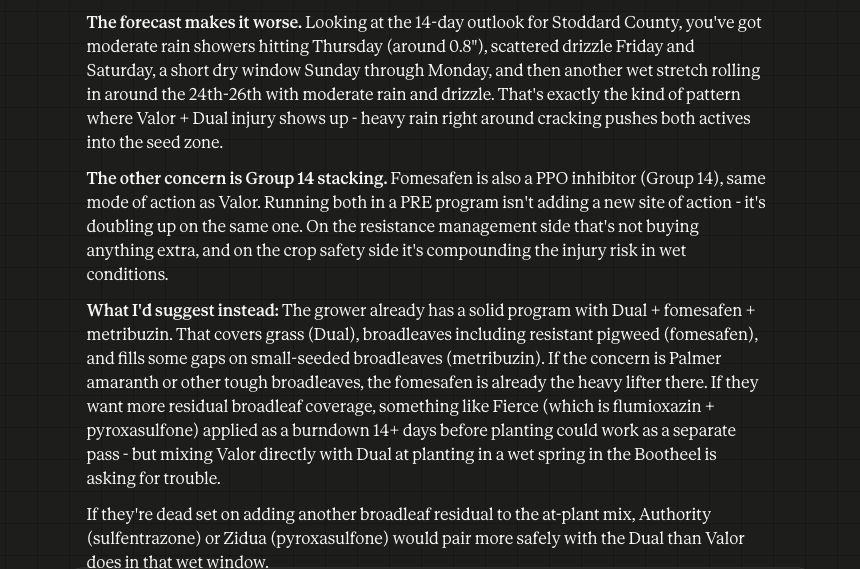
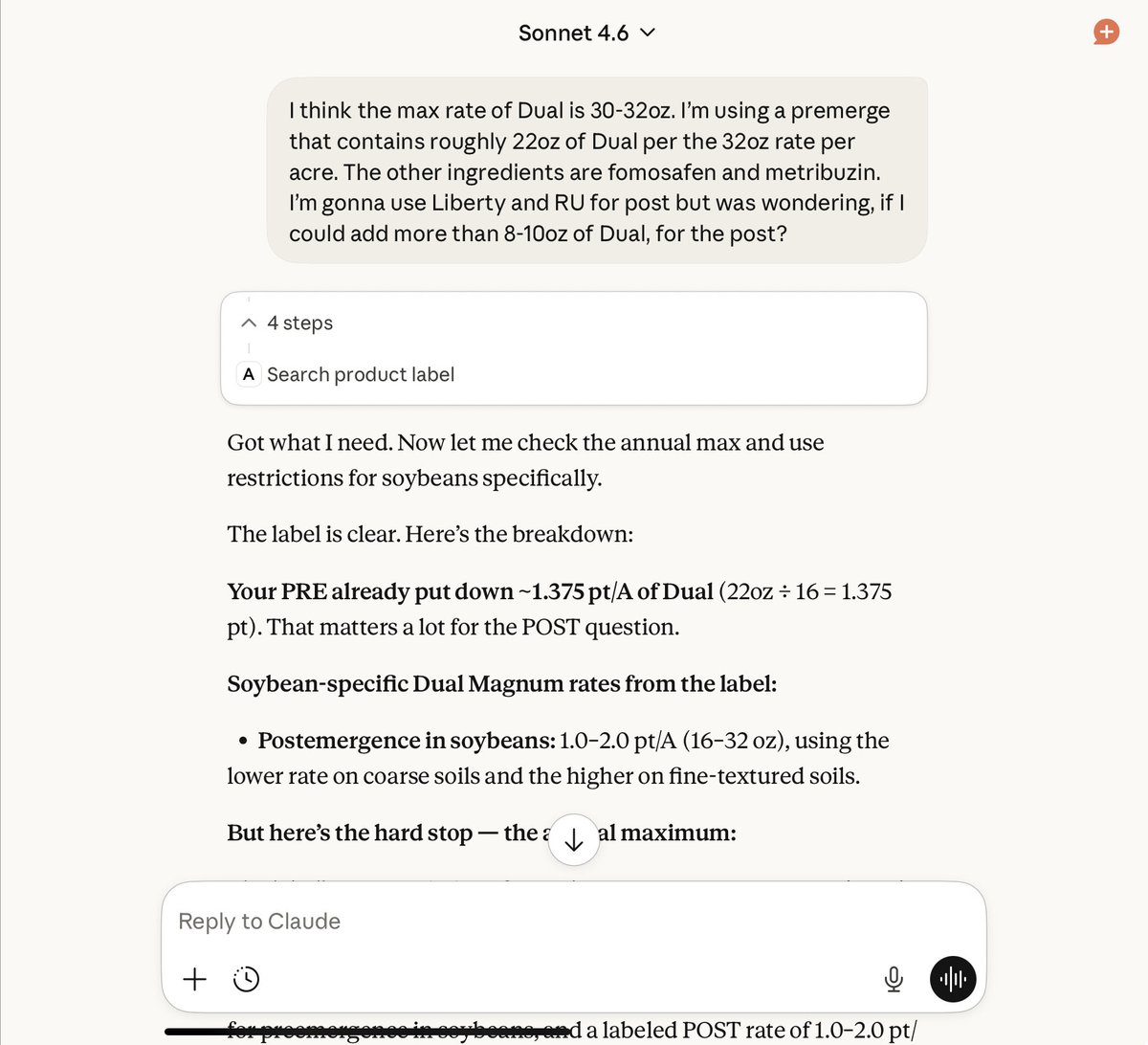
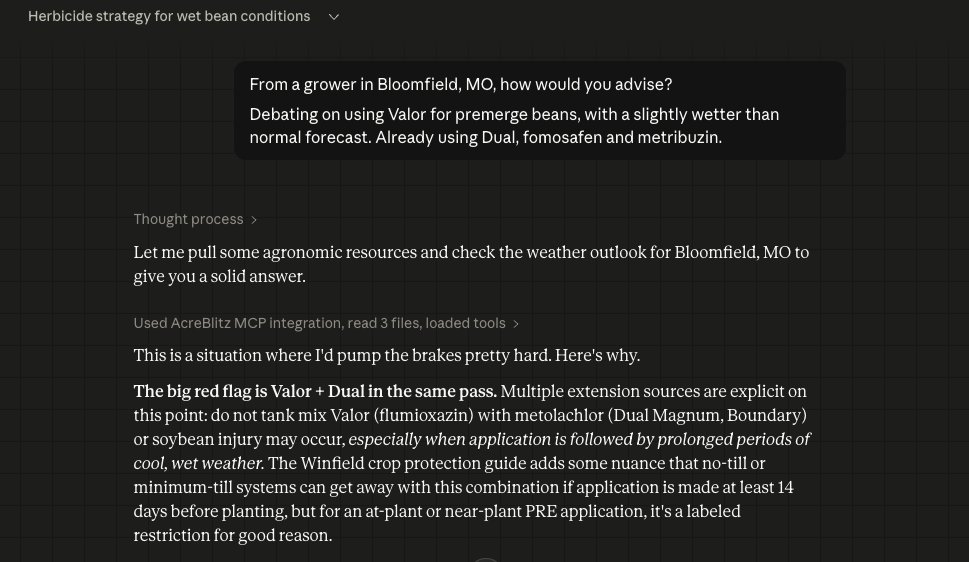
Interesting how well the guidance lined up with the thread in newagtalk.
1. Pulled weather forecast for Bloomfield, MO
2. Searched extension/agronomic guides for "Valor/flumioxazin in preemergence soybeans"
3. Searched product labels
Every B2B software company is (or should be) building a "headless" version of their product. One that can be used by agents.
But "headless" doesn't mean "brainless".
You don't just wrap your existing APIs into an MCP server and call it a day.
The companies that succeed in the agentic era are those that take a thoughtful approach to *designing* an agentic user experience (AUX).
Yes, that will likely involve APIs, MCPs and CLIs.
But the difference will be in the *ergonomics* of the interface. We need to figure out *how* agents actually want to use our products/platforms. Because if all they wanted to do was use them like humans do, we have "computer use" for that.
I'm personally very excited about this new agentic world when it comes to B2B software.
HubSpot is all-in on building the #1 agentic customer platform.
Just posted this in a private Slack thread with the HubSpot exec team:
Being agentic is not just about agents running *on* our platform, it's about agents *running* our platform (being able to operate it). That's how you take AI from being a simple tool to a savvy teammate.
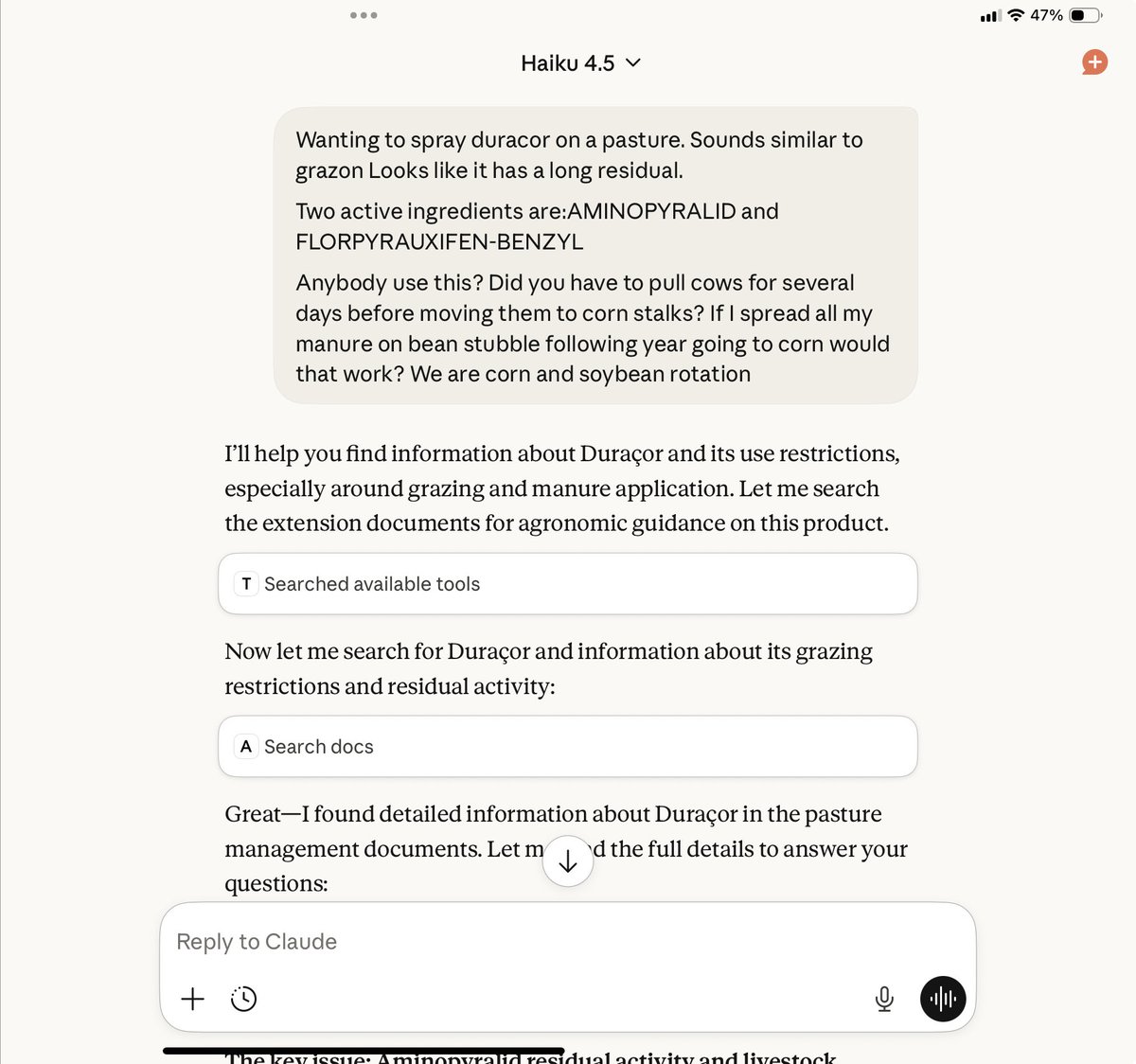
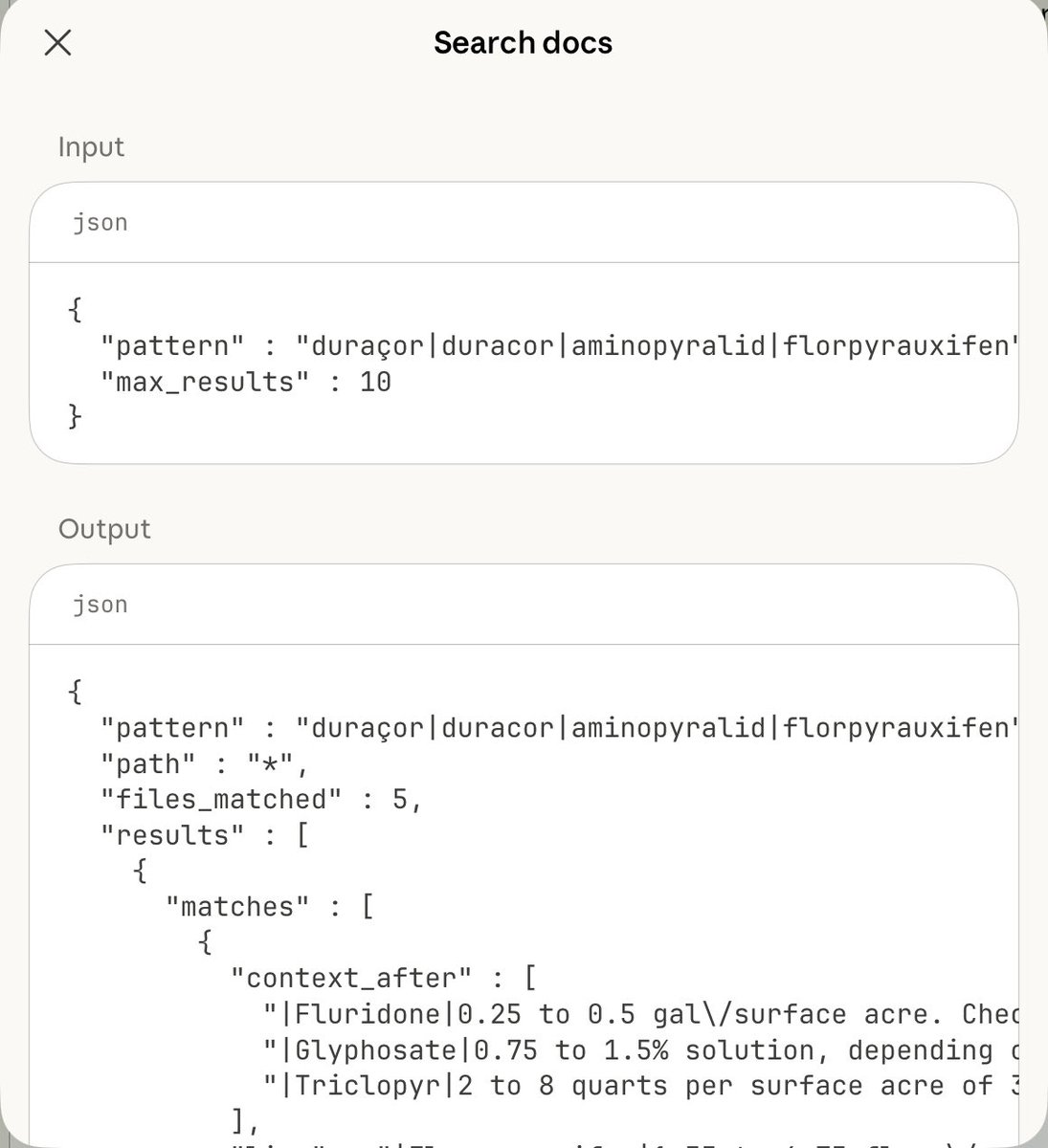
Interesting that Haiku models won’t use product label tools first, but does a docs search through all of the extension docs. While Sonnet and Opus will always defer to label tools first.
@Dusty3080467325@MaxCropProtect@ISUCropNews Not arguing the phenomenon, could make a good argument for improved stand-ability in the fall and other abiotic effects beyond yield too. It’s good chemistry, but you could have called it the “Pyraclostrobin Effect”, being generic and all.
@Dusty3080467325@MaxCropProtect@ISUCropNews Why not just drop the Headline altogether and save more money? Already have the group 11 from the Quilt, why add another at below label rate?
@Dusty3080467325@MaxCropProtect@ISUCropNews All for generics, but why not bump the rate up to at least the labeled range for Headline? Resistance buildup has a much greater long tail cost than just using the right amount the first time.
This question from newagtalk actually surprised me, I expected it to fail given the use of acronyms and shortening of the product names. Along with Dual Magnum not being the simplest label to understand, I even struggle reading through it. Agentic file search for the win.
@calcsam@NickHorob It just didn’t end up making sense for the product. Mastra performed well with it though and it was reliable, just didn’t end up making sense.