Reading scores fell in 47 of 50 states since 2015. That’s the exact window of the Science of Reading movement’s rise. The approved curricula didn’t save us. The people who sold them are now proposing a national database to make the mandate permanent. Follow the money.
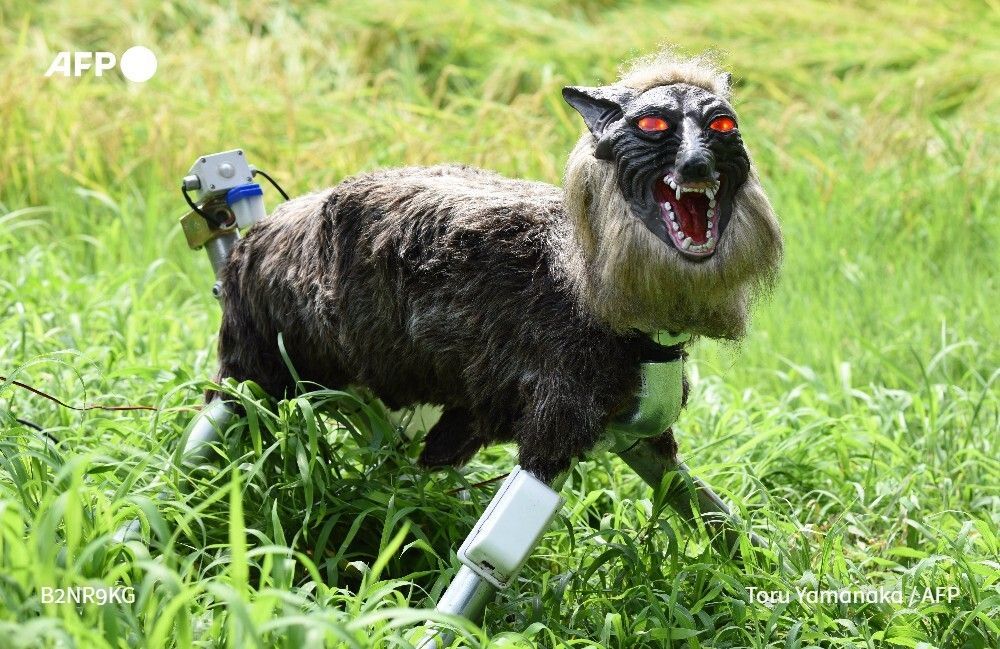
🇯🇵 A Japanese company making ferocious-looking robot wolves is being swamped by orders after record numbers of fatal bear attacks on humans last year.
➡️ https://t.co/za0BDVrwrN
This is a trend on TikTok right now with girls showing everything that their friends who are education majors don’t know
People who think you’re not qualified to homeschool your kids don’t realize how low the bar actually is
what i learned about hvac repair after dealing with 4 companies across 5 weeks and thousands of dollars is that they are all perpetrating fraud all the time and there’s no way to avoid it
I don’t drink Starbucks everyday.
I used to drink once a year during the month of November.
I stopped drinking it this past November.
Spending $9 on a coffee, is not cool.
Is Starbucks trying to get into BNPL as well?
🚨 Commitment Alert 🚨
Congratulations to Seton Soccer players, Addison Gick and Lauren Vaughn on their commitments to continue their academic and athletic careers at the next level 💚
Addison Gick ➡️ NKU ⚽️
Lauren Vaughn ➡️ Austin Peay ⚽️
#GoSaints
This program is based on the "white genocide" conspiracy that Black South Africans are planning to rise up and kill white property owners
It's impossible to explain how infuriating this story is without telling 1 of the greatest stories in all of Black history.
A thread
Happy 93rd birthday Carol Burnett!!
One of the all time great clips from 1977.
A lady asks Carol if the somebody in the audience is Maude (Bea Arthur).
But what happens next is an all time classic. 😂😂
please stop what you're doing and spend 6 minutes to watch this vid by johnny harris on chinese "flying money". the absolutely insane practice of how $4T+ gets laundered every year, and particularly how china does it through trade (via manufacturing). you will be stunned.
Robert Sapolsky is a Stanford neuroscientist who proved chronic stress is the silent killer doctors ignore.
On Chris Williamson's podcast, he revealed 10 "normal" habits you do every day that wreck your sleep, mood, and nervous system:
1) Replay conversations in your head
@JamesAFurey Professor: “Make general rules like ‘Be respectful’ so it can cover a lot of things.”
First principal: “These kids all have a different idea of what respectful means. Pick the top five most annoying things they do and make those your classroom rules.”
I can’t stop laughing! 😂 This guy goes into fast food joints and yells their company slogans after buying their food. 😂 The reactions he gets are hilarious! 🤣
In 1986, a Texas psychologist told 46 students to write about the worst thing that ever happened to them, 15 minutes a day for 4 days straight. Over the next 6 months, those students went to the doctor half as often as the kids in the control group.
The psychologist was James Pennebaker. He repeated the experiment, and so did other labs. Same answer every time: writing about pain in a notebook was changing something inside the body. Follow-up studies found improved immune cell counts, faster wound healing after surgery, lower HIV virus levels in blood tests, and better lung function in people with asthma.
For years the mechanism was a puzzle. Pennebaker had stumbled onto a much bigger pattern than he realized. Making things of any kind does something to the body.
Take painting. A 2016 study at Drexel University handed 39 random adults some markers, clay, and collage paper and told them to make whatever they wanted for 45 minutes. No rules, no skill required. 75% of them walked out with lower cortisol (the main stress hormone) in their saliva. Beginners and experienced artists got the same drop.
Take dancing. Doctors at Einstein College of Medicine tracked 469 seniors over a 21-year period in a study published in the New England Journal of Medicine in 2003. People who danced a few times a week were 76% less likely to get dementia than people who rarely did. That was the largest protective effect of anything they tested. Crosswords came in at 47%, reading at 35%. Swimming and cycling did nothing for the brain at all.
Take singing. In 2004, researchers in Germany measured antibodies in a choir's saliva before and after rehearsal. The antibody count (the stuff that fights off colds and flu) rose significantly. A follow-up study on cancer patients and their caregivers found that one hour of group singing dropped cortisol and switched on their immune systems at a measurable, blood-test level.
And just going to see art helps. University College London tracked 6,710 British adults over age 50 for 14 years. People who went to the theatre, a museum, or a concert every few months were 31% less likely to die during that window. Even going once or twice a year dropped the risk by 14%. Wealth, education, and starting health were all accounted for.
The mechanism seems to live in a brain circuit called the default mode network, the part that wanders when you daydream. When you fall into the zone of making something, that network hooks up with the one that holds your attention, and the brain's stress system quiets down. Cortisol falls, dopamine climbs, and the slow-burn inflammation that eventually kills most of us calms down too. None of it depends on the quality of what you make.
The Spanish tweet sounded like hyperbole. 40 years of peer-reviewed data says it's roughly right.
🚨 NEW SCHOOL RECORD ALERT 🚨
Congratulations to Heidi Harmeyer for breaking the 45 year old 800 record set by Diane Hoeting in 1981 with her time of 2:15.64 last tonight! 💚
#GoSaints
The research behind this is wild. If you spent years bottling your feelings, huge chunks of your life were probably never recorded in the first place. Every time you push down a feeling, your brain has to choose: save the memory of what's happening, or shut the emotion up. It picks the emotion.
In 2000, a team at Stanford tested this. They showed people a surgical film. Half were told to react naturally, the way they would if they were alone. The other half were told to hide their reactions, like someone trying not to look upset at the dinner table. Then everyone took a surprise memory test. The suppressors did worse on every measure, on what they'd seen and on what they'd heard. The same pattern held in two more experiments in the same paper.
Brain scans later explained why. Your brain has three jobs when something emotional happens: tag the feeling, put what's happening into words, and save the scene to memory. When you reframe a feeling instead of suppressing it, all three regions fire together as a team. When you suppress, that teamwork falls apart. The memory-saving region goes quiet while the brain fights its own emotional response.
And it compounds over time. Suppression keeps cortisol (the stress hormone) high, and cortisol shrinks the part of your brain that saves memories. People under chronic stress can lose 10 to 15 percent of the volume there. Even three weeks of elevated cortisol shrinks the wiring between brain cells by about 20 percent. The damage can partly reverse once the stress drops. But not always.
The long-term cost shows up in the dementia data. A Finnish study followed 1,137 older adults for about a decade. People who said they habitually suppressed their emotions had nearly five times the risk of developing dementia. The researchers accounted for genetics, smoking, obesity, and education, and the gap still held.
There's a way out. It's called cognitive reappraisal. Instead of shoving a feeling down, you change the story you're telling yourself about what caused it. A tough meeting becomes practice. A short-tempered friend becomes a tired friend. Same event, new frame. And because reappraisal kicks in before the emotion fully fires, your brain never has to fight itself. A 2003 study from Stanford and UC Berkeley found reappraisers ended up with more positive emotion, better relationships, and higher wellbeing. Zero memory cost.
So when you say you don't remember half your life, you might be right about that. The part of you that saves the record had other orders the whole time.