In his new book, “Between Fixed and Fickle,” moral psychologist Audun Dahl of @CornellCHE explains why people change their minds about seemingly obvious moral truths across situations, lifespans and history. @CornellPsychDpt@harvardpress https://t.co/k2tt6fJj3d
Researchers at @CornellCHE have identified a molecular gatekeeper that clears excess manganese from the brain, offering new clues about a rare neurological condition. In large amounts, the metal can cause cognitive decline and other ill effects. @lreiley https://t.co/mmclQBbANn
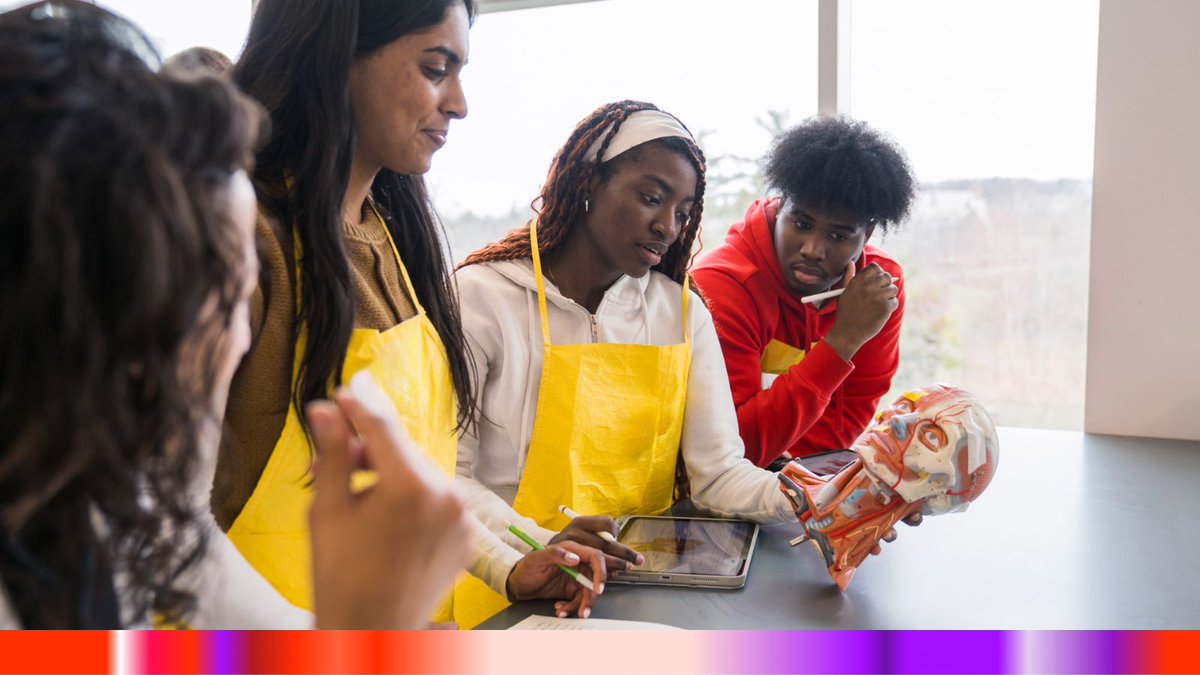
The faculty recipients of this year’s @CTICornell Creative Teaching Awards have given students hands-on, local learning experiences well beyond classroom walls. @CornellCHE@cornellvet@WeillCornell@CornellCALS https://t.co/cYhWNUfsbG
Fostering connection: @Cornell researchers have developed a dual mirror-equipped robot, MirrorBot, that spurred conversations between strangers sparked by initial eye contact made in the mirrors. @CornellCHE@CornellEng@Cornell_Bowers@CornellGrad https://t.co/MtgOgkGF6z
Remembering James Garbarino, MAT ’70, Ph.D. ’73, professor emeritus of human development in @CornellCHE and a renowned expert on childhood trauma. Garbarino died March 7 in Ithaca, at age 78. @CornellBCTR https://t.co/SXWymYQ8wk
Memory becomes muse: The 42nd annual @Cornell Fashion Collective Spring Runway Show paid homage to well-loved storybooks and designers’ childhood memories and cultural backgrounds. VIDEO @CornellCHE https://t.co/4X1KahTQsd
For teens entering high school – an anxious time for many – inclusive environments may benefit not only those identifying as LGBTQ, but their majority-group peers. @CornellCHE@CornellGrad@CornellBCTR https://t.co/NIWDPP6oMf
The annual Cornell Fashion Collective Spring Runway Show, on Saturday in Barton Hall, will feature the work of @CornellCHE fashion design majors and students from across the university looking to broaden their @Cornell experience. https://t.co/sr38ekD1wU
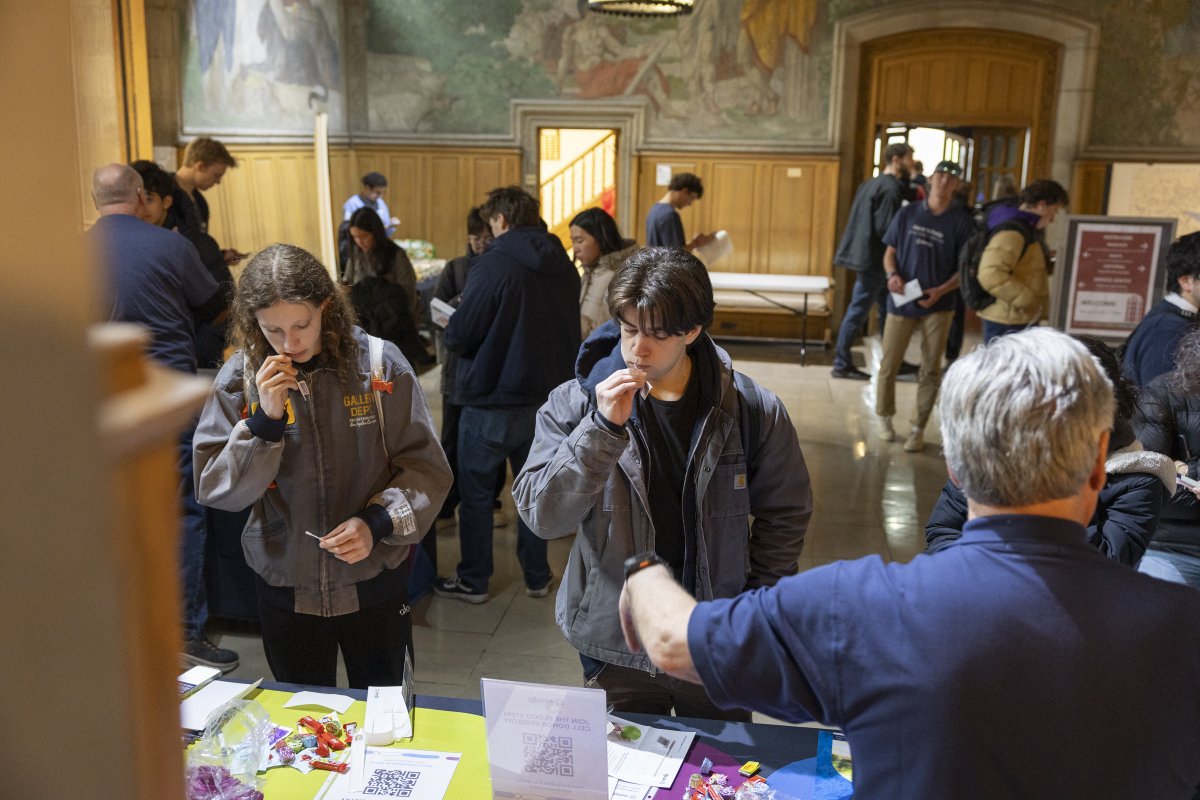
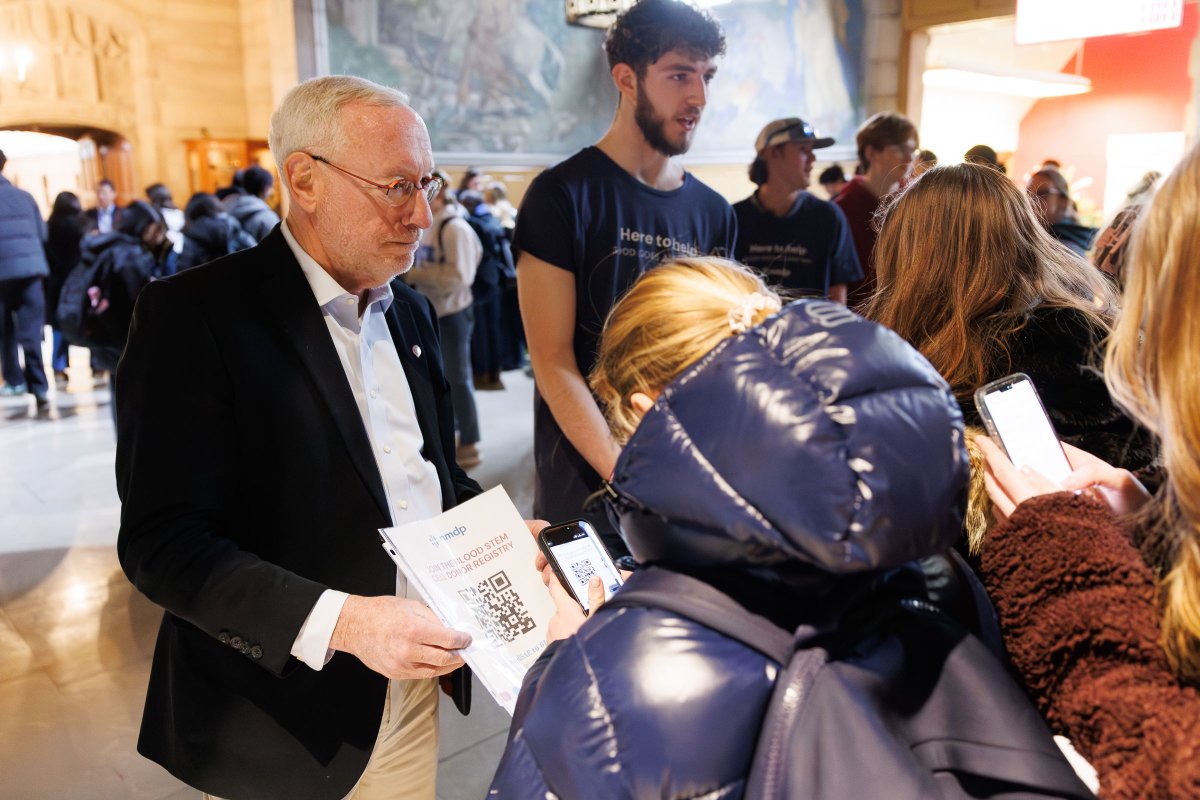
Cornell is hosting a stem-cell cheek swabbing campaign until March 20 across the Ithaca campus. The goal: Inspire 10,000 students, faculty and staff ages 18-35 to spend 30 seconds swabbing themselves to join the national stem cell registry.
Cornellians who match with a patient in need could donate stem cells or blood-marrow through @nmdp_org, a nonprofit that facilitates transplants. Donors must be 18-35, making universities ideal places to test for would-be matches.
Big Red, Big Impact – the largest such event NMDP has ever hosted – entails swabbing stations across the campus, with an extensive network of volunteers assisting with signups and handing out kits for Cornellians to swab the insides of their own cheeks. People are able to swab themselves at sites ranging from North Campus to Collegetown and Willard Straight Hall.
“Cornell is proud to partner with NMDP to drive science, strengthen the national registry and expand opportunities for Max and the thousands of other patients who are awaiting life-saving transplants,” said President Michael I. Kotlikoff. “I know that our community will enthusiastically come together to help others, advance knowledge and do the greatest good.”
More information, and volunteer signups, can be found at https://t.co/gPZJIGnVJA.
Thank you for championing Cornell Human Ecology on Giving Day! Your generosity and belief in our mission helped us raise $388,313 in just one day!
Your generosity will provide students with a transformative Human Ecology education and carry forward our trailblazing vision.
Last summer, Jenna Cho ’26 interned at The Center for Discovery, researching how nature affects the psychological well-being of youth with profound autism.
“As a pre-med student, this experience has been extremely valuable to me."
Support CHE today: https://t.co/j458D11A7E
Food policy expert @marionnestle, a professor emerita at @nyuniversity, will give a talk, “Food Politics in the Trump Era: The 2025-2030 Dietary Guidelines for Americans,” on March 19 in Schurman Hall. @CornellCHE@CornellCALS https://t.co/bPGMgX7XrC
A message on #CornellGivingDay from current students to the alumni and supporters who make it all possible! ❤️
Your generosity helps CHE students find their home, pursue their dreams and challenge convention while championing humanity.
Give to CHE today: https://t.co/j458D11A7E
Happy #CornellGivingDay! You can make your Giving Day gift today to support Cornell Human Ecology's trailblazing leadership and innovation.
Your gift will be matched dollar for dollar and unlock additional challenge funds. Show your support today: https://t.co/j458D11A7E
Tomorrow is #CornellGivingDay! Cornell Human Ecology is a place where bold ideas and innovative discoveries lead to lasting impact. When you make a Giving Day gift, that legacy continues to thrive. https://t.co/j458D11A7E
Researchers in the Division of Nutritional Sciences have identified a molecular mechanism that constrains skeletal muscle regeneration and myofiber repair, a finding that could lead to improved treatment for conditions like muscular dystrophy and severe injury.
To repair muscle, muscle cells, or myocytes, fuse to one another. But the molecular pathways that signal this cell-to-cell fusion have remained poorly defined.
“We don’t fully understand how muscle regeneration occurs after injury or during aging,” said Daniel Berry, the Andre Bensadoun, Ph.D. ’60 Associate Professor in @CornellCHE.
The team, led by Berry, found that platelet-derived growth factor receptor beta (PDGFRb), a receptor protein located in cell membranes, is a key modulator of myocyte function in adult muscle cells. They published their findings Feb. 16 in the Journal of Clinical Investigation. The co-first authors are Siwen Xue, a doctoral student in molecular nutrition, and Abigail Benvie, Ph.D. ’24, now a @Yale postdoctoral fellow.
More: https://t.co/8VRyaABbO4.
Ruth Bader Ginsburg ’54, Supreme Court justice and @CornellCAS alumna, was a champion for women’s equality. Her style, and the substance behind it, will be on display in an exhibit, “Fashioning Justice: Ruth Bader Ginsburg ’54 and the Power of Presence.”
The exhibit – a collaboration between the Cornell Jeb E. Brooks School of Public Policy (@CornellBPP) and the College of Human Ecology (@CornellCHE) – will run March 16 to May 1, from 8 a.m. to 5 p.m. daily, in the Rachel Hope Doran ’19 and Terrace Level Display Cases in the Human Ecology Building.
The exhibit will feature accessories, on loan from family members, from Ginsburg’s personal wardrobe, including her signature lacy judicial collars (among them her distinctive “Dissent” collars) along with gloves, handbags, jewelry and scarves. Cornellian yearbooks and a Class of 1954 Freshman Desk Book, from Cornell University Library, will also be displayed.
Pieces from the Cornell Fashion + Textile Collection (CF+TC) expand the narrative, with examples of fashion and justice influenced by Ginsburg’s legal legacy.
“This is a really exciting opportunity to talk about the intersections of fashion, law, freedom of expression, and clothing as symbolic speech” said exhibit curator Denise Green, Lau Family Associate Professor and director of graduate studies in the Department of Human Centered Design, in the College of Human Ecology (CHE).
Read more: https://t.co/EtWtVzBPHL.
What makes a food system resilient—and why does it matter for public health?
Elsie Moore (@Cornell) explains how resilient food systems help communities withstand disruptions like disasters, supply chain breakdowns, and rising food costs.
🎧: https://t.co/P9Weg4kM41. @CornellCHE
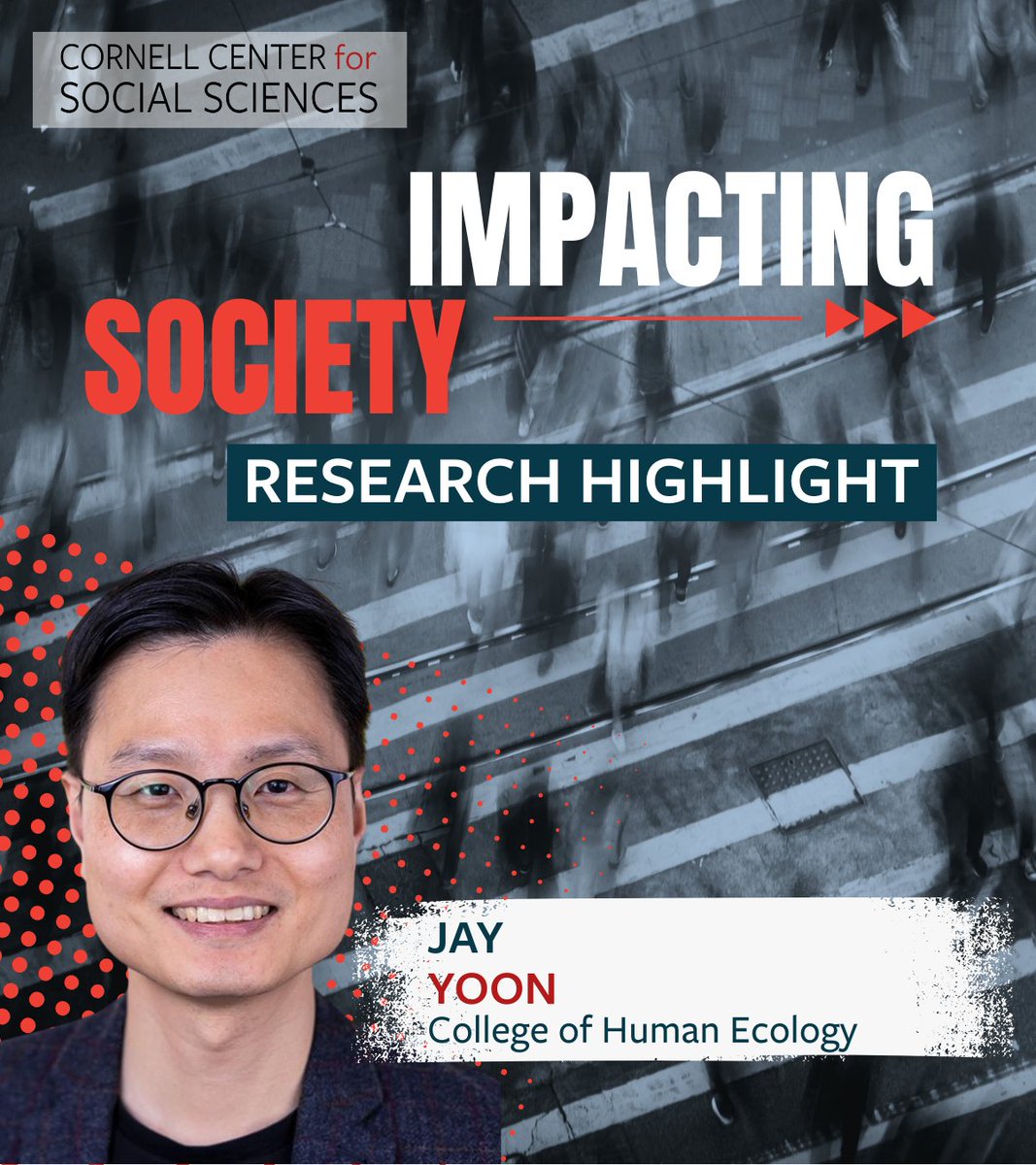
Impact that is enabling and empowering. CCSS funding in 2022 helped Jay Yoon, Associate Professor in @CornellCHE lay the foundation for his $500K NSF CAREER project on designing everyday technologies that promote well-being. https://t.co/fteWhUkkVI
@CornellRsrch