Nvidia's benefit trust gives the company leeway to decide how to measure whether it’s benefiting society, as reported in @usnews. “I think then the real test emerges if and when the question of public benefit becomes costly,” says @cornellgov prof @sekreps
https://t.co/7pBXPwrpQT
The number of robustness checks needed for economics research papers would rise from 50 for a human author to an impractical 7,000 for an AI agnet ones, @CornellEcon graduate student Gabriel Sekeres calculated — in a @TheEconomist pice on AI in economics
https://t.co/lMwX790ENq
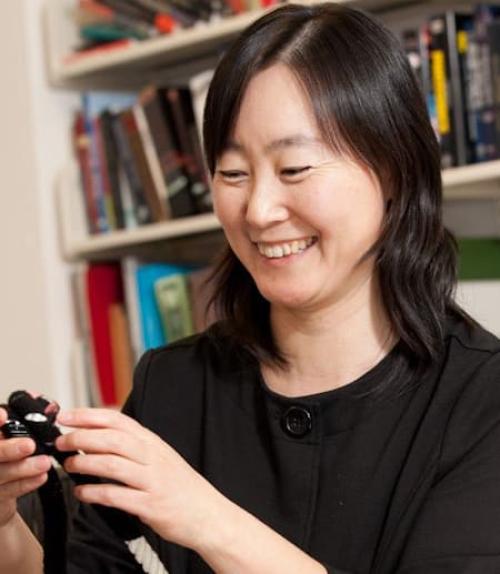
Congratulations to @CornellPhysics professor Michelle Wang! She has been awarded the 2027 Max Delbrück Prize in Biological Physics from @APSphysics for her landmark research on the landscape of DNA mechanics and topology
https://t.co/lnfHKSmEqq
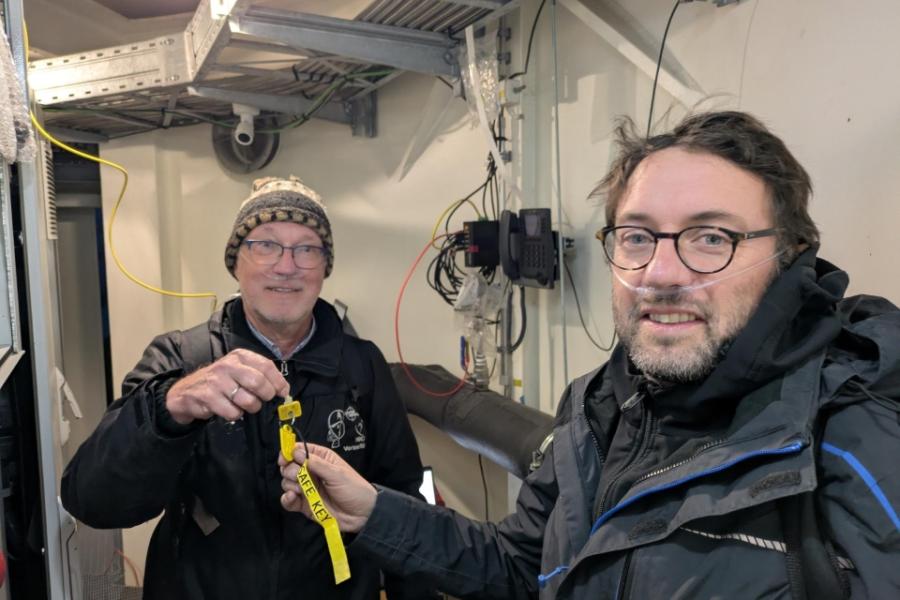
The Fred Young Submillimeter Telescope has reached another milestone as it gets ready for first light: On Nov. 4 the German builder turned over control of the telescope's motion to the CCAT team, the culmination of ten years of effort.
@CornellAstro
https://t.co/PnBU6KiAuq
The return of the snatch-and-grab state: THE AGE OF CONFISCATION by @CornellHistory professor @njtmulder sheds light on modern economic warfare, reviewed in @TheEconomist
https://t.co/P9heZL5gZd
How can promising carbon capture technologies move from the lab into the real world? They need to be tested under real-world conditions. The new CAPTURE Lab at Cornell is making that possible.
The first facility of its kind in the U.S., CAPTURE Lab enables researchers to test emerging carbon capture and conversion technologies on actual flue-gas emissions at a small, exploratory scale.
Part of the university’s Living Lab approach, the mobile facility connects to the university's Combined Heat and Power Plant. It's open to academic and industry partners, creating new opportunities to test technologies and identify promising carbon capture and conversion tech.
By making real-world testing more accessible and bringing researchers and companies together, CAPTURE Lab is helping move promising carbon capture and conversion research closer to practical applications.
Read more: https://t.co/QIT6rKVU1r.
@CornellEng | @CornellCAS | @AtkinsonCenter
@stevenstrogatz@scifri "It may be the golden age of applied math coming up," Strogatz says on Science Friday. "But pure math, the math that looks inward at itself and enjoys its own harmony and symmetries and patterns, that is too easy for the AI. That’s the problem."
Math is embedded in our daily lives, Cornell's @stevenstrogatz points out in “Big Math: The Hidden Codes That Run Our World," which he wrote with Alex Townsend. @scifri interviews Strogatz about the book and this important moment for math swayed by AI.
https://t.co/5mIZ793LJQ
“I think then the real test emerges if and when the question of public benefit becomes costly” — or when the public benefit comes into conflict with making a profit, @cornellgov's @sekreps tells @AP ahead of Anthropic's IPO as a public benefit corporation
https://t.co/bdEXvb20vq
Blanche Bruce, the first Black senator to serve a full term in Mississippi, and Hiram Revels, who served a partial term, "were symbolically quite important," @cornellgov professor @DavidAlexBatema tells @USATODAY. Scott Colom is the next Black MS senator.
https://t.co/bB3pGd56S0
Graphene continues to surprise scientists with its remarkable properties: @CornellPhysics professor Xiaomeng Liu's lab has discovered that stacking six graphene layers in a "stair step" arrangement – creates a platform for two unusual quantum phenomena.
https://t.co/Dq8aFIC6H2
Join us tomorrow at 4:30 p.m. for a Chats in the Stacks book talk with Erik Born of @CornellCAS, discussing his latest book, Wireless Futures: Speculative Media and German Modernity.
📍 Olin Library, Room 108, or online
Learn more: https://t.co/bVVQyIYubx
A community that got together organically through a genuine interest is no longer organic once fueled and harnessed by a profit-motivated company, @CornellSoc prof Benjamin Cornwell tells @CNBC. Members may “lose faith in the original purpose" or drop out. https://t.co/jurAzwdPap
In their new book, “Big Math,” @CornellCAS mathematicians Alex Townsend and @stevenstrogatz crack open our algorithm-driven world and reveal the history of math concepts that undergird, and often control, modern life. @littlebrown https://t.co/oChLjmunRz
Remembering Andrew Ramage, professor emeritus in the Department of History of Art and Visual Studies in @CornellCAS. Known for his hands-on approach to research and dedication to his students, Ramage died Nov. 2 in Ithaca, at 87. https://t.co/VGqWJBhhI3
Get "A First Look at the 2026 Election Results and Pre-Election Polls," Thurs., Nov. 12, 3 pm, co-hosted by @RoperCenter and DC-AAPOR, at 1828 L St NW in Wash, DC and online.
Featuring a panel of experts & moderated by @cornellgov professor @pete_enns
https://t.co/si7mI4ovfv
"There's always been greater investigatory activity in divided governments than when the president's party controls Congress," @cornellgov professor Doug Kriner says in a @CBS look into the last two years of the Trump presidency.
https://t.co/yqZxSkCjcS
Surveying the skies for more than a century: Historic Fuertes Observatory, a hub for astronomical activity, is actually the university's fourth star-watching facility. @WeCornellians offers a brief history of star-gazing at Cornell ⭐️ 🔭
https://t.co/WfGGlTt5EQ
Everyone across the world has a family, even if that family has been lost, broken or transformed, anthropologist Meredith Small attests. In her book “Family," Small explores why this type of connection is the bedrock of human interaction in all cultures.
https://t.co/WgRF7rXF2x