I wrote about APEC, trade, connectivity, the Asia-Pacific and the militarization of the so-called “Indo-Pacific.”
You responded with a random scrapbook about WTO accession, masks, Covid, Taiwan, Hungary and schools in Iraq.
What you’re doing is a classic case of:
“I don’t know how to refute your argument, so I’m just going to dump everything labeled ‘China’ that I have on my hard drive—all that trash—on you at once.”
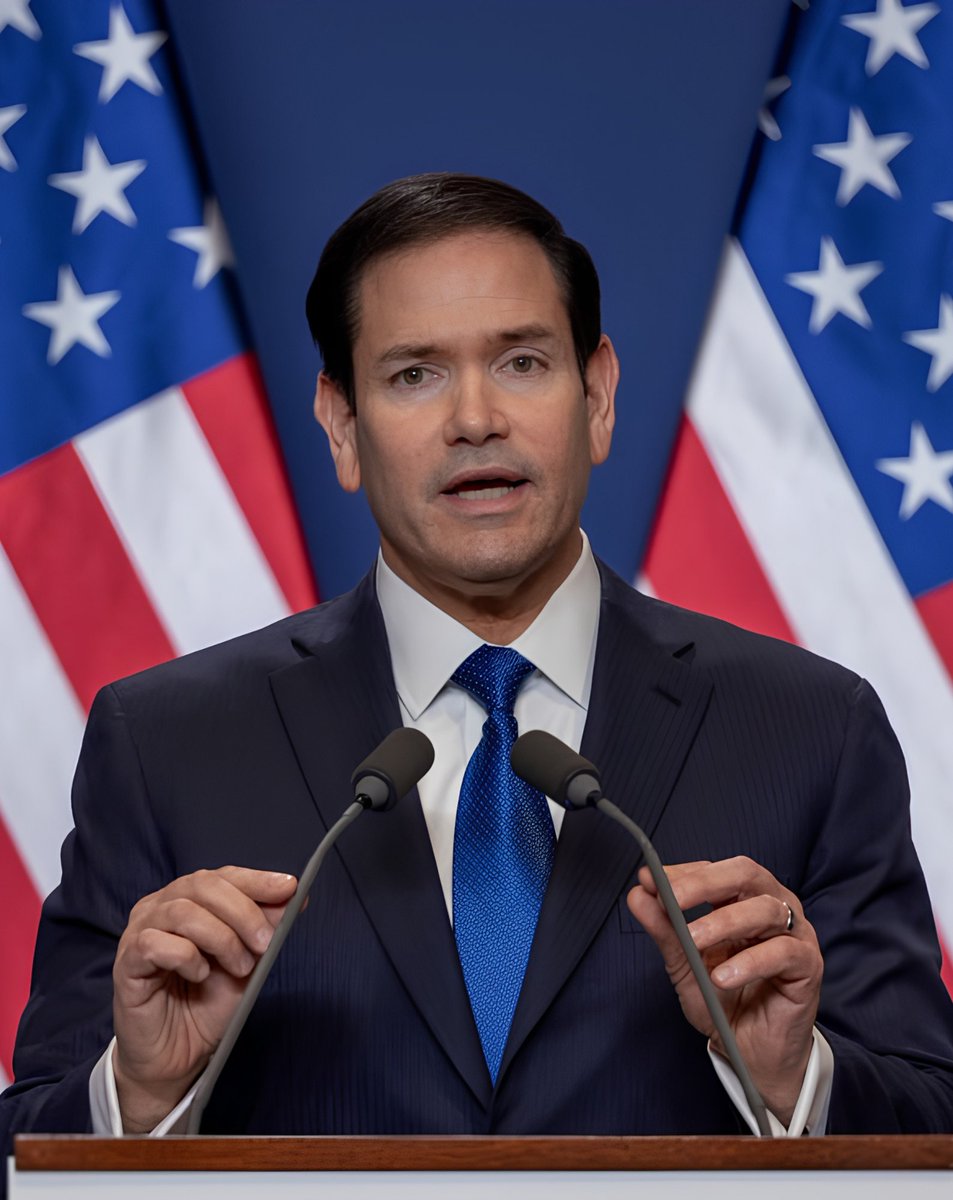
Marco Rubio’s role in the Jensen Huang affair is revealing.
A son of Cuban immigrants who spent his political career proving how uncompromisingly “American” he could be toward Cuba and China ends up helping destroy the influence of another immigrant success story whose loyalty was suddenly treated as conditional.
According to The Washington Post, Rubio took a CIA assessment and rewrote it in stronger language before sending it to Trump.
A former official put the motive more plainly:
“They wanted to destroy the influence Jensen had over the president.”
And that is where this stops looking like a clean national-security story.
Jensen Huang represented something Rubio has spent his entire career trying to prove about himself:
that an immigrant background does not make you less American.
Yet when Huang’s Chinese ethnicity, China ties and policy influence became politically inconvenient, those same things were turned into suspicion.
That is why this entire episode feels like projection.
One immigrant spends decades proving his loyalty by becoming harder than everyone else on the country he came from.
Another immigrant spends decades building one of America’s most important companies—only to discover that achievement does not erase the question mark beside his identity.
Rubio chose the system.
Huang discovered what the system does when it decides your background has become useful against you.
BREAKING: Marco Rubio triggered Jensen Huang's downfall by rewriting the CIA's report on him in stronger language, per the Washington Post.
A former official said some people in the administration "wanted to destroy the influence Jensen had over the president."
“Just holding the meeting elevates Russia to the status of a superpower alongside China and the US.”
This sentence lays bare Russia’s current self-perception.
Neither China nor the United States needs to be “invited to a trilateral meeting” to prove its status as a superpower.
Their economic scale, technological power, military strength, financial influence, and central positions in global supply chains already define their place in the international order.
Russia is different.
That remark is revealing precisely because of its bluntness: for Russian nationalists, merely taking a seat at this table is enough to be interpreted as Russia once again being recognized as a superpower on par with China and the United States.
Russia needs the symbolism.
The Soviet Union did not.
During the Soviet era, Moscow did not need anyone else to “elevate” its status. It was itself a complete superpower system—possessing nuclear forces, a vast industrial base, advanced technology, an ideological bloc, satellite states, a global military presence, and an international structure capable of standing as a symmetrical counterpart to the United States.
Russia today remains a major nuclear, military and resource power and continues to exert global political influence.
But it no longer possesses the comprehensive, symmetrical superpower status that the Soviet Union once held against the United States.
That is why the most attractive aspect of a so-called “New Yalta” for Moscow may not be what the meeting actually achieves.
It is the image itself:
Trump. Xi. Putin.
The three of them sitting together.
That single photograph can be packaged for domestic consumption as:
“Look—the world is still decided by the three of us.”
China, by contrast, has far less reason to embrace such a framework.
Beijing is particularly uninterested in trilateral nuclear arms-control talks because such a format would force China into a framework that equates its nuclear responsibilities with those of the United States and Russia, despite China possessing a substantially smaller nuclear arsenal.
For Washington and Beijing, sitting at the table confirms nothing they do not already know about their own weight.
For Moscow, simply being seated there is part of the prize.
And that difference says everything about how far the world has moved beyond the Soviet era.
https://t.co/uLaSb7kh09
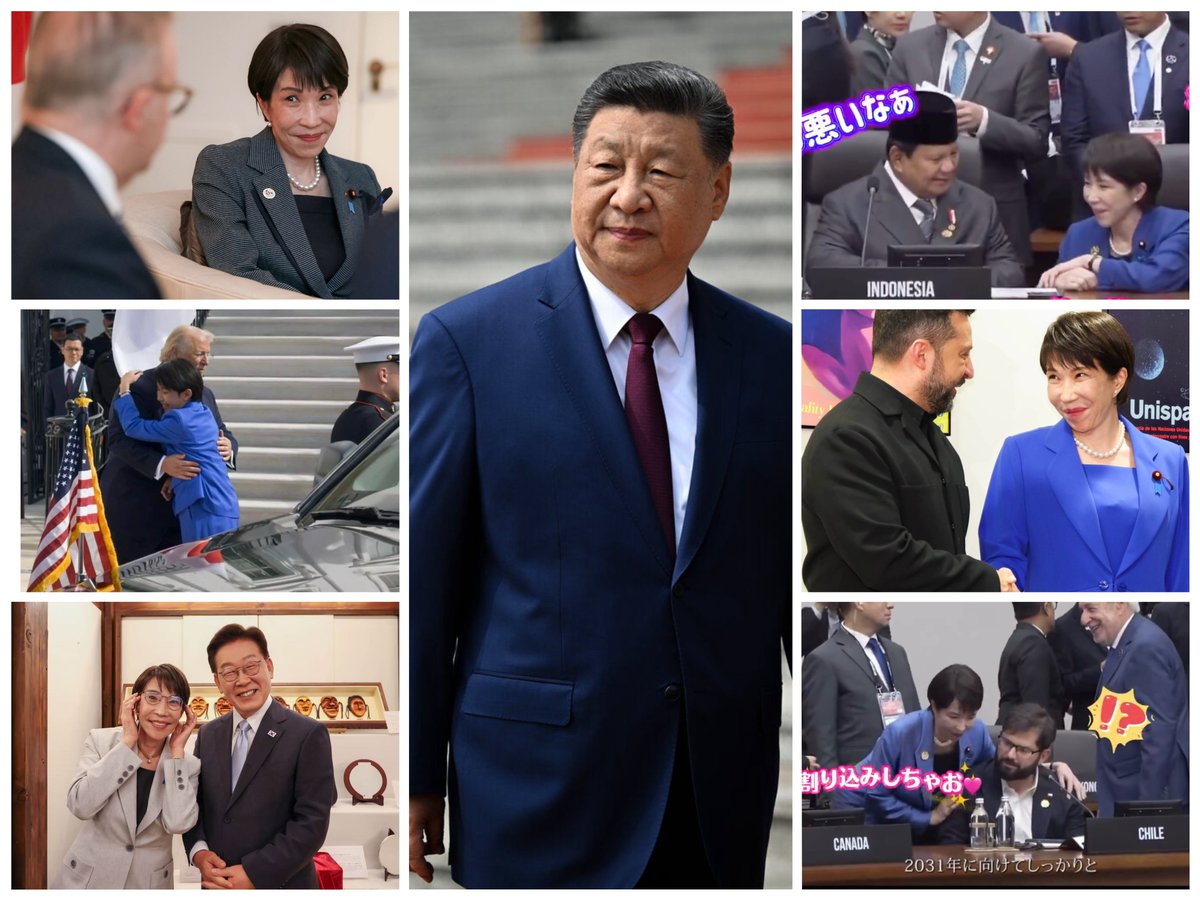
@tatekawaunsui As the host, China has a responsibility to ensure that every guest is treated with proper respect—
and protected from excessive harassment. 🙈
Given Ms. Takaichi’s recent diplomatic enthusiasm,
some guests may require a little extra diplomatic protection.
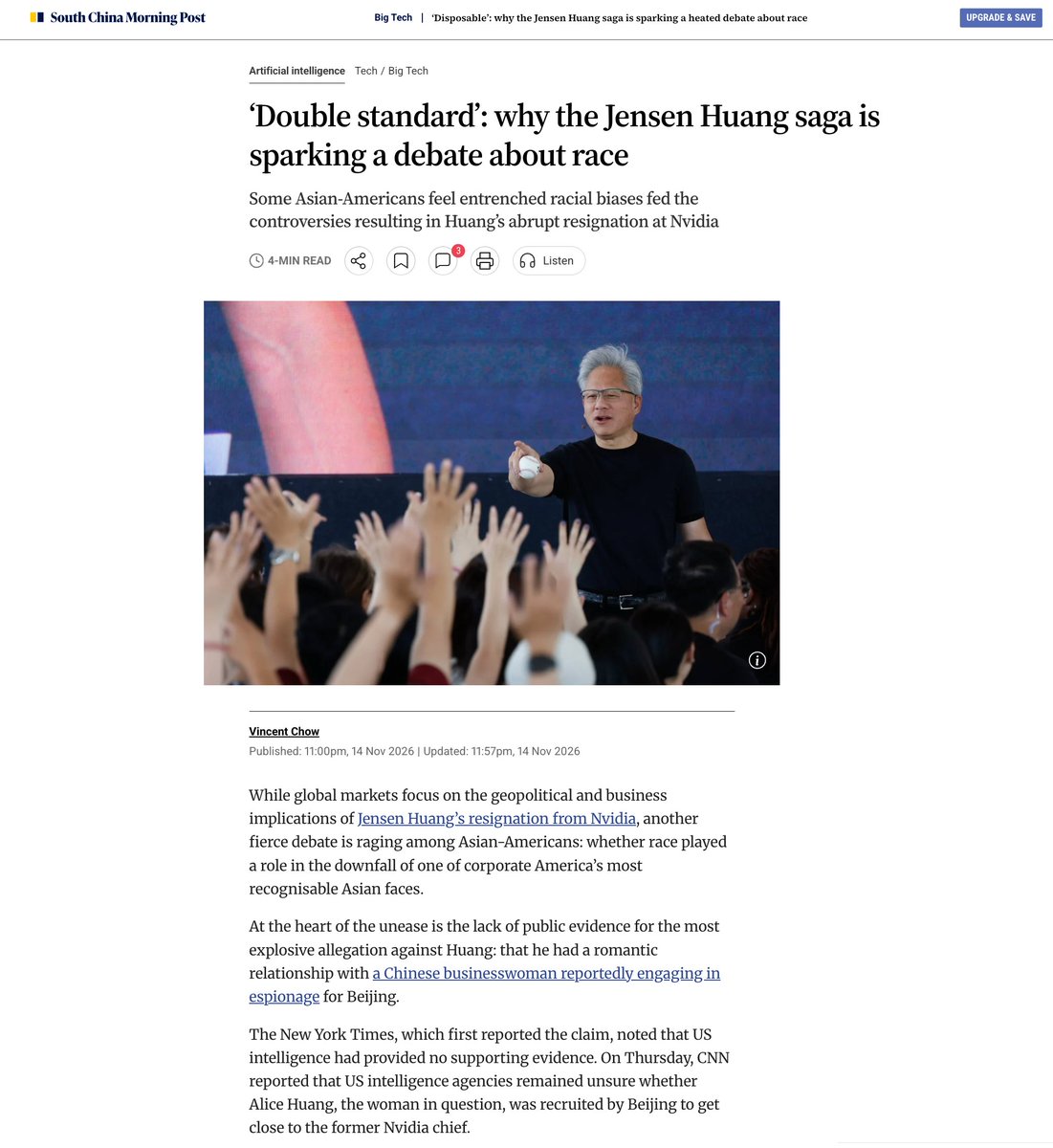
The deepest wound left by the Jensen Huang saga is not about Nvidia.
It is the identity crisis it has created for Chinese-American talent in U.S. tech.
You can spend your entire life building American companies, create jobs, build technology, defend America’s technological leadership, pay taxes, create wealth, become indispensable—
And still, the moment geopolitics changes, your Chinese face can suddenly become a question mark.
That is the trauma:
No matter how loyal I am, will it ever be enough?
No matter how much I contribute, will I ever be fully seen as American?
If Jensen Huang—after 33 years of building one of the most important companies in U.S. history—can suddenly be pulled into a narrative of Chinese spies, divided loyalties and national-security suspicion, what exactly are younger Chinese-American engineers supposed to conclude?
That success does not guarantee belonging.
That contribution does not guarantee trust.
That assimilation may never erase the asterisk beside your identity.
And that is far more damaging than one CEO losing one company.
It tells an entire generation:
You may build America.
America may still ask whether you belong.
For more than two years, the U.S. intelligence apparatus investigated, monitored and amplified the claim that Alice Huang was a Chinese spy.
The accusation helped ignite a national-security scandal around Jensen Huang, destabilized Nvidia, and contributed to driving America’s most important technology leader out of the company he built.
And now?
“Actually, we’re not sure she was a spy.”
CIA officials are unconvinced that the intelligence proves she knowingly passed information to Beijing.
Some U.S. intelligence officials now say calling her a “Chinese spy” was over-torqued.
But apparently that does not matter anymore.
Because the narrative has already mutated:
Maybe she wasn’t a spy.
Maybe she never passed anything to China.
Maybe there is no proof she worked for Beijing at all.
But she was Chinese.
She was successful.
She had access.
Therefore she was a “risk.”
That is the real scandal.
The accusation no longer requires espionage.
Being Chinese is enough.
They destroyed a man’s career first.
They asked whether the story was true afterward.
For centuries, Korea was a tributary state of China.
Today, South Korea kneels at the feet of its master in Washington.
And South Korean colonial lackeys like you somehow manage to combine the worst of both worlds:
denying the Chinese civilization that provided the civilizational foundation of your writing system, classical canon, statecraft and intellectual tradition,
then wrapping American military dependence in the language of “sovereignty.”
No historical confidence.
No civilizational confidence.
No geopolitical power of your own.
No position of your own.
Forever merely a parasitic state, living off a host civilization.
That is the real colonial mentality:
unable to face your own history,
unable to stand on your own identity,
so you spend your time insulting the civilization you inherited from and flattering the power you now depend on.
A parasite will always be a parasite—
You can steal from Chinese civilization.
You can pledge allegiance to Western power.
You can rename dependence “sovereignty.”
It still will not give you dignity.
I’m not responding to you again.
The moment you started cheering for the Nanjing Massacre, you already told everyone exactly what kind of person you are.
You do not need another paragraph to explain how principled, moral, or anti-racist you supposedly are.
That performance is over.
You exposed yourself more clearly than I ever could.
Keep trying to rewrite the timeline if it helps you sleep.
I’ve seen enough.
I never expected moral consistency from someone who tried to weaponize race as a shield, failed, got hit with his own logic, and then spiraled into cheering for the Nanjing Massacre.
That already told me everything I needed to know about you.
The funniest part is that you’re still obsessed.
You provoked people.
You got humiliated.
You failed to control how they answered you.
And now you keep tagging me because apparently one failed confrontation has been living rent-free in your head ever since.
You can dress it up as “calling out racism” all you want.
You lost the argument, exposed your own hypocrisy, then responded by celebrating mass murder.
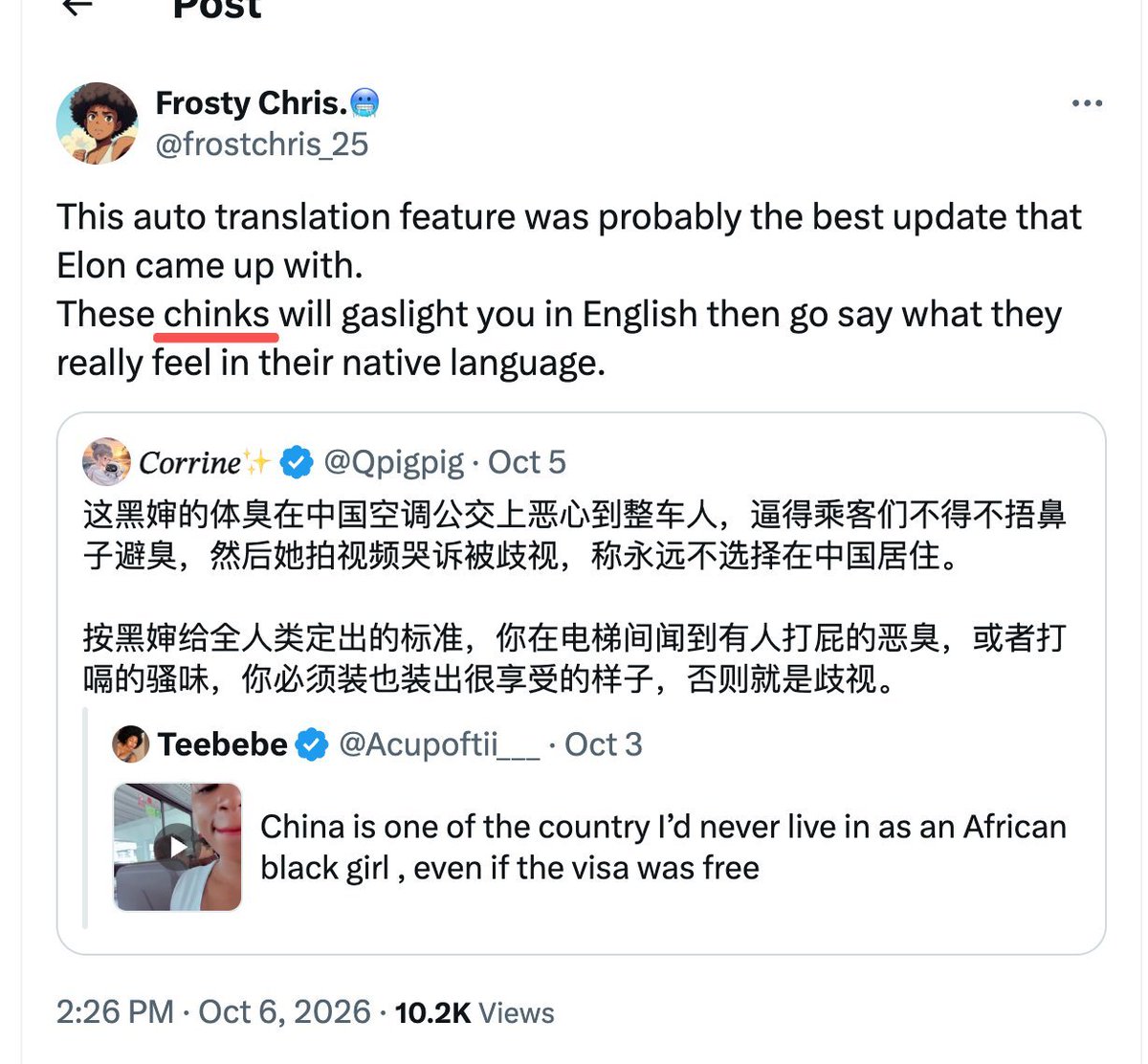
You haven’t exposed any moral failings on the part of the Chinese;
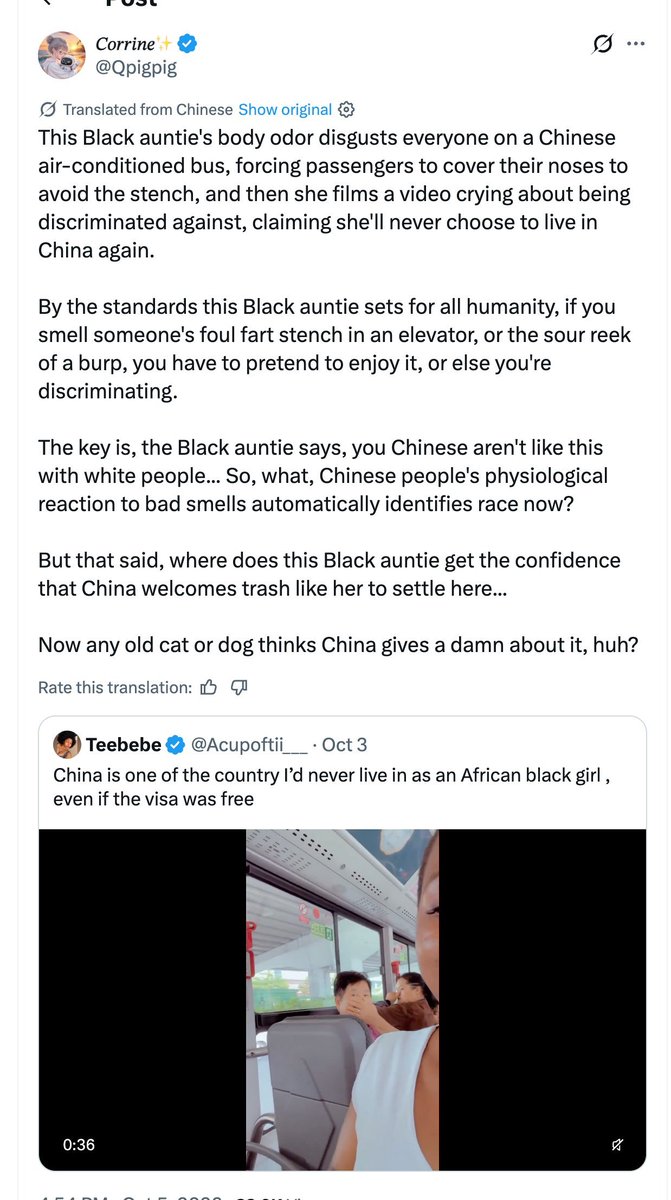
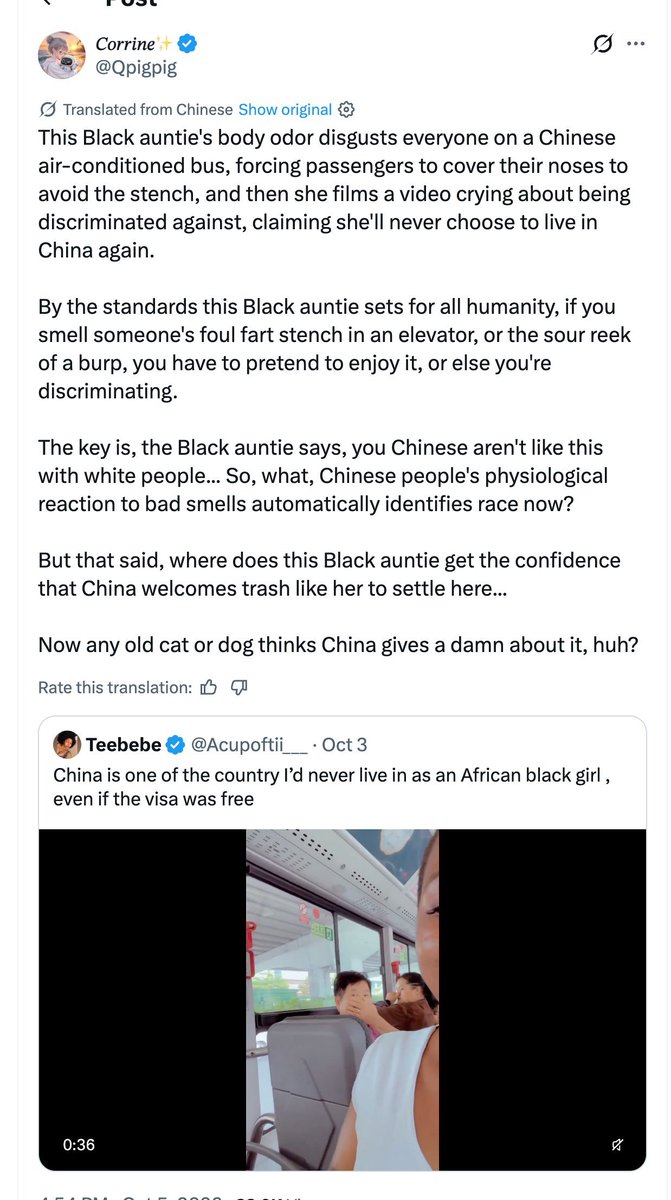
you’ve simply revealed how Black people use the "race card" to bring humiliation upon themselves.
Keep tagging me if you need the attention.
Garbage always rattles loudest when the bin gets kicked.
You cannot rewrite the timeline.
Your race does not give you immunity from being a racist.
Black victimhood is not a license to dehumanize Chinese people, and colonial history is not a coupon for genocidal rhetoric.
If you weaponize race against others, do not cry “racism” when the weapon comes back in your face.
@snapipup@BW Your genocidal nation was founded on the slaughter of indigenous peoples; it is truly ironic that a descendant of criminals would simultaneously oppose immigration and attack China for defending its own territorial sovereignty.
Projection is a hell of a drug.
APEC will be held in Shenzhen next week.
China’s message for APEC is straightforward:
Trade, connectivity, the digital economy, artificial intelligence, growth, and shared prosperity.
In other words: the Asia-Pacific.
Not a region reorganized around military blocs, forward bases, containment strategies and preparations for another proxy war.
That is precisely why the language matters.
“Asia-Pacific” describes a region connected by trade, production, development and economic interdependence.
“Indo-Pacific” has been turned into a strategic map for pushing external military power deeper into Asia, building military blocs to contain China, expanding bases, remilitarizing Japan and transforming the region into a theater of confrontation.
China does not want the Asia-Pacific turned into somebody else’s battlefield.
APEC should be about building factories, trade routes, digital infrastructure and prosperity—
not drawing battle lines.