This work is so incredibly heavy at times. But it is also encouraging to all who are suffering, in a way, that we feel this so deeply. It’s so meaningful to patients that people like you and so many others know exactly what it’s like to live it and that those trying to solve it truly get it ❤️🩹
📢 Published in the final form is the first Delphi consensus on #POTS and #Dysautonomia from the International POTS and Dysautonomia Collaborative! I am honored to serve as a Co-Chair, along with @KSivakoti89360, for this amazing collaborative group - all top POTS/dysautonomia experts. Uniting our colleagues from different specialties across the world, we had only one goal in mind: to improve the care of patients with POTS and Dysautonomia globally. 🌍
🫂 This work is a true labor of love, perseverance, resilience, professionalism and integrity. The paper has been already translated into several languages and shared by different academic, healthcare and government agencies. Thanks to our International POTS and Dysautonomia Collaborative members for investing their own time and effort into this important work! 🙏
@FudimMarat@ArturFedorowski@DH_Lau@DINETorg@HopkinsMECFSC@AANmember@BrainHealth_AAN@Jacobs_Med_UB@UofUHealth@ahsheadache@HRSonline@AASAutonomic
https://t.co/Yvwpq8tWrm
Support for new researchers in the ME/CFS space can be hard to find. These grants are one of the few built to bring scientists into the field. Ramsay applications are open from @PlzSolveCFS for PhD, postdoc/faculty + collaborative awards. https://t.co/JDTNFxRU9q
@tessfalor@ThePOTSPostman Some upright mri quality turns out pretty poor. Flex/extension can also be done supine but doesn’t show the impact of gravity. Sent separate response re: other approaches too.
None of this dismisses correlations and it's important for how hypotheses are generated. It's not just social media, it's scientists in our own work too. Language matters in how we discuss our work in this space, and patients deserve that clarity.
A recurring problem I've noticed in complex chronic illness space online (hEDS, ME/CFS, Long COVID, POTS): association gets communicated as causation.
Finding biological plausibility is easy. Establishing causality is not. 🧵
This matters beyond semantics: premature causal claims narrows the hypothesis space. These are heterogeneous conditions. There will be multiple causes and biologically distinct subgroups. A single-cause narrative should make us more skeptical.
I'd argue multi-omic work is step 1 and 2. The multiomic work is hypothesis generating, not testing it. Large, unbiased and integrated datasets combined with clinical data and collected longitudinally will provide a depth this field has never seen. In a lot of these conditions, the field has skipped this and went straight to narrow hypotheses. These datasets have the ability to generate better ones, which we then test in targeted validation studies.
When I decided to leave my academic postdoc, I was nervous. If I stayed in the complex chronic illness space (EDS, POTS, ME/CFS), would my next team understand what it's like to live with these conditions? How much hope patients place in research, and how vulnerable that leaves them?
At @ChronicleBioAI I didn't have to wonder. Our founders get it, and that's what I'm most proud of about being here. I'm grateful to be doing this with people who want answers as badly as our community does.
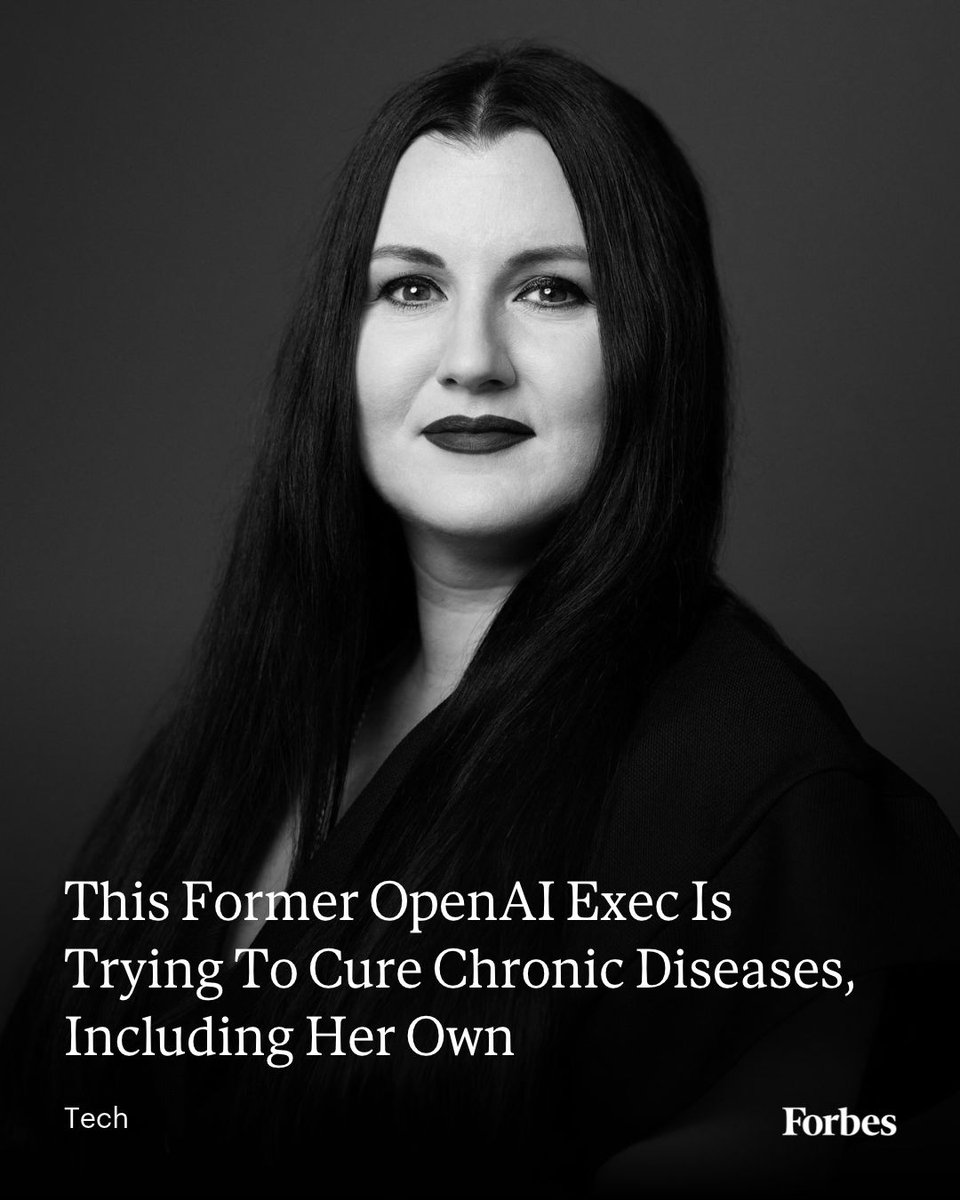
Sufferers of complex, chronic diseases like POTS and long COVID-19 often spend years searching for relief. This former OpenAI exec started ChronicleBio to find treatments using AI and lots of biological data.
Read more: https://t.co/8MiznwgHLV
📸: Joel Saget/AFP via Getty Images
Proud to share that our work at ChronicleBio was featured in Forbes! This mission is personal for our founders, and for me too.
“I don't think any three people want to solve this problem more than we do. We want it so bad, for ourselves and for our kids, because there is a genetic predisposition to this, and because there are millions of people out there." - @rishi_n_reddy@rohit0logy@fidjissimo
Chronic conditions have long been defined by symptoms instead of biology, hindering drug discovery that could help millions of patients.
@Forbes spoke with ChronicleBio about how we're using multi-omic analysis & AI to end trial-and-error medicine.
https://t.co/WtbMLEhDVT
Thanks @Forbes for featuring the great work we’re doing @ChronicleBioAI.
There are exactly 0 FDA-approved therapies for the hundreds of millions of people suffering from diseases like POTS, Long COVID, MECFS or hEDS. We created ChronicleBio to change this.
By building the deepest dataset on these conditions and leveraging AI, we will understand what the biology behind the symptoms is. From there, we can map the right drugs to the right patients.
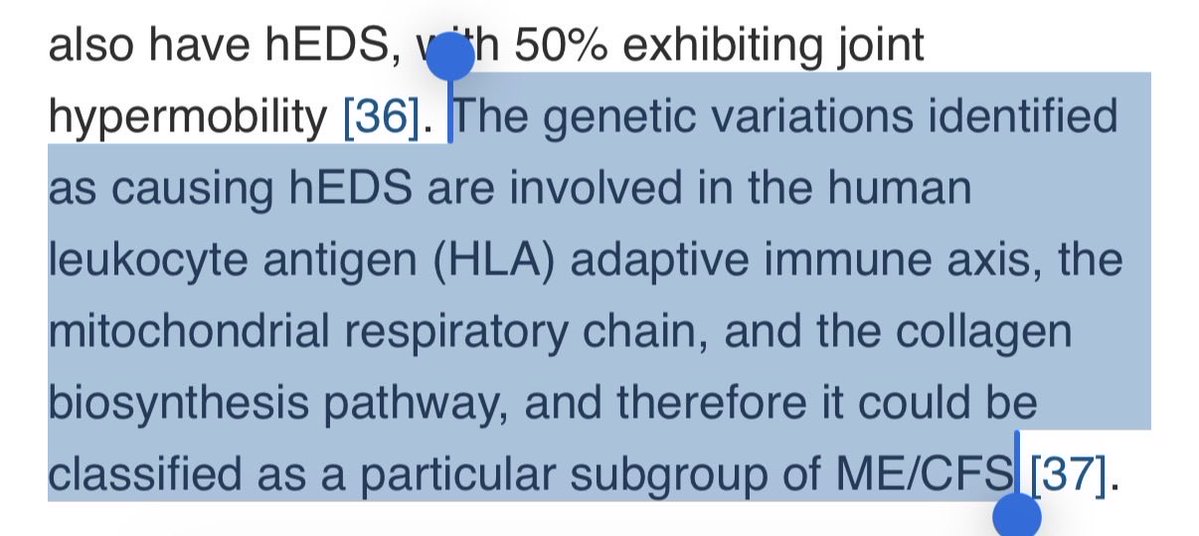
Perfect example of why "it's published" or "it's on PubMed" isn't evidence on its own. This paper claims several genetic variants/pathways as "causing" hEDS, tied to a citation that does not support the claim.
The paper cited actually says “No causal relationships between genetic variants and clinical manifestations have been established by this study.”