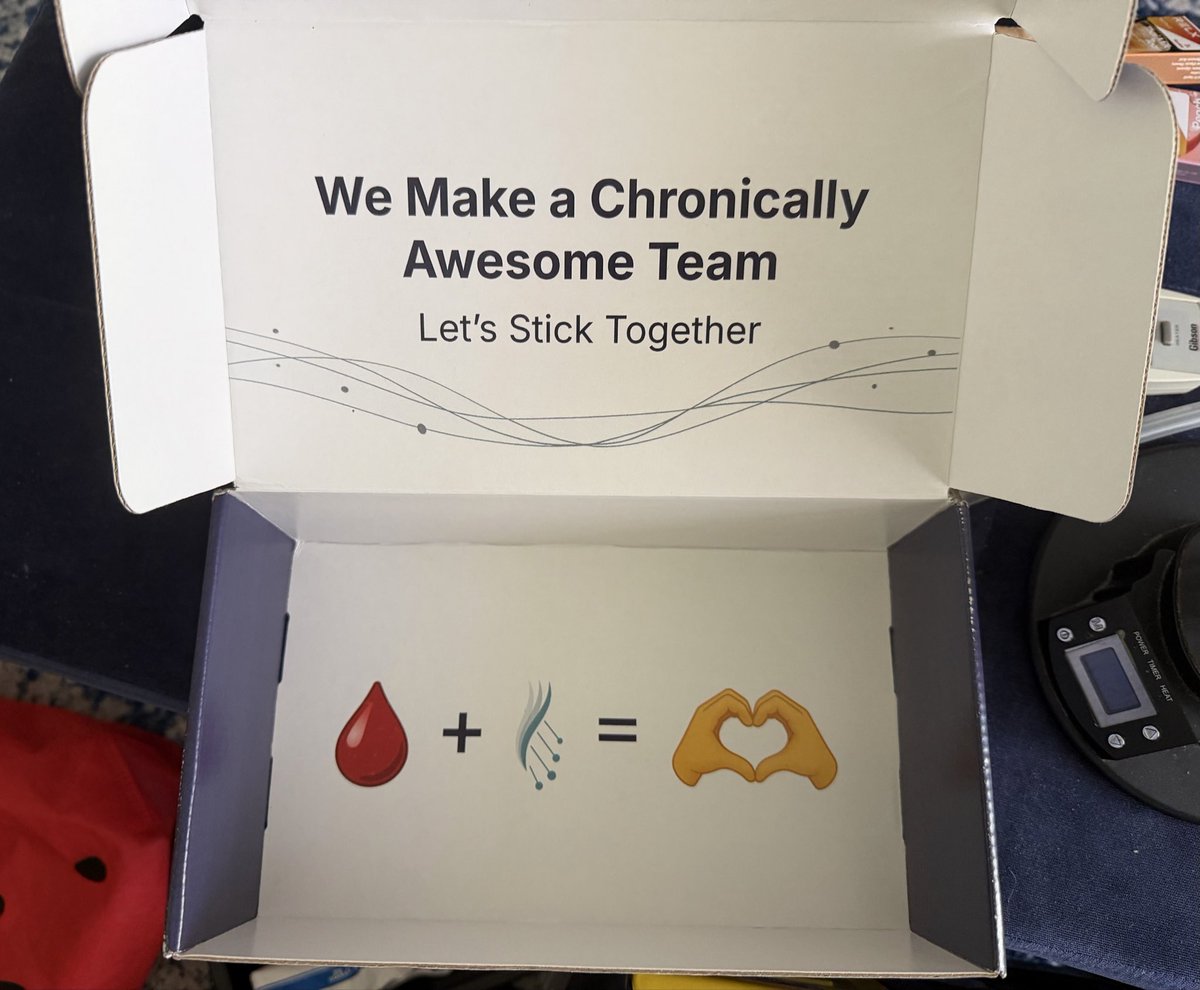
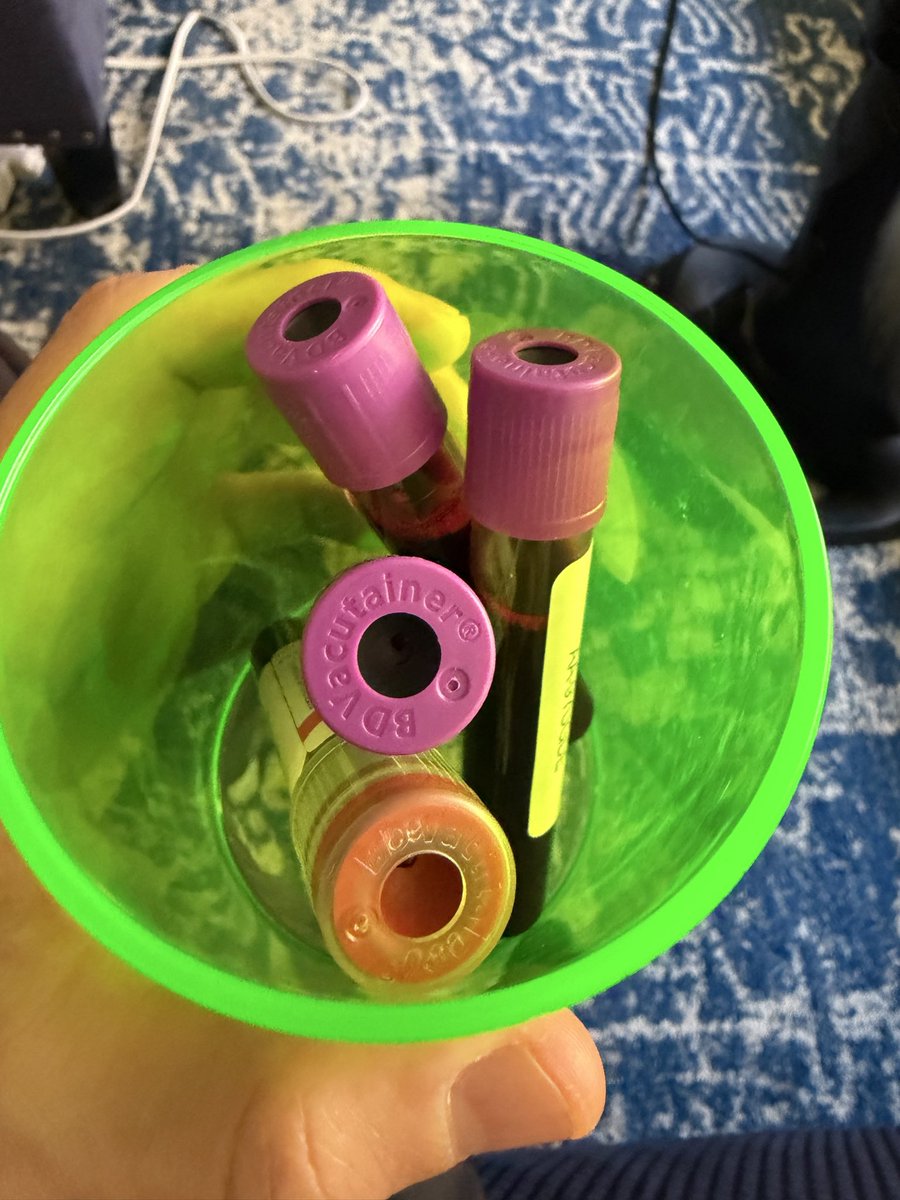
No need to leave your bed! We’ll bring the research to you.
Mobile sample collection is our next chapter in expanding access to research on complex chronic conditions. Every participant receives a research report back.
Sign Up: https://t.co/vvYZYEDh74
Nothing like waking up to dozens of congrats for taking a job you did not take! While I loved my time at Meta, no, I am not going back! I’m still dealing with severe health issues and focusing all my energy on finding cures for myself and millions of patients like me. And while it’s been a hard time personally, it has also been the most meaningful mission I have ever worked on.
“This is real, tens of thousands of people are suffering,” Dr. @knidac said, “and there are things we can do to help them.”
Dr. Knight, a member of the ChronicleBio Scientific Advisory Board, and one of the leading clinical voices on Ehlers-Danlos Syndrome in the country spoke with the @nytimes this week alongside Dr. @CortDoesScience, our Principal Translational Scientist, for a piece on hypermobile Ehlers Danlos Syndrome. They see firsthand how diagnostic delays and limited treatment options have left patients suffering. With limited resources available, patients often turn to social media for answers.
“People aren’t making up symptoms just because they saw a video,” Dr. Gensemer said. “They’re actually finding words to describe things that have been wrong their whole life.”
hEDS is a chronic illness at the center of our research. Many patients with the condition also develop POTS, ME/CFS, MCAS, and related neuroimmune conditions. Resolve one patient into the mechanisms driving their disease and you find shared pathways across millions. That’s what we’re doing.
Read more about what patients with these conditions experience in the full New York Times piece: https://t.co/3Ebxt5lJzc
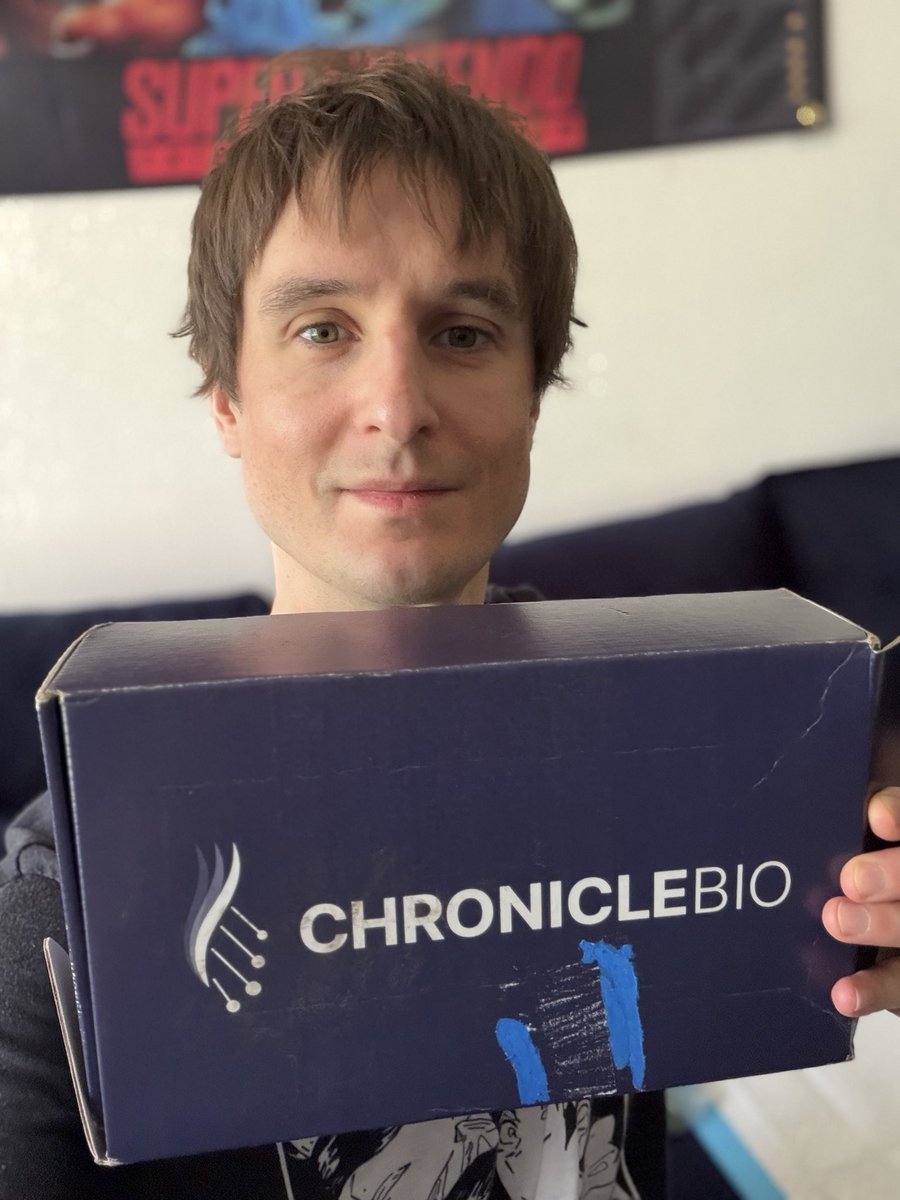
Just had my @ChronicleBioAI blood draw. My blood will now be sent off to be sequenced for RNA, proteomics, metabolomics, and DNA as part of the most comprehensive chronic illness patient biobank to date!
Being severe enough that I'm not able to leave my apartment, I highly appreciated how easy the blood draw was. The phlebotomist let himself in per my instructions and everything was done in five minutes. And he ended up being my regular guy I use through GetLabs as well!
OK. Let's answer the question. Why is what @ChronicleBioAI so completely breakthrough level data collection?
I know you probably have "testing" fatigue. We have seen some not so helpful and very expensive testing being promoted in the last few years. I have done a LOT of expensive "so-what" testing -- this is not what is going on here.
The ChronicleBio databank is different. The people running it are super experienced and very well funded. Given the expertise of this group - I think there is a good chance we are seeing the first hints of where research in these conditions will be heading in the next decade. The data has jumped the walls of the academy!
The strength and the breakthrough data collection here is that they are not picking and choosing a level of biology to focus on. The past decade has seen some awesome metabolomics, and genetics, and proteomics, and microbiome studies but they are all disjointed, from different labs, different cohorts, different subtypes, different people.
What ChronicleBio is doing is collecting ALL the data for a very well defined group of patients. They are focusing on ME, LongCovid, hEDS, MCAS, POTS, Sjogren's. They get the subtype problem.
For each person - they will be collecting about 1 BILLION data points - i.e. pieces of information - for each person.
Complete genomics, methylomics, transcriptomics, metabolomics, proteomics. Nothing like this has ever been attempted before.
This will be the biobank that will define the subgroups, tease the genetics from the environmental factors, track changes at different severity levels.
And, they come to you. Bedridden - severe - patients can get a home visit for collection.
In the past year I have seen groups charging thousands for way less than 1% of this data - for just one level of this data.
The first 250 patients are 100% FREE for the first collection and after that each collection will be $400. This is insanely cheap and if I had to guess - I would say they they are probably covering a few thousands dollars worth of testing for each person. The 400$ likely covers the logistics of the collection - all the assay's are paid by ChronicleBio.
The only thing that bums me out is that they are not in Canada and not International. I would literally give a toe to get this testing.
This one is different. I promise.
Well deserved! We are so excited about working with @ChronicleBioAI Everyone has been helpful, curious, collaborative and working hard to move this field forward. @tessfalor and I (Isabel) have been so impressed by the responsiveness and care through #innovationinn & beyond.
When I decided to leave my academic postdoc, I was nervous. If I stayed in the complex chronic illness space (EDS, POTS, ME/CFS), would my next team understand what it's like to live with these conditions? How much hope patients place in research, and how vulnerable that leaves them?
At @ChronicleBioAI I didn't have to wonder. Our founders get it, and that's what I'm most proud of about being here. I'm grateful to be doing this with people who want answers as badly as our community does.
Thanks @Forbes for featuring the great work we’re doing @ChronicleBioAI.
There are exactly 0 FDA-approved therapies for the hundreds of millions of people suffering from diseases like POTS, Long COVID, MECFS or hEDS. We created ChronicleBio to change this.
By building the deepest dataset on these conditions and leveraging AI, we will understand what the biology behind the symptoms is. From there, we can map the right drugs to the right patients.
@32Sfc46582@fidjissimo@Forbes Thank you! We just started at-home sample collection to reach those who can’t get to a lab. More on that here: https://t.co/ahTscFz5kJ
Thanks @Forbes for sitting down me and my co-founders, @fidjissimo and @rohit0logy to capture the @ChronicleBioAI story.
Our living data ecosystem has generated more than 200TB+ of data (and counting) enabling our AI models to decode the most enigmatic diseases we face today.
We have already identified multiple targetable endotypes, confirming the heterogeneity of these diseases is very real and reinforcing that the status quo approaches simply will not work.
We are now on an executing on an asset strategy to bring the right therapies to the right patients as quickly as possible.
TL;DR we’re firing on all cylinders… and we’re hiring
https://t.co/mHpsn0LftS
Chronic conditions have long been defined by symptoms instead of biology, hindering drug discovery that could help millions of patients.
@Forbes spoke with ChronicleBio about how we're using multi-omic analysis & AI to end trial-and-error medicine.
https://t.co/WtbMLEhDVT
Such a meaningful experience at the @chroniclebioai lab, seeing the biobank behind the research!
Every sample in these freezers represents a person, living with these complex chronic illnesses, that needs answers.
Thank you @SummerDashe & team for the warm welcome!
Your illness isn't waiting on a test to be real. The test is waiting on science to catch up. It's why I'm proud to be a part of the work at @ChronicleBioAI and fighting to find the answers for people who've been told for far too long their experience is "normal".
We have shipped #innovationinn samples from Canada to @ChronicleBioAI
There was a delayed in customs that had us at the edge of our seat, but they made it safely.
Thanks @rohit0logy and team for staying on top of it with us
When the team at @RenegadeRes reached out to us to collaborate on sample analysis, we didn't hesitate. In under 24 hours we had a plan in motion, kits shipped their way, and vendors prepped. The Renegade team worked just as quickly to make it happen.
Patient-led science means we all understand what's at stake with our work and why time matters. Millions of people are losing days to their symptoms. We are working rapidly to understand the biology of complex chronic conditions in an effort to find treatments that could help.
ChronicleBio is generating multi-omic data on samples collected during Renegade Research's Innovation Inn. It was a multi-day event where #MECFS patient-researchers deliberately tracked their own post-exertional malaise (PEM) to help characterize what happens in the body before, during, and after.
Across the event, the team collected 482 plasma, serum, and whole blood samples at multiple timepoints, alongside HRV, lactate, heart rate, blood pressure, and symptom data. We supplied collection kits for every timepoint, and our analyses will complement everything else being measured.
We're proud to be one of several partners contributing to this work, alongside @amaticahealth, Alden Scientific, Arden Bio, Infinity Bio, CDI Labs, Theriome, @imyoohealth, and an MIT team from @ImmunoFever’s MAESTRO project demoing nailfold capillaroscopy, WAVi EEG, and Right Eye tracking.
One of the ways our researchers determine what could be causing fatigue in complex chronic conditions is through metabolomics.
In our study, we measure 2,000+ metabolites that can give participants insights on their biology.
More Info: https://t.co/vvYZYECJhw
Just got my blood drawn for multiomics from @ChronicleBioAI ! This futuristic company is using long-read genome sequencing (from @nanopore ), transcriptomics, proteomics, and metabolomics to build an AI foundation model for rare and complex diseases, like #EhlersDanlosSyndrome and #POTS. I just want to thank the team and give a shoutout to @fidjissimo for putting this together. Fidji is one of the most amazing visionary leaders in the entire tech space. Motivated by her own health struggles, put together a new company doing what I have been dreaming someone would do since my hackathon in 2019. It’s cool to be working with all star research scientists like @CortDoesScience as well.
Interestingly, all of this became possible because I met @gdb / Greg Brockman, president and cofounder of OpenAI, at an EDS conference at GitHub, hosted by the nonprofit I work with, @Research2People . Greg pleasantly surprised everyone and showed up unannounced with his wife, who has EDS like me. After talking with them for a while, I was introduced to Fidji by email. Fidji introduced me to her people, who I got to know and respect, and now I am proudly working with ChronicleBio to do what I have been dreaming of ever since starting with Research to the People, where my multiomics journey began and changed my life. This now is the next level - far more ambitious than anything before.
I have to say, ChronicleBio is doing the most cutting edge data generation in the entire space, and I am so happy to be a part of this. Thank you ChronicleBio! Today is a good day!
#EDS #EhlersDanlos #MECFS #MCAS #RareDisease
I disagree with Dario on most things, but this is spot on: “At this point, saying that AI will cure cancer is more a cliché than it is inspiring, and most people think it is deceptive. The thing that will work is actually curing cancer.”
The thing that frustrates me is that some people often draw a straight line from smarter models → cures, without acknowledging how much infrastructure is missing in between. We’ve still got a lot of work to do, people.
The regulatory bottleneck gets a lot of attention. But the bigger bottleneck may be that in many places, we’re lacking the right biological data. AI can’t reason its way to cures if we haven’t generated the data required to understand the disease in the first place.
Ironically, that’s why I’m most bullish on AI making dramatic progress in cancer first: decades of investment have produced extraordinary datasets across genomics, pathology, imaging, clinical outcomes, and more.
For complex chronic diseases, much of that infrastructure simply doesn’t exist yet. The good news is that many companies (including @ChronicleBioAI) are racing to build it.
But model intelligence and biological infrastructure are going to have to scale together. I really do believe AI can cure all diseases but only if we build the infrastructure to translate intelligence into cures at the same pace that models improve (which is a high bar!). Otherwise, we risk having superintelligent AI with an incomplete picture of human biology, and delay that promise by years.
Ever wonder what actually happens to your sample after it’s collected for the Chronicle Biobank?
Most study participants never hear what researchers found. We invite you into the scientific process while it’s unfolding.
Learn More: https://t.co/IV3LGE4H4S
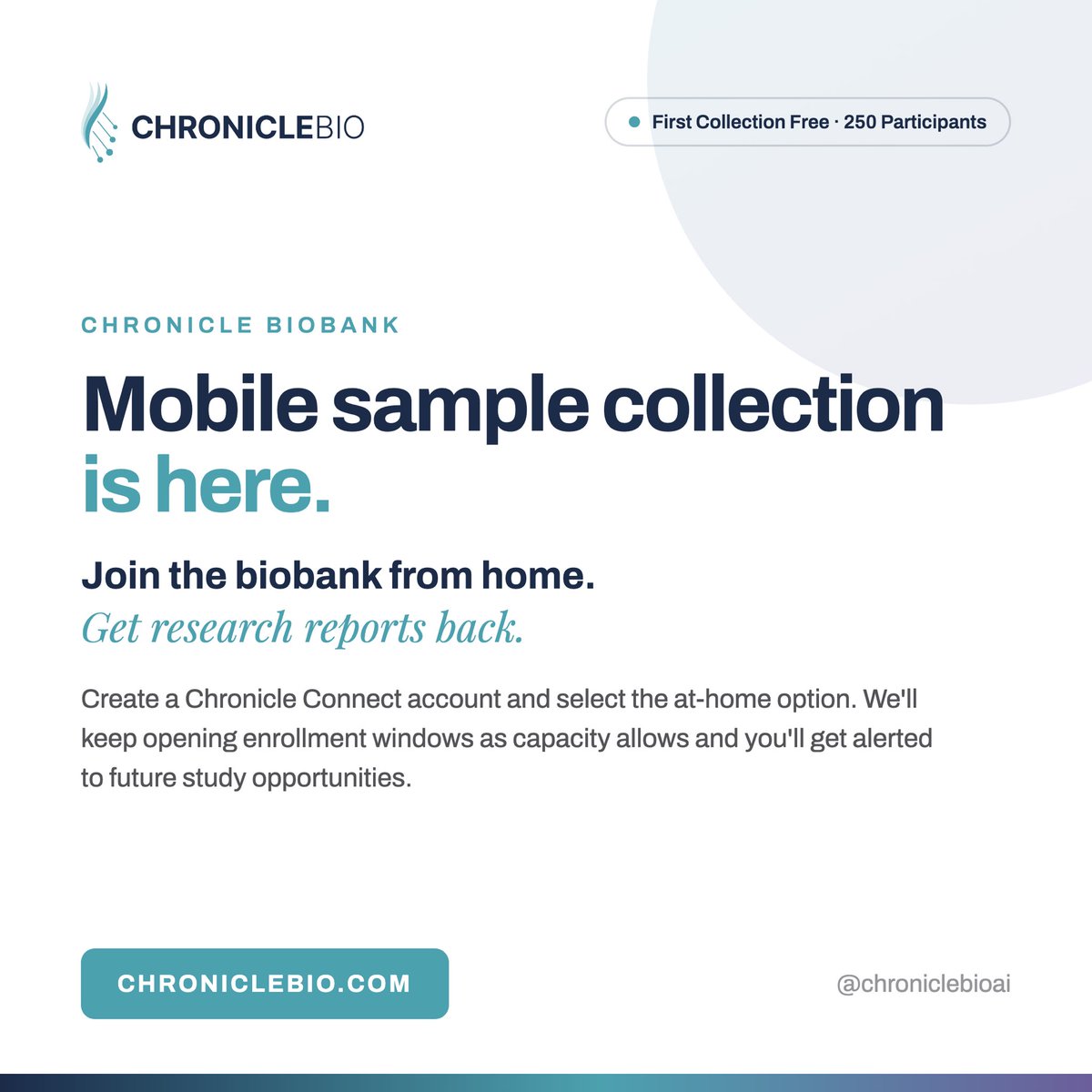
Mobile sample collection is here!
Join the Chronicle Biobank Study from home. Get individual research reports back.
Spots are limited. The initial collection is free for the first 250 participants.
Sign Up: https://t.co/RS55kCwpc1
#Chronicling#ChronicIllness#Research