Check out ProbeLab's update on the most notable results on @IPFS from the past few weeks here: https://t.co/pLtnFBHUx9 and, as usual, follow all the action at: https://t.co/uk2qJy0G5S.
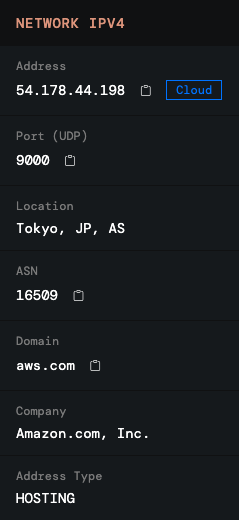
At ProbeLab, we just launched an ENR viewer! The tool allows to decode and inspect @Ethereum Node Records. Inserting your ENR will give information about your node’s ID, public key, IP address, ports, and GeoIP, hosting provider. Check it out at: https://t.co/xz4DI3NYT8.
As promised a few weeks ago, we crawled the @monero P2P network - here's what we found:
- 16,454 reachable nodes
- 81.6% flagged as spy nodes
- 80%+ running on a single cloud provider
Monero's transaction privacy is strong but its P2P layer tells a different story.
ProbeLab has improved its tooling to distinguish between different service classes for requests that hit the traditional @IPFS (https://t.co/Dum8ncVKa2 and https://t.co/T1xQbW1dNs) gateways. Follow the action at: https://t.co/8TxwznJo9r
Exciting news from the ProbeLab team!
We've just added @monero crawling functionality to Nebula, our network-agnostic P2P crawler! 🕵️♂️📈
Measuring privacy-centric networks like Monero is notoriously difficult, but Nebula can now do the following:
As part of ProbeLab's revamp of @IPFS metrics, we now have data on the performance of traditional, as well as service worker gateways! Read more at: https://t.co/nfUxOxQO8A and head over to https://t.co/TQQb87x1wQ for all the dashboards!
Here's ProbeLab's summary on the highlights and notable results for the @IPFS network for the past few weeks: https://t.co/9pO2qtMako
Follow all the action at: https://t.co/uk2qJy0G5S.
New metrics on @IPFS just landed on https://t.co/RvveYzTmbd! Among others, check Kubo e2e performance, number of daily unique CIDs on the Amino DHT, and IPNI status. Check more details at: https://t.co/cqWaRd22p1.
Check all of this and more at: https://t.co/JeZW4gWWmg
The ProbeLab team participates in @FILRetroPGF Round 3 to showcase the extensive set of results that we've been producing for the Filecoin network.
Thanks to @protocollabs@FilFoundation and Lotus Pond Association for supporting this round.
Check: https://t.co/yc8MUFHJHM
https://t.co/yc8MUFHbSe is now monitoring the @base DHT network. Following up from our @Optimism Chain Composition study, we decided to get more information about the geolocation of nodes, the network's cloud dependency and more. Latest report at: https://t.co/TKhvkXjmeW.
Where are Celestia’s nodes running?
What clients are they using?
Who’s really powering the mesh?
You can now answer it all.
Celenium Node Analytics is live.
Check node hotspots, type, version, and more. 🌐
https://t.co/zwcKy0nf1z
Some light reading for your Friday! Up today is a retrospective on EIP7691, which increased blob throughput. Did it perform as we expected? And what does this tell us about a potential 60M gas limit?
Read on 👇
New post on https://t.co/j5UaKGaEf3!
Accelerating blob scaling with FullDASv2 (with getBlobs, mempool encoding, and possibly RLC)
By:
- cskiraly
🔗 https://t.co/4Z9jkRoFbv
Highlights:
- The FullDASv2 design aims to enhance data scalability in blockchain by using advanced coding techniques and efficient messaging protocols.
- The introduction of the getBlobs API improves the connection between different parts of the system, allowing for better data retrieval and reconstruction.
- Cell-level messaging is crucial for reducing delays and improving data availability, enabling nodes to recover data without needing to be 'supernodes'.
- Blobs are now encoded directly in the mempool, which reduces the computational load on builders and speeds up data processing.
- The research explores alternatives to traditional coding methods, like Reed Solomon codes, to further optimize data handling and recovery in the system.
ELI5:
This research discusses a new way to improve how data (called blobs) is managed and shared in a blockchain system. It introduces techniques to make the process faster and more efficient, allowing the system to handle more data at once without slowing down.
New and fresh results on Ethereum's blobs and their presence at the EL mempool for block processing coming directly from @ProbeLab's research factory 🏭
https://t.co/k9hbZDvJ9g
This is probably one of the coolest live dashboards that I've seen for Etherum's live performance:
https://t.co/VyuAZxCA6k
Keep this awesome job up @ethPandaOps 💪
guys, who is this team staying up all hours, relentlessly harassing all holesky node operators to get back online, providing rescue nodes, creating explorers on the fly, standing up devnets and shadowforks, and keeping mainnet ultra protected?
THEY MUST BE STOPPED