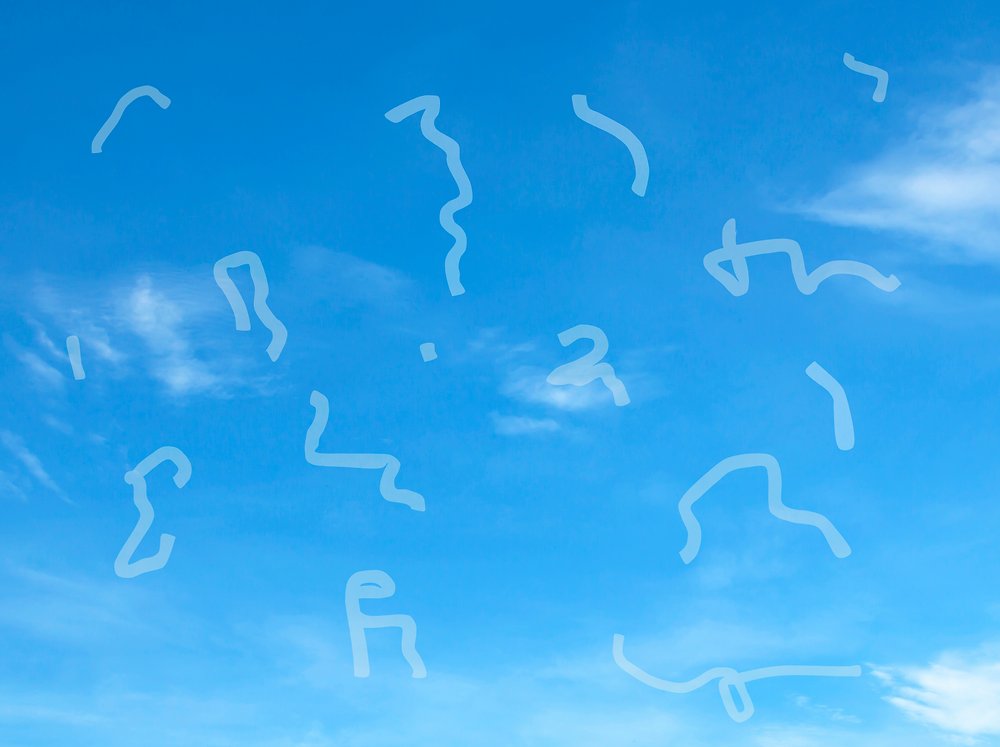
OoooOOooh! Guess what! As of Chrome 149, shape() works in shape-outside!
So you can really *shape* your UI's 😉*
rect() and xywh() are also supported for shape-outside in Chrome 149
*(just let me have my Mom joke)
So @inregistry seems to have suspended my primary domain without sending me a single email for allegedly an invalid whois.
PSA: Never trust a country-TLD. .in has its esp worse because it doesn't allow whois privacy. But I had my home address in there.
@captn3m0 I got the same email from namecheap. .in domain never had allowed whois protection AFAIK but for some reason the domain contacts where all weird in namecheap. Had to manually correct it. Didn't know the domain would be suspended so soon. one week is too short a period for warning
Prof. Donald Knuth opened his new paper with "Shock! Shock!"
Claude Opus 4.6 had just solved an open problem he'd been working on for weeks — a graph decomposition conjecture from The Art of Computer Programming.
He named the paper "Claude's Cycles."
31 explorations. ~1 hour. Knuth read the output, wrote the formal proof, and closed with: "It seems I'll have to revise my opinions about generative AI one of these days."
The man who wrote the bible of computer science just said that. In a paper named after an AI.
Paper: https://t.co/juSOmK9vOt
AirTag V2 Quickie-Teardown - nRF52840 upgrade & Bigger 🧲
We just picked up a 4-pack of Apple's second-gen AirTag. That means we have a spare to tear down and check out the build of this new improved device. Even just taking it apart we've learned a lot on how Apple has improved on the assembly process. The original AirTag used a lot of glue to keep it together and weatherproofed. This version uses just a couple small dabs to adhere the PCB to the outside, otherwise it's just sandwiched layers of battery holder + PCB + magnet buzzer + NFC antenna (https://t.co/T9XWNKJkti) + buzzer coil.
Inside, we see a move from the nRF52832 (https://t.co/4Dp3iiuEDR) to the newer nRF52840 (https://t.co/rdm4ZS2rPQ) which has more flash and RAM. There's still the Apple-silicon ultra-wideband chip with two tiny antennas on the PCB. The NFC antenna fits neatly at one end. The speaker assembly is larger thanks to a bigger magnet and coil - it must use the case as a resonating cavity.
We love the high-density, all-black goth design of Apple hardware. We don't expect to be able to make something like this in house at Adafruit any time soon but there's always neat techniques to learn when seeing how the best-of-the-best do it.
Note, we mentioned that the nRF52840 adds Angle-of-Arrival (https://t.co/jor7QVJj4m) sensing that should help determine what direction and distance a target object is at, but that’s actually in the nRF5340
Drug-Drug Interactions kill thousands yearly. Can we train AI to catch them?
DDI-Corpus-Processed: 7K+ expert-annotated examples
The model must classify:
- Mechanism (how drugs interact)
- Effect (clinical outcomes)
- Advisory warnings
- No interaction
https://t.co/mkibJZzd2F
EYE FLOATERS - a sign your body is quietly suffering.
This is how they form, what that tells you about your underlying health, and how to prevent/eliminate them.
(🧵1/8)
Yesterday a quasi-judicial body in Italy fined @Cloudflare $17 million for failing to go along with their scheme to censor the Internet. The scheme, which even the EU has called concerning, required us within a mere 30 minutes of notification to fully censor from the Internet any sites a shadowy cabal of European media elites deemed against their interests. No judicial oversight. No due process. No appeal. No transparency. It required us to not just remove customers, but also censor our 1.1.1.1 DNS resolver meaning it risked blacking out any site on the Internet. And it required us not just to censor the content in Italy but globally. In other words, Italy insists a shadowy, European media cabal should be able to dictate what is and is not allowed online.
That, of course, is DISGUSTING and even before yesterday’s fine we had multiple legal challenges pending against the underlying scheme. We, of course, will now fight the unjust fine. Not just because it’s wrong for us but because it is wrong for democratic values.
In addition, we are considering the following actions: 1) discontinuing the millions of dollars in pro bono cyber security services we are providing the upcoming Milano-Cortina Olympics; 2) discontinuing Cloudflare’s Free cyber security services for any Italy-based users; 3) removing all servers from Italian cities; and 4) terminating all plans to build an Italian Cloudflare office or make any investments in the country.
Play stupid games, win stupid prizes. While there are things I would handle differently than the current U.S. administration, I appreciate @JDVance taking a leadership role in recognizing this type of regulation is a fundamental unfair trade issue that also threatens democratic values. And in this case @ElonMusk is right: #FreeSpeech is critical and under attack from an out-of-touch cabal of very disturbed European policy makers.
I will be in DC first thing next week to discuss this with U.S. administration officials and I’ll be meeting with the IOC in Lausanne shortly after to outline the risk to the Olympic Games if @Cloudflare withdraws our cyber security protection.
In the meantime, we remain happy to discuss this with Italian government officials who, so far, have been unwilling to engage beyond issuing fines. We believe Italy, like all countries, has a right to regulate the content on networks inside its borders. But they must do so following the Rule of Law and principles of Due Process. And Italy certainly has no right to regulate what is and is not allowed on the Internet in the United States, the United Kingdom, Canada, China, Brazil, India or anywhere outside its borders.
THIS IS AN IMPORTANT FIGHT AND WE WILL WIN!!!
Go 1.26 brings the long-awaited vectorized operations (SIMD) in the simd/archsimd package.
Since it's hard to create a portable high-level API, the Go team decided to start with a low-level, architecture-specific one and support only amd64 for now.
I think it's a great idea to let developers try things out and give feedback before designing a high-level interface.
But there's one thing I don't quite understand.
Why is the package called simd/archsimd? Since it's amd64-specific, shouldn't it be simd/amd64 or maybe simd/avx?
What happens when Go adds support for SIMD on arm64? Wouldn't simd/archsimd become a messy bag of types, some supported only on amd64 and others only on arm64?
Meta's segmentation models are insanely underhyped.
The latest release - SAM Audio - allows you to search for ANY sound across a video, isolate it, and apply effects.
Watch me take a travel vlogger's noisy clip and remove the background audio so he's way easier to hear 👇
The goroutine leak profile in the upcoming Go 1.26 is a big deal.
But the synctest package, available since 1.24, can also catch leaks just fine. I don't know why no one talks about this.
Anyway, it's time to cover both of them!
https://t.co/iUrAa7ShdI