Saying goodbye to the guy you shared a cigarette with at 3 a.m. while blackout drunk, became best friends with for the night, and both know you will never see again.
Frederick Douglass rose from slavery to become a leading abolitionist, bestselling author and founder of The North Star—later serving as a presidential adviser and U.S. Marshal. He lands on the #Forbes250 Greatest Historic Self-Made Americans list. https://t.co/gylcANexwC (Photo: Library Of Congress via Getty Images)
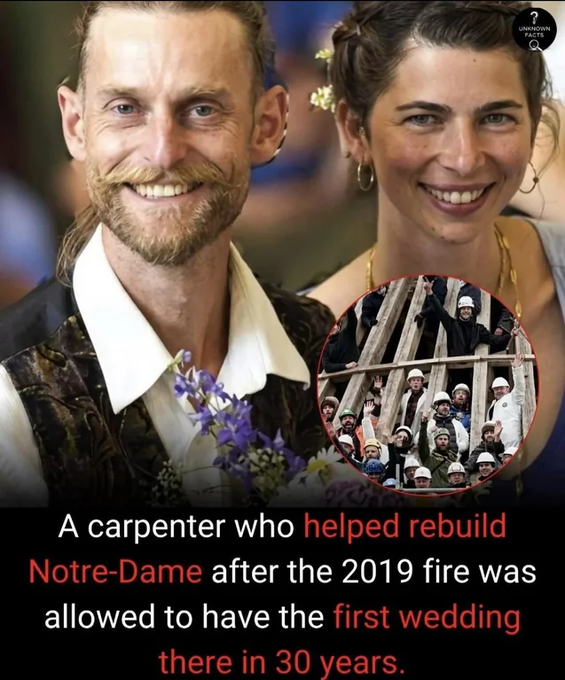
Martin Lorentz, a 29-year-old carpenter who spent three years helping rebuild Notre-Dame’s medieval wooden framework (the “forest” of beams) after the April 2019 fire, married his fiancée Jade inside the cathedral.
5 July 1894 | A Czech Jew, Gustav Frankenstein, was born in Prosiměřice.
He was deported to #Auschwitz from #Theresienstadt Ghetto on 6 September 1943. He did not survive.
The average age of the signers of the Declaration of Independence in 1776 was 44. Benjamin Franklin was 70, Thomas Jefferson was 33 when he drafted it, and George Washington, also 44, did not sign it.
The painting shown is part of John Trumbull’s Declaration of Independence, depicting the five-man drafting committee presenting the document to the Continental Congress. The committee included Thomas Jefferson, John Adams, Benjamin Franklin, Roger Sherman, and Robert Livingston. Jefferson, just 33, wrote the first draft, while Franklin, at 70, was the oldest signer. Livingston helped draft the Declaration but did not sign it.
The youngest signer was 26-year-old Edward Rutledge of South Carolina. Many others in the painting, including Samuel Adams, John Hancock, Benjamin Rush, Charles Carroll, and George Wythe, helped shape the new nation. By signing the Declaration, they openly declared themselves rebels against Britain.
Despite its title, Trumbull’s painting does not depict the signing of the Declaration. It shows the draft being presented to Congress, and not every signer is included.
Ernest Hemingway holding a shotgun in the Finca Vigía, his home in Cuba. This is the same weapon he used to end his own life in 1961.
By the late 1950s, Ernest Hemingway was one of the most celebrated writers in the world. He had won the Pulitzer Prize in 1953 for The Old Man and the Sea and the Nobel Prize in Literature in 1954. Yet behind his public image of rugged confidence, Hemingway struggled with severe depression, chronic pain from multiple injuries, alcoholism, and deteriorating physical and mental health.
After leaving Cuba following the 1959 revolution, Hemingway settled in Ketchum, Idaho. In 1960, he underwent electroconvulsive therapy at the Mayo Clinic in an attempt to treat his depression. Friends and family later recalled that he was devastated by memory loss, which hindered his ability to write, the activity that had defined his life.
On July 2, 1961, at the age of 61, Hemingway died by suicide at his home in Idaho. His death shocked the literary world and brought increased attention to the links between mental illness, trauma, and creativity.
Hemingway's family suffered a tragic pattern of suicides. His father, Clarence Hemingway, died by suicide in 1928, and several other members of the Hemingway family, including his granddaughter, model Margaux Hemingway, also died by suicide.
#archaeohistories