Honestly, About Me
# Started dev journey very late.
# After college, 1 year jobless, life wasn’t going good.
# Wasted my valuable time, already too late but Still trying to make a comeback🤞
# Open for any suggestions or advice.
# Let’s connect & grow together 🙂🚀
#codinglife
A feature I'd love to see in ChatGPT 👀
For long conversations, a 📌 Pin/Ribbon feature would be really useful.
Instead of scrolling through hundreds of messages to find something important again, we could simply pin it and jump back to it anytime.
@OpenAI@ChatGPT#ChatGPT
A feature I'd love to see in ChatGPT 👀
For long conversations, a 📌 Pin/Ribbon feature would be really useful.
Instead of scrolling through hundreds of messages to find something important again, we could simply pin it and jump back to it anytime.
@OpenAI@ChatGPT#ChatGPT
2026 started in the worst way !!
→ Joined a new company
→ Within a month, medical emergency → admitted in hospital
→ Had to resign
Thankfully recovered now.
From tomorrow:
→ Starting everything again
→ Will post my learnings while preparing to apply for jobs again
2026 started in the worst way !!
→ Joined a new company
→ Within a month, medical emergency → admitted in hospital
→ Had to resign
Thankfully recovered now.
From tomorrow:
→ Starting everything again
→ Will post my learnings while preparing to apply for jobs again
Part-2 of Backend from first Principles
🧠 What is a Backend? (Systems-first view)
At its core, a backend is a computer listening on open ports (80/443) for requests via HTTP, WebSockets, gRPC, etc., and serving or accepting data.
But to really understand backend engineering, you need to see the full flow, not just code 👇
🌐 Request journey
Browser → DNS → Public IP → Firewall → Reverse Proxy (Nginx) → App Server
Each layer matters:
→ DNS maps domain → IP
→ Firewalls decide which ports are reachable
→ Reverse proxies handle SSL, routing & redirection
→ App server processes the request
Same app works on:
→ localhost during development
→ Real domains in production via DNS + Nginx
📦 Why do we even need a backend?
Think of liking a post on Instagram:
→ Your app sends a request
→ Server identifies the user
→ Persists the action in a database
→ Triggers a notification to the other user
All of this happens between your click and the notification.
If you strip backend down to one word, it’s this:
👉 DATA
Fetching it, receiving it, persisting it, and acting on it.
🤔 Why not do everything on the frontend then?
Because frontend works very differently.
🖥️ Frontend reality
→ Browser first fetches the HTML
→ Then loads JavaScript, CSS, fonts, and images
→ Browser executes the JavaScript (browser = runtime)
→ All logic runs on the user’s device
🔒 Browser limitations (by design)
→ Sandboxed environment
→ No file system access
→ No environment variables
→ Strict CORS rules
→ Limited compute power
These restrictions exist because browsers execute remote code — without isolation, security would be impossible.
⚙️ Why backend logic can’t live in frontend
→ Backends need access to filesystem and secrets
→ Backends must call many external services (no CORS restrictions)
→ Heavy business logic needs stable, scalable compute
→ Clients can be low-end devices, while servers can scale CPU and RAM
✅ Final takeaway
→ Frontend = UI + interactions
→ Backend = centralized system managing data, security, state, and scale
Understanding this flow is the right starting point before learning backend principles deeply.
#Backend #LearningInPublic
Part-2 of Backend from first Principles
🧠 What is a Backend? (Systems-first view)
At its core, a backend is a computer listening on open ports (80/443) for requests via HTTP, WebSockets, gRPC, etc., and serving or accepting data.
But to really understand backend engineering, you need to see the full flow, not just code 👇
🌐 Request journey
Browser → DNS → Public IP → Firewall → Reverse Proxy (Nginx) → App Server
Each layer matters:
→ DNS maps domain → IP
→ Firewalls decide which ports are reachable
→ Reverse proxies handle SSL, routing & redirection
→ App server processes the request
Same app works on:
→ localhost during development
→ Real domains in production via DNS + Nginx
📦 Why do we even need a backend?
Think of liking a post on Instagram:
→ Your app sends a request
→ Server identifies the user
→ Persists the action in a database
→ Triggers a notification to the other user
All of this happens between your click and the notification.
If you strip backend down to one word, it’s this:
👉 DATA
Fetching it, receiving it, persisting it, and acting on it.
🤔 Why not do everything on the frontend then?
Because frontend works very differently.
🖥️ Frontend reality
→ Browser first fetches the HTML
→ Then loads JavaScript, CSS, fonts, and images
→ Browser executes the JavaScript (browser = runtime)
→ All logic runs on the user’s device
🔒 Browser limitations (by design)
→ Sandboxed environment
→ No file system access
→ No environment variables
→ Strict CORS rules
→ Limited compute power
These restrictions exist because browsers execute remote code — without isolation, security would be impossible.
⚙️ Why backend logic can’t live in frontend
→ Backends need access to filesystem and secrets
→ Backends must call many external services (no CORS restrictions)
→ Heavy business logic needs stable, scalable compute
→ Clients can be low-end devices, while servers can scale CPU and RAM
✅ Final takeaway
→ Frontend = UI + interactions
→ Backend = centralized system managing data, security, state, and scale
Understanding this flow is the right starting point before learning backend principles deeply.
#Backend #LearningInPublic
Coming back from a break !!
Starting a Backend from First Principles playlist by Sriniously today.
Will share my learnings along the way
Yt Link: https://t.co/AbYTXuFd9A
Coming back from a break !!
Starting a Backend from First Principles playlist by Sriniously today.
Will share my learnings along the way
Yt Link: https://t.co/AbYTXuFd9A
This year is ending in 5 days.
And I want you to pause for a second.
Not to overthink.
Not to regret.
Just to be honest with yourself.
Maybe you didn’t crack that job.
Maybe you could not be consistent.
Maybe you gave up more times than you’d like to admit.
That’s okay.
Because growth is not linear.
And real progress is invisible while it’s happening.
If you showed up even on bad days,
If you tried again after failing,
If you learnt even a little more than last year…
You’re already ahead.
Next year doesn’t need a “new you”.
It needs a more "disciplined you".
Less noise.
More focus.
Fewer excuses.
More action.
5 days left.
Don’t rush resolutions.
Just promise one thing to yourself:
You won’t quit on your goals this time.
Save this.
Read it again on Jan 1st.
Cheers,
Akshay Saini
PS. Christmas sale ends today at @namastedev_ , use coupon code "XMAS25" to get the maximum discount on all our courses.
#AllTheBest #MerryChristmas
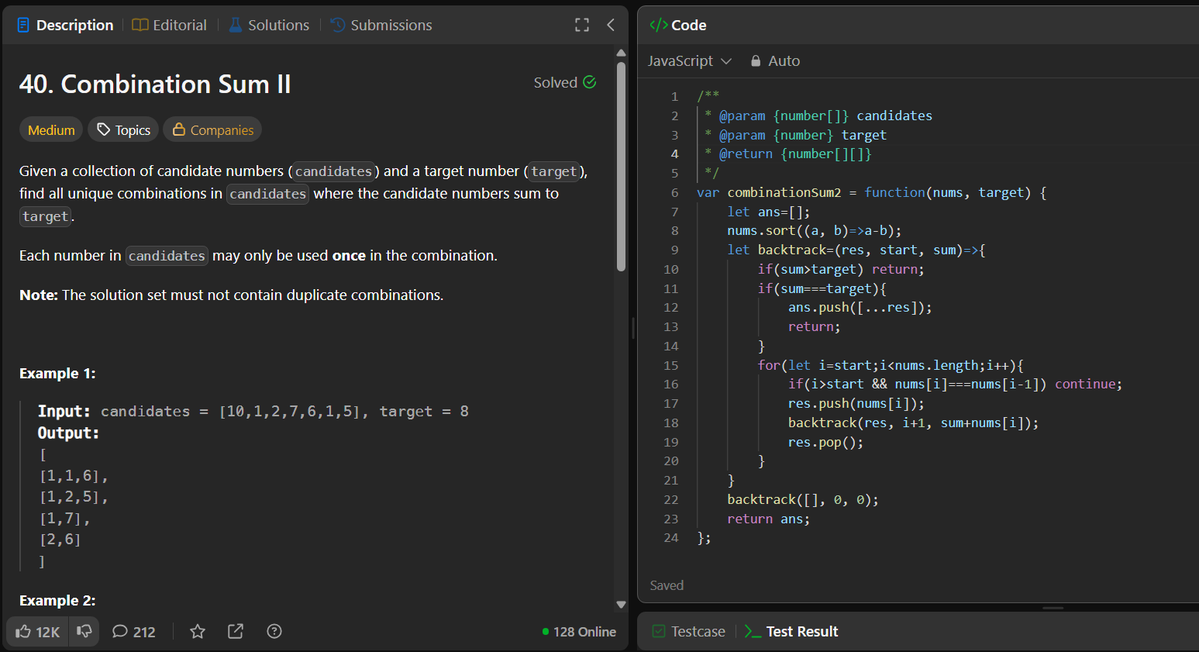
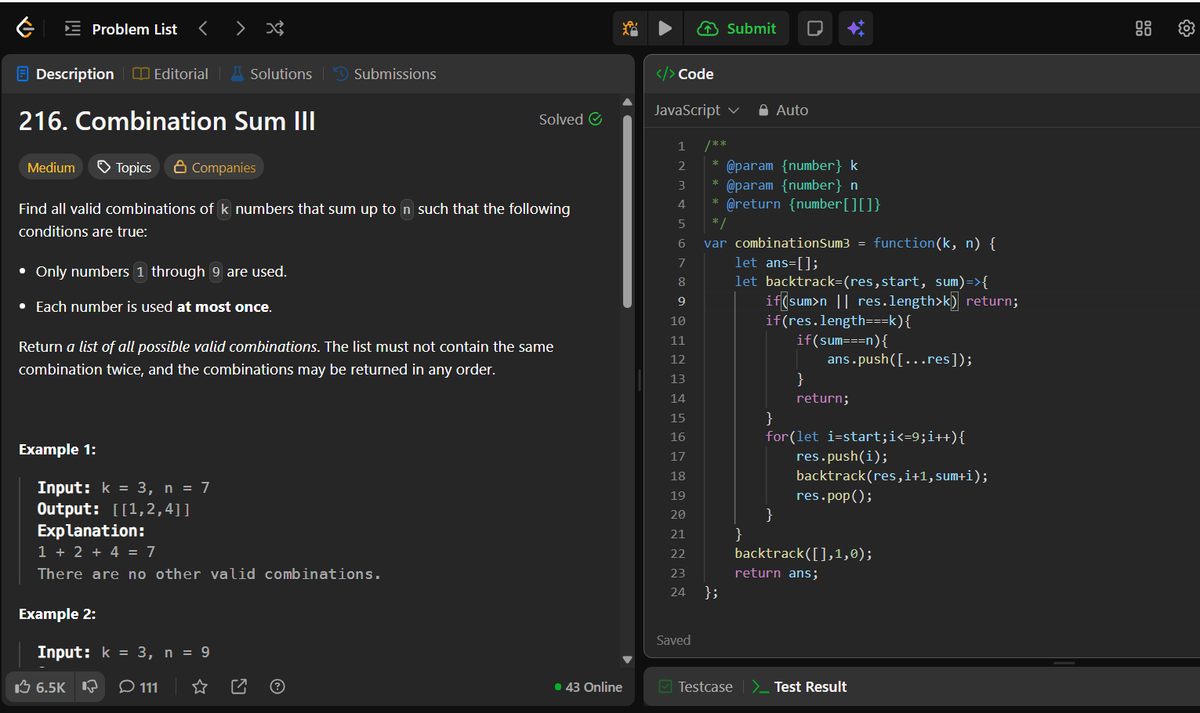
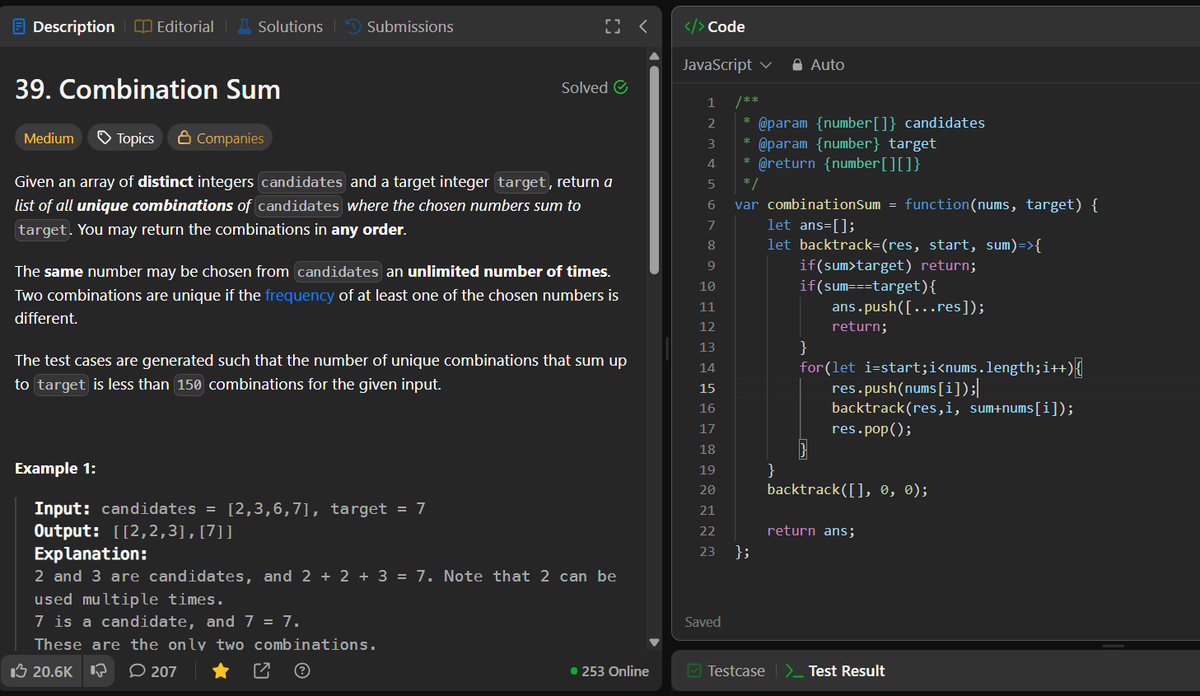
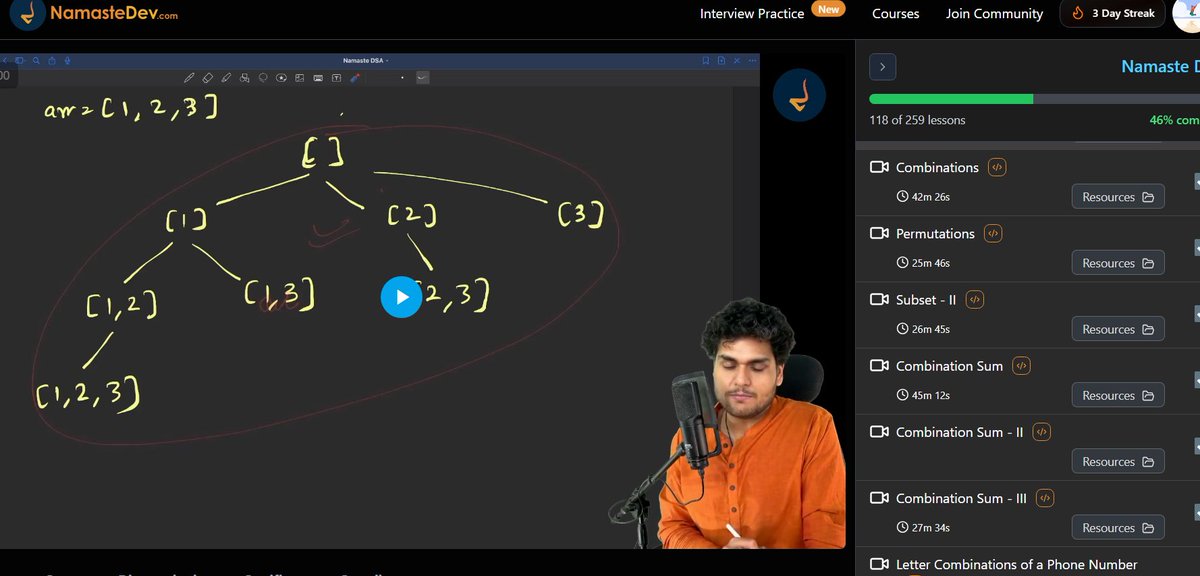
🚀 Day 5 of #100DaysOfCode
Solved:
• 46. Permutations
• 39. Combination Sum
• 40. Combination Sum II
• 216. Combination Sum III
• 47. Permutations II
Never understood backtracking this clearly before. Thanks @akshaymarch7🙏
#namastedsa#DSA
🚀 Day 5 of #100DaysOfCode
Solved:
• 46. Permutations
• 39. Combination Sum
• 40. Combination Sum II
• 216. Combination Sum III
• 47. Permutations II
Never understood backtracking this clearly before. Thanks @akshaymarch7🙏
#namastedsa#DSA