I’m moving most of my activity over to BlueSky & will be deleting a bunch of old posts here over the next weeks.
Find me over there: @ craftinghamster . bsky . social
Hey friends! It's my birthday but you get the gifts! 🎉 To celebrate I'm having a big 50% OFF SALE on everything in my shop! Sale ends July 6th. Thank you always for your support! ❤️🧡💛 (link in thread)
⚠️ Warning
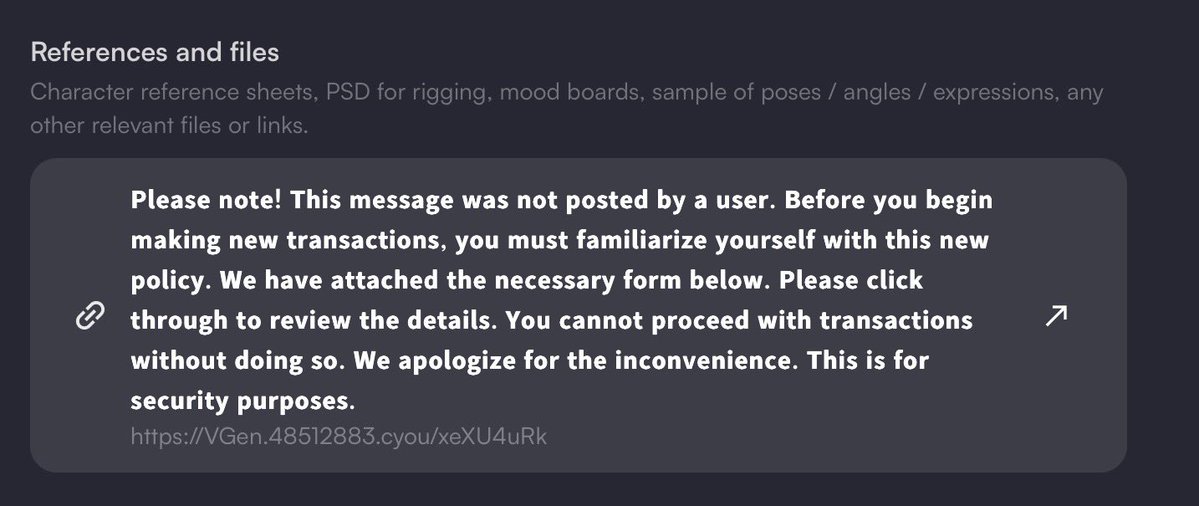
I just received TWO identical commission requests from the same account with a suspicious link claiming I must review a “new policy.”
Please DO NOT click any links like this and stay safe!
#VGen#VGenComm
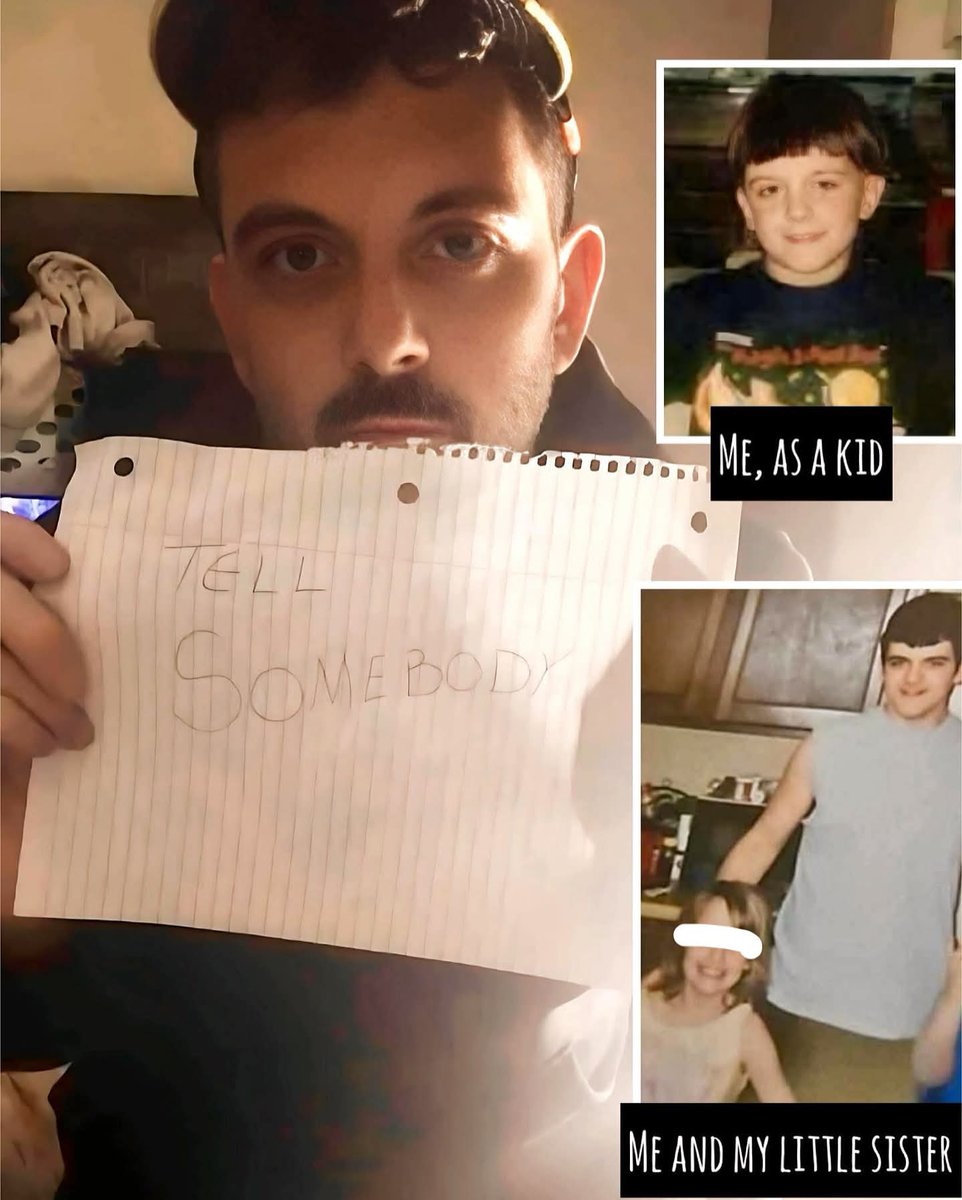
At the age of 5, I started being molest3d by the 18 year old son, of my babysitter. The abuse happened at their home.
He groomed me to feel like it was normal behavior, and that he did it to me because he "loved me.” I believed him for so long, until it started to hurt. He even brought his friends to join in. Over the years, he did unspeakable things, and threatened to kill me if I spoke up. He told me it was my fault, and that nobody would believe me, that I was gay, and that everyone would hate me. His family were devout Christians, and he made it perfectly clear that when I died, only I would go to hell because I made him want me. I felt trapped. I was his defenseless slave. When I was 9, my baby sister was born. My abuser found out that his aunt would be watching her. He told me not to worry, that "when she starts coming around, I won't need you anymore." The sickening feelings of helplessness tormented me. I didn't sleep and I stopped eating. On my 10th birthday, I was encouraged to tell by watching the "Sally Jessie Raphael" talk show. The episode was about child sexual abuse, and Sally looked at the camera and said "If you’re watching this, and are going through it, please tell. Its not your fault, you must speak up." I felt like she was talking directly to ME.
I walked into my baby sister's room, looked down in her crib, and with innocent eyes she smiled up at me. I knew I had to protect her! Suddenly he wasn't so big and scary anymore (he was 6'4 270 lbs). I pulled my grandmother into the bathroom, and told her everything. Thankfully she believed me, and later he crumbled under interrogation and was locked away for a very long time. My story is complex. Drugs and alcohol became my way of coping for so long, but now after a year sober, I'm finally starting the healing process. I’m baffled at how little the adults in my life looked out for me, and that he was allowed to be alone and have sleep-overs with a 5 year old child. In hindsight, it's infuriating. I would never allow this to happen to my children. In retrospect, I don't think I would change what happened in my life if given the chance, because it's made me such a compassionate person as well as a protective, understanding parent. I'm sharing my story for everyone who is a victim, but especially for all the boys who are now men, who haven't spoken yet. I humbly pray that I can inspire someone to speak up, because I know how horrifying it can be in a very toxic masculine society, which discourages making oneself vulnerable. I firmly believe as a man, the most badass thing you can do is speak up. You're not weak!
Credit - tell somebody
ME/CFS Scandal Follow up
If anyone is interested in reading more about the (incorrect) psychopathologising of ME , Adam’s blog is good.
The more people that know about this the better.
https://t.co/Z06r2dkWwc
This is a really good and detailed explanation and quick tutorial on how to substantially improve the privacy of your smartphone. It takes maybe 10 minutes to read the thread and change your settings. Recommended.
Greentext summary of the article:
>be me, computer nerd
>looking into the company that checks your ID when you sign up for websites (Persona)
>stumble across a weird hidden web address: "openai-watchlistdb"
>why the hell does OpenAI have a watchlist?
>dig a little deeper and find the company's secret portal for government agencies
>some idiot programmer accidentally left the site's entire source code completely public
>didn't have to hack, didn't need a password, literally just clicked download
>start reading the code to see what they are actually doing with your data
>turns out, when you upload your ID and selfie to use ChatGPT, it does way more than just check your age
>an AI scans your face to see if you "look suspicious"
>it compares your selfie to a massive database of world leaders, politicians, and criminals
>it runs over 200 background checks on you in seconds, including tracking your crypto wallets
>saves your face in a biometric database for up to 3 years
>if the AI decides it doesn't like your face or background, it flags you
>the system has a built-in button for the feds to instantly file a "suspicious activity report" on you to financial police and intelligence agencies
>the exact same company taking your passport photo for a chatbot is running a massive surveillance machine for the government
Why Being Trans Is Biological, Not Ideological
Public debate about trans people often treats gender identity as a belief, a preference, or a social trend. That framing is inaccurate. Being trans is best understood as a natural biological variation that arises during human development.
Human sex development is not a single event that happens at birth. It is a multi-stage biological process involving chromosomes, gene expression, hormone production, hormone receptor sensitivity, and brain development. These processes occur at different times during fetal growth and do not always align in the same direction.
All human embryos begin along a broadly similar developmental pathway. Later, genetic signals and hormone exposure guide the development of reproductive anatomy. Brain development related to identity, body perception, and self-recognition follows a different timeline. In some individuals, these pathways diverge. When they do, a person may be born with physical sex characteristics that do not align with their neurological sense of self. This is the basis of being transgender.
This phenomenon is supported by multiple areas of medical science, including endocrinology, neurobiology, and developmental biology.
Neuroimaging studies have shown that many trans people exhibit brain structures and neural activity patterns that align more closely with their lived sex than with the sex recorded at birth. These findings do not suggest that all trans people share identical brain traits, but they do demonstrate that gender identity has a biological basis rooted in the brain.
Variations in sex development further illustrate that sex itself is not strictly binary. Intersex conditions such as androgen insensitivity syndrome and congenital adrenal hyperplasia show that chromosomes, hormones, anatomy, and secondary sex characteristics can combine in a wide range of natural configurations. These variations are medically recognised and occur without any social influence.
Trans people arise from the same biological system that produces everyone else. Their existence does not contradict biology. It reflects its complexity.
When discussions about sex and gender ignore this science, they create confusion rather than clarity. Treating trans identity as a purely social or ideological matter misrepresents established medical understanding and invites suspicion toward a group of people whose existence is rooted in biology.
Accurate reporting and public discussion should reflect the full picture. Sex is observed and recorded at birth based on visible anatomy, but biological development does not end there. The brain is a biological organ. Identity formation is a biological process. Acknowledging this does not erase sex. It recognises how human biology actually works.
Clarity comes from explanation, not omission. When the biological basis of trans identity is left out of public discourse, the result is not neutrality but distortion.
Trans people are not an exception to nature. They are one of its outcomes.
Detransition Is Not the Story They Keep Telling You
For years, public debate around transgender people has been dominated by one claim: regret. We are told that large numbers of trans people “realise they were wrong,” that transition is a mistake, and that society is rushing people into irreversible decisions. That narrative has now collapsed under the weight of the largest dataset ever collected on transgender lives.
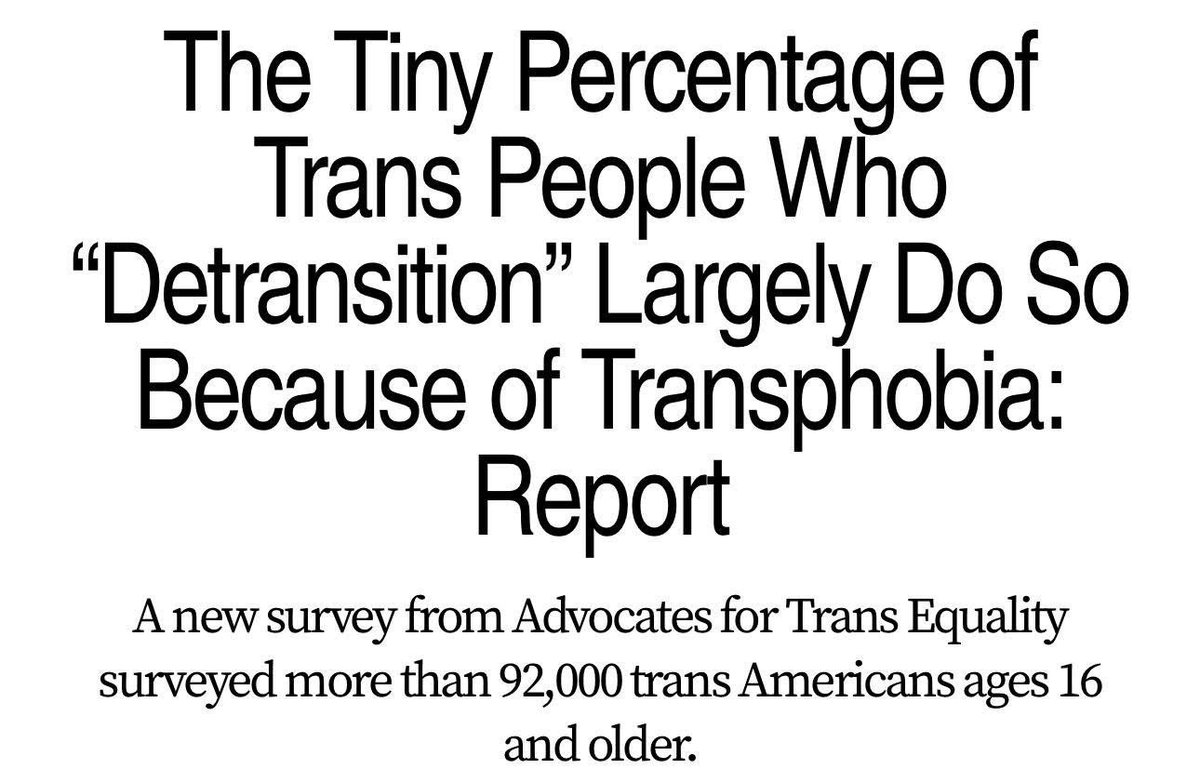
In June 2025, Advocates for Trans Equality published findings from the 2022 U.S. Trans Survey, the most comprehensive survey of trans people in history. More than 92,000 transgender Americans aged 16 and over took part. This is not anecdote. It is population-level evidence.
The results are stark.
Only 9 percent of respondents reported that they had ever returned, at any point, to living as the sex they were assigned at birth. That figure is routinely cited as proof that transition “doesn’t work.” What is almost never mentioned is why those people did so.
The most common reason was not doubt about gender identity. It was that being trans had become socially unbearable. Forty-one percent said it was “just too hard to be trans in my community.” Thirty-seven percent cited pressure from parents. Twenty-four percent cited pressure from other family members. Thirty-three percent reported harassment or discrimination.
Social hostility, family rejection, and structural transphobia overwhelmingly explain why people stopped or reversed transition.
Only 4 percent of those who temporarily returned to living as their assigned sex said they did so because they realised transition was not right for them. When you consider everyone in the survey who had ever transitioned, that equates to 0.36 percent.
That is not a trend. It is not a crisis. It is statistical rarity.
The data also addresses another persistent myth: that transition harms health or wellbeing. The opposite is true.
Respondents who had socially transitioned were more likely to report good or better health than those who had not. Those who had medically transitioned reported even stronger outcomes. Nearly all respondents receiving gender-affirming hormone therapy reported increased life satisfaction. The same was true for those who had undergone gender-affirming surgery.
Transition did not erase all life’s difficulties. No medical intervention does. But it consistently reduced dysphoria, distress, and day-to-day suffering.
One of the strongest predictors of positive outcomes was not medical status at all. It was support.
Respondents with supportive families reported significantly better health and markedly lower rates of suicidality. Those without support were far more likely to have considered or attempted suicide. The difference was not identity. It was environment.
This aligns with decades of research across pediatrics, psychiatry, and public health. Trans people do not experience poor mental health because they are trans. They experience poor mental health when they are rejected, isolated, and targeted.
The political context matters here. While trans people gained visibility and some protections between 2015 and 2022, the same period saw an explosion of anti-LGBTQ+ legislation. Hundreds of bills restricting healthcare, public participation, and basic civil life were introduced in just a few years. Since then, that legislative hostility has intensified.
At the same time, data on trans people has been stripped from federal health surveys, and research funding has been withdrawn. This erasure makes large independent surveys like the U.S. Trans Survey not just informative, but essential. When official data disappears, misinformation thrives.
What emerges from this evidence is not confusion, contagion, or regret. It is a clear pattern.