"Tell me again, how does your holographic lens actually work?"
We get you. Understanding the nitty-gritty details of a display technology is hard, yet so satisfying when you finally get the beauty of its mechanism.
Over the years, CREAL fielded recurring questions from journalists, investors, partners, and the broader AR community. So we thought: let’s answer them, insightfully, straight from the engineers who build the tech.
Welcome to C·Lab 🎥
▶️ Full interview here: https://t.co/XgAqLpSsCt
#ar #display #smartglasses
If you've tried AR glasses already, you've probably noticed something: content always stays at arm's length away.
That's not a design choice. It's a display limitation.
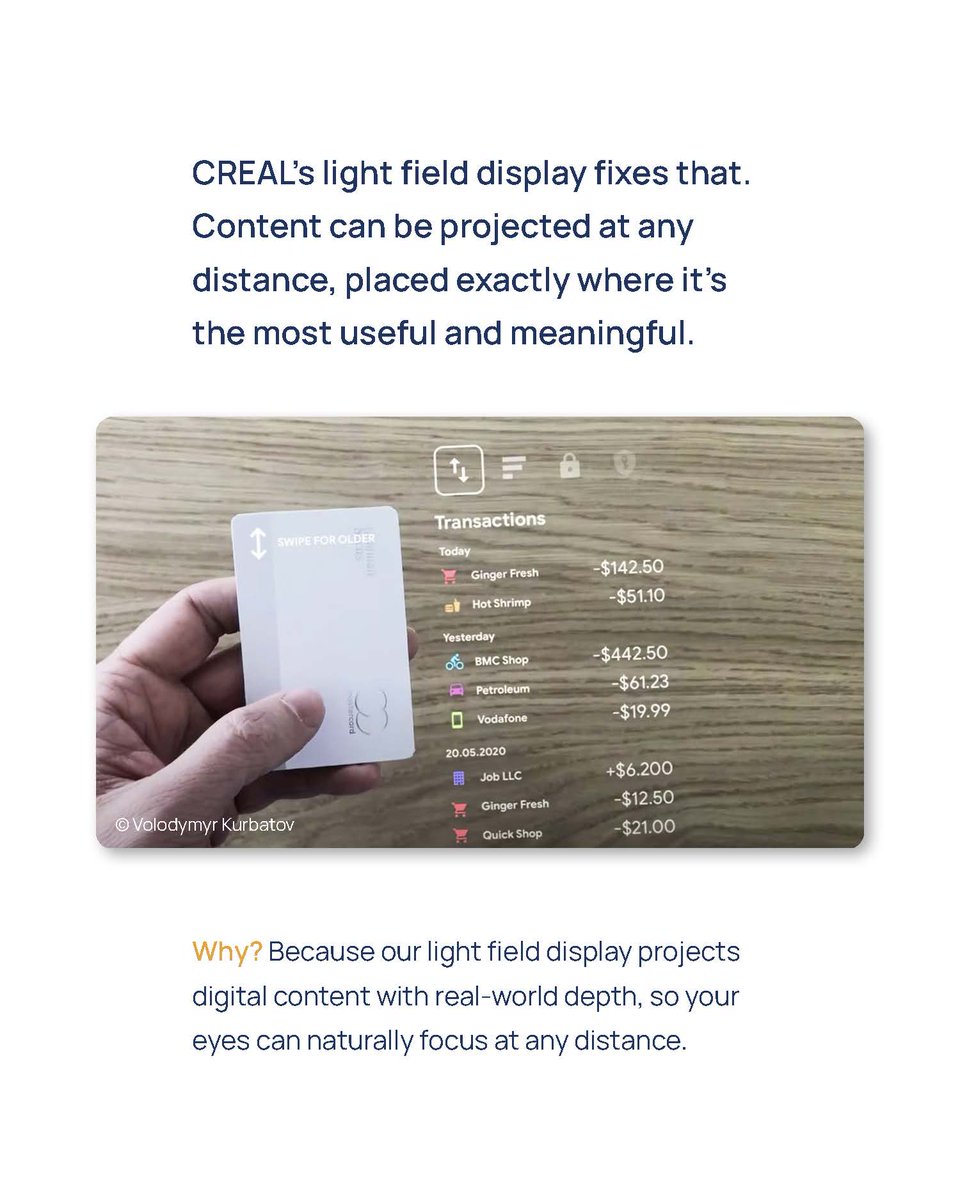
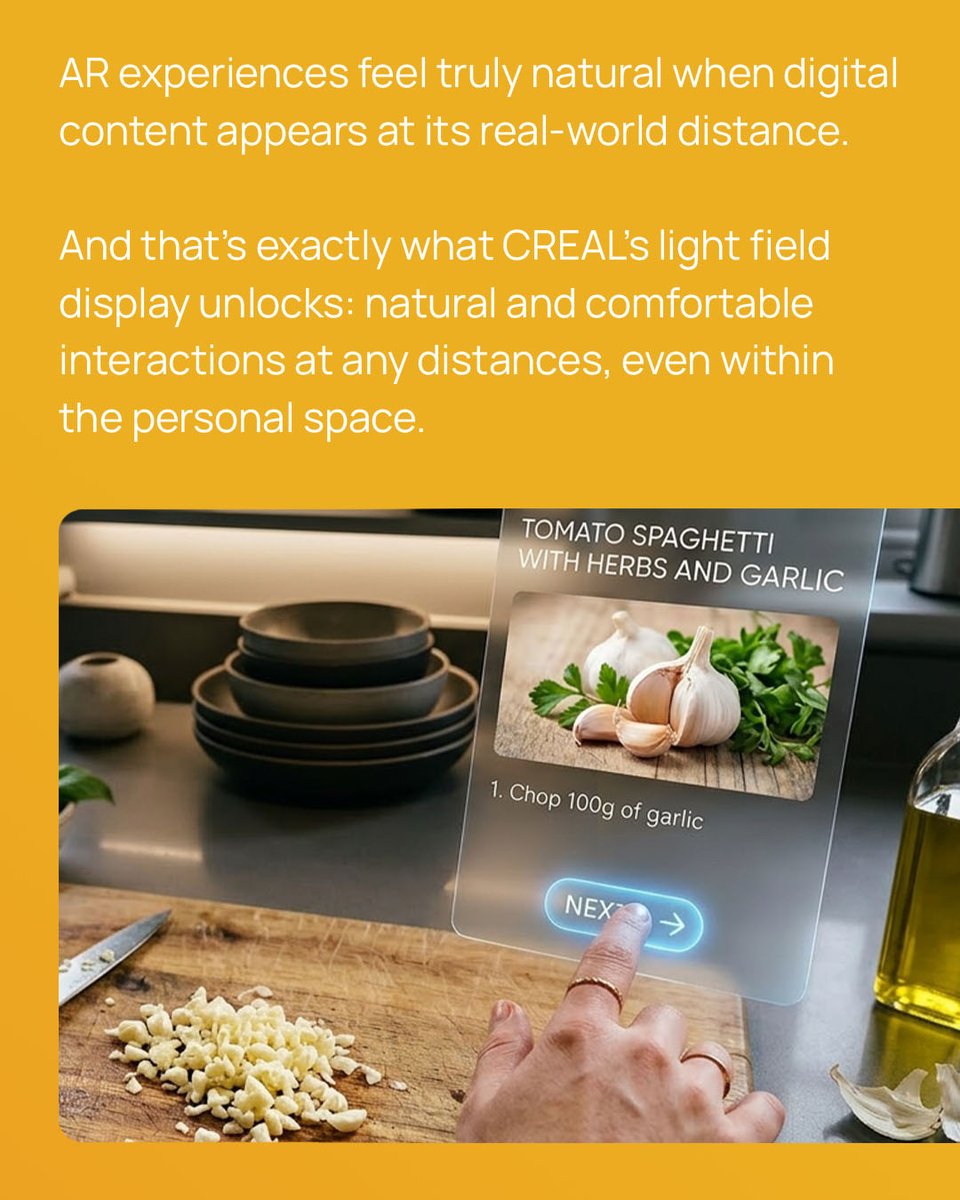
Recipes, messages, transactions, manual work, ... the things you actually want to interact with, live within arm's reach. It's the space where most of our gestures and activity actually happen.
CREAL's light field display finally makes that space accessible in AR, projecting digital content at any distance, exactly where it belongs.
If you're looking for an uncompromised display solution for AR glasses, let's connect!
#smartglasses #ARglasses #display
Don’t miss Tomáš Sluka talk at MicroLED Connect + AR/VR Connect!
“Time-Sequential Pixel Replication: How Laser-FLCoS Breaks the Resolution-FoV Barrier in AR"
🗓️ September 16 | ⏰ 3:15 PM
Tomas talk will introduce CREAL’s “Time-Sequential Pixel Replication” solution. As AR displays face a fundamental trade-off — resolution and field of view competing for pixel count and engine volume — CREAL’s new approach exploits FLCoS's ultra-high binary switching speed (above 8 kHz) to sequentially tile physical pixels across the field of view, allocating resolution according to human visual acuity rather than uniformly.
The result: over 3K perceived resolution across a 75° field of view from a <1 cc engine footprint 🚀
If you’re interested in knowing more, let’s meet there! 👀
#AR #DisplayTech #FLCoS
🎥 At IEEE ICIR 2026, CERTH presented a real-time AI-powered system that creates realistic 3D head avatars.
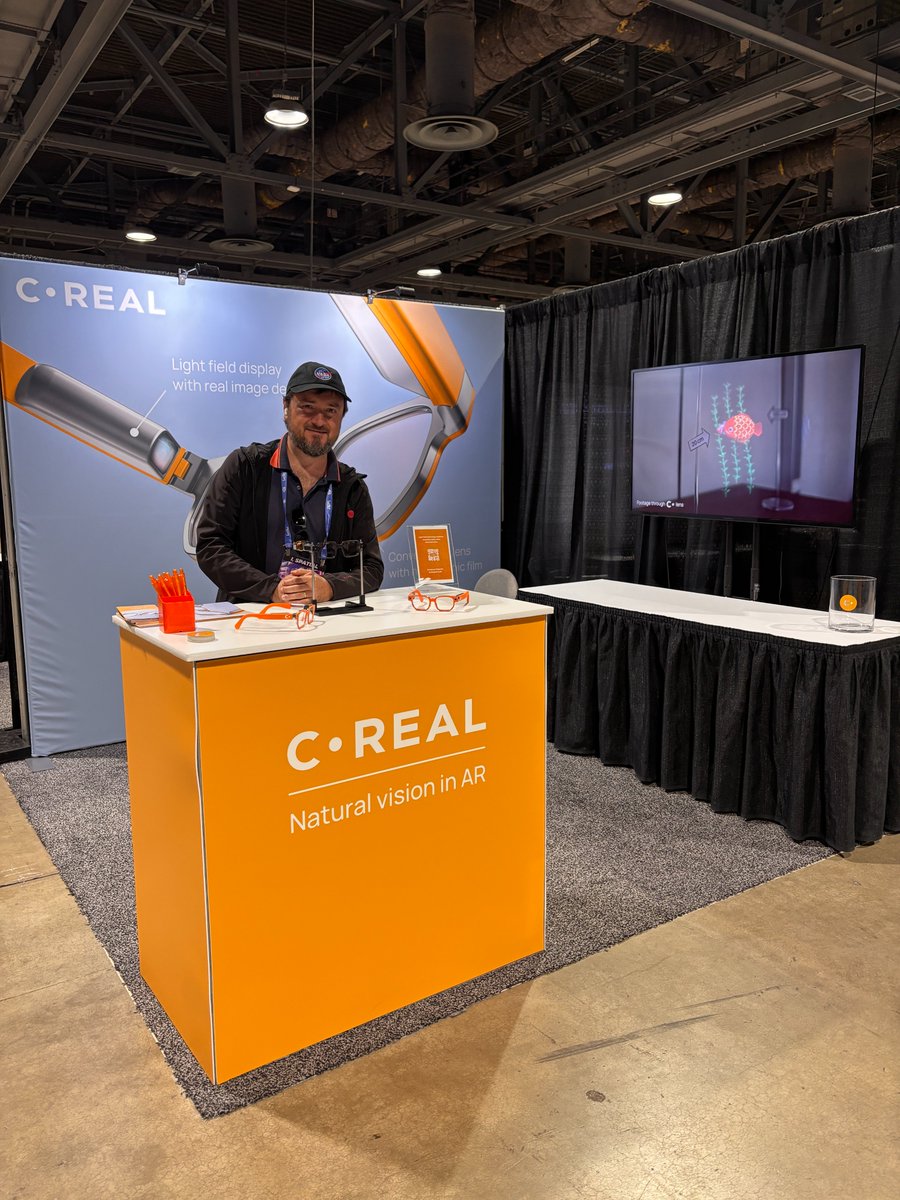
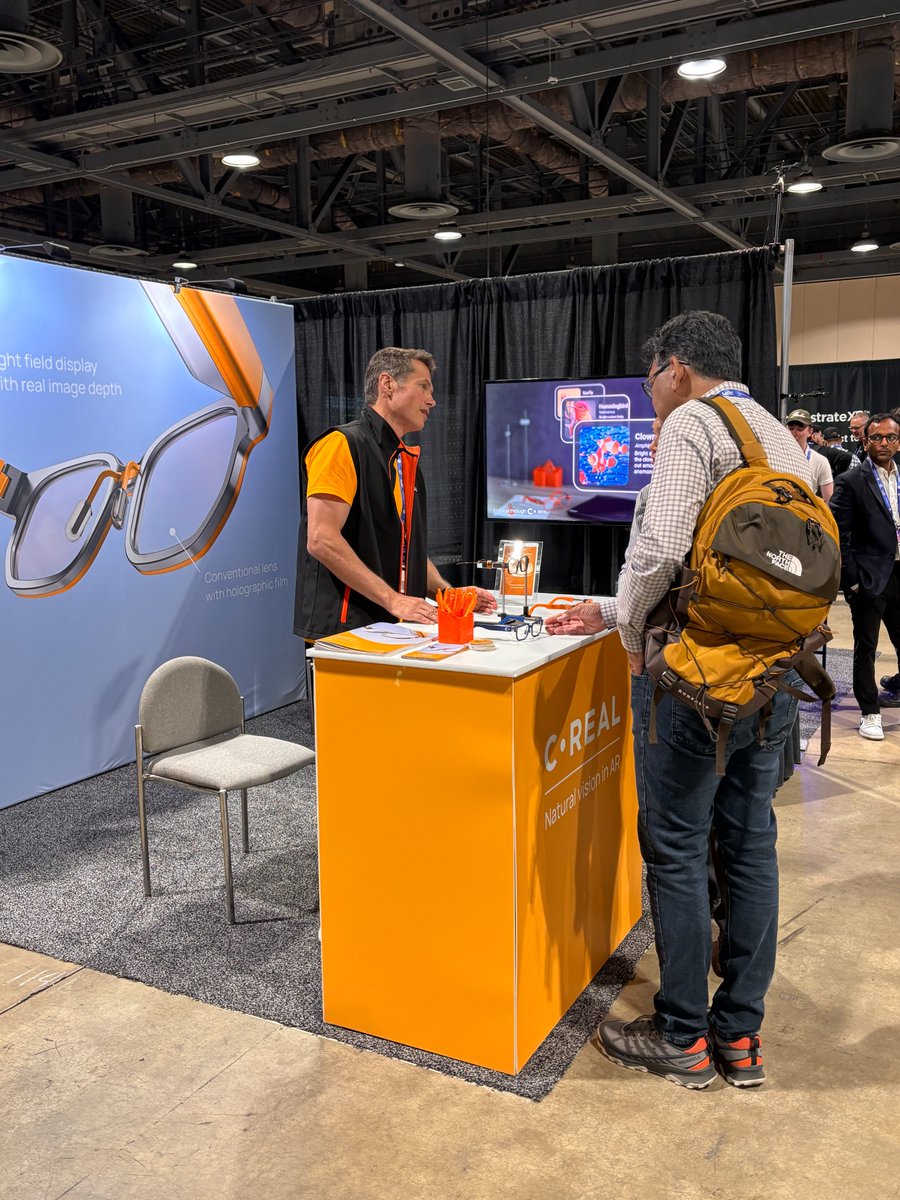
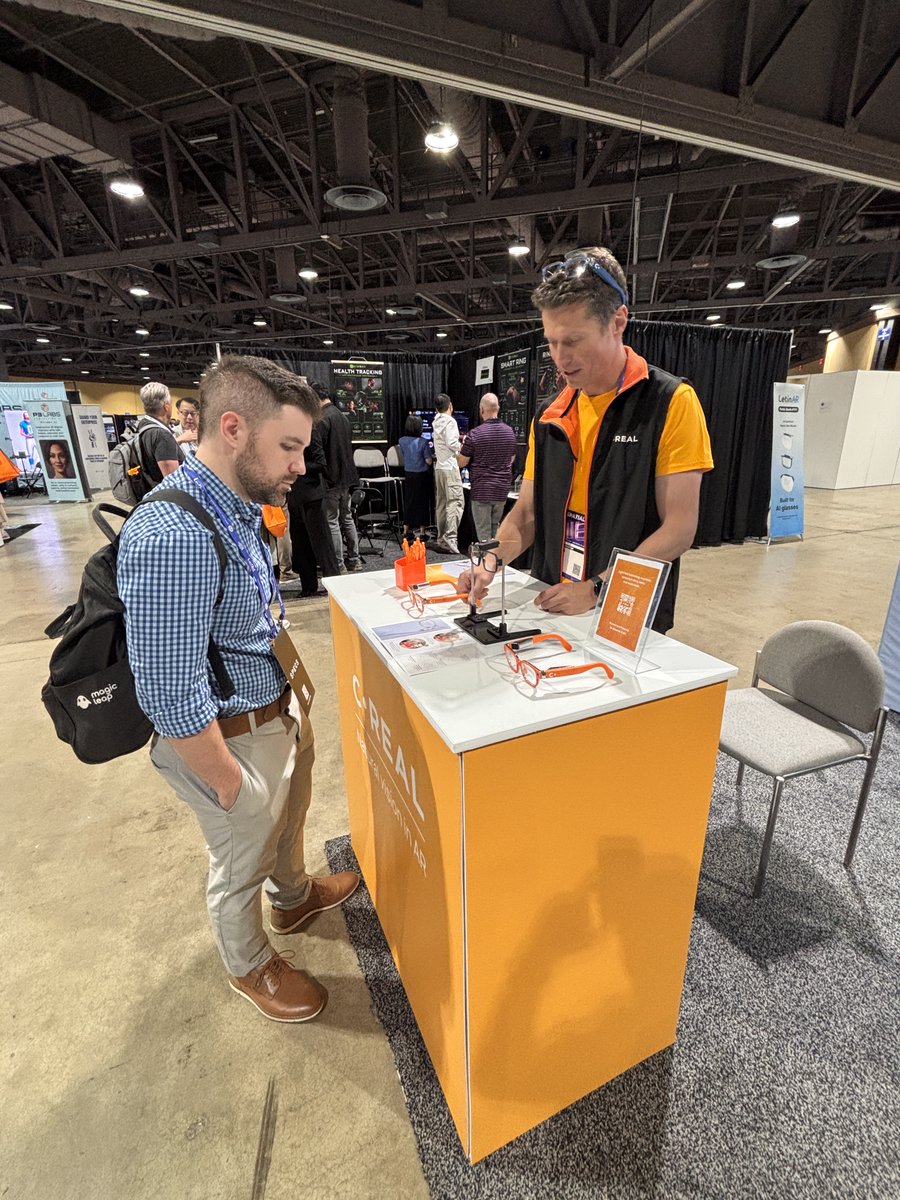
🥽 At AWE USA 2026, CREAL demonstrated its groundbreaking light-field display technology, advancing immersive XR for Industry 4.0 and Virtual Medical Training.
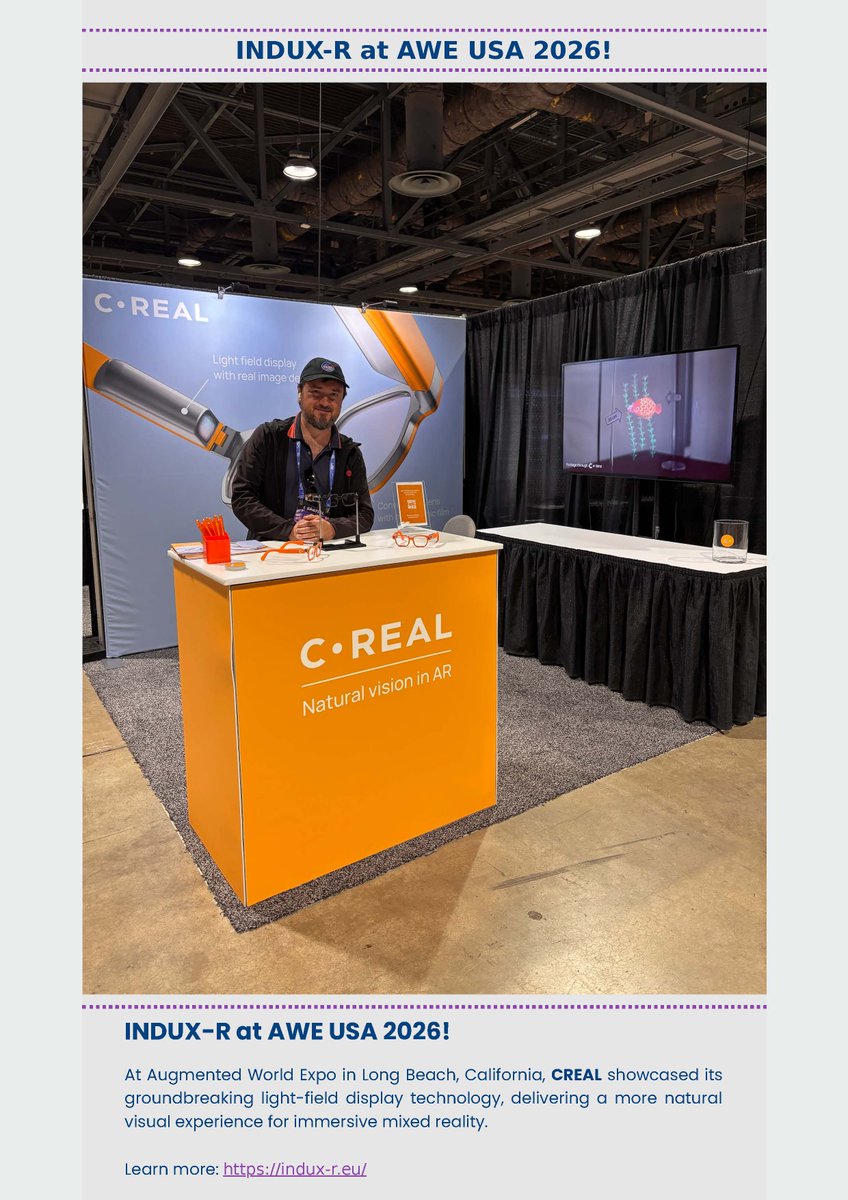
🚀 INDUX-R at AWE USA 2026! 🥽
🥽 At Augmented World Expo in Long Beach, California, @CREAL_3D showcased its groundbreaking light-field display technology, delivering a more natural visual experience for immersive mixed reality.
Learn more:https://t.co/YN90q05LNf
What makes a great combiner for AR glasses?
At CREAL, we believe the answer starts with a simple idea: AR glasses are, at their core, glasses first. The combiner should build on that, not reinvent it.
That means prescription correction built into the lens by design, with its natural curvature, transparency, and thickness preserved; a manufacturing path rooted in the spectacle lens industry that already produces 700 million lenses a year, and a high light efficiency for better brightness, longer battery life, and less heat.
And it matters: in the US alone, 50% of adults wear glasses and a further 13% use contact lenses. A combiner that treats prescription as an afterthought isn't designed for the mass market.
This is what our holographic optical element (HOE) AR combiner offers — a point @ZEISS_Group, one of the world's foremost names in optics, puts clearly:
"From ZEISS XRX’s perspective, holographic optical element (HOE) combiners that build on the conventional spectacle lens represent a compelling option for future AR glasses. Integrating prescription power and natural lens aesthetics from the outset, while drawing on an industrial base that already manufactures hundreds of millions of lenses per year, aligns well with what we believe is needed for broad consumer adoption: comfort, visual performance, and scalable production.”
🔗 Read more: https://t.co/L7ixNMV5y9
#AugmentedReality #ARGlasses #Wearables
When the most feared “Display Skeptics” rave about our light field display!
“It’s wild”, “Amazing”, ”People are trying to just get heads-up displays and do simple little graphics, and they [CREAL] are solving the whole problem of depth and whatnot."
Huge thanks, Karl Guttag and Radu Reit, for your review 🙌
#ar #display #AWE2026
▶️ Full video: https://t.co/JKGF3iApXm
Meet us at AWE US to discover and learn more about our light field display technology for AR glasses 👓
C• you there!
🗓️ 16-18 June
📍 Long Beach, LA
#ar#AWE2026#ISpatial#XR
At CREAL, it all starts with light.
Creating it, shaping it, bending it.
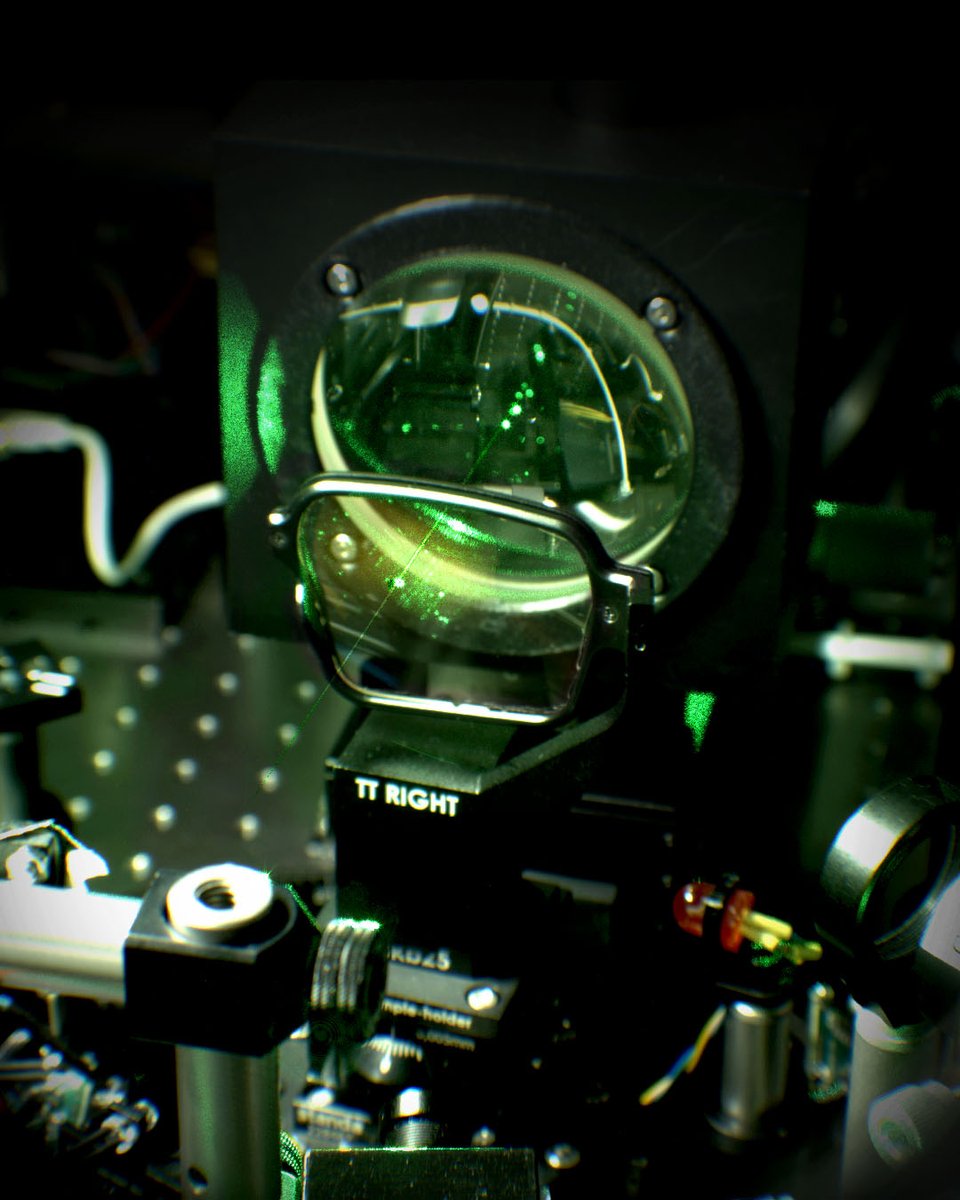
In the darkness of our labs, we replicate the real-world light to display images that feel indistinguishable from reality.
On this International Day of Light, we’re proud to innovate at the intersection of photonics, optics and human perception — bringing natural vision to Augmented Reality. 💫
#InternationalDayOfLight #photonics #lightscience
C• 100% real footage — shot directly through the lens 👀👓
We are steadily improving the quality of our light field. This example of a CREAL user interface showcases its unique, real depth.
Currently in the "last mile" phase of quality improvements, squeezing out every final percentage of performance is challenging... But the progress is visible and incredibly satisfying!
See for yourself 👇
#ar #display #lightfield #itsallaboutvision
AR is becoming the natural interface of AI.
@LiquidCity_ imagined with @NianticSpatial what a combination of those two technologies could look like: personal AI agents as little creatures, living within a user's personal space.
Then, CREAL collaborated with Liquid City to bring this scenario to life, shooting it directly through our light field display.
AR and AI will come together in many shapes; we're only at the early beginning of designing those experiences. But surely, the visualization of AI will become increasingly blended, contextual and 3D. And our display is already built for that.
#augmentedreality #AIagents #lightfield #spatialcomputing
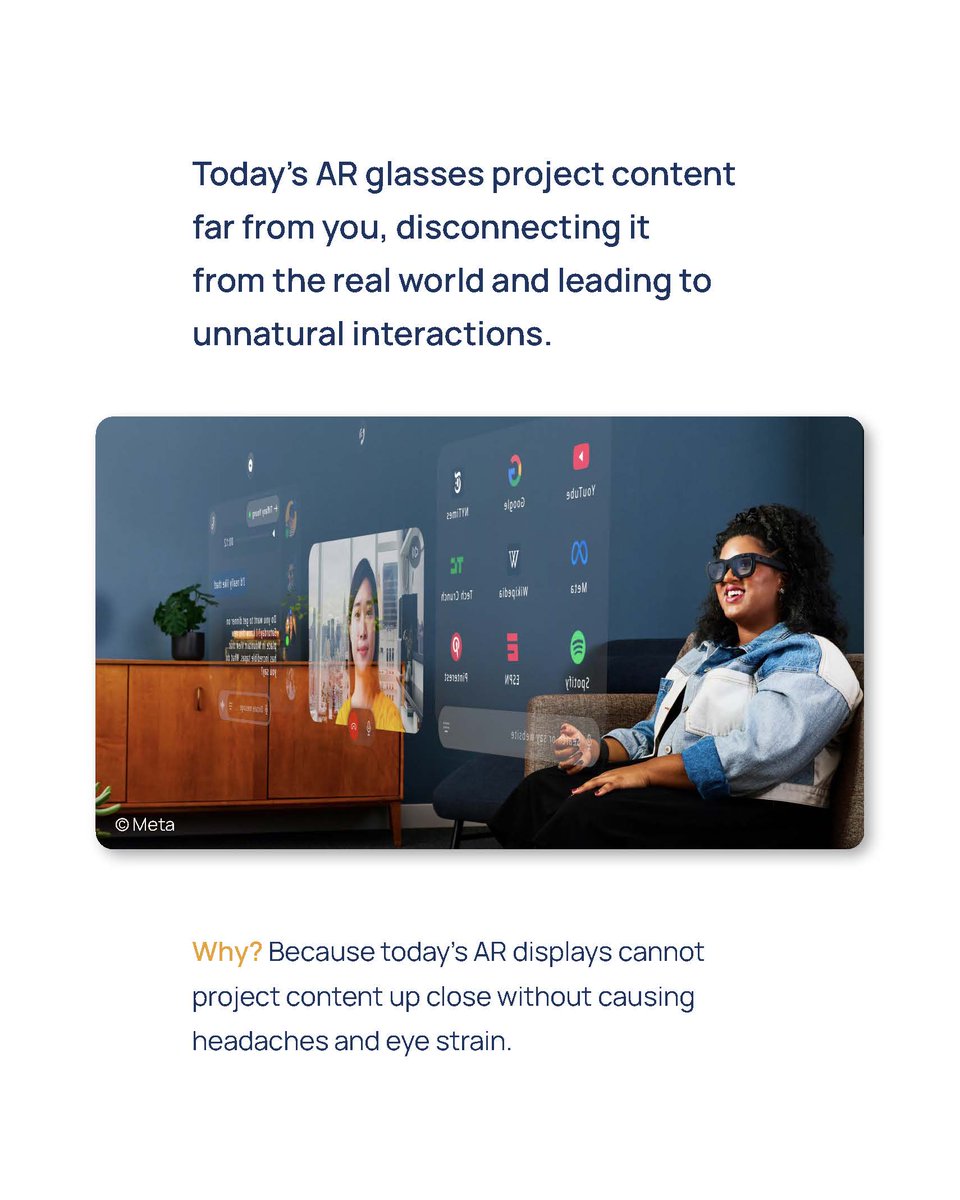
Our eyes focus and converge at the same distance. AR displays break that rule – and your brain won’t like it.
Until today, to counter this issue, AR glasses manufacturers such as Meta, Apple, Snap and Microsoft have advised a compromise, rather than fixing the display: place digital content far (1+ meters) from the user.
But that's a momentary fix. Indeed, what about clicking menus, reading text, or moving pieces on a board game? Up-close interactions are everywhere.
For the most natural experience of AR, digital content has to appear in the natural places it belongs. AR has to be contextual.
The only real fix is a display that supports the most natural function of human vision: focus. That means moving from 2D to 3D displays, and finally enabling natural interactions with digital content at any distance.
This shift to 3D displays is the breakthrough AR glasses need to be worn all day, as they are meant to be.
🔗 For more background on the issue and how 3D displays solve it, read here: https://t.co/QOWT2iGb2D
#ar #display #3d #itsallaboutivision
And yet, a third recommendation, from @Snap
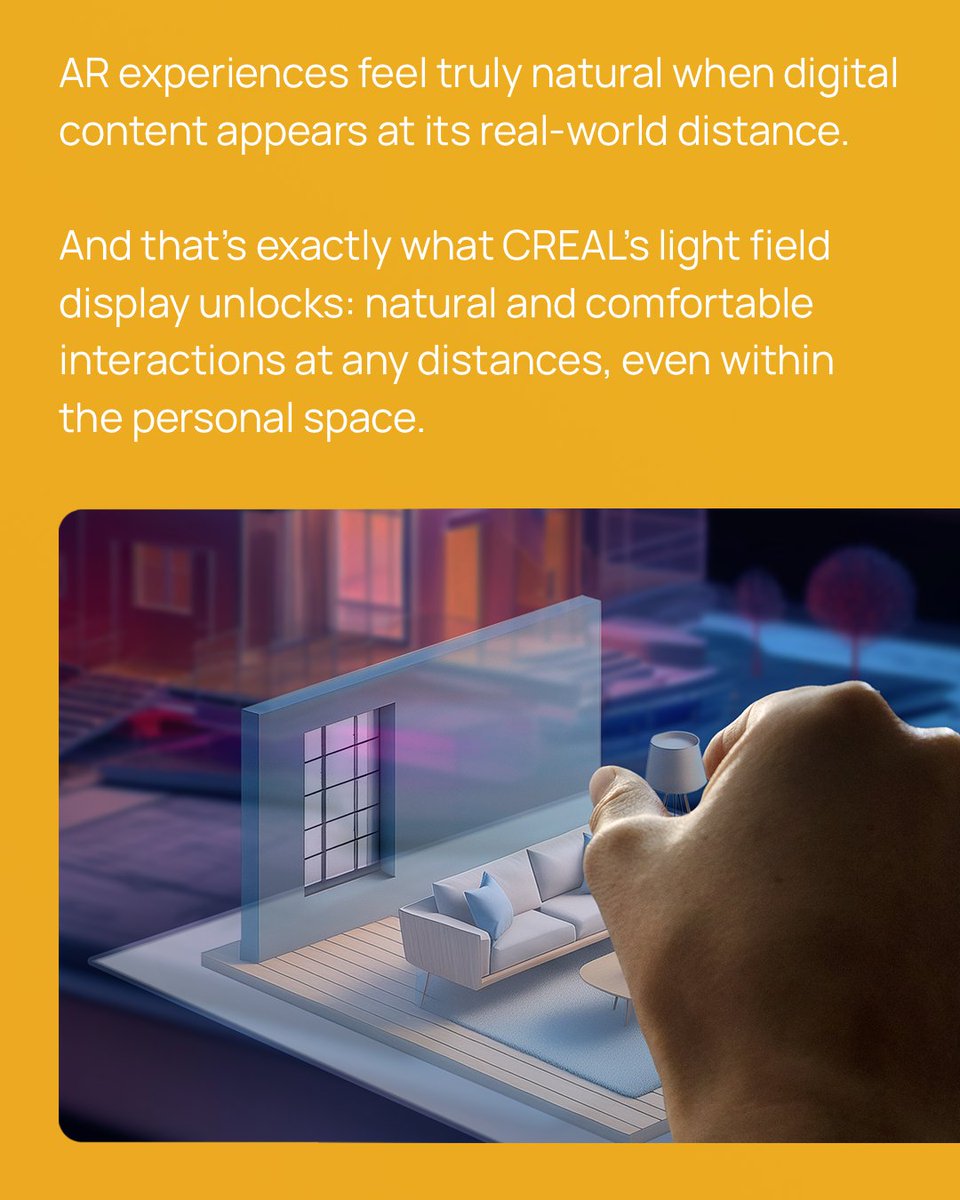
To ensure visual comfort, digital content is advised to be placed in the far-field. But interacting on an architectural model at 1+ meters? That doesn’t sound very practical.
A correct and natural AR experience requires true 3D displays, allowing digital content to appear at its natural distance for the user to comfortably interact with digital objects.
That’s why CREAL developed its light field display for AR glasses, enabling natural vision at any distance, and building the foundations for widespread AR adoption.
If you’re looking for an uncompromised and future-proof display solution for AR glasses, let’s connect.
🔗 Snap Source: https://t.co/HGg7X4fNk0
#display #ar #3d #itsallaboutvision
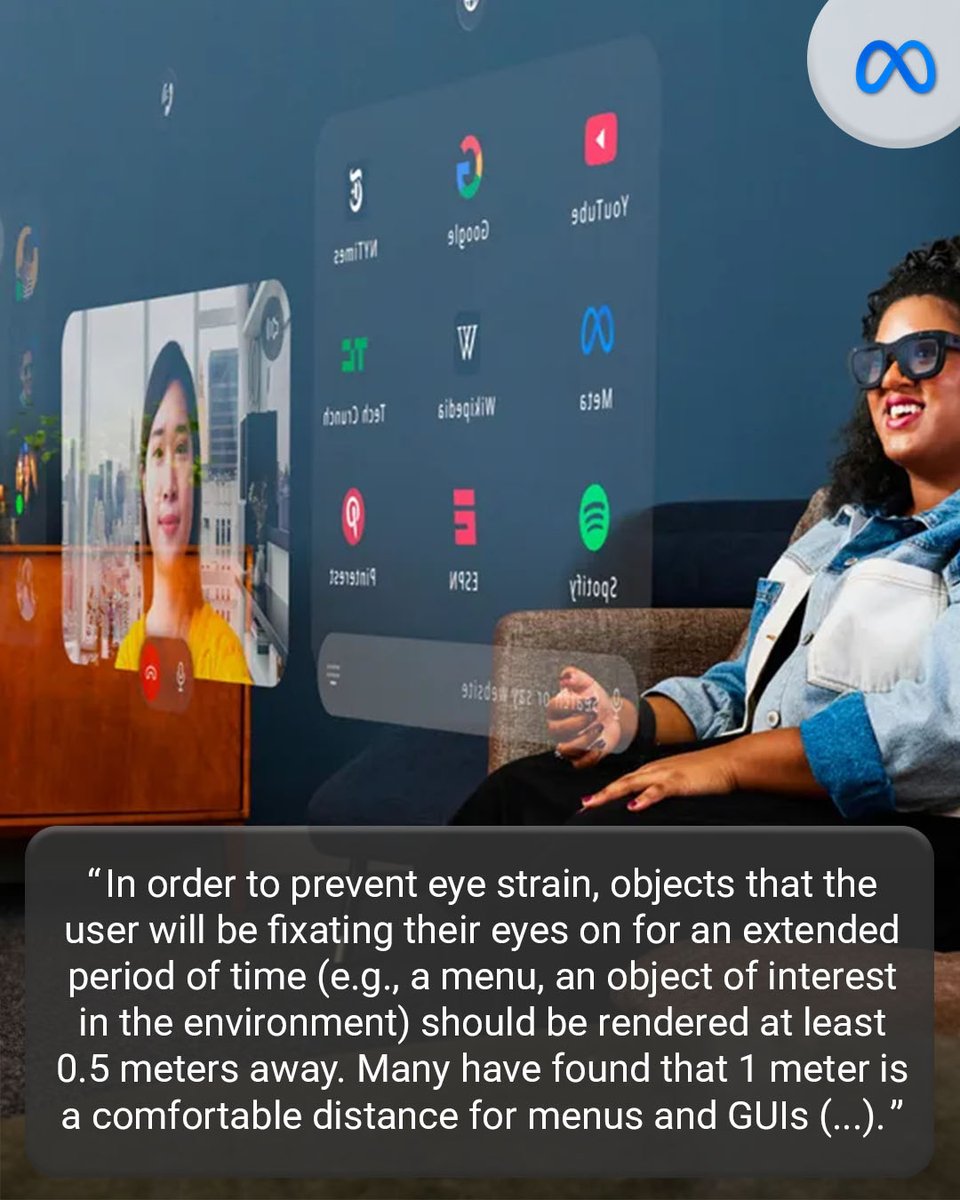
Another design interaction's recommendation, this time from @Meta.
It recommends placing XR content at around 1 m from the user to prevent eye strain. But why place menus at 1 m when their natural setting should be within the personal space?
Guidelines like these reflect the limitations of today’s display technologies — and will eventually lead to a dead end as AR applications expand.
For AR to become the next computing platform, contextual AR is essential. Digital elements should appear where they naturally belong in space — not floating at a distance.
If you’re building AR glasses and looking for a future-proof, uncompromised display solution, let’s get in touch!
🔗 Meta source: https://t.co/UFcERD2xc2
#display #ar #3d #itsallaboutvision
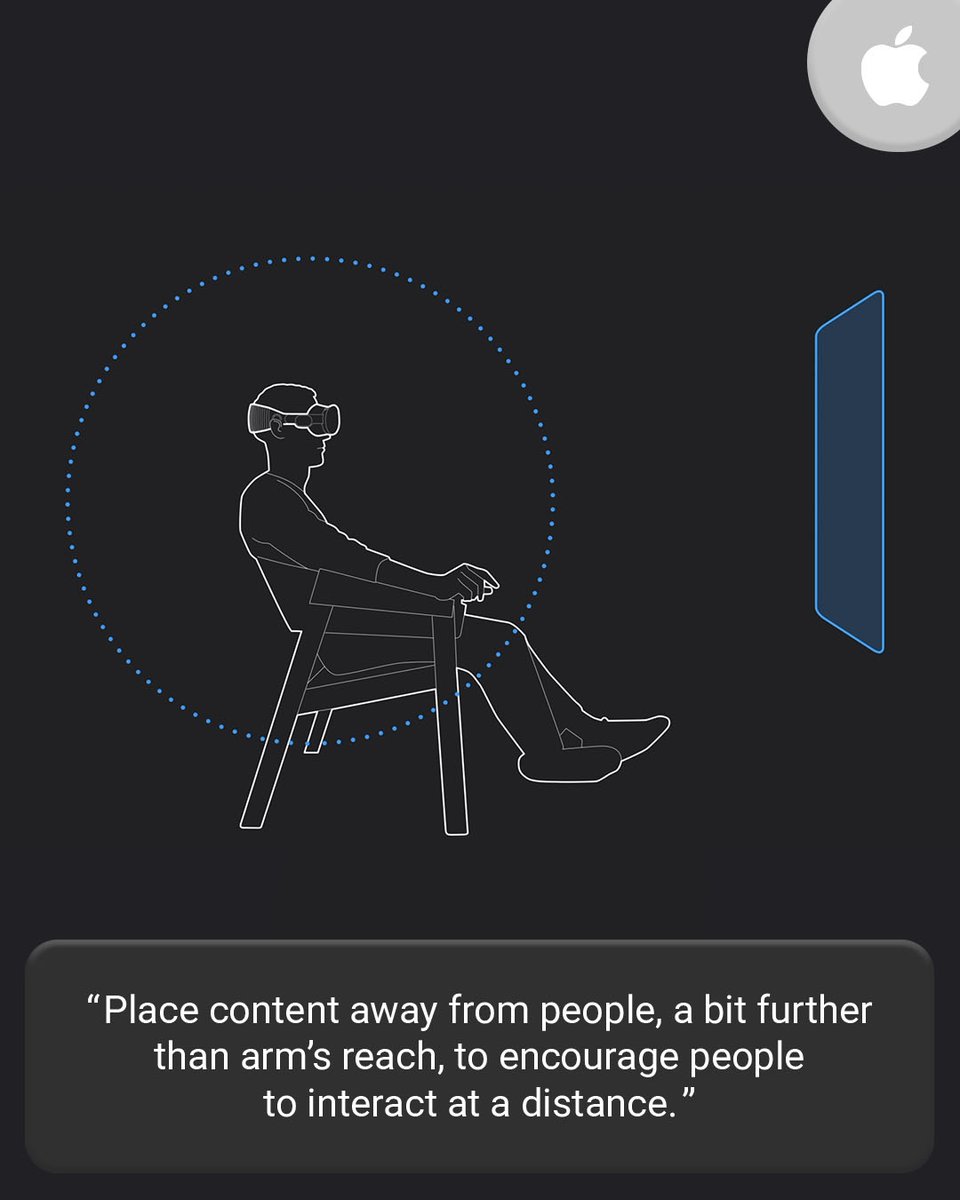
Until today, most AR glasses and headsets manufacturers recommend placing digital content in the far field (1+ meters) to ensure visual comfort.
But what about all the interactions that naturally happen within arm’s reach distance? After all, who reads a cooking recipe 1+ meters away?
This recommendation from Apple reflects a compromise of today’s display technologies — one that will eventually hit a wall as AR glasses and headsets move toward widespread adoption.
For a realistic, comfortable, and immersive experience, digital content should appear at its real-world distance, allowing users to interact with objects within their personal space as well.
That’s why CREAL developed a 3D light field display that enables natural vision of digital content at any distance. Built around the requirements of the visual system, it ensures a fully correct experience of AR.
If you’re looking for an uncompromised display solution for AR glasses, let’s connect!
🔗 Apple source: https://t.co/sZmvU3eD5j
#display #3d #ar #lightfield #itsallaboutvision
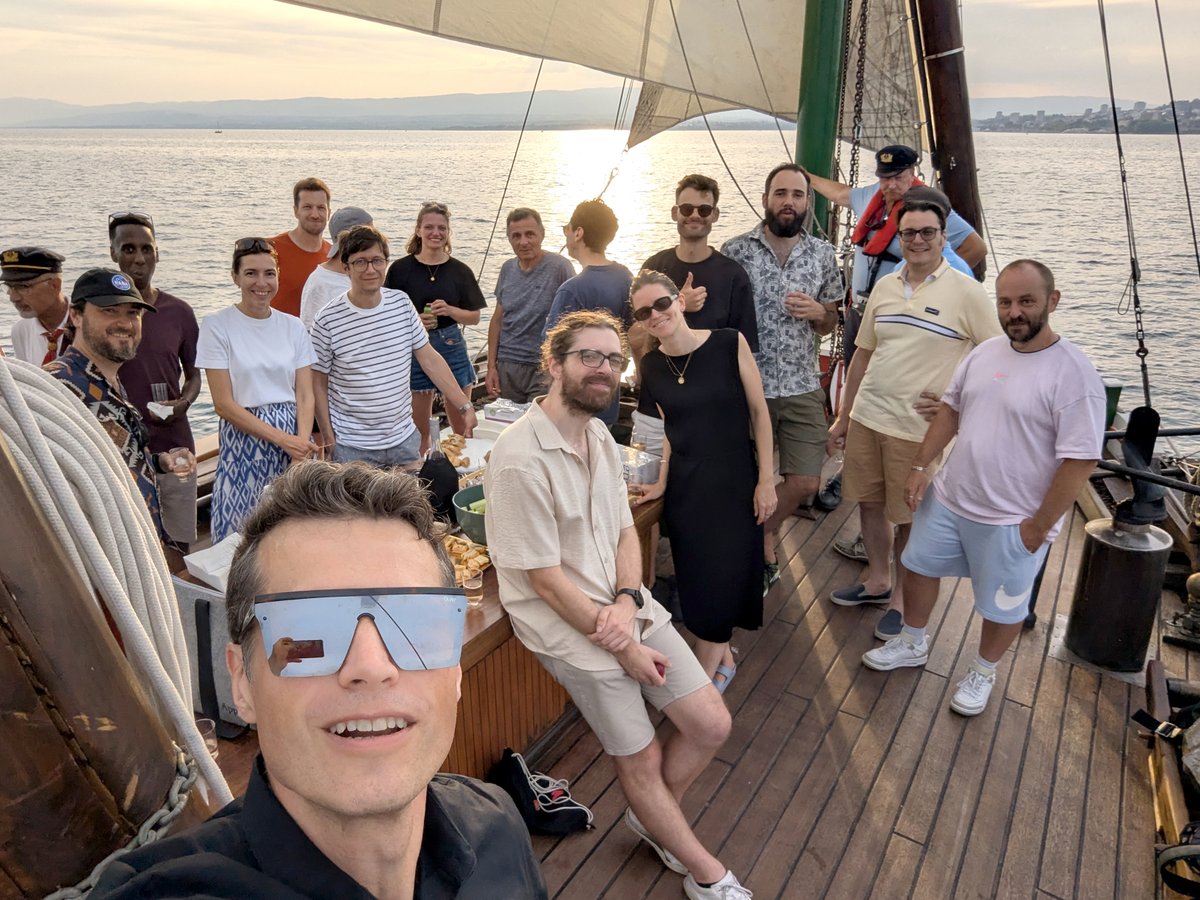
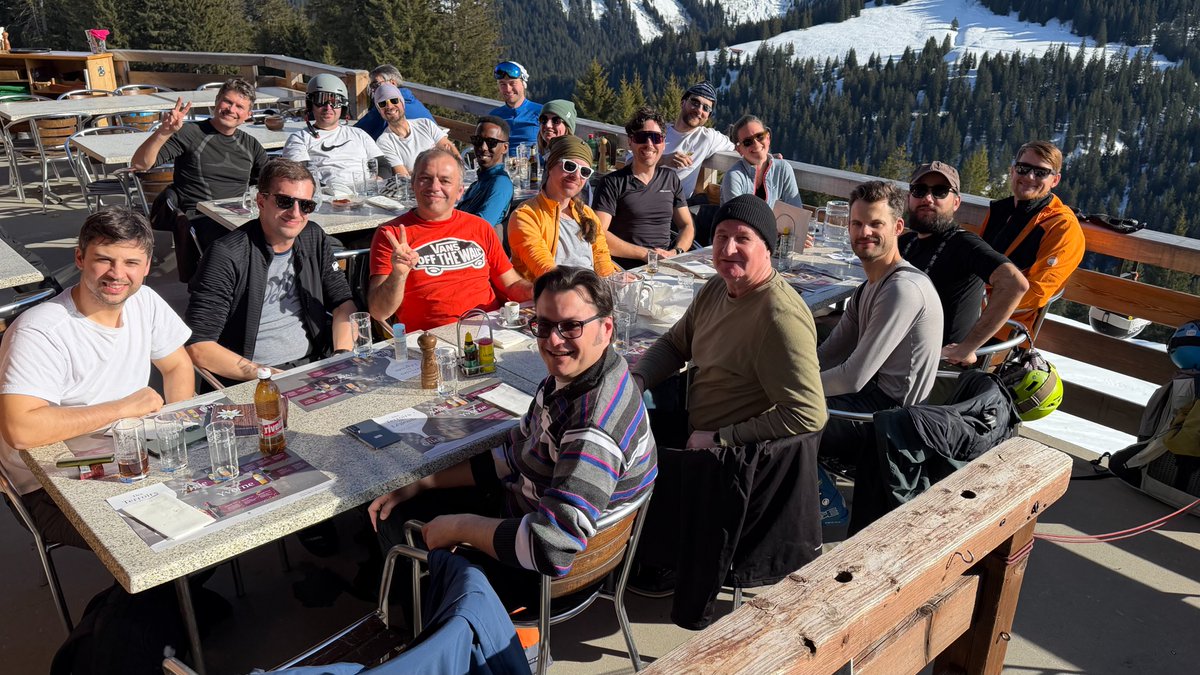
Experts in light field display by day… Occasional ski champions by tradition!
CREAL's annual ski day is always filled with strong team spirit, great food and a healthy dose of competition! A perfect reminder that solid and innovative teams are built both inside and outside the lab 💫
Sharing another striking AR use case – this time, visualized by @nathanmatsuda (@Meta) – demonstrating that real 3D in digital content is not optional.
Most AR applications will make the most sense when in the intimate and personal spaces, and display technologies should therefore be fundamentally designed for comfortable, sustained near-field viewing.
Thanks, Alexander Meijers and Saskia Groenewegen, for curating this insightful interview.
👁️ Discover the solution: https://t.co/2Iy3XKlJn5
🎬 Watch the interview: https://t.co/I3g8vSLzTD
At CREAL, we demonstrate the benefits of our light field display across a wide range of use cases. And while real 3D is the right way to project digital content, in all scenarios, some use cases are simply more impactful than others.
We shot this video almost two years ago, and today it still remains one of our strongest examples — one that makes everyone agree on the need for real 3D content in AR.
ARglasses will only truly become an everyone and everyday product once they deliver a correct visual experience, in a fashionable form factor… and CREAL is on it!
Let 2026 be a year of success! 🚀