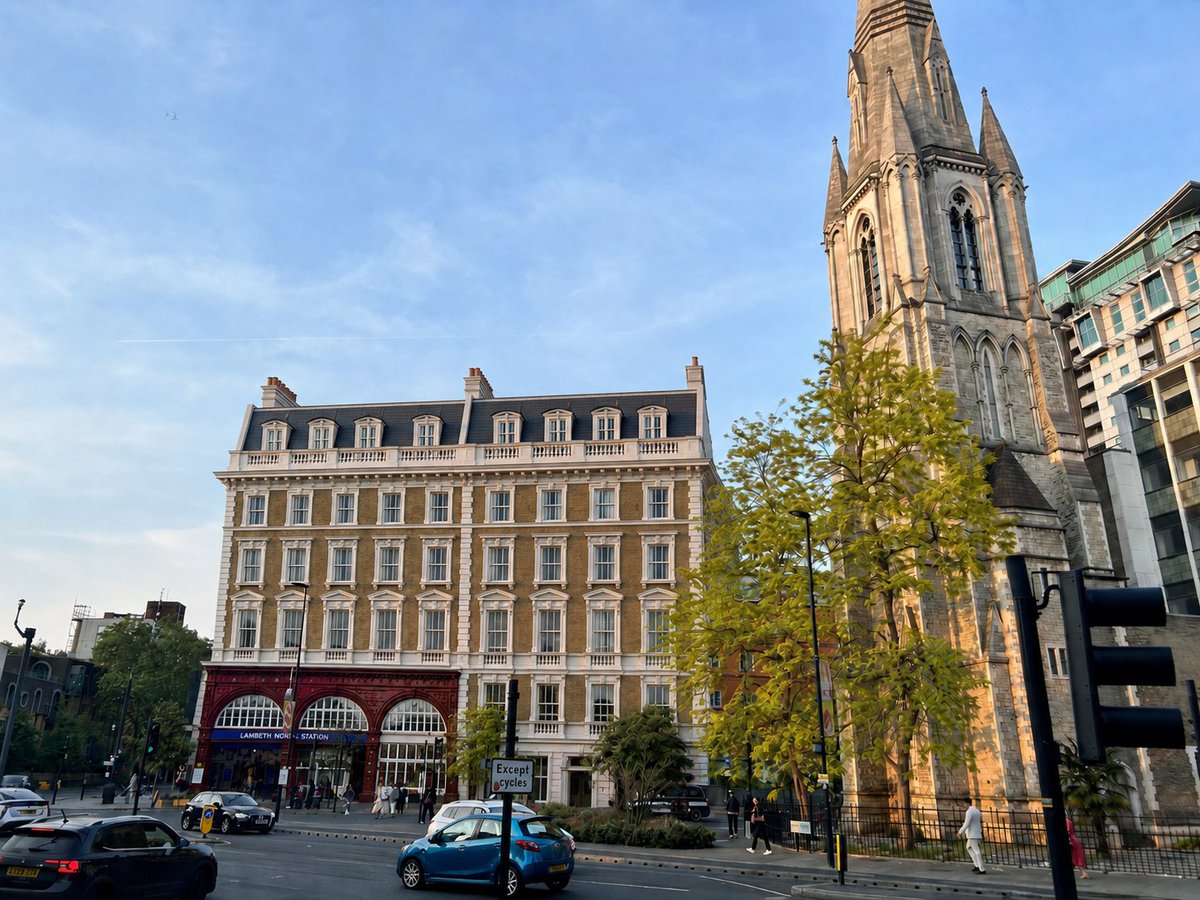
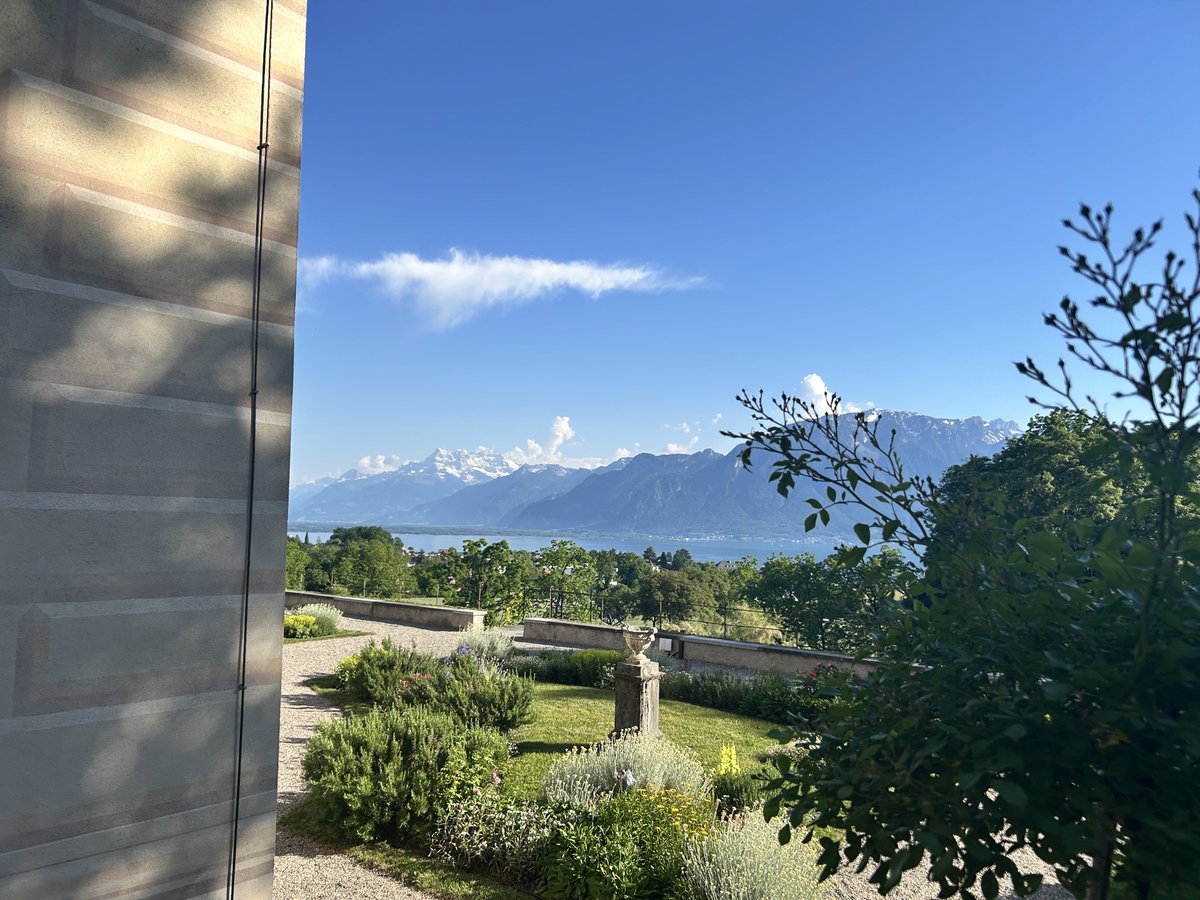
📢 Only a few places left for our 2026 Urban Design & Architecture Summer School! Starting on 10 July, our intensive residential course in Sherborne offers a practical introduction to designing beautiful, sustainable and popular places
https://t.co/rs0xRdys7T
@ADAMarchitectur
Tyler and I just published a list of the recipients of the New Aesthetics grants: https://t.co/aLhVgYXrbi.
Thank you very much to all who applied. There were far more applications than we expected. We funded 28 grantees and are excited to see what they create.
My reflections on the whole thing:
• Though there are clearly selection dynamics afoot, figuring out some route beyond the current aesthetic moment seems to be of wider interest in the art community than I would have guessed. Many applicants described their dissatisfaction with the status quo, some in strong terms. We had to close applications after a few weeks because there were so many.
• It's too early to call it, but it seems that both beauty as an unapologetic goal (contra much that is in modernist and contemporary approaches), and ways to channel pre-modern styles into something new for the present era, are of growing interest.
• The awards made me reflect on the perhaps obvious issue of how hard it must be for an artist to persistently do something new: schools, galleries, buyers, etc., all have structurally embedded preferences as well. These individual awards made me wonder what form supporting new clusters could take.
• Architecture seems to me like the discipline most ripe for new ideas. One correspondent observed: "American architects are somewhat constrained by the association with the academy, in addition to the well known regulation issues. There is a tendency to overthink things so that the designs are formally interesting to someone deep in the conversation, but lacking poetry and magic. There are more firms in Europe, South America and beyond that “just do things” (especially in places where it is easier to build)." This was evident in the submissions.
• AI seems to be making people rethink things in a quite fundamental way, just as urbanization/industrialization/popularization of photography did at the end of the 19th century. For some that will mean interesting new forms of AI-augmented art, but the effects of the rethinking will likely be wider.
• Arts funding is clearly as precarious and scarce as ever. That's unfortunate, but it probably also means that individual actors can have meaningful impact, and I encourage others to get involved if interested.
• There's a lot to know that is not written down, and I'm very grateful to those who have helped and advised me along the way.
I'm honoured to have an article about Poundbury in the latest issue of the CPH @Nir_Buras, alongside several other excellent articles about beautiful architecture and urbanism. Read it here:
https://t.co/AHYkEZkDvq
The water fountain has two functions. One is to provide water. The other is to provide joy and civic dignity to the city. One of these fountains only performs one of these roles. One, happily, does both.
The total collapse of any even pretence of creating humane and loveable buildings and places in the growing Cambridge is heart-breaking. This is not economics. Cambridge is one of Britain's richest places. It is a profound cultural failure. We set out a better route for the beautiful & popular growth of Cambridge which you can read ....
This is our local tube station as is and as reimagined with homes on top. Which do you prefer? Beautiful buildings do not just create homes. They improve places. It is beyond insane that there is literally a bungalow a few hundred yards from both the Palace of Westminster and Waterloo Train Station. In a world where Create Streets were setting planning policy beautiful, popular intensification of this types of site would be embedded by right following provably popular pattern books so there was no planning risk or equity capital requirement at all, only the need to raise debt for the construction. The good news is that....