Animación que muestra la evolución del uso del tiempo libre desde 1920 a la actualidad en los estadounidenses de 25 a 30 años
"No hacer nada" desaparece en los 70
"Sexo" en el 87
"Leer libros" en el 2007, justo cuando entra "sreaming" y "RRSS"
https://t.co/94MCDHKzgj
A single GPU can now calculate hundreds of global weather scenarios in under 60 seconds. The exact same task requires a supercomputer and hours of brute-force physics.
Google DeepMind recently released WeatherNext 2. The model beats the previous state-of-the-art system on 99.9% of weather variables across a 15-day forecast window. It achieves this massive jump in accuracy using a new modelling approach called a Functional Generative Network.
Meteorologists categorise weather data into two buckets:
1. Marginals are isolated data points, like the precise temperature at a specific location or the wind speed at a certain altitude.
2. Joints are the massive, interconnected systems that form when all those individual elements interact.
The researchers hid the joint systems from the model during training. They only taught it the isolated marginals. When they turned it on, the model skillfully predicted the massive, complex systems anyway.
The architecture forces an 87-million-dimensional output distribution through a 32-dimensional mathematical bottleneck. To survive this severe constraint and still produce accurate individual data points, the neural network has no choice but to learn the underlying physics linking everything together. It figures out the weather because that’s the most efficient way to solve the maths.
The practical results are immediate. The model gives forecasters a full 24-hour advantage in tropical cyclone tracking compared to the previous leading system. It maps extreme wind speeds and heatwaves with unprecedented precision.
We’re watching a pretty big shift in predictive capabilities. The machine is deducing the structural reality of planetary weather from isolated fragments of data.
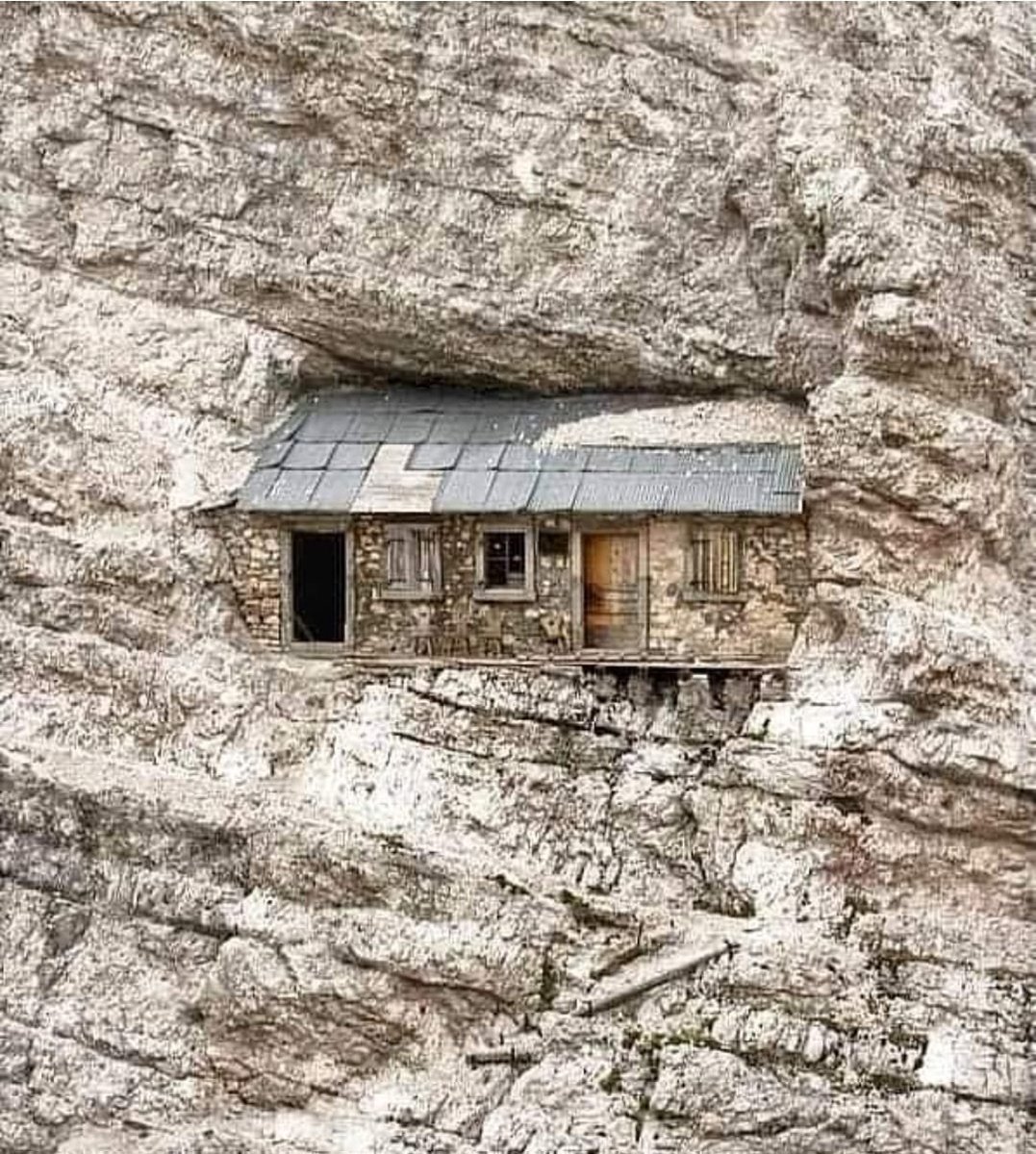
Esto es un refugio alpino en los Dolomitas, a 2760 m. de altitud.
No, no tiene otro acceso y no sé sabe con exactitud quién lo construyó ni cómo lo hizo porque pertenece a uno de los episodios más ásperos de la historia de Europa: La Guerra Blanca.
🧵⤵️
Apparently, the @spillways10 staking contract was hacked, and funds have been draining for the last 200 days. I was approached by a stakeholder to investigate the hack and I happily agreed. A thread:
The GOAT of the GOATs appears to have perfected mogul skiing. They either have to make the courses harder or Mik might need to find a new sport to dominate.
I hunted, killed, and ate a wild baboon (brains and all) with the indigenous Hadza tribe in Africa.
Here are the 13 things I learned about human health along the way.
👇 THREAD
Un grupo de ingenieras pasean sus ordenadores (Robotron 1715) durante un desfile en la Alemania oriental.
Berlín oriental, RDA, 1987 | 📸 Thomas Uhlemann
Finally wrote about what I've been learning so far regarding web3-based buildings
I'm pretty excited about what could be possible ✨
https://t.co/sI34dCf85W