FBI shows up to interrogate a U.S. citizen at his house—for writing an anti-ICE social media post.
"This is about comments that you posted online," said agent.
Orders homeowner to stop recording—refuses to even tell him which comments.
Agent wearing unique World Cup uniform to indicate he is currently assigned to work with ICE on immigration issues.
Craig Brittain has been actively documenting and participating in protests at the Delaney Hall ICE detention facility in Newark, New Jersey.
His social media posts videos of demonstrations, conflicts with agents, and calls for the facility’s closure.
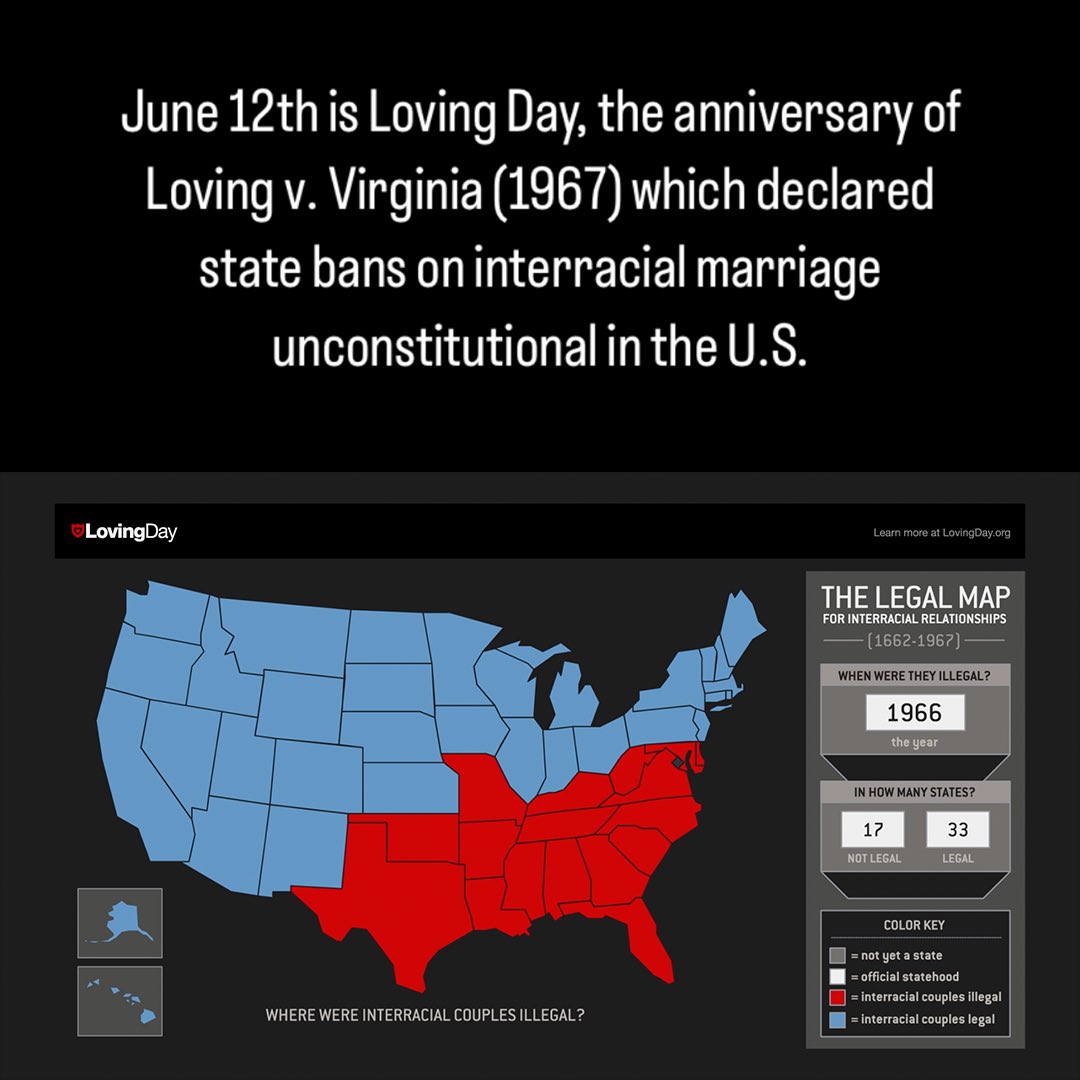
Today we honor the anniversary of Loving v. Virginia. In 1967, the Supreme Court declared the ban on interracial marriage unconstitutional in the U.S. This year, we’re highlighting our Legal Map. Here's what the country looked like in 1966 before the Loving decision #lovingday
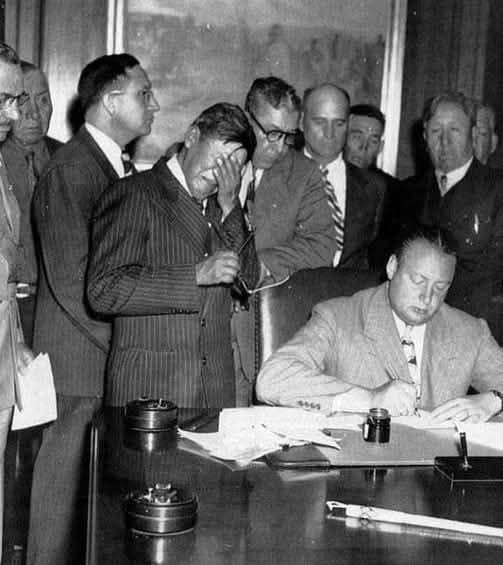
#صورة من #امريكا عام 1948
تظهر رجلا يرتدي بدلة
وربطة عنق يبكي أمام كاميرا تلفزيون
كان اسمه جورج جيليت
بتلك الدموع لم تكن دموع الخوف
كانت الدموع تذرفها العجز…
وعدم القدرة على فعل أي شيء.
جورج جيليت
زعيم قبائل الماندَان والهيداتسا والأريكارا (القبائل الثلاث المتحدة)
يبكي بحرقة وهو يُجبر على توقيع ( اتفاقية ) تنازل عن أكثر من 627 كيلومتر مربع من أراضي أجداده لصالح بناء سد غاريسون على نهر ميسوري.
من أخصب أراضي المحمية، بما في ذلك القرى والمزارع واضطر أكثر من 90% من السكان إلى النزوح.
وكان التعويض المقدم ضئيلاً جداً
5 مليون دولار ثم زاد قليلاً
ولم يكن هناك خيار حقيقي إما التوقيع أو المصادرة بدون تعويض يُذكر
« ما أبيعه ليس مجرد أرض… إنها ذكرى شعبي »
هذه الصورة واحدة من أقوى الشهادات على المعاناة للشعوب الأصلية في أمريكا !!
and never mind the cost
No wonder who them lawmen was protecting
When they nailed the Savior to the cross
'Cause the law is for protection of the people
Rules are rules and any fool can see
We don't need no riddle-speaking prophets
Scaring decent folks like you and me
No sirree
The Law Is for Protection of the People
Song by Kris Kristofferson ‧ 1970

Overview
Lyrics
Billy Dalton staggered on the sidewalk
Someone said he stumbled and he fell
Six squad cars came screaming to the rescue
Hauled old Billy Dalton off to jail
'Cause the law is for
Held down Homer Lee and cut his hair
'Cause the law is for protection of the people
Rules are rules and any fool can see
We don't need no hairy-headed hippies
Scaring decent folks like you and me
No sirree
Oh, so thank your lucky stars you've got protection
Walk the line
Reporter: “To what extent are Americans’ financial situations motivating you to make a deal? [with Iran]”
Trump: “Not even a little bit…. I don't think about Americans’ financial situation”
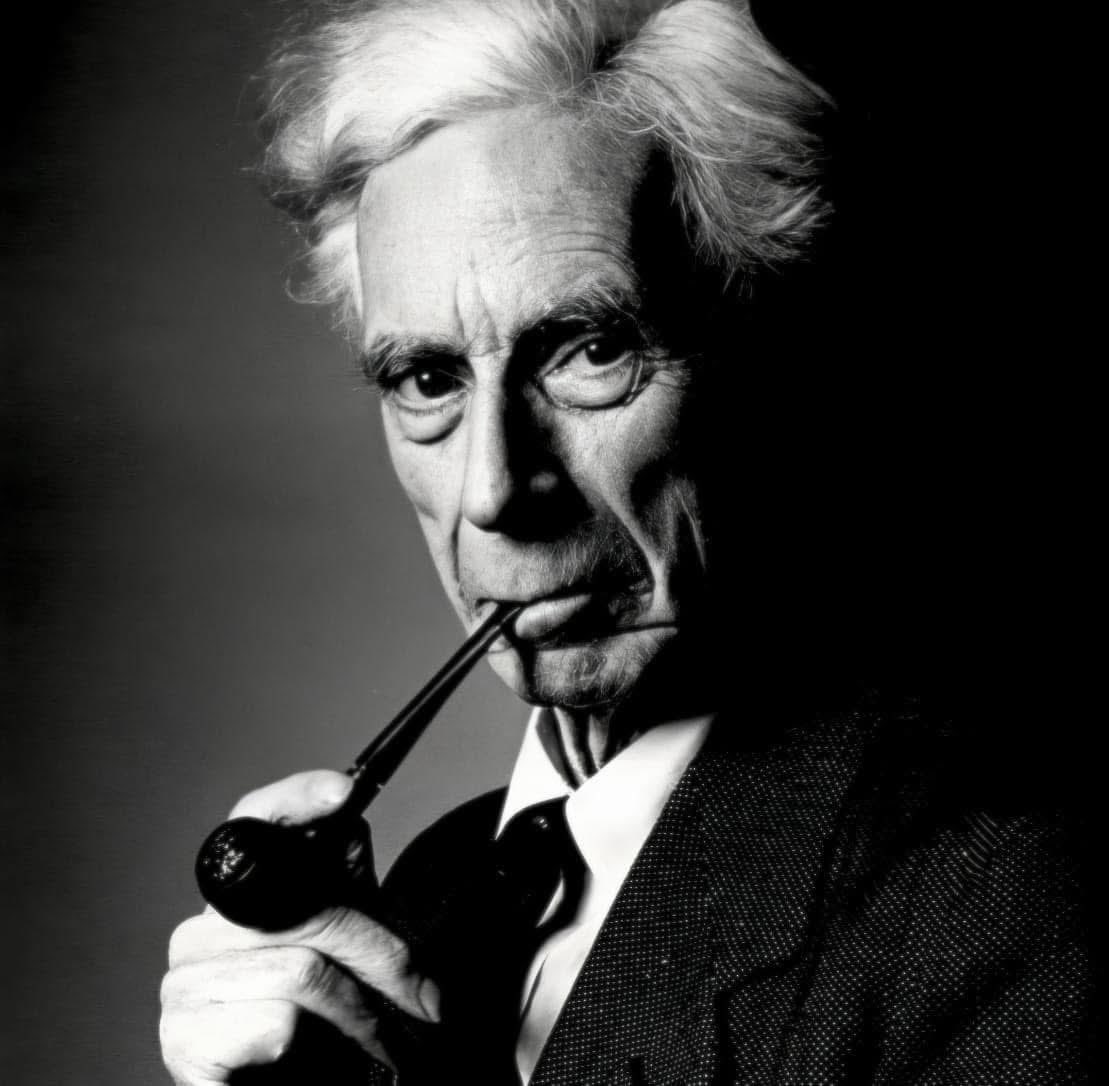
"The idea that the poor should have leisure has always been shocking to the rich. In the early nineteenth century, fifteen hours was the ordinary day's work for a man; children sometimes did as much, and very commonly did twelve hours a day. When meddlesome busybodies suggested that perhaps these hours were rather long, they were told that work kept adults from drink and children from mischief.
When I was a child, shortly after urban working men had acquired the vote, certain public holidays were established by law, to the great indignation of the upper classes. I remember hearing an old Duchess say: 'What do the poor want with holidays? They ought to work.' People nowadays are less frank, but the sentiment persists, and is the source of much of our economic confusion."
— Bertrand Russell
Murray: Is it true that people making under $184,000 pay a 12.4% Social Security tax rate?
Dahl: Yes
Murray: And the rate for someone making $1,000,000?
Dahl: 2.2%
Murray: So, a 12.4% tax for people making less than $184,000, but 2.2% for a millionaire or .0002% for billionaires.
In 1973, women fired for being pregnant had no legal recourse. The rule in Washington, D.C. was clear: keep your job, or keep your child.
Pat Schroeder walked into the Capitol with a diaper bag. She was thirty-two years old. A newly elected representative from Colorado.
She had a two-year-old and a six-year-old at home.
The men who ran the congressional committees asked her how she planned to be a mother and a lawmaker at the same time. They asked it in the marble hallways. They asked it on television broadcasts.
She told them she had a brain and a uterus, and they both worked. Then she went to find her desk.
Her assignment was the House Armed Services Committee. The chairman was F. Edward Hébert. He openly stated that women and minorities had no business deciding military policy.
He refused to assign her a seat. He forced Schroeder and Ron Dellums, a Black representative from California, to share a single chair during committee hearings.
She sat on half a cushion and reviewed national defense budgets.
There was no women’s restroom near the House floor. The building had been designed by men, for men. Schroeder had to walk down a different corridor, out of earshot of the voting bells, just to find a facility.
She kept baby formula in a filing cabinet next to legislative drafts. Her male colleagues openly joked about her schedule.
Millions of American working mothers did not have a filing cabinet. They worked on automotive assembly lines in Detroit. They typed in secretarial pools in Manhattan. They carried trays in diners across the Midwest.
When they became pregnant, they lost their paychecks.
The system did not classify it as termination. Employers called it a permanent separation for personal reasons.
A woman would show a physical sign of carrying a child. A floor manager would process the paperwork. The desk was cleared by Friday.
At the time, federal labor law treated pregnancy as a voluntary, temporary disability. The Civil Rights Act of 1964 prohibited sex discrimination, but the legal framework contained a massive loophole. In 1976, the Supreme Court ruled in General Electric Co. v. Gilbert that excluding pregnancy from disability benefits did not constitute discrimination. The court’s logic stated that the rule simply divided the workforce into two groups: pregnant women and non-pregnant persons. Since the non-pregnant group included both men and women, the policy was deemed perfectly legal.
Schroeder started drafting a federal response. She wanted a guarantee that a woman could have a baby and return to her desk.
The first attempts did not even survive the committee process.
Business lobbies sent representatives to the hearings. They carried heavy binders of financial projections. They testified under fluorescent lights that holding a job open for a mother would bankrupt small merchants and destroy the domestic economy.
Schroeder adjusted her approach. She realized that framing the issue solely around pregnancy allowed the opposition to dismiss it as a women's issue.
She rewrote the text. She expanded the scope to include any worker who needed time to care for a newborn, an adopted child, or a dying parent.
She called it the Family and Medical Leave Act.
In 1985, she introduced the legislation. It stalled. The committee chairmen refused to advance it to the floor.
Letters arrived at her office in the Longworth Building. Thousands of them. Postmarks from Ohio, Mississippi, and Oregon.
A cashier wrote that she told her manager she was due in October. She was let go in August.
A teacher lost her seniority because she stayed home for six weeks after a complicated delivery.
Schroeder filed the bill again in 1986. It failed again.
She brought it back in 1987. She negotiated. She compromised.
The original draft included paid leave. The lobbyists attacked the cost. They argued the federal government could not force corporations to pay for hours not worked.
Schroeder stripped the paid provision entirely. The new version only guaranteed an unpaid absence.
The opposition still fought it.
She restricted the law to companies with more than fifty employees. She exempted the smallest businesses entirely. She cut the protected timeline down to twelve weeks.
She flew back and forth from Denver to Washington. Three thousand miles every weekend. Her children grew up.
By 1990, the stripped-down, unpaid, heavily compromised bill finally passed the House and the Senate.
President George H.W. Bush vetoed it.
He stated that the federal government had no business dictating corporate benefit policies. He suggested that companies should offer leave voluntarily.
Schroeder filed it again in 1991. The process started over. The business lobbies returned. The financial projections were read into the congressional record a second time.
The bill passed the House. It passed the Senate.
In 1992, the President vetoed it a second time.
Nine years had passed since Schroeder wrote the first draft. Almost twenty years had passed since she arrived in Washington with a diaper bag.
During those years, the American workforce turned over. Women gave birth, stayed home, and found their positions filled by someone else on Monday morning.
The calendar turned to 1993. A new administration took the oath of office.
Schroeder put the paperwork on the desk one more time.
On February 5, 1993, the new president signed the document. The Family and Medical Leave Act became Public Law 103-3.
The cost was heavy. The compromise Schroeder had to swallow remained in the text. It was twelve weeks. It was entirely unpaid.
They asked how she could be a mother and a legislator. She made it illegal to ask anyone else.
Today, the law she wrote is invoked twenty million times a year. Workers use the federal protection to keep their badges while they hold their infants or sit beside a hospice bed. The paperwork requires a physician's signature and a human resources stamp. Half of the women who legally qualify for the time cannot afford to take it. The paychecks still stop coming on day one.
Pat Schroeder: the woman who made family a legal right.
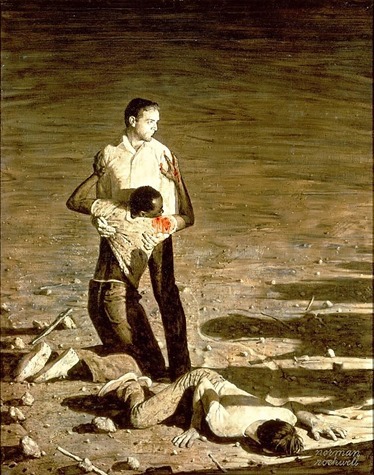
Norman Rockwell painting "Southern Justice (Murder in Mississippi)." It depicts the final moments in the lives of James Chaney, Andrew Goodman and Michael Schwerner, three civil rights workers killed by members of the Ku Klux Klan over 50 years ago for registering people to vote.
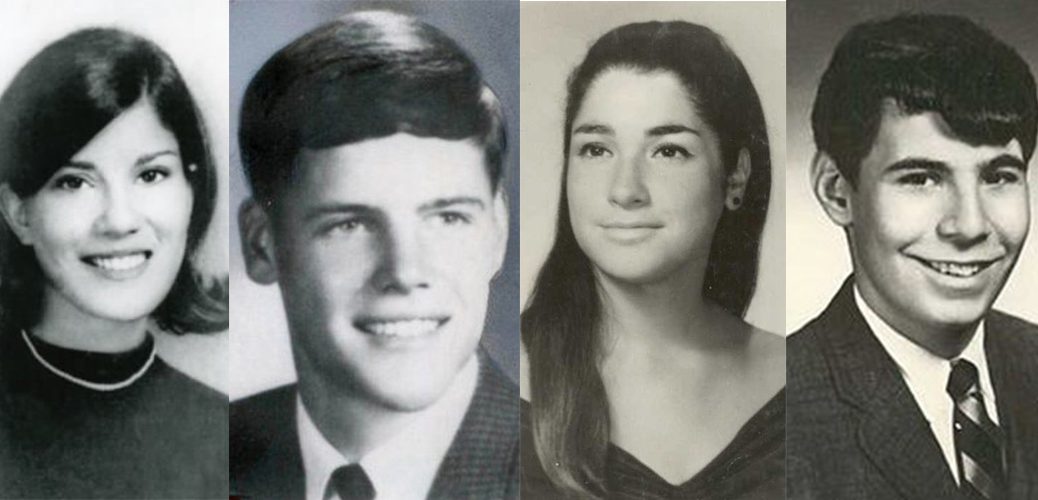
Kent State happened 56 years ago today. We remember "Four dead in Ohio," but let us also remember their names... Allison B. Krause, 19. William Knox Schroeder, 19. Sandra Lee Scheuer, 20. Jeffrey Glenn Miller, 20.