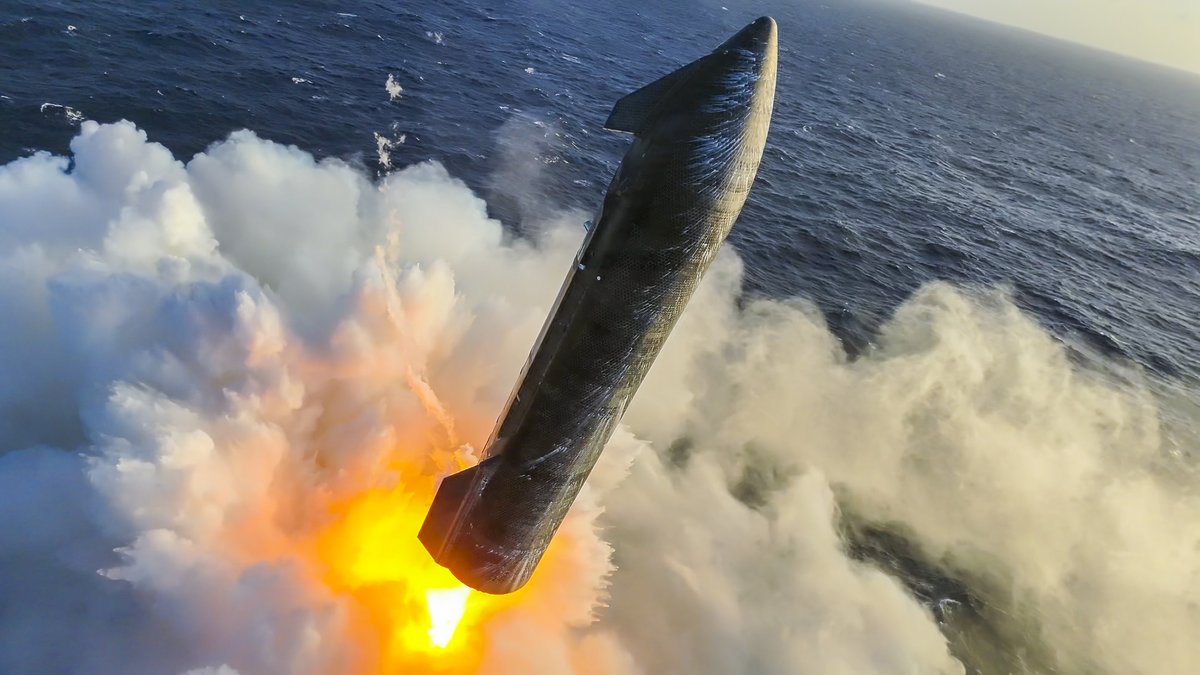
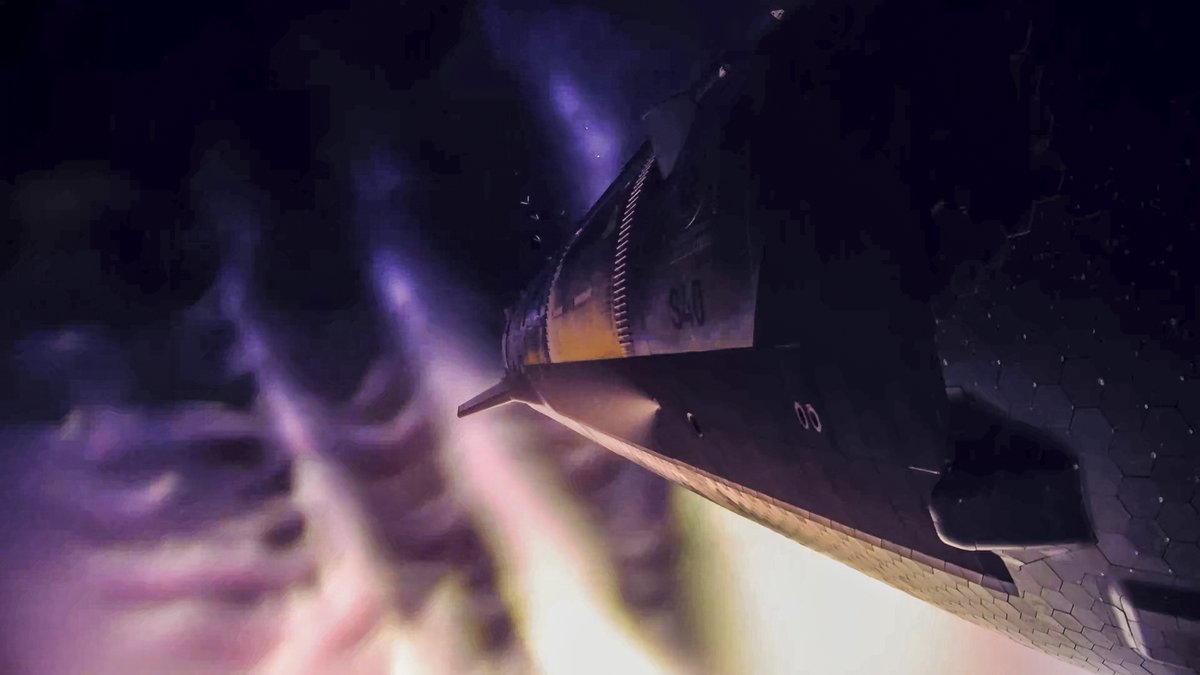
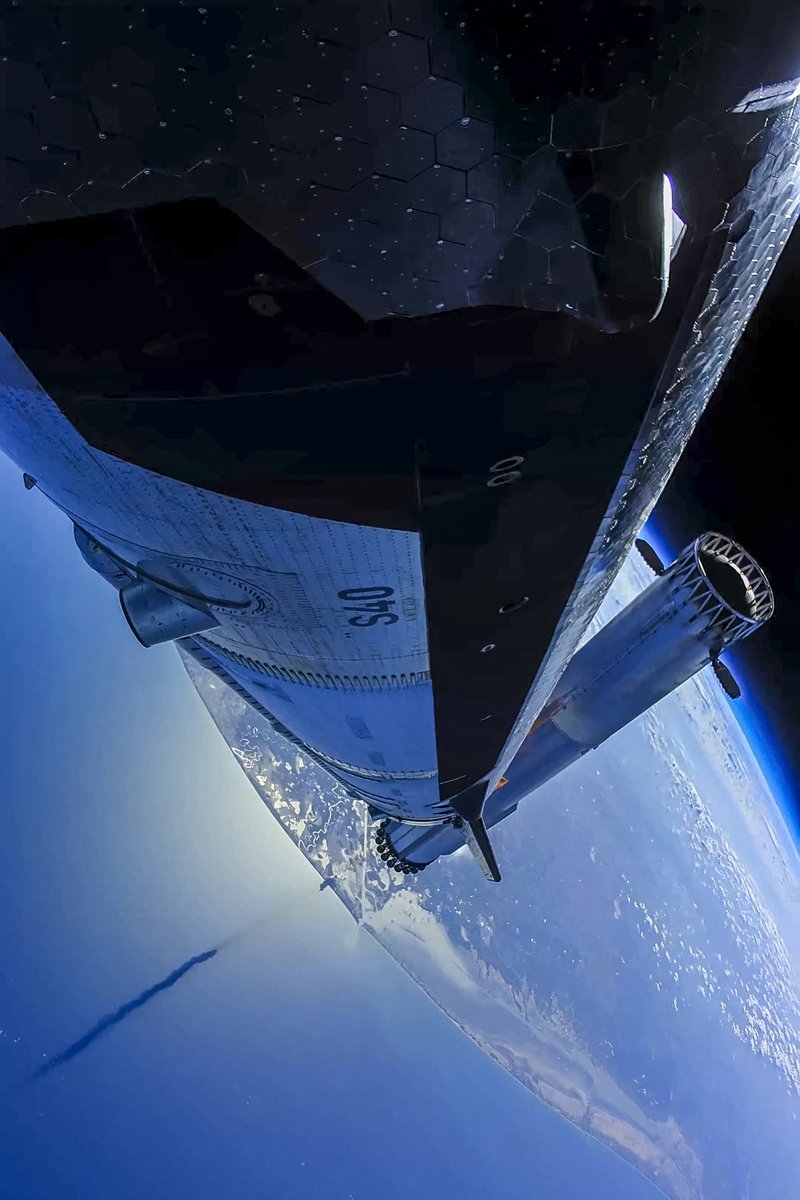
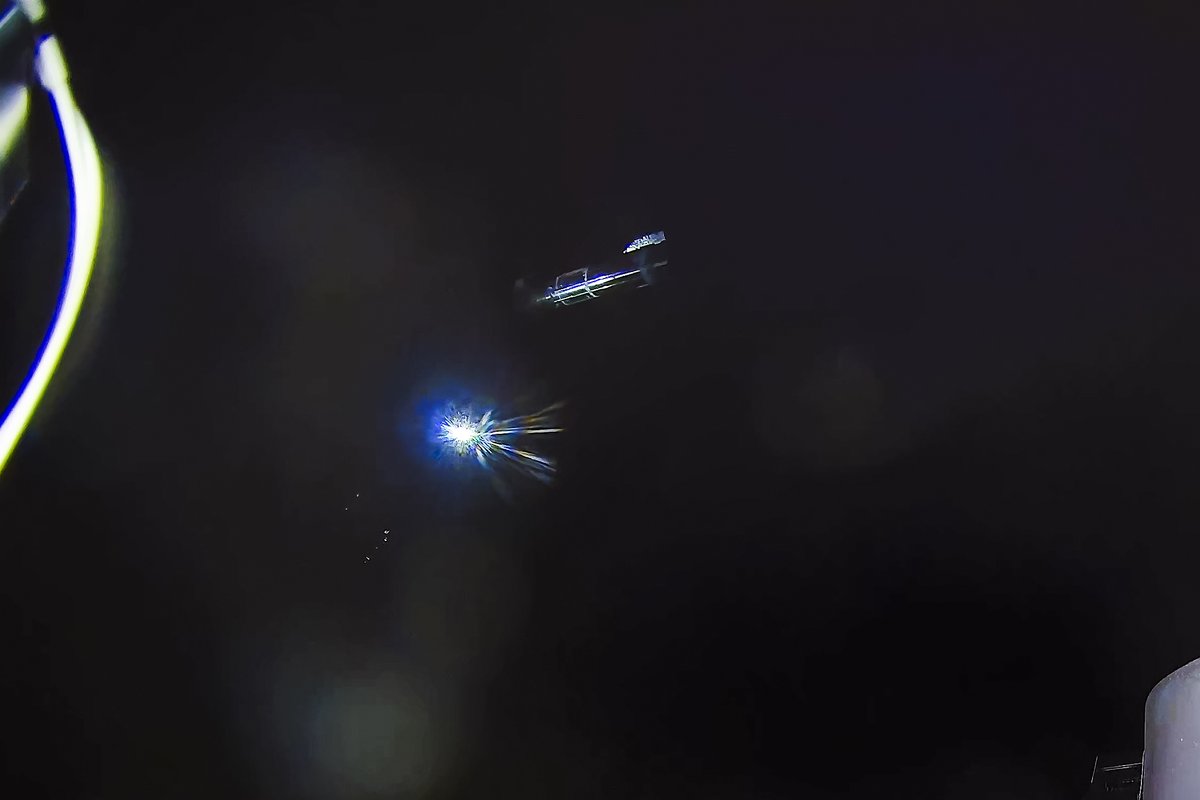
View of Starship in space from a Starlink V3 satellite on Flight 13.
This composite is made of imagery from four separate cameras on a single satellite. Six of the satellites were equipped with cameras to scan Starship’s heat shield and transmit imagery down to operators to continue testing methods of analyzing Starship’s heat shield readiness for return to launch site on future missions
The first Starlink V3 satellites in space successfully deployed their solar arrays, fired their thrusters, established connections with the Starlink constellation using radio frequencies and laser links, and captured imagery of Starship
Hoy a las 3:10 am salió el Sol en la Costa Espacial!
Bueno, no, fue otro Falcon 9 de @SpaceX que lanzaba por séptima vez. Misión NROL-95 para la @NRO_gov.
A los 8m del despegue, rotamos las cámaras casi 180° para ver el regreso de la primera etapa en LZ-2.
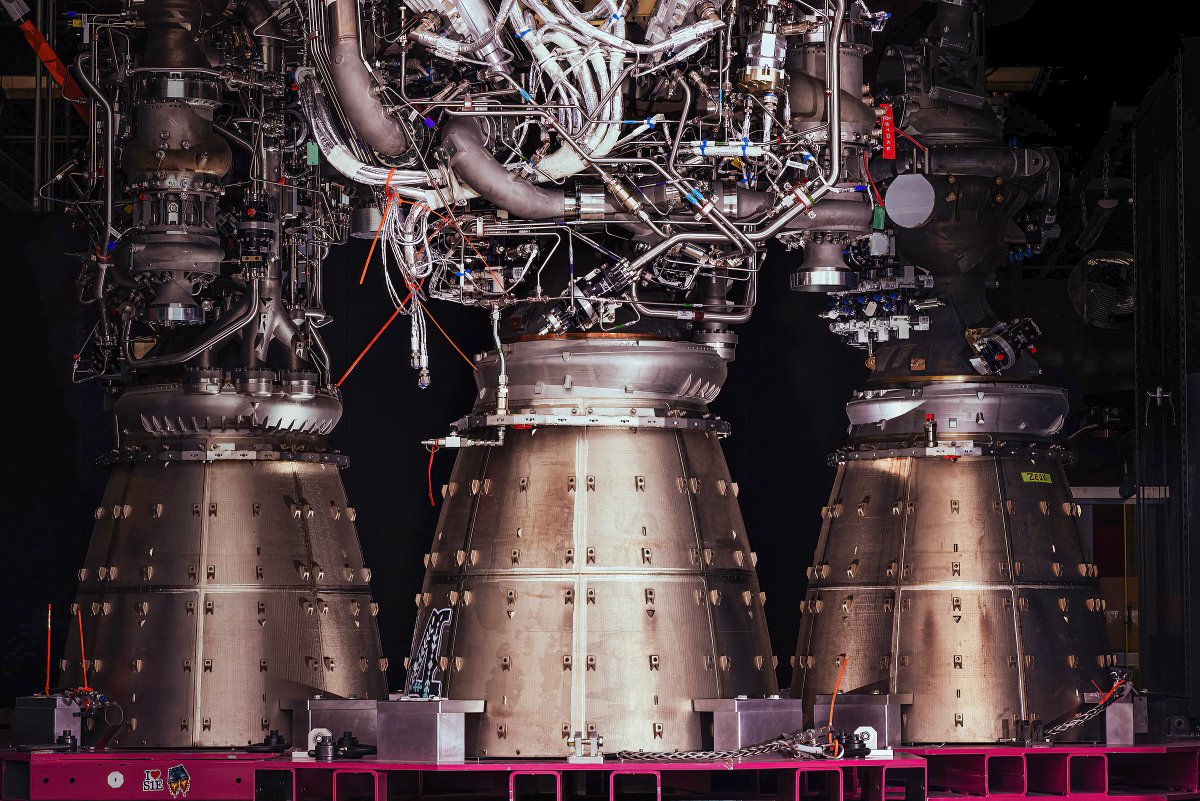
The first three of our flight one engines are designed, built, and ready for testing. ✅
Stage 1 Zenith engines ZE14, 15, and 16 are ready to ship from our shop floor in Kent, WA to Moses Lake for hot fire acceptance testing.
Getting our Zenith engines through qualification testing is no small feat, and trusted vendors like Performance Sealing Inc. - who can iterate at industry-leading speeds - are key to keeping our work on time and on track.🙏🙌
After a successful week of testing RFA ONE on the pad for the first time, we encountered an issue with the vehicle that requires further investigation. We have made the decision to de-stack the vehicle in order to investigate. We will provide further updates as soon as confirmed information is available.
Destacking of the vehicle access tower is complete. We removed the top six modules to begin integrating fluids and controls as part of our new ConOps. This includes adding cryo systems, pneumatics, and mechanisms. We’ll also add in floors for access before we begin re-stacking. This allows us to work in parallel, keeping with our return-to-flight timeline.
We found Ship 40 floating in the ocean
At the time of the capture, 2026-07-27 03:56 UTC, Ship 40 had been floating for 56 hours.
Using @MarineTraffic data, I estimated the position of Ship 40 and recovery ship GO Australis at the time of when the satellite imagery would be taken.
Harry Stranger then tasked an @UmbraSpace Synthetic-aperture Radar (SAR) satellite.
🛰️ Umbra / SpaceFromSpace