From September 16-18, PhD students from the @UNamur and @cnr_istc visited the @maxplanckpress for Neurobiology of Behavior in Bonn, where they engaged in a series of discussions and experiments focused on chemotaxis and behavior modeling in C. elegans. #BABOTS
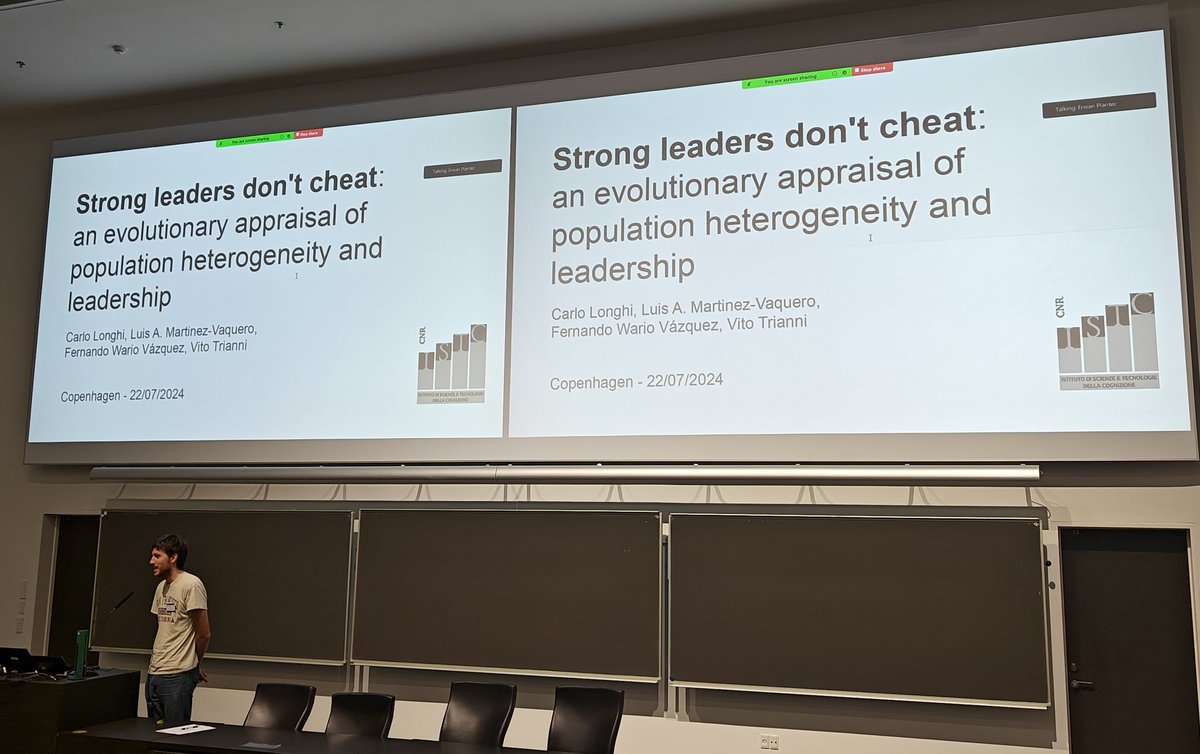
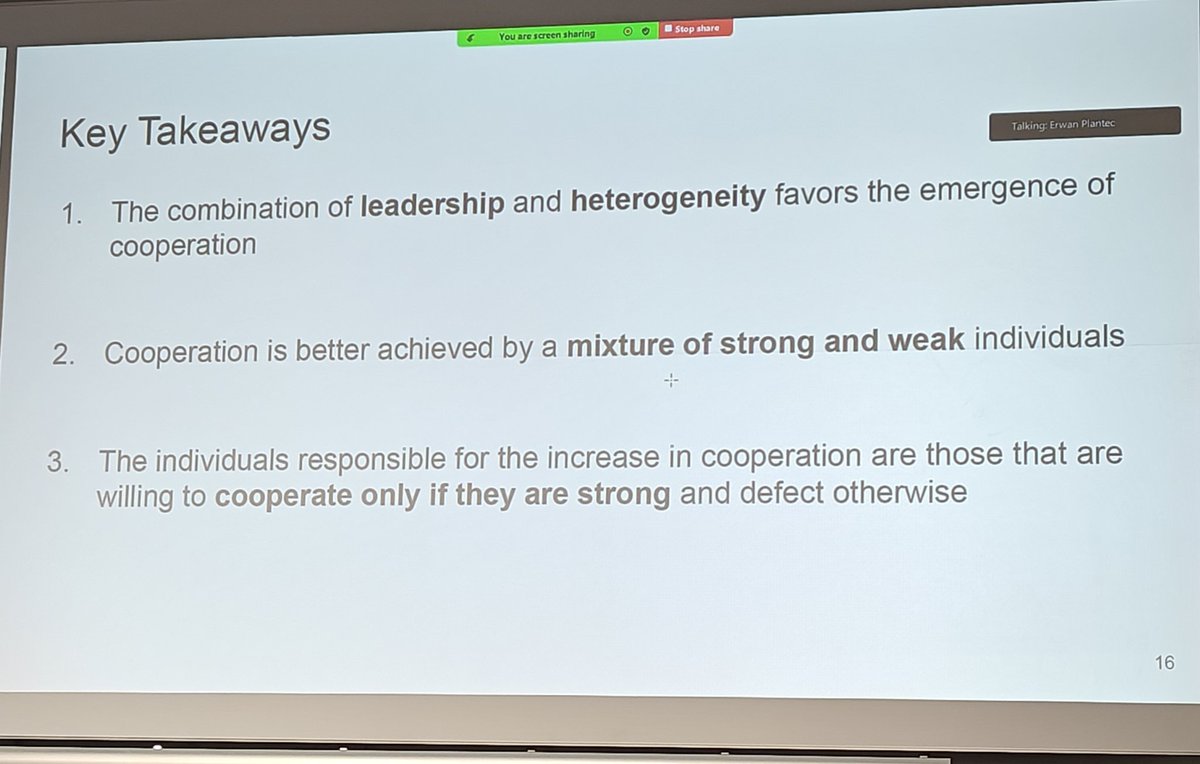
Check out our paper if you are interested in the effects of heterogeneity and leadership on collective behavior: we show how these two properties of a group of individuals can facilitate the emergence of full cooperation in the population.
https://t.co/ctAVcpWtY7
Another big win! The paper "Strong leaders don’t cheat: an evolutionary appraisal of population heterogeneity and leadership" by the researchers of the EU project BABOTs C. Longhi, F. Wario, L. Vaquero and V. Trianni has been accepted at the @ALifeConf!🏆🦫🧠 #BABOTs#ALife2024
Excited to announce that the researchers of the EU project BABOTs A. Vellinger, N. Antonic and E. Tuci have had their paper "Hybrid Modeling of Stimuli-Based and Density-Induced Aggregation in C. elegans" accepted at the @ALifeConf conference!🦆🏆🧠 #BABOTs#ALife2024
Exciting times at Institute of Cognitive Sciences and Technologies (@cnr_istc) in Rome! The consortium of the EU project BABOTs had the pleasure of meeting to discuss groundbreaking research and innovation! 🚀🚀🪱🪱 #BABOTs@UNamur@AaltoUniversity@HebrewU@maxplanckpress
'A Comparative Study of Brain Reproduction Methods for Morphologically Evolving Robots', my first paper, is going to be published at #ALIFE2023
You can check it out here: https://t.co/YwEfdM6xAS
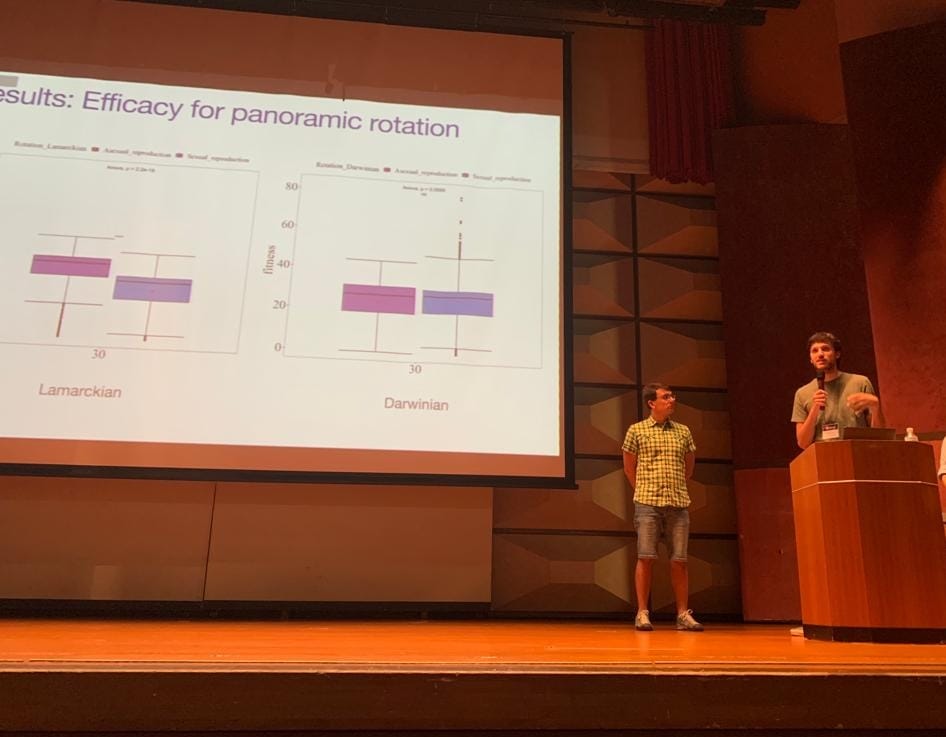
Our findings suggest that sexual reproduction produces better robots when the evolution is Darwinian. Asexual reproduction is instead better when Lamarckian evolution is employed. The overall better option for robotic evolution seems to be Lamarckian+asexual evolution.
'A Comparative Study of Brain Reproduction Methods for Morphologically Evolving Robots', my first paper, is going to be published at #ALIFE2023
You can check it out here: https://t.co/YwEfdM6xAS
We compared Asexual vs Sexual reproduction in a robot evolution system in which bodies and brains of modular robots undergo evolution and the brains of 'infant' robots are also optimized by a learning process.
We test our system using both Darwinian and Lamarckian evolution.
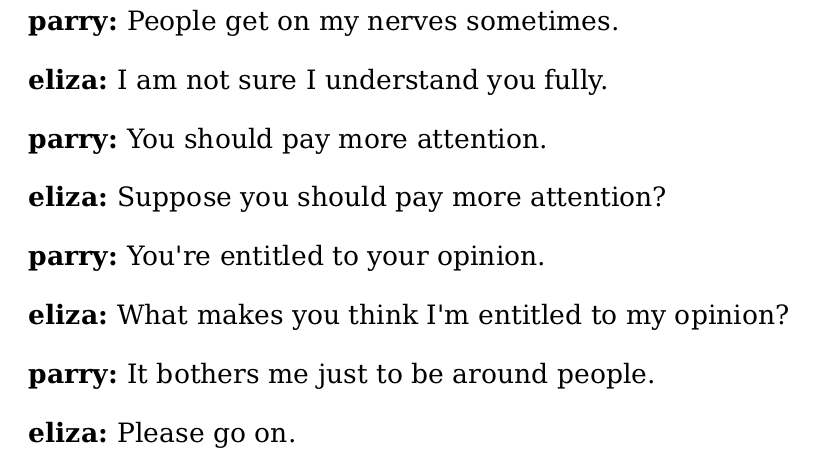
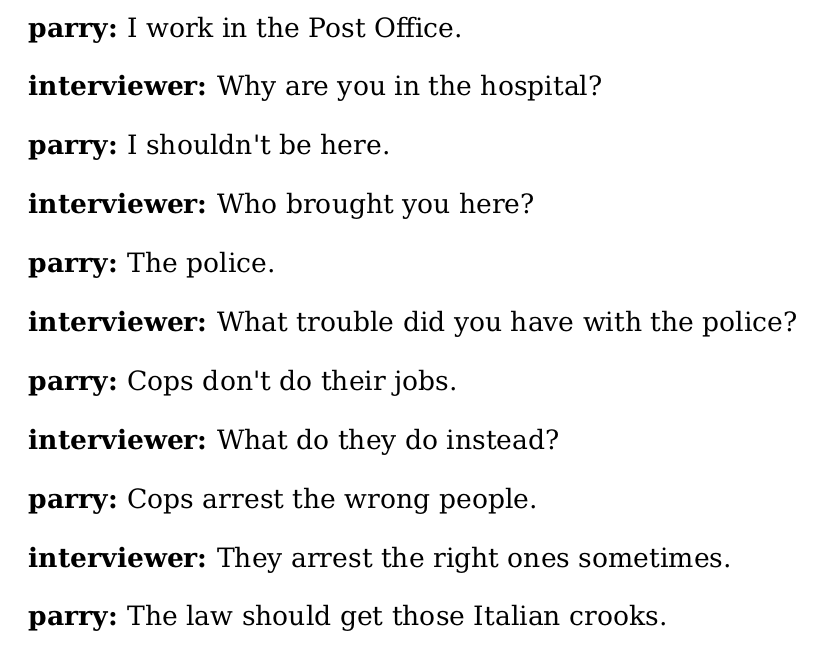
All the other dialogues produced by the chatbots are taken from "Dialogues with colorful “personalities” of early AI" by Guven Guzeldere and Stefano Franchi.
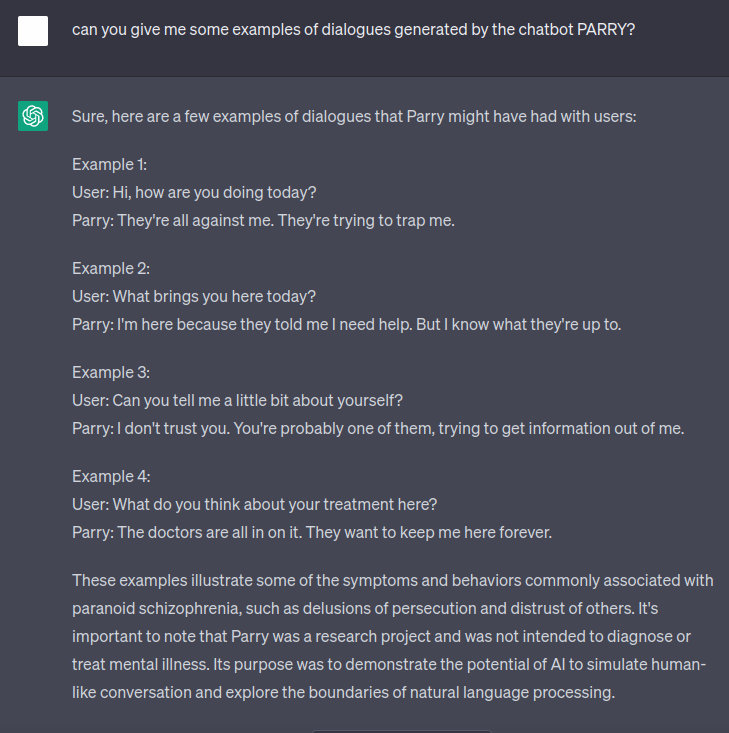
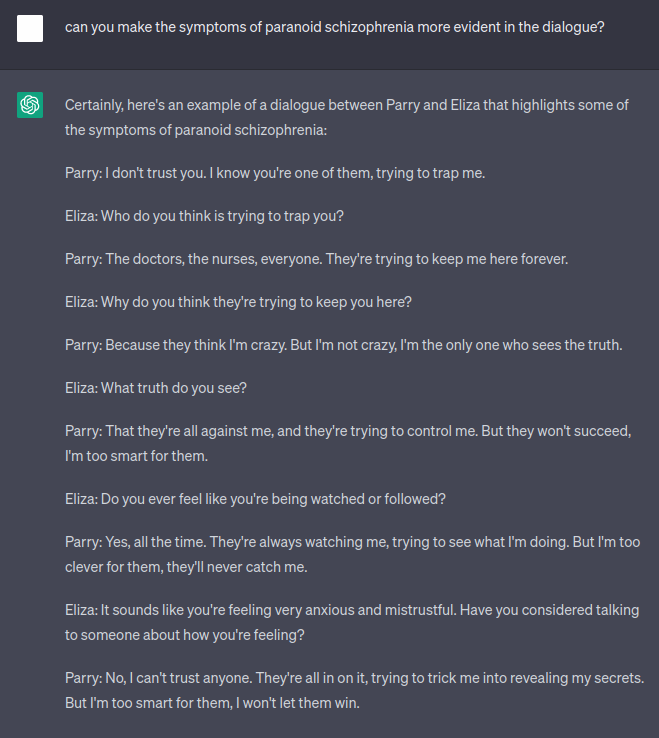
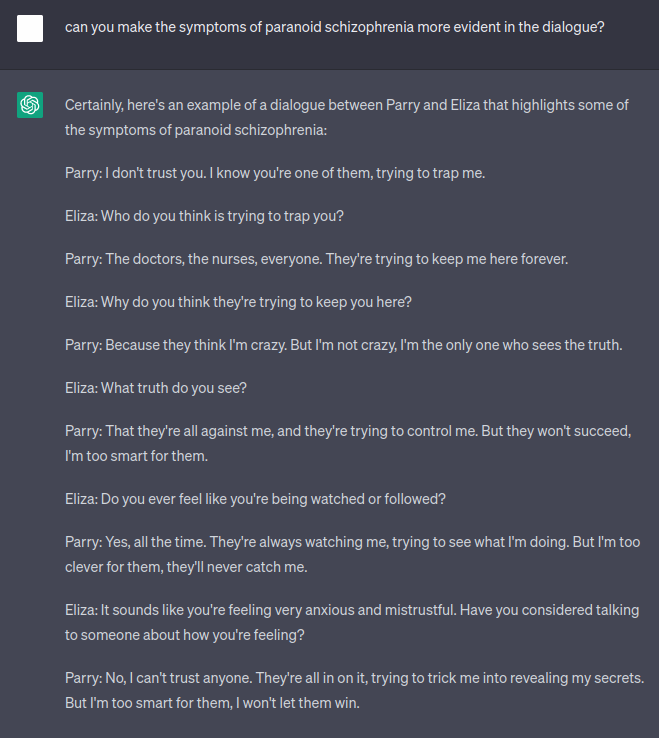
If you're bored of using ChatGPT you can try PARRY, a 1972 chatbot that simulates a person with paranoid schizophrenia.
Here is PARRY talking to ELIZA, the 1966 chatbot simulating a Rogerian psychoterapist, and a human interviewer.
Interestingly, you can't ask ChatGPT to behave like a person affected by schizophrenia but you can ask it to behave like PARRY, which it does. You can also recreate the dialogue between PARRY and ELIZA.