🦀 Call for Contributions – Workshop on Agentic & Generative AI as Artificial Life
How can we design agentic AI ecosystems that remain safe & secure as they become more complex and autonomous?
We are inviting contributions to our upcoming workshop:
👉 https://t.co/707uPF6bvO
Congratulations Dr. @EIiasNajarro! It was great having Elias as a PhD student. He worked on some really exciting research over the last few years! Some highlights below 🧵
Small experiment on "semantic artificial life".
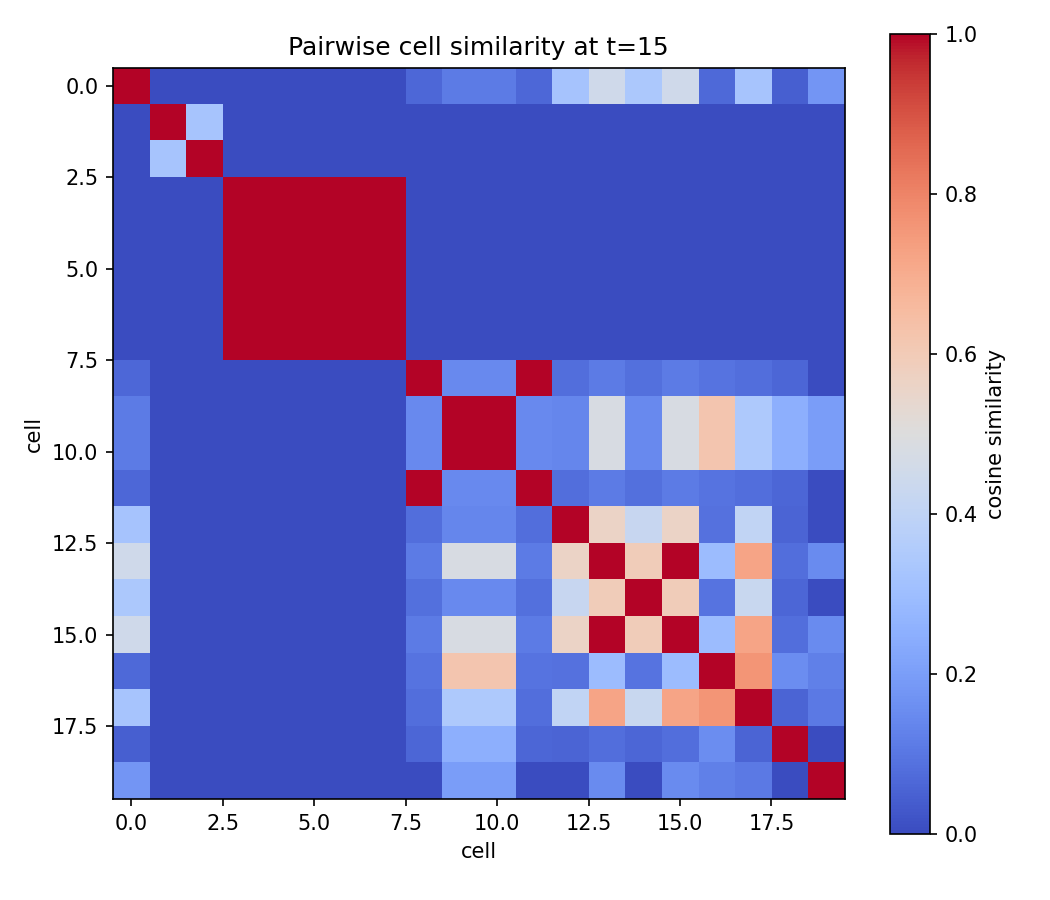
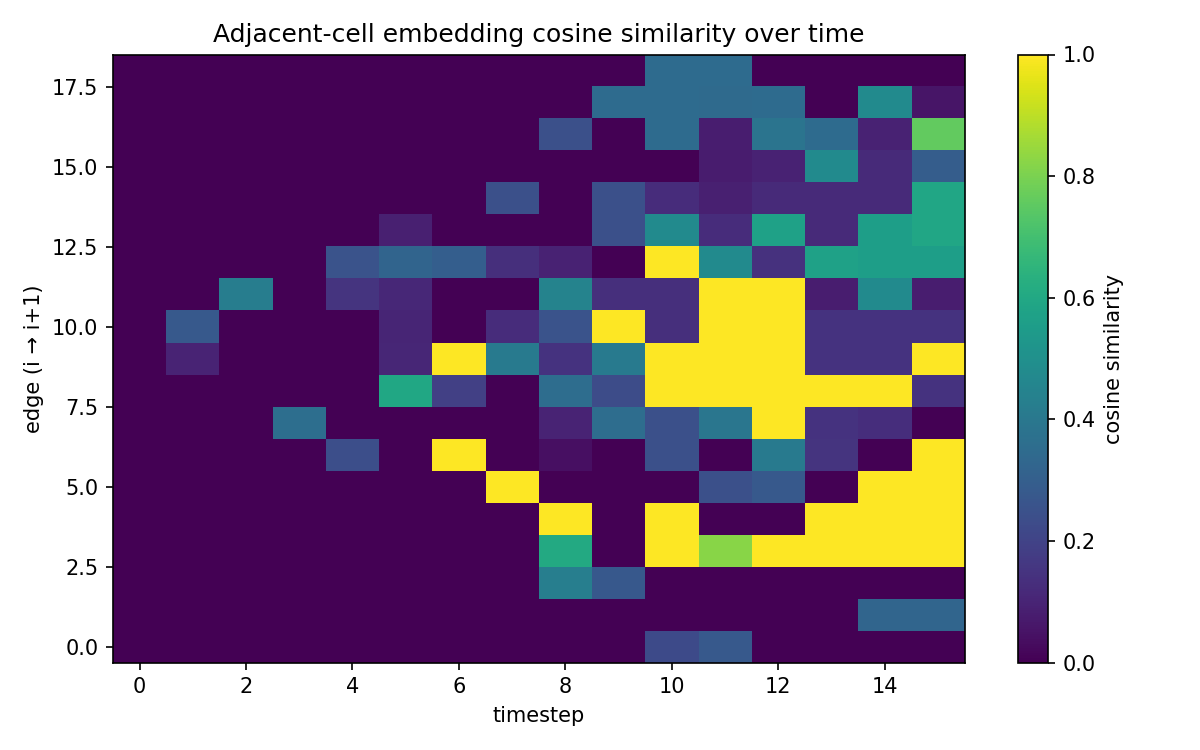
I put small LLMs (Qwen 2.5 0.5B) on a 1D lattice. It is an NCA where update rules are LLMs that receive tokens from left/right neighbors & their previous output and produce new output tokens.
@JonathanRoseD Correct, all cells update synchronously. Cosine similarity measures the semantic similarity of the word embeddings of each cell to the initial seed.
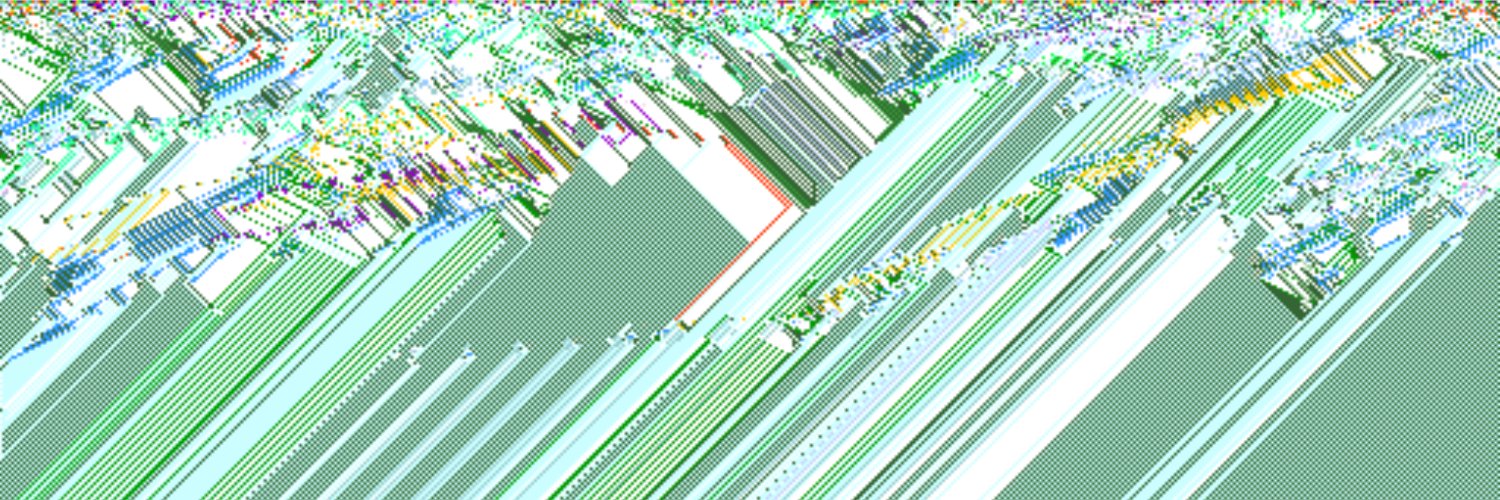
It's taken way longer than originally anticipated (18 months), but I'm super excited to say that the project to translate Nils Aall Barricelli's groundbreaking 1954 paper on computational evolution/artificial life (Esempi Numerici di Processi di Evoluzione) is now complete! [1/2]
@lfegray Yes that would be fun to try! One could design a task that can only be solved by the collective and do either one shot prompting to the seed cell with the task + input (more difficult as the seed cell would have to transmit that somehow) or give the task as context to every cell.
Will semantic gliders propagate? One cell is initialised with "life finds a way".
Outputs:
t=1: life starts glowing | new life emerges | life blooms
t=15: sunrise brings new hope | nightmares drift softly | new life sprouts eagerly
13 distinct phrases emerge!
Are you passionate about #ALife, eager to gain hands-on experience in event management, and interested in networking with leading researchers in the field?
Join us to volunteer the upcoming @ALifeConf, taking place from August 17th to 21st! #ALIFE2026
🔗 https://t.co/hIVyqmEyRH
While waiting for #ALIFE2026, dive into talks, workshops & side events from previous years on our YouTube channel 📺
https://t.co/nZ2c1zqFMS
Meanwhile, the organizing committee is busy behind the scenes — meta-reviews are underway and keynote announcements are coming soon.
Personal update: I've joined Anthropic. I think the next few years at the frontier of LLMs will be especially formative. I am very excited to join the team here and get back to R&D. I remain deeply passionate about education and plan to resume my work on it in time.
New research out — A developmental model with morphogenetic scaffoldings to guide self-organisation: a single model, many grown patterns. The memory-compute trade-off but in self-organizing systems.
A collab featuring @EIiasNajarro@JakobSchauser and @risi1979 and yours truly
Dear @ALifeConf 2026 reviewers,
AI cannot be used to write your reviews, see an extract from the guidelines below.
Uploading unpublished work in LLMs may constitute a violation of reviewer confidentiality!
-Program Chairs
@alifeofficial
Due to a higher-than-expected number of submissions, we’re seeking additional reviewers for #ALIFE2026.
If you can help, please sign up:
https://t.co/xjXuQApiWf
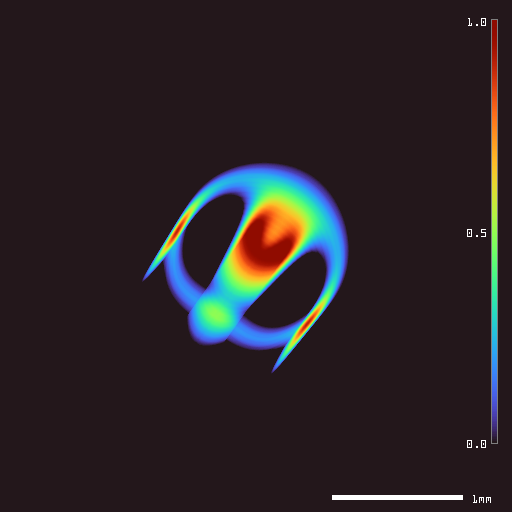
Today is Orbium's birthday!
11 years ago on 2015-04-15, it first appeared in a precursor of Lenia written in C#.
To this day, we still don't know why it exists.
A "Neural Computer" is built by adapting video generation architectures to train a World Model of an actual computer that can directly simulate a computer interface.
Instead of interacting with a real operating system, these models can take in user actions like keystrokes and mouse clicks alongside previous screen pixels to predict and generate the next video frames.
Trained solely on recorded input and output traces, it successfully learned to render readable text and control a cursor, proving that a neural network can run as its own visual computing environment without a traditional operating system.
https://t.co/roTpqsdrEE
Cool work by @MingchenZhuge@SchmidhuberAI et al.!








![drtimt's tweet photo. It's taken way longer than originally anticipated (18 months), but I'm super excited to say that the project to translate Nils Aall Barricelli's groundbreaking 1954 paper on computational evolution/artificial life (Esempi Numerici di Processi di Evoluzione) is now complete! [1/2] https://t.co/lqp2KmA61I](https://pbs.twimg.com/media/HI7RC6bXoAEt8Po.jpg)