Academic, Teaches Global Politics, Indian Polity. Author: Ambedkar and The Making of The Modern India:Social Transformation, Democracy and Gender Justice.
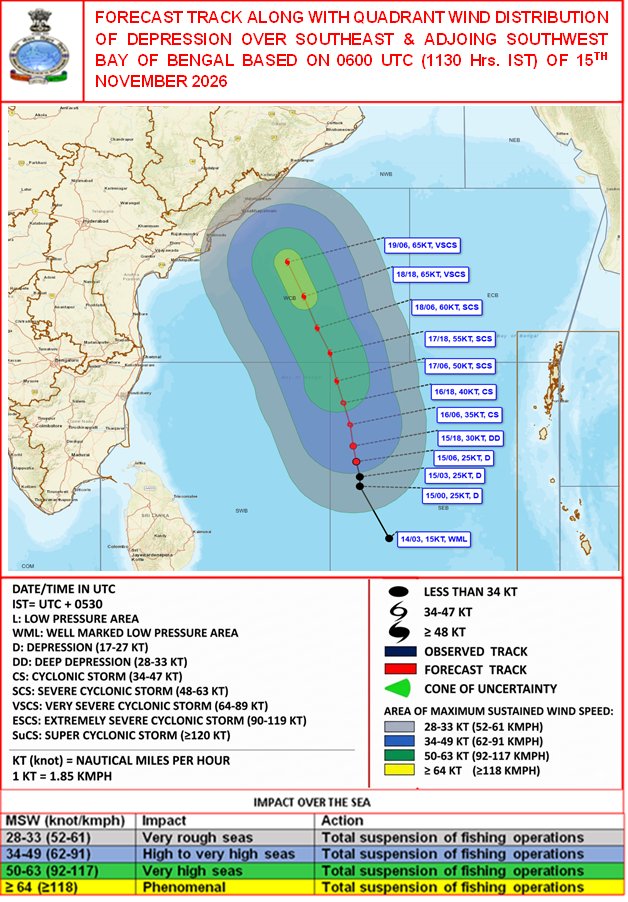
The Depression over Southeast & adjoining Southwest Bay of Bengal moved north-northwestwards with the speed of 15 kmph during past 06 hours and lay centered at 1130 hours IST of today, the 15th November, 2026 over the same region, near Latitude 9.8°N and Longitude 86.8°E, about 620 km east-northeast of Trincomalee (Sri Lanka), 680km west-southwest of Sri Vijaya Puram (Andaman & Nicobar Islands), 800 km east-southeast of Chennai (Tamil Nadu), 960 km south-southeast of Visakhapatnam (Andhra Pradesh) and 1070 km south-southeast of Gopalpur (Odisha).
It is very likely to move north-northwestwards, intensify further into a Cyclonic Storm over the central parts of south & adjoining westcentral Bay of Bengal on 16th November and into a Severe Cyclonic Storm over westcentral Bay of Bengal on 17th November, 2026. Thereafter, it is likely to intensify further and move northwestwards towards Andhra Pradesh coast during subsequent 2 days.
Most men between the ages of 50 and 69 should take a blood test to check for prostate cancer every two years, the American Cancer Society said, in its first update to screening guidelines for the disease in more than a decade. https://t.co/Huc542bWjD
In today's Spaces discussion of The Bitcoin Standard course, @rekh37 mentioned B.R. Ambedkar, an Indian economist who, in 1923, suggested an Indian rupee of a fixed supply, probably the first-ever Bitcoin-like proposal
https://t.co/2wl06PwHql
His book: https://t.co/oGEQHikfQr
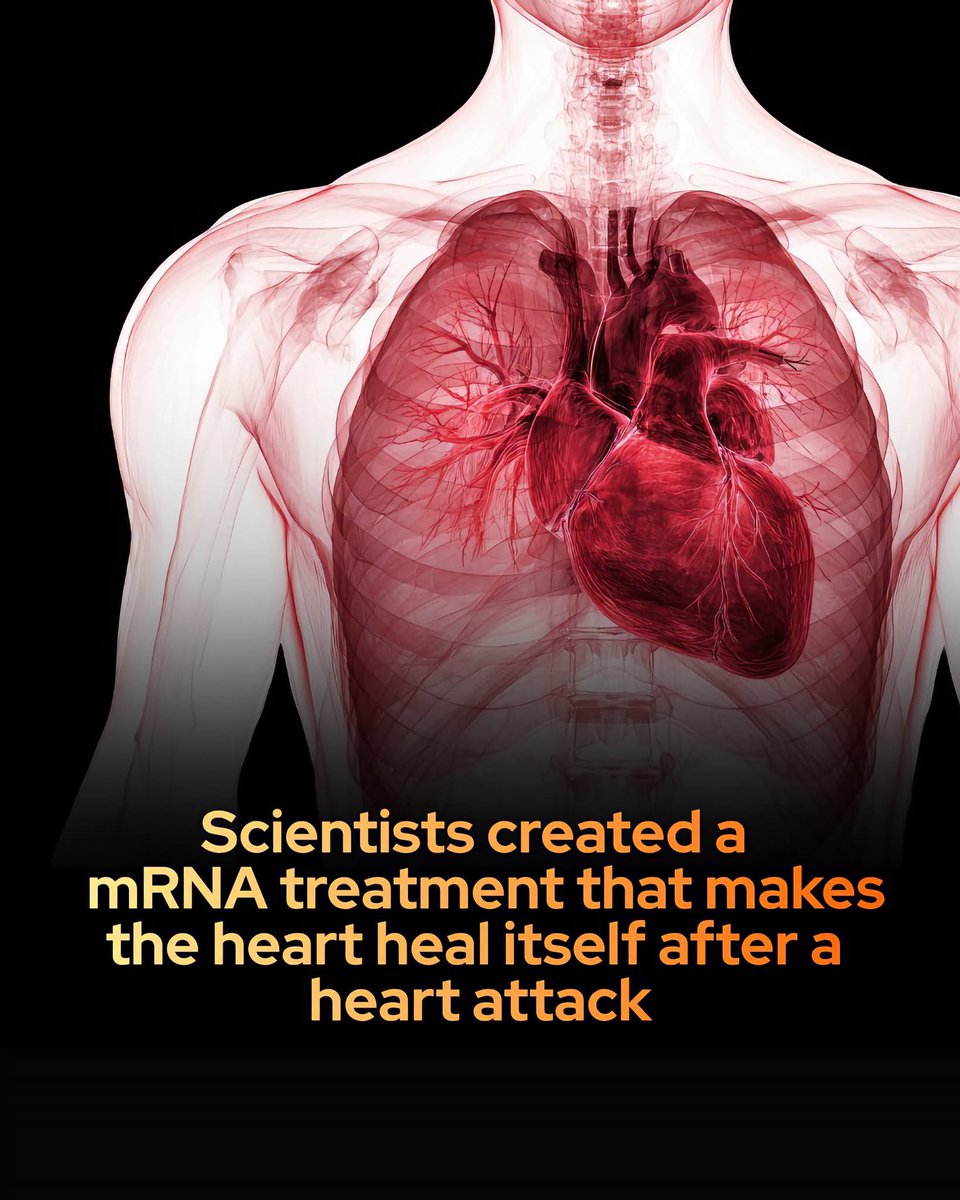
🚨Scientists just got heart muscle to regrow after a heart attack.
Adult heart muscle cells almost never divide, so the damage from a heart attack is usually permanent, and a human heart can lose up to a billion of those cells in a single attack.
A team from the University of Cambridge, Australia's QIMR Berghofer and AstraZeneca injected a short-lived mRNA into the heart after a heart attack. It briefly switched on two proteins, Myc and cyclin T1, that push heart muscle cells to start dividing again, then faded away.
Treated hearts pumped about 10% more blood per beat than untreated ones, and the benefit was still there 12 weeks later. The study was published in Nature Cardiovascular Research.
Today's heart failure drugs ease the strain on a damaged heart, but none of them replace lost muscle. "We're not just treating the symptoms of heart failure, this approach could help the heart to repair itself," said Cambridge researcher Catherine Wilson, and the British Heart Foundation called getting the human heart to repair itself "the holy grail for cardiologists."
That said, all of these results come from mice, and the method used to deliver the mRNA can't be used in patients yet. Also, Myc is a well-known cancer gene, so long-term safety is the big open question, even though the treated mice showed no tumors during the study. The British Heart Foundation is now funding the next step, testing the treatment in larger animals on the road to human trials.
source: Boikova, A., Quaife-Ryan, G. A., Batho, C. A. P., et al. (2026). A transient modified mRNA encoding Myc and cyclin T1 improves cardiac function after myocardial injury. Nature Cardiovascular Research.
Three people with epilepsy resistant to drug treatment saw the number of seizures they had per month fall by more than 90%, after gene-laden viruses were infused directly into their brains
https://t.co/iqNtN8iiZz
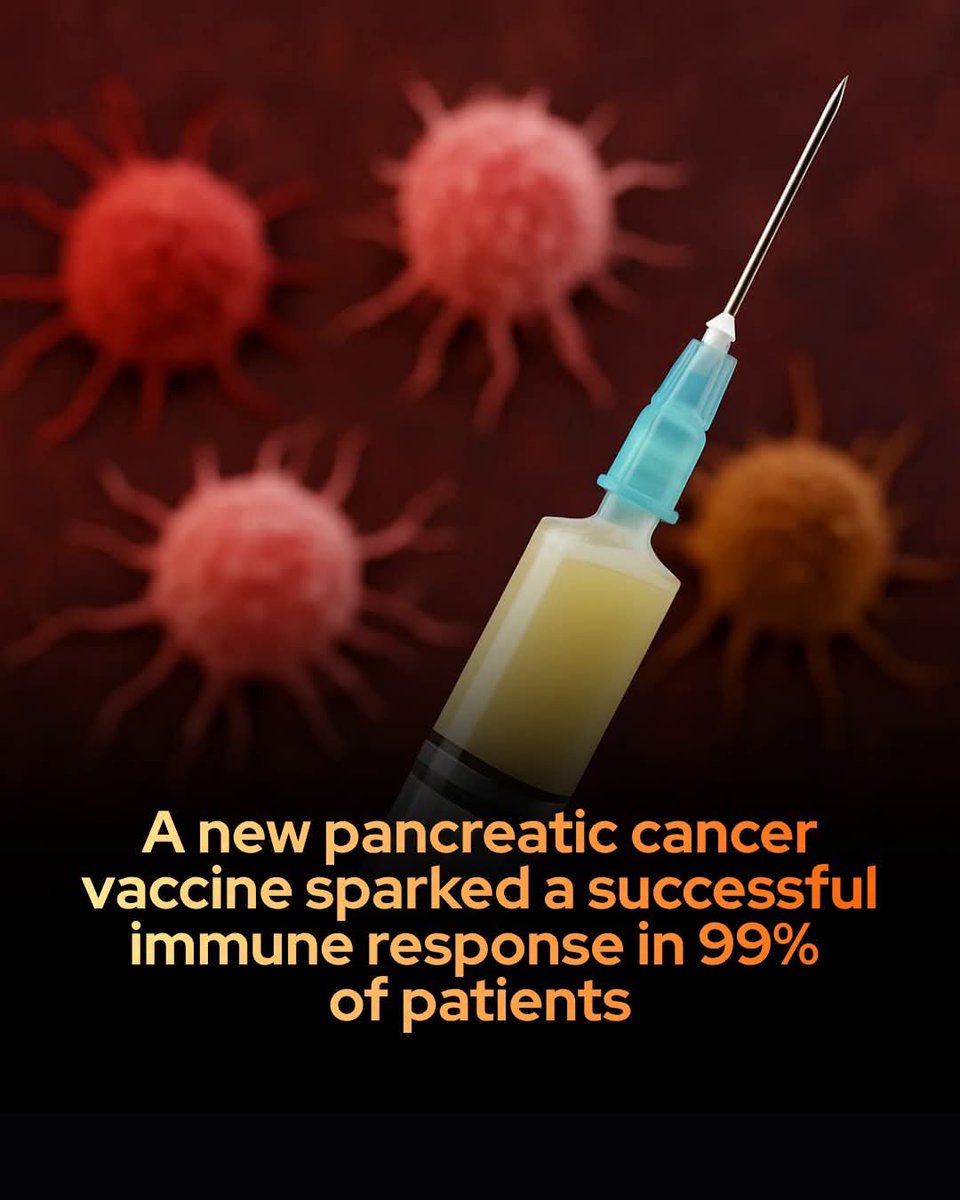
A new vaccine against pancreatic cancer, one of the deadliest cancers there is, trained the immune system to fight back in 99% of patients.
Most pancreatic cancers are driven by mutations in a gene called KRAS. A vaccine called camupepimut, made by Elicio Therapeutics, is designed to teach the immune system's T cells to recognize seven of the most common KRAS mutations.
In a phase 2 trial led by Mayo Clinic oncologist Ben George, 144 people who'd had surgery and chemo were randomly assigned to get the vaccine or not. Of 90 vaccinated patients who could be checked, 89 developed T cells that targeted mutated KRAS, and in more than 80% the response was over nine times stronger than before.
Patients with the strongest immune responses tended to stay cancer-free longer. A larger phase 3 trial is planned with booster shots and possible drug combinations.
source: George, B., Singh, H., Devoe, C. E., Chung, V., Hosein, P. J., Hendifar, A., et al. (2026). Lymph node-targeted, mKRAS-specific amphiphile vaccine in pancreatic cancer: The randomized phase 2 AMPLIFY-7P trial. Nature Medicine.
Scientists Have Created an Implant That Turns Excess Blood Sugar Into Something Your Body Can Pee Out!
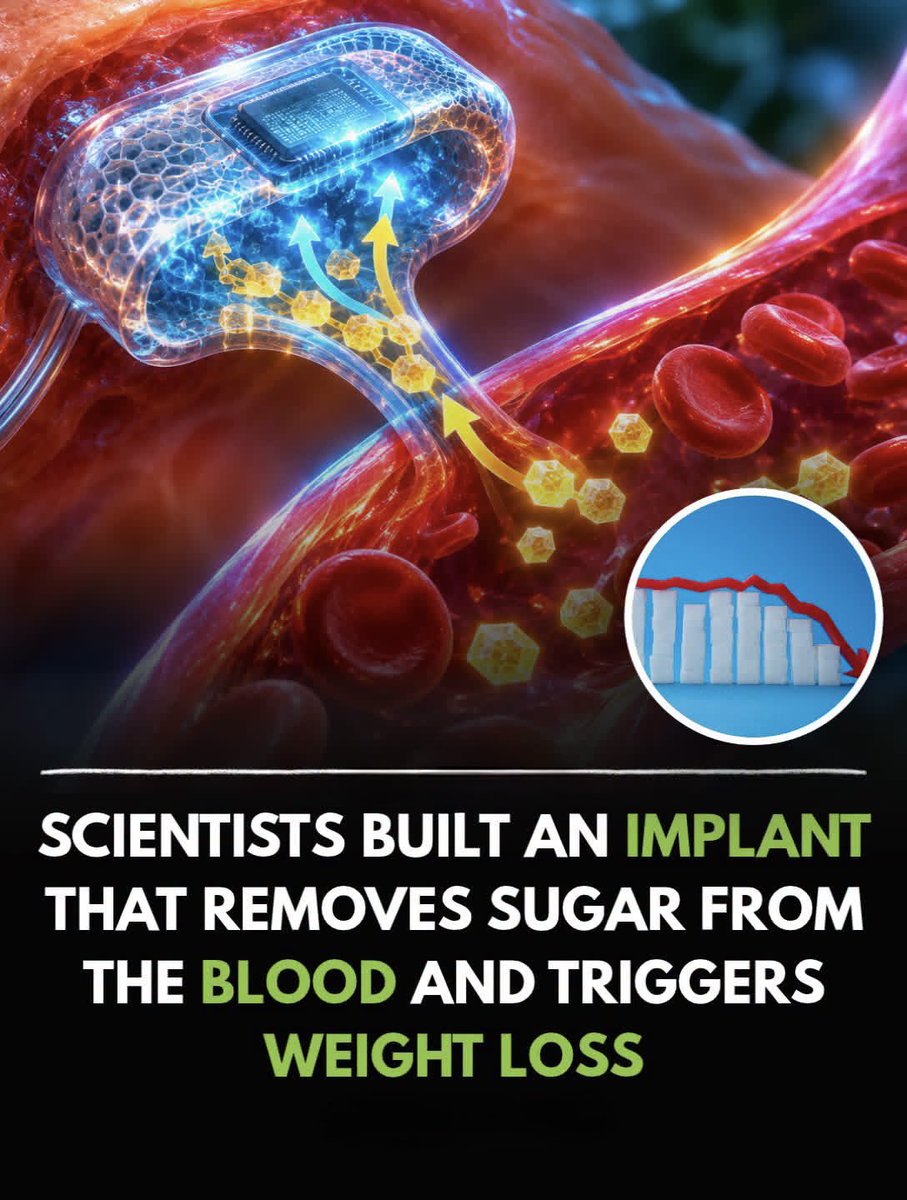
What if an electronic implant could lower blood sugar without insulin or traditional diabetes drugs? Scientists at ETH Zurich have developed an experimental device that does something remarkably different.
Called ECHO, the wireless implant uses a special catalyst made from gold, platinum and graphite to convert excess glucose into gluconate, a substance the kidneys can eliminate through urine.
Here's where it gets even more interesting: A continuous glucose monitor can detect rising blood sugar and communicate with the implant through a smartphone, allowing the device to switch on when glucose levels become too high.
In experiments involving diabetic mice, blood sugar returned to normal levels within approximately 60–90 minutes. After six weeks, the animals also experienced weight loss of up to 10%, alongside changes suggesting their bodies were using more fat for energy.
The research, published in Science on October 22, 2026, introduces a completely different approach to managing diabetes and obesity: removing excess glucose rather than simply helping the body process it.
But there is a major catch. The implant has only been tested in laboratory experiments and mice. It has not yet been tested in humans. Its long-term safety, effectiveness and potential kidney-related risks still need investigation.
Could this technology eventually open a new chapter in diabetes treatment?
Source: Maity, D., Guha Ray, P., Buchmann, P., Charpin-El Hamri, G., & Fussenegger, M. (2026). Wireless electrocatalytic closed-loop system for drug-free management of diabesity. Science, 394(6822).
Scientists made a gel that coaxes damaged teeth into growing new enamel.
Scientists at the University of Nottingham, led by Abshar Hasan and Alvaro Mata, developed a protein-based gel that mimics the proteins that guide enamel formation when teeth first develop.
Once applied, the thin coating acts like a scaffold, pulling calcium and phosphate out of saliva and organizing them into new crystals that grow into the existing tooth, much the way natural enamel forms. It contains no fluoride, and it can even coat exposed dentine, the sensitive layer underneath enamel. In lab tests that simulated brushing, chewing and acidic foods, the regenerated enamel held up with the same mechanical properties as healthy enamel.
That matters because enamel is the hardest tissue in the body, yet once acid erosion or decay wears it away, the body can't replace it. Today's treatments can strengthen what's left or fill the gap with artificial material, but they can't rebuild the real structure. A coating that does could help with sensitivity and early damage, and it could give fillings and veneers a better surface to bond to.
To be clear, so far this has been tested on teeth in the lab, not in people's mouths, and the hope of a first product soon comes from the researchers and their own startup, Mintech-Bio. Still, it's a promising step toward treatments that let teeth repair themselves instead of just patching them.
source: Hasan, A., ... Mata, A. (2025). Biomimetic supramolecular protein matrix restores structure and properties of human dental enamel. Nature Communications, 16.