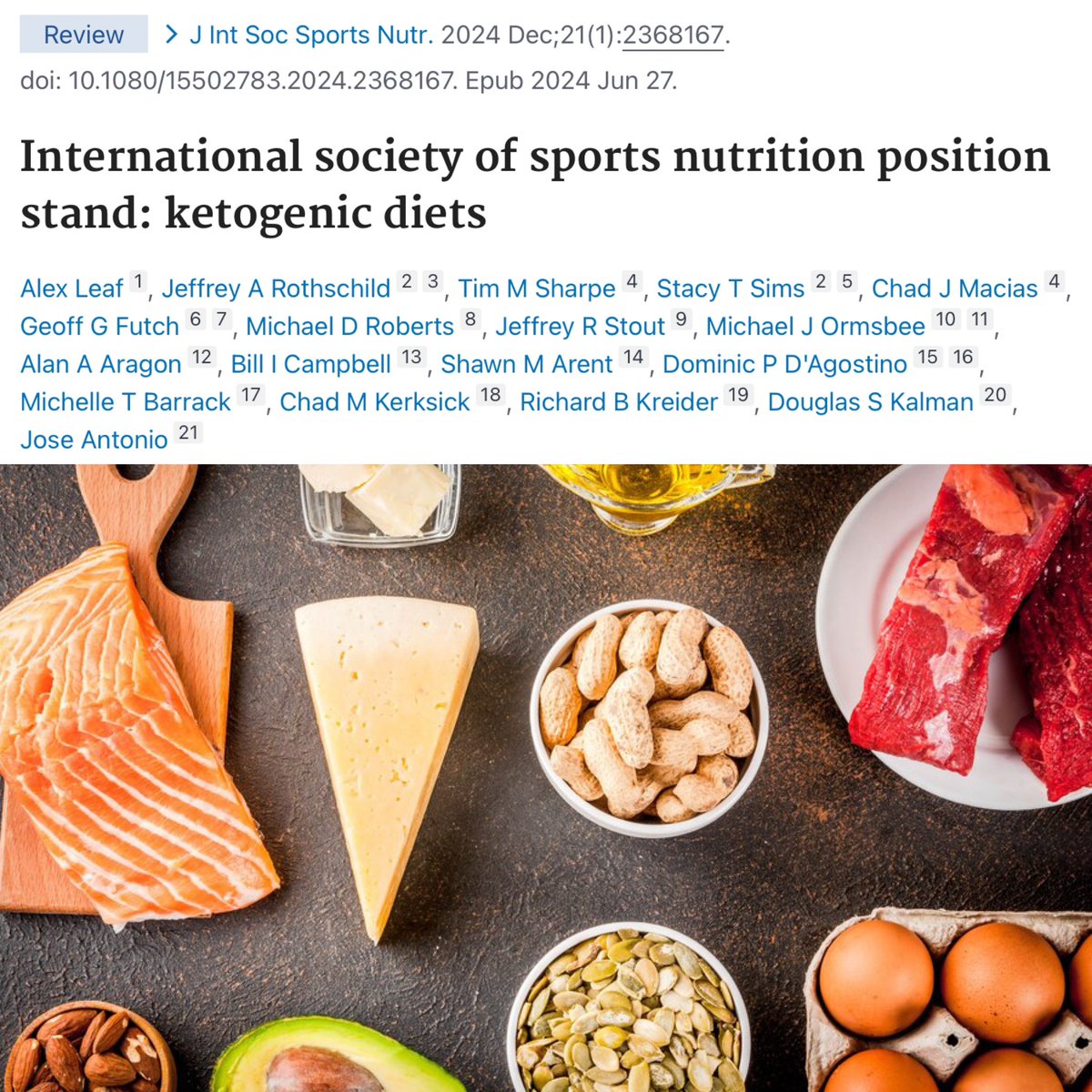
The ISSN Position Stand on Ketogenic Diets 🗣️
This new review and position stand critically analysed the available research on ketogenic diets for healthy exercising adults.
Here are the primary takeaway points👇
➡️ Ketogenic diets are defined as serum ketone levels > 0.5 mM🩸
➡️ This is usually achieved with < 50g carbohydrate per day 🍽️
➡️ It is not intrinsically harmful and is safely used in clinical populations👩⚕️
➡️ The keto diet results in increased fat oxidation during exercise 🔥
➡️ But this has primarily neutral or detrimental effects on athletic performance compared to a higher carb diet 😮💨
➡️ These effects on exercise may be influenced by training status or length of diet 🗓️
➡️ All data from elite athletes shows a negative effect on performance when following a keto diet for < 6 weeks ❌
➡️ Only two studies lasted more than 6 weeks, with only one showing a significant improvement in performance ⚖️
➡️ Most studies show that strength gains are similar between ketogenic and higher-carb diets 💪
➡️ Keto diets may result in greater total body mass, fat and fat-free mass (incl. lean tissue) losses vs higher carb diets 📉
➡️ There is insufficient evidence to establish if ketogenic diets affects males and females differently 🔍
Is intermittent fasting going to kill you? 😱
This week on overreaction theater we have a new abstract that was published at the AHA conference which concluded that IF raised the risk of death from heart disease by 91%. This got a TON of press. So what do I think?
Well this is an abstract at a conference, it has not gone through peer review, there is no full text & I can’t read the detailed methods & results so I can’t comment too much but I’ll give a few thoughts now & in a few months I’ll circle back once it’s published
This was a cohort study based off NHANES data from 2003 to 2018 comparing people who ate inside of an 8 hour feeding window vs those that ate in a feeding window greater than 8 hours & found those eating inside the window had a 91% greater risk of death from CVD
This study used food recall data which is standard for these studies but does have its own limitations. Further, IF didn’t gain popularity til after 2010. It’s very likely that many of the people surveyed in this study were not purposefully following an IF protocol. They just likely skipped meals like breakfast which placed them inside that window. Other studies have shown skipping breakfast increases risk of CVD & mortality (PMID: 32085933)
But this is less likely to be a function of skipping breakfast or meals causing CVD than it is that people with poor meal habits are more likely to skip meals & have overall poorer diet quality (PMID: 32398192) & has been associated with greater BMI (PMID: 38479908)
But the HUMAN RANDOMIZED CONTROL TRIALS where IF is used as a way to reduce calorie intake demonstrate improvements in risk factors for CVD (PMID: 38425626) so I highly doubt there is something unique to IF that causes CVD. I think this is probably explained by confounding variables but I’ll have to wait til the full text is published to comment more
Overall, IF can be an effective way to reduce calories & improve metabolic health through loss of body fat but it is NOT uniquely beneficial to health compared to calorie equated non-IF protocols. It has been promoted as a pro longevity tool but there is also NO real data to support IF as uniquely beneficial for longevity
Share👊
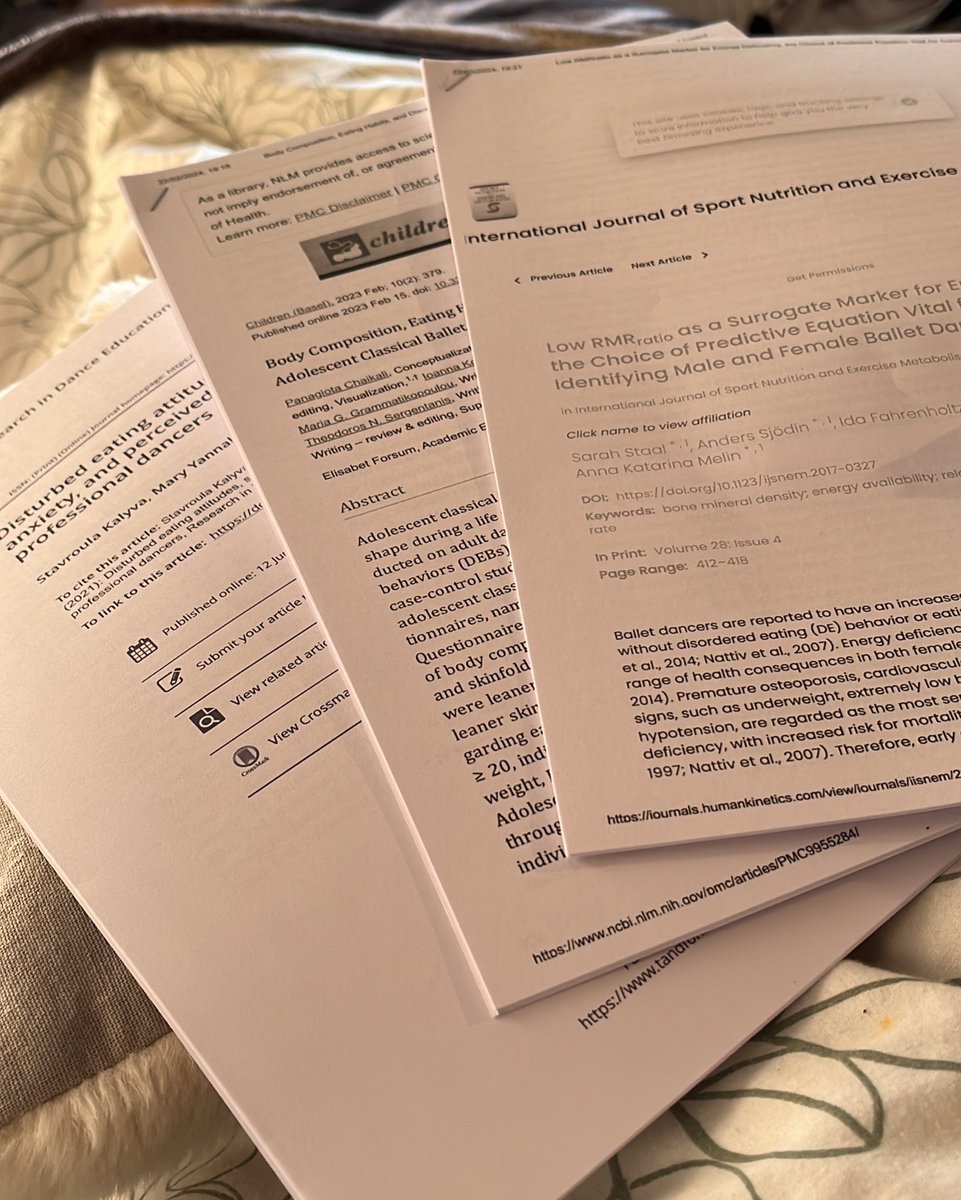
❗ Calling all professional ballet dancers ❗
I am looking for participants to take part in my survey on the use of protein supplements in professional ballet dancers.
Please find more detail here:
https://t.co/mrormhrkI3
Great seminar on food marketing and young people delivered by @EmmaBoyland@LBUHealth @ObesityInst
Opening my eyes even more to the constant battle of widespread media and the influence this has on food choice from a young age
#foodmarketing#foodmedia#nutrition#CPD
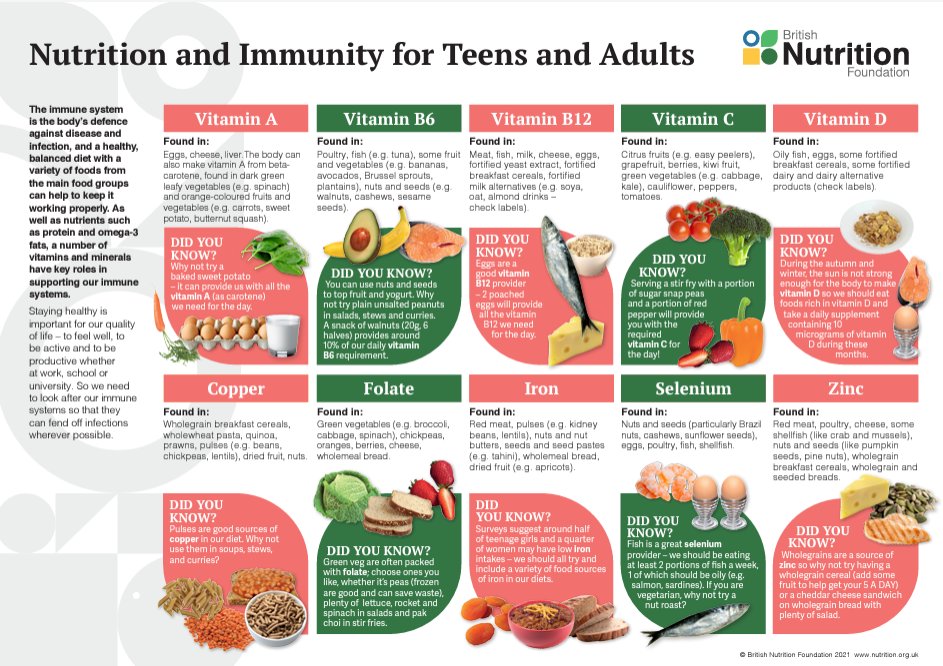
A range of micronutrients are important to support the immune system including vitamins A, B12 and C and selenium, iron and zinc. A varied diet is key to providing all the nutrients we need to help us fend of infections as we head into autumn. For more see https://t.co/yA9IdvOMUu
“Research has found that individuals with a moderate to high adherence to the Eatwell Guide recommendations have a 30% lower dietary carbon footprint and a 7% reduced total mortality risk…”
A new rapid review on the Eatwell Guide @MyNutriWeb
https://t.co/0k2PA6Mtuw
A huge thank you to all who came and spoke with our year 2 @NDLeedsBeckett Nutrition students today as part of their assessment. We hope you enjoyed talking with them! Some great conversations took place😃🍏🍓🫐 #nutritionmatters#raisingawareness
Kitchen practical today comparing soya alternatives was by far the best practical we have done so far! Vegan cheesecake was definitely my favourite 🤤
@LBUHealth@leedsbeckett