NEW CHALLENGE ANNOUNCEMENT
Announcing the Energy Arbitrage designed in collaboration with @cryptoeconlab
It's been on testnet for over a month and live on mainnet next week!
So what is energy arbitrage and why does it matter?
AI is eating electricity faster than grids can supply it
The algorithms that decide how grid-scale batteries charge and discharge are becoming some of the most consequential algorithms on Earth, and until today they've been locked behind closed doors.
@hellasdotai putting out badass posts left & right
The figure below is a deterministic Hellas hypergraph model, trained with their category theory-based compiler Catgrad, without needing PyTorch or TensorFlow
This is a feat no other DeAI project has accomplished (or attempted)
1/ Tensor compute is the high-performance execution of tensor operations, and it powers modern AI from inference to training.
Today, much of this compute runs on external infrastructure: centralized clouds, GPU marketplaces, and decentralized networks.
Yet outsourcing compute comes with a structural issue: verifying that a specific computation was executed correctly is surprisingly hard. Without this guarantee, clients have no choice but to trust their provider.
And trust doesn't scale.
So how do you remove trust from outsourced compute?
We studied how @hellasdotai solves this 👇:
https://t.co/PJfmFjWWgx
7/ What we found: the system holds up.
When properly calibrated, cheating carries negative expected value.
And as the network grows, security gets stronger. More usage means more collateral securing the system, cheaper verification as specialized services emerge, and stronger incentives overall.
Nasdaq + Kraken just announced tokenized equities on DeFi.
When stocks live on-chain, token supply mechanics apply: float, dilution, circulating supply pressure.
TradFi is about to learn what crypto has known for years.
https://t.co/wFr2p04EWR
ACI leaving @aave isn't drama. It's a mechanism design problem.
When your biggest delegate is also your service provider, conflicts of interest are structural — not personal. You need voting mechanisms designed to handle this.
We studied this: https://t.co/BZyxVzhBXb
Hi Dan,
Have been following OnRe since the Ethena backing — scaling to $100M AUM this quickly in on-chain reinsurance is impressive, especially with the Bermuda structure.
The blended yield architecture is particularly interesting given it draws from two distinct return drivers. In multi-leg systems like this, cycle timing between underwriting cadence and market-driven yield components can behave differently across regimes.
We’re currently offering a free lightweight diagnostic to a small number of selected projects, modeling multi-source yield stability under different market and claims scenarios.
Curious whether there's already a yield floor mechanism built into the pool design, worth a quick chat?
@zksy is killing Lite on May 4 and going all-in on Era.
One network instead of two means the entire ZK emission schedule now concentrates onto a single chain. That changes staking yields, circulating supply dynamics, and dilution math.
Model it yourself: https://t.co/wFr2p04EWR
World Liberty Financial just proposed a stake-to-vote governance model: lock WLFI, vote at least twice during your lock period, earn ~2% annualized rewards from the treasury.
This is textbook veToken design. Lock commitment + participation requirements + directed rewards. The same mechanism pattern that drives Curve, Balancer, and dozens of DeFi protocols.
Model it yourself: https://t.co/SbiqQvRKVU
Standard Chartered says stablecoin growth could create $1T in new T-bill demand by 2028. That's a massive concentration of reserves in a single asset class.
The question nobody's modeling: what happens to peg stability when those reserves face a liquidity crunch? Cascading redemptions don't care about market cap—they care about exit liquidity.
We applied our liquidity-cascade modeling from our stETH simulator to this T-bill thesis. The results are sobering.
Stress-test the mechanics here: https://t.co/fmJOYz6cAi
@MoonwellDeFi just lost $1.8M because an oracle priced cbETH at $1.12 instead of ~$2,700. Bots liquidated real collateral for pennies.
Oracle design isn't a plug-and-play problem. It's a cryptoeconomic one — incentive alignment, fallback logic, staleness checks, multi-source aggregation.
Get one wrong and the protocol bleeds.
This is exactly the kind of failure mode we stress-test: https://t.co/VSu2fUajkx
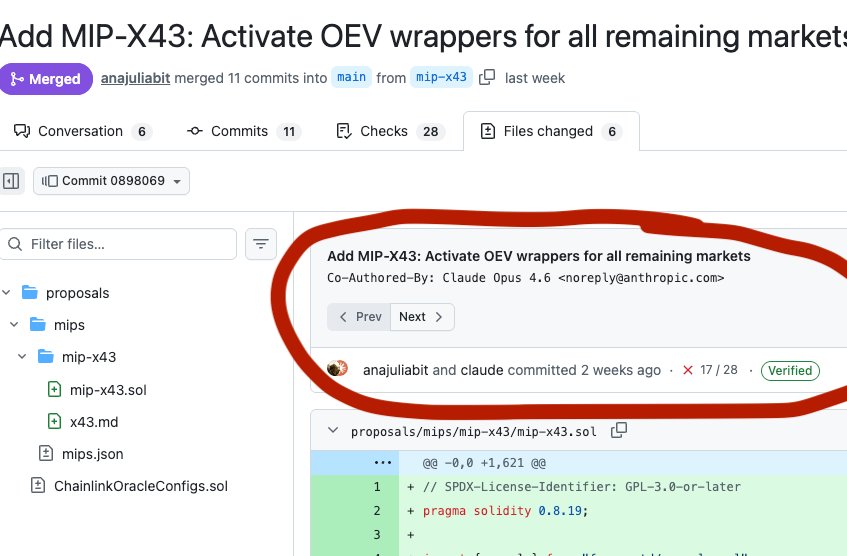
🚨Claude Opus 4.6 wrote vulnerable code, leading to a smart contract exploit with $1.78M loss
cbETH asset's price was set to $1.12 instead of ~$2,200. The PRs of the project show commits were co-authored by Claude - Is this the first hack of vibe-coded Solidity code?