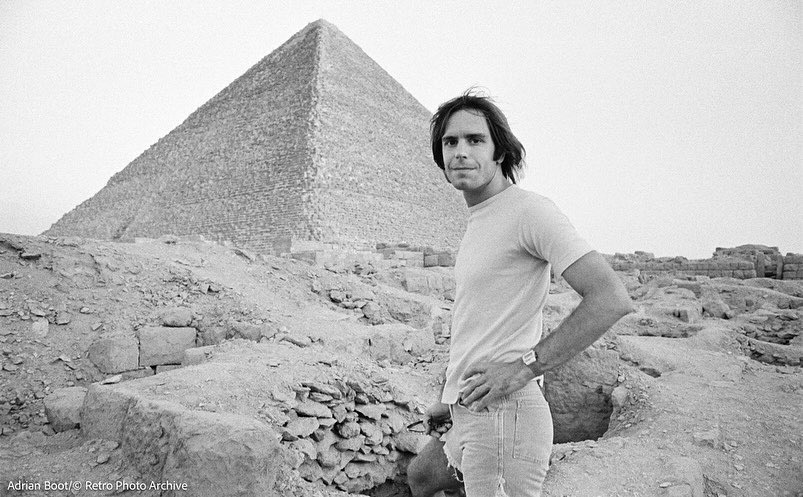
Today as the Dead faithful celebrated the life of Bob Weir, John Mayer delivered perhaps the only “Ripple” that’s ever made me smile-cry… Highly suggest.😔
Bobby Weir, just 17 years old when he co-founded the Warlocks, was one of the very few people who was at every single Grateful Dead show. Joining up with Jerry and Pigpen in 1964, and soon after Billy and Phil, with Mickey soon to follow, the Grateful Dead were defined by each of the unique musicians and voices these guys brought to the stage. And Bobby was as unique as they come.
A guitar player unlike any other, and a songwriter who created some of the most interesting, exciting, and oddly-timed songs in rock history, Bobby was also the unabashed rock star in the Grateful Dead. His list of contributions to the Grateful Dead repertoire is way too long to list, but songs like Sugar Magnolia, Truckin', Jack Straw, Cassidy, Looks Like Rain, Playing In The Band, Weather Report Suite, The Music Never Stopped, Estimated Prophet, Feel Like A Stranger, Hell In A Bucket, and Throwing Stones are just the tip of iceberg of his songwriting magnificence.
When Bobby had a spare moment both during the Dead's 30 year performing career and after, he was always working on exciting, different projects like Kingfish, Bobby & The Midnites, Weir & Wasserman, RatDog, The Other Ones, The Dead, Furthur, Dead & Company, Wolf Bros, symphonic collaborations, recordings, performing. He never sat still, and was always moving forward, an inspiration to us all.
Watching Bobby do anything was always a joy, as he embraced life around him. First and foremost, his family gave him immense happiness. Being on stage and performing for us all showed us a man who loved to bring smiles to our faces. He didn't do anything halfway, always giving it his all.
For 60 years, Bobby has been a huge part of the soundtrack to our lives. His kindness, generosity, and musical contributions have made our world a better place. — David Lemieux
Photo by Adrian Boot @ Retro Photo Archive
Today I turn 55.
I’m the fittest, sharpest, and happiest I’ve ever been.
If I’m an outlier, it’s not because I’m built different or discovered a secret formula. The truth is far less glamorous:
It’s a million tiny choices, compounded over decades.
Here are 55 of them:
1. Walk 15+ miles a week, even if you do other exercise. Humans are uniquely made to move slowly over long distances—it’s critical to longevity.
2. Develop a writing practice. It’s the single best way to sharpen your mind. And remember, you don’t have to be a good writer to write. Start with 10 minutes a day.
3. Swap out your toothpaste, deodorant, lotions, soap, shampoo, and other personal care products for natural versions. Here’s a rule of thumb: Don’t put anything on your skin that you couldn’t safely eat.
4. If you have a positive thought about someone, don’t keep it to yourself—share it immediately. Encouragement defies the laws of physics: When you give energy, you also receive it.
5. Wear shoes with a wide forefoot (I like Topo Athletic) and wear toe spreaders around the house (search “yoga toes” on Amazon). Spine health begins with the feet.
6. Get sunlight regularly. Moderate sun exposure (without sunscreen) is hugely important for overall health.
7. Do a 3-minute deep (“ass to grass”) squat every morning. Deep squats are often called the anti-aging exercise. It’s been said that, “It’s not that you can’t do deep squats because you’re old, it’s that you’re old because you can’t do deep squats.”
8. Explore minimalism (it’s not what you think it is).
9. Set boundaries on toxic relationships. We tend to cling to relationships past their expiration date, and it takes a bigger toll on our health than we recognize.
10. Eat real food. Not too much. Don’t eat garbage. Binge occasionally. Fast occasionally. That’s the diet.
11. Learn about FIRE. It’s a great framework for financial success.
12. Don’t take antibiotics except in emergency situations. They’re massively over-prescribed and aren’t needed in most cases. Antibiotics have done untold damage to our guts, which is where health begins. Great natural alternatives are out there.
13. Get 8 hours of quality sleep each night. To optimize sleep:
—Don’t eat after 6pm
—Get blackout shades and cover LEDs with black tape
—No screens 2 hours before bed
—Try ashwagandha (an herb) to calm the nervous system
14. Stop drinking, even in moderation. People find all sorts of ways to justify drinking, but there’s no escaping the simple fact that alcohol is a toxin and it limits your potential.
15. Travel as much as possible. Nothing expands the mind like seeing the world. And travel doesn’t have to be expensive—the best experiences happen outside of fancy resorts, when you live like a local.
16. Let go of resentment. When you forgive someone, you release the prisoner, and the prisoner isn’t them… it’s you.
17. Show up on time, every time. Poor time management limits success more than most people realize. If you struggle with punctuality, stop everything else and fix that first.
18. Spend lots of time in nature and touch the earth. Humans evolved over 300k years to live in harmony with nature, and only recently have we retreated indoors. If you don’t spend time outside, you’re fighting biology (hint: You won’t win.)
19. Stop doing dumb things. As Leo Tolstoy said, “People try to do all sorts of clever and difficult things to improve life instead of doing the simplest, easiest thing—refusing to participate in activities that make life bad.”
20. Find your happy place and (eventually) move there. Most people live where they live because... that's where they live. We are products of our environment—choose yours carefully.
21. Find a hobby and pursue mastery. You can’t have a happy life without a passionate pursuit that isn’t your vocation. Your work—even if you enjoy it—isn’t enough.
22. Avoid mainstream medicine except as a last resort. The results are in—our healthcare (or more appropriately, sick care) system is badly broken and only makes people sicker.
23. Have a mindset of abundance. There is no advantage to being a pessimist—even if you’re right, it’s a miserable way to live. In a very real way… whatever you believe, you’re right!
24. Do hard things. Choose courage over comfort. Everything you want is on the other side of fear and hard work. As Jerzy Gregorik said, “Hard choices, easy life. Easy choices, hard life.”
25. Ignore haters. Hurt people hurt people. Negative/toxic people live in a prison of their own design. Don’t join them!
26. Say no. Protect your time and energy like it’s your most precious asset… because it is.
27. Become a water snob. As an alien said on Star Trek, humans are “ugly bags of mostly water.” You are what you drink—literally! We have Mountain Valley Spring water delivered in glass 5-gallon jugs and also have whole-house water filter (Aquasana Rhino).
28. Stop drinking sodas and sugary energy drinks. After a few weeks you won’t miss them, and a few months later they’ll seem disgusting. Refined sugar causes inflammation, which is the root of most disease.
29. If you’re over 35, find a good functional/longevity medicine doctor and start tracking your hormones. Modern life is hell on the endocrine system and restoring healthy hormone levels can change your life. As we get older, we either accept a slow decline in performance or we do something about it—choose the latter!
30. Develop a morning routine and follow it faithfully. Win the morning, win the day!
31. Invest in experiences, not things. People frequently regret buying things, but rarely regret investing in great experiences (especially when shared with loved ones). Remember, there’s nothing you can buy in a mall that you’ll remember in ten years.
32. Explore spirituality. It’s arrogant and small-minded to believe there’s nothing going on in our universe that is beyond our comprehension. We know less about our universe than an ant meandering on a sidewalk understands about this planet.
33. Have a strong bias toward action—doing rather than talking. If you ask a bunch of old people about their regrets, they’ll talk about the things they *didn't* do—the shots they didn’t take—more than the things they did do (even if it went wrong). As Wayne Gretzky famously said, “You miss 100% of the shots you don’t take.” Most people don’t take enough shots.
34. Stay lean. Men in particular are obsessed with muscle mass these days, but bulk doesn’t age well. The goal is to be strong but lean. The fittest guys in their 50s and beyond aren’t meatheads, they’re lean guys who are serious about a sport.
35. Curate your inner circle carefully. Surround yourself with people you admire and who challenge you to grow. Remember, we’re the average of our 5 closest relationships.
36. Be the fittest version of yourself. Your body is your only vessel for experiencing life—so treat it as such. Fitness isn’t working out a few times a week, it’s a lifestyle. The older you get, the more time you need to devote to your health.
37. Take the time to appreciate art and beauty in all its forms.
38. Think globally, but act locally. Too many people put their energy into far-away problems they don’t understand and can’t impact, while ignoring problems right under their nose. Want to change the world? Start at home.
39. Try psychedelics. It’s one of those things everyone should do at least once, and it might be the breakthrough you’ve been looking for.
40. Limit bad habits, including unhealthy thought patterns. We all have them—practice avoidance and find substitutes. Get professional help if needed.
41. Be a lifelong learner. Your brain is just like a muscle—if you don’t feed and flex it regularly, it will atrophy.
42. Find your purpose. People with a strong sense of purpose are happier and live longer. Lack of purpose sucks energy and magnifies depression.
43. Only take advice from people who embody the traits you want to have. Talk is cheap—emulate those who have DONE it.
44. The goal is not to retire and do nothing, it’s to build a great day-to-day life that you don’t need to escape. A life of leisure is a slow death. Happiness isn’t possible without a little struggle, uncertainty, and skin in the game.
45. Have fun! Do frivolous and silly things that make you smile. As George Bernard Shaw famously said, “We don't stop playing because we grow old; we grow old because we stop playing.”
46. Whatever you want to do or achieve in life, start NOW. Don’t fall victim to “someday thinking” because someday never comes.
47. Accumulate assets—things that grow in value over time. It’s the #1 habit of rich people, and it can be done in tiny chunks. Instead of spending $100 on an impulse purchase that has no lasting value, put that money into an index fund or Bitcoin. It becomes addictive (in a good way).
48. Don’t ignore the big 3 canaries in the coal mine for health:
—Low libido (and ED)
—Frequent sinus & respiratory issues
—Depression
These usually aren’t medical conditions in themselves, they’re symptoms of an underlying problem. Find a good doc (outside of the mainstream) and figure out the root cause.
49. Have a clear vision for your future. How can you decide which direction to go if you haven’t clearly defined the destination? It sounds obvious, but 95% of people haven’t defined their “Ideal End State” in detail and in writing. (Check out my thread on this topic.)
50. Make your own decisions. We live in an era where most of what society tells us is wrong. Don’t be afraid to break from societal norms—if people say you’re crazy, it’s a sign that you’re doing something right.
51. Get hardcore about mobility exercise. As you age, it’s usually the knees, hips, and lower back that limit physical performance. 30 min a couple times a week can spare you a lifetime of pain. YouTube is a great resource.
52. Go all in on family. Get married, stay married, have kids. Burn the boats. In the end, family is all that matters.
53. Be ruthless with your time. Money comes and goes. Time only goes. Audit your calendar ruthlessly—cut the trivial, double down on the meaningful, and spend your hours like your life depends on it. (Because it does.)
54. Have a strong bias toward action. Be curious, try things, meet people—it’s how you increase your surface area for serendipity, the most powerful unseen force in our lives.
55. Reinvent yourself every decade. Over time, we slowly drift off course from our priorities, values, and true identity. Take stock and don’t be afraid to hit the reset button. Bold, calculated moves made for the right reasons almost always pay off—usually even more than you can imagine.
🎁 P.S. If you enjoyed this post, would you give me a birthday gift? Repost or comment with the item number(s) you liked best?
Here's my 10+ hour conversation with Scott Horton (@scotthortonshow) where he lays out an extensive & detailed case against war, militarism, and the military industrial complex. https://t.co/XXqb7I0DdJ
Today in 1945, the US government dropped an atomic bomb on Hiroshima, Japan. Combined with the detonation of another atomic bomb three days later in Nagasaki, Japan, the decision resulted in the death of 225,000 people—most of which were innocent civilians.
It's a sad reminder that most of what we have been taught about the atomic bombs, and the reasons behind their usage, is the product of lies and the US propaganda machine.
According to the standard narrative, Japan refused to surrender in WW2 even after long and bloody battles in the Pacific, and an allied invasion of the Japanese mainland would have caused the deaths of 1 million+ allied soldiers as well as 10 million+ Japanese. Slaughtering hundreds of thousands of innocents in the two cities, by this argument, saved millions of lives and convinced Japan to surrender.
In reality, Japan had made overtures as early as late May, 1945 to surrender to the United States in a virtually unconditional manner, save for some basic legal protections for Emperor Hirohito. Furthermore, Japan was in no position to continue the war for long, for the US oil embargo had completely starved the country of fuel and basic resources. By the end of July, 1945, Japan’s navy had completely stopped major naval operations.
Some of the highest-ranking and most respected US generals reflected on the bombings and expressed moral outrage and strategic doubts about their usage. Others made this clear at the time, and strongly urged their civil superiors not to use them.
Supreme Allied Commander in Europe Dwight Eisenhower, for instance, pleaded with Secretary of War Henry Stimson to reconsider the plan, expressing his belief “that Japan was already defeated and that dropping the bomb was completely unnecessary,” and also because he “thought that our country should avoid shocking world opinion by the use of a weapon whose employment was, I thought, no longer mandatory as a measure to save American lives. It was my belief that Japan was,” Eisenhower wrote, “at that very moment, seeking some way to surrender with a minimum loss of ‘face.’”
Admiral William Leahy, the highest-ranking US military officer on active duty in the war, wrote similarly: “It is my opinion that the use of this barbarous weapon at Hiroshima and Nagasaki was of no material assistance in our war against Japan. The Japanese were already defeated and ready to surrender because of the effective sea blockade and the successful bombing with conventional weapons.”
Chester Nimitz, the commander-in-chief of the US Pacific Fleet, insisted that the atomic bombs were “of no material assistance in our war against Japan” for similar reasons.
General Douglas MacArthur, the supreme allied commander of the Southwest Pacific, saw “no military justification for the dropping of the bomb” whatsoever, and also professed that “Japan would have surrendered even if the atomic bombs had not been dropped.”
Admiral William “Bull” Halsey stated emphatically that “atomic bombing—of civilians, is morally indefensible.”
Because the US government decided otherwise, 225,000+ innocent civilians died in atrocities the scale of which the world had never seen. Instead of saving American lives, the chief purpose of the two atomic bombs seems to have been to flex the might of the American war machine in front of Soviet eyes. The detonations led to a costly arms race, the birth of the military industrial complex, and the Cold War itself.
Americans are still paying the price for all of it.
I do not accept that the atomic bombs saved millions of lives (they didn’t), that Japan would never have surrendered otherwise (they would have, and tried to do so before the bombings), or that they were morally justified in any way (they weren’t). These are all myths to justify the mass extermination of civilians in an overt act of terrorism by the US government.
The catastrophes in Hiroshima and Nagasaki demonstrate that it is never moral to target civilians for mass death. I sincerely hope the horrors of that day can still persuade some that atrocities of this kind must never transpire again.
For humanity to thrive, there can be no brinksmanship with Russia, China, or any other nuclear power.
For humanity to thrive, there can be no nuclear winter.
For humanity to thrive, there can never be any more tragedies like Hiroshima and Nagasaki ever again.
@BradRTorgersen@ComicDaveSmith March 2025 DNI report, Tulsi Gabbard: Iran is not building a nuke. Entire community agrees.
June 2025, Trump: i don't beleive them and it's better to kill all the people we were negotiating with.
Some view he's got.