@JoelKatz If I pick blue there is a chance I could die. If I pick red there is 0% chance I will die.
If everyone were perfectly rational then they would all pick red. But not everyone is. So a perfectly rational majority would all pick blue.
Ideally, blue. But real world? Probably red
@adam3us@noremacback@DeItaone@halfin@lopp@lensassaman@franfinney@nathanielpopper@nytimes The lack of a financial legacy for their families is certainly odd. But then, even if not SN wouldn't they have had the foresight to mine or buy a stash of btc anyway? You know the zeitgeist in 2009-11, was it just experimental sw or was it seen as something profound?
Finding Satoshi is one of the most well-produced Bitcoin documentaries I've had the pleasure of watching.
I learned a few things and so will you... it's available today at https://t.co/9lamPbLc4b
@eddiejiao_obj@drewocarr@LTXStudio@modal_labs All of this is live! it's early and slow. many of the demos above are sped up/edited, but we can't wait to see what you think. Try it yourself at https://t.co/bcephqPu1c (5/5)
On-chain decentralised accounts fix this:
❝Google and Microsoft effectively felt they were forced to completely disable all [the head of the ICCs] accounts and all his access to everything, leaving Europeans thinking: 'Well could this happen to us?'❞
https://t.co/kC4RDsKyhz
@coinbureau And real-world dapps must be designed for everyone, not just crypto folk.
Simple onboarding, email recovery, no crypto required, real blockchain use case.
Exactly what OpenSig is doing.
https://t.co/clae0Z1rWk
How do investigative journalists prove their photos are not AI generated?
Or record an audit trail of notes that demonstrate a timeline of evidence?
The blockchain is a constant timestamped record on which to anchor events and documents.
OpenSig is the app with which to do it
I've been using TheGraph for probably 3 years now, first for Seedling and now for OpenSig. It's a quality service for querying blockchain event data with GQL.
Sometimes it can fall behind the blockchain by 10 minutes or so, but hopefully that will improve as usage picks up.
Some dates matter more than others.
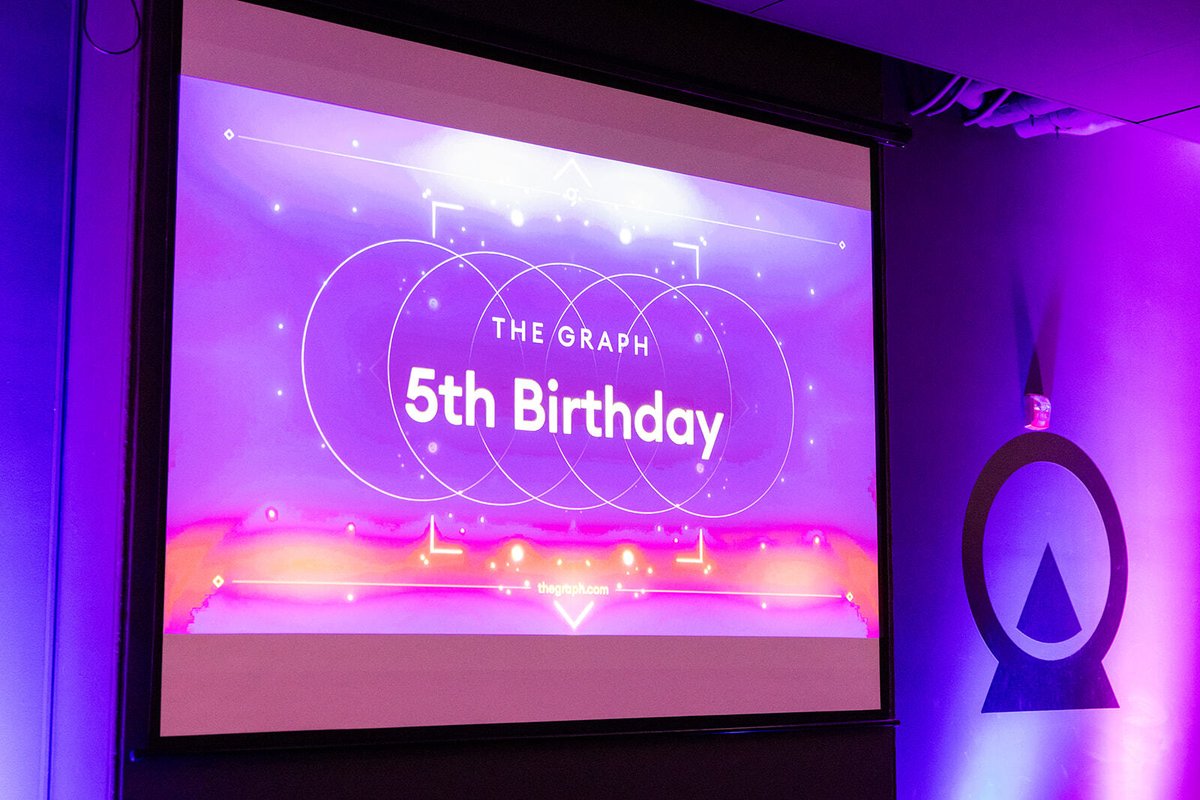
December 17th marks the official launch date of The Graph Network, marking 5 years of operating critical web3 data infrastructure and setting standards for decentralized indexing and query integrity across chains. 🌐⚙️
OpenSig took a lot of effort behind the scenes to get right. Biconomy’s discord support was fast, reliable, and thoughtful throughout. A credit to the team.
Huge respect to the @OpenSigLabs team for shipping this.
They delivered a real, mass‑market signing app where users get gasless, self‑custodial proofs without ever dealing with wallets or crypto concepts directly, which is incredibly hard to execute.
We’re proud that Nexus smart accounts and our bundler infrastructure could support this, and grateful for the trust. 🙏
Find out more 👇
Tomorrow's World was one of my favourite programmes as a kid. It reviewed the cutting edge of home technology.
Astonishing how much tech has changed in 40 years yet the cutting edge seems just as scrappy and frustratingly slow now as it did then.
https://t.co/8Juw4Eu4tk
Copyright, as the name suggests, gives you the right of ownership over your work. That's all well and good, but how do you prove you created it?
OpenSig anchors your work to your identity on a specific date using cryptographic proof. No bullshit, just math.
Don't trust, verify.
People often treat I created this and I own the copyright as the same claim.
They aren’t.
Copyright is a legal right that arises automatically when you create an original work.
But proving when you created it or that a specific file existed in a specific form is a separate question.
That’s where proof of creation matters.
OpenSig doesn’t replace copyright.
It gives you independently verifiable evidence of:
- when a file existed
- what its exact contents were
- who held it at that point in time
This strengthens authorship claims, clarifies timelines, and reduces ambiguity in disputes.
Copyright is the right.
Proof of creation is the evidence.
5. Email recovery via optional smart wallet module
6. Identity verified using verified credentials
7. OpenSig's open standard for anyone to build on
8. OpenSig library open source
Built on @0xPolygon, with @biconomy Nexus, @OpenZeppelin, @graphprotocol and @infura_io
OpenSig has a Web2 UX but is built using Web3 tech making it fully decentralised:
1. Each user owns an ERC4337 smart wallet
2. Gasless txns via OpenSig's paymaster based on user's ERC20 credit balance
3. On-chain proof registry
4. TheGraph network for querying proofs
Milestone moment for me: the OpenSig app is now out for public beta.
👉One of the first truly decentralised non-defi apps for the mass market.
Publish on-chain authorship and integrity proofs directly with your digital identity. Any file, any size.
First 3 credits are free.
Introducing OpenSig.
Privacy-first IP protection for the digital age.
Timestamp your creative work on blockchain before you share it. Files never leave your device.
Beta is live now on iOS & Android.
First 3 timestamps free.
→ https://t.co/PUoAuBXLhO
Over the past three months we've evolved OpenSig through 3 iterations of external testing and it's now just a few weeks away from public beta.
One of the first truly decentralised non-defi apps.
Check out the new website and sign up for early access.
https://t.co/KLs3xMF8q6