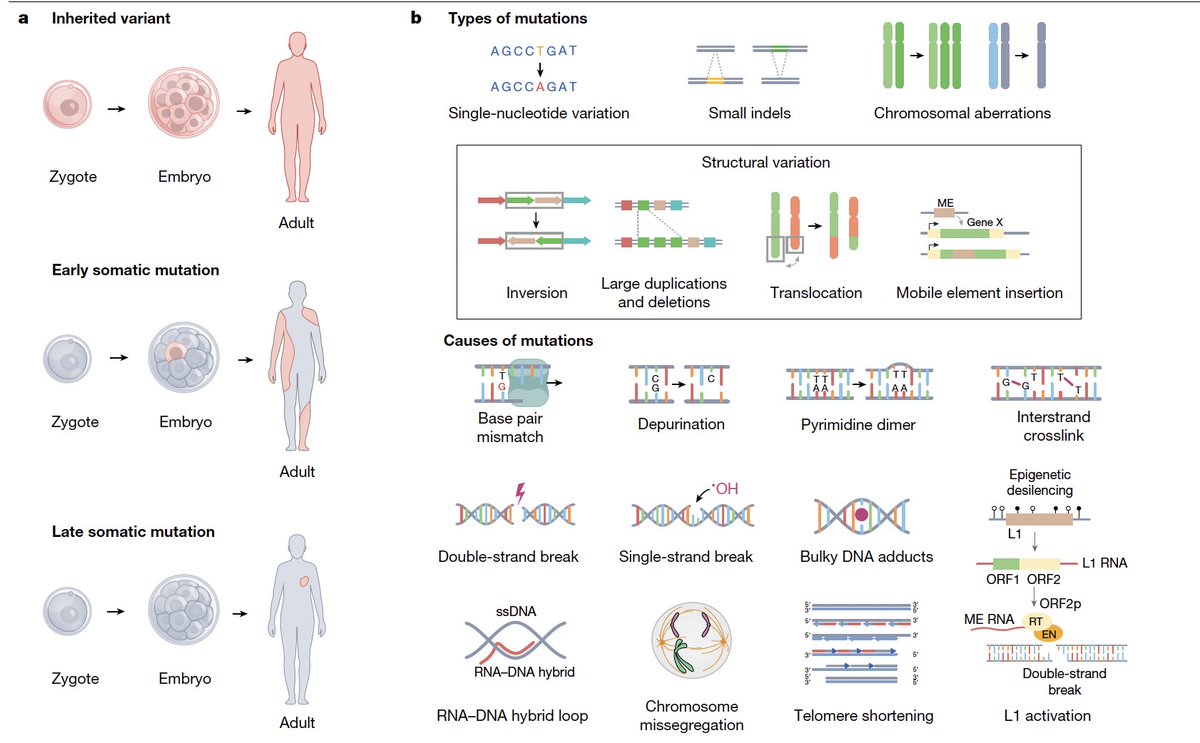
Recently spotlighted in @Nature, a new BioRxiv preprint showcases a single-cell sequencing approach that reveals somatic mutations, chromosomal changes, and lineage insights often missed in bulk data.
Uncover the science behind it: https://t.co/YWUoRxN5HJ
Welcome, Tim Coorens 🇳🇱, our new Research Group Leader.
Find out how Tim’s group is exploring using large-scale single-cell and spatial data to trace cell lineages, understand cancer origins, and uncover how mutations drive disease.
https://t.co/yRX2SElyKv
The cells in our bodies constantly acquire mutations. But what are the patterns of mutations across tissues? How do mutations in normal cells lead to disease? These and other questions we will tackle within the SMaHT Network, now described in @Nature
https://t.co/5c1mfZOrOR
🧬 The SMaHT marker paper is now live in @Nature
This landmark study characterizes somatic variation across 19 tissue types from 150 nondiseased donors, laying the groundwork for future discoveries in health, aging, and disease.
Read the full paper: https://t.co/uXArDHEtHn
We are all somatic mutation mosaics.
"There are trillions of cells in a human body and so the total number of somatic mutations acquired in a single individual may well exceed quadrillions, millions of times the size of the human genome." @Nature https://t.co/y6Y9MggS0o
1/ 🧵Check out our new study in @NatureGenet, which examines how precancerous conditions (MGUS/SMM) evolve into Multiple Myeloma, and offers new computational methods to predict progression risk and model cancer evolution.
https://t.co/IHnN87QKTk
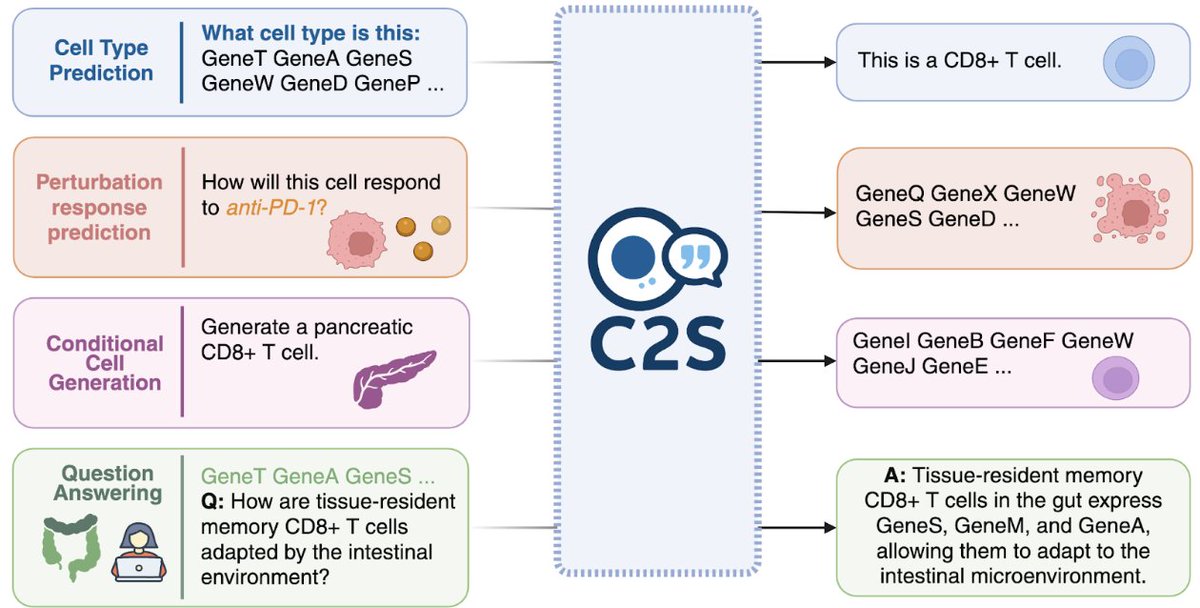
What if LLMs could “read” & “write” biology? 🤔
Introducing C2S‑Scale—a @Yale + @GoogleAI@GoogleDeepMind collab: we scaled LLMs (up to 27 B!) to analyze & generate single‑cell insights by turning transcriptomes into text 🧬➡️📝
🔗 Blog: https://t.co/3GbnXbKVmb
🔗 Preprint: https://t.co/beO8Z9CESc
#SingleCell #AI #LLM